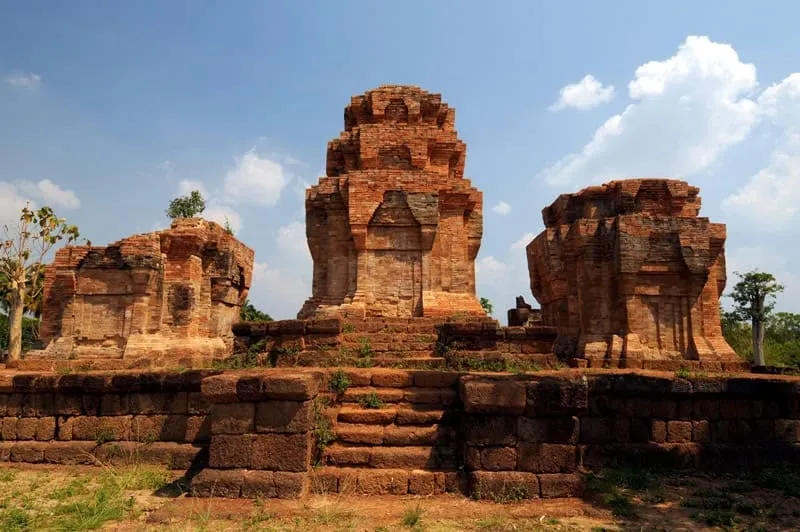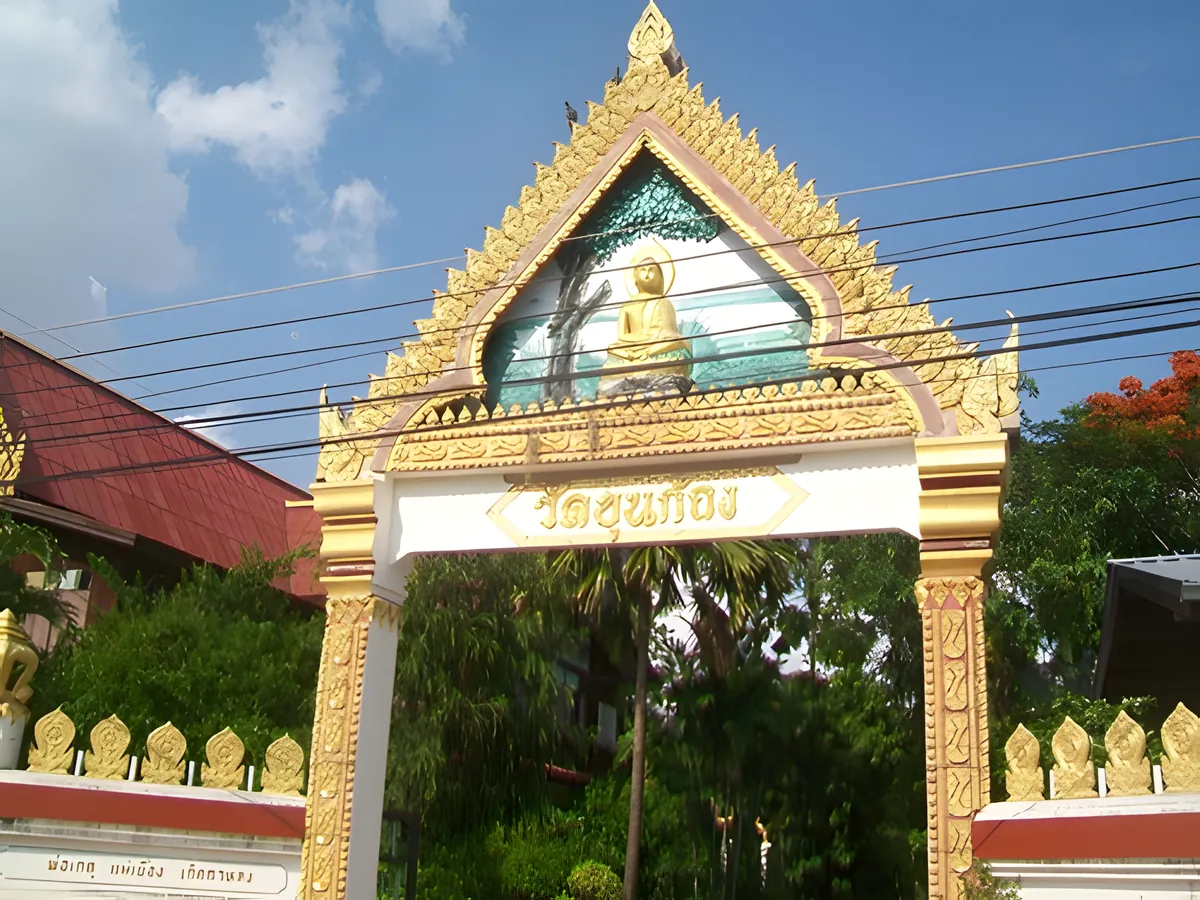





Prasat Wat Khok Ngio is a small Khmer-era laterite sanctuary inside the grounds of Wat Khok Ngio, on Highway 348 about 3 km before Pakham town in Buriram province. Entry is free and there’s no gate or set hours — it sits in the open, part of an active temple compound.
Historians believe the building was one of the arogyasala, hospital chapels King Jayavarman VII ordered built across the Khmer Empire in the early 13th century, part of a network said to have numbered 102 sites. The layout still shows that origin: a rectangular plan facing east, a central sanctuary tower built of laterite blocks, a vihara hall, a boundary wall with a gate, and the remains of a stone reservoir — features typical of arogyasala rather than a standard temple-mountain prasat like Buriram’s better-known Phanom Rung. Two carved stone figures on site are identified with the arogyasala tradition: a physician deity and the Bodhisattva Avalokiteshvara, both weathered but still legible on the doorframes.
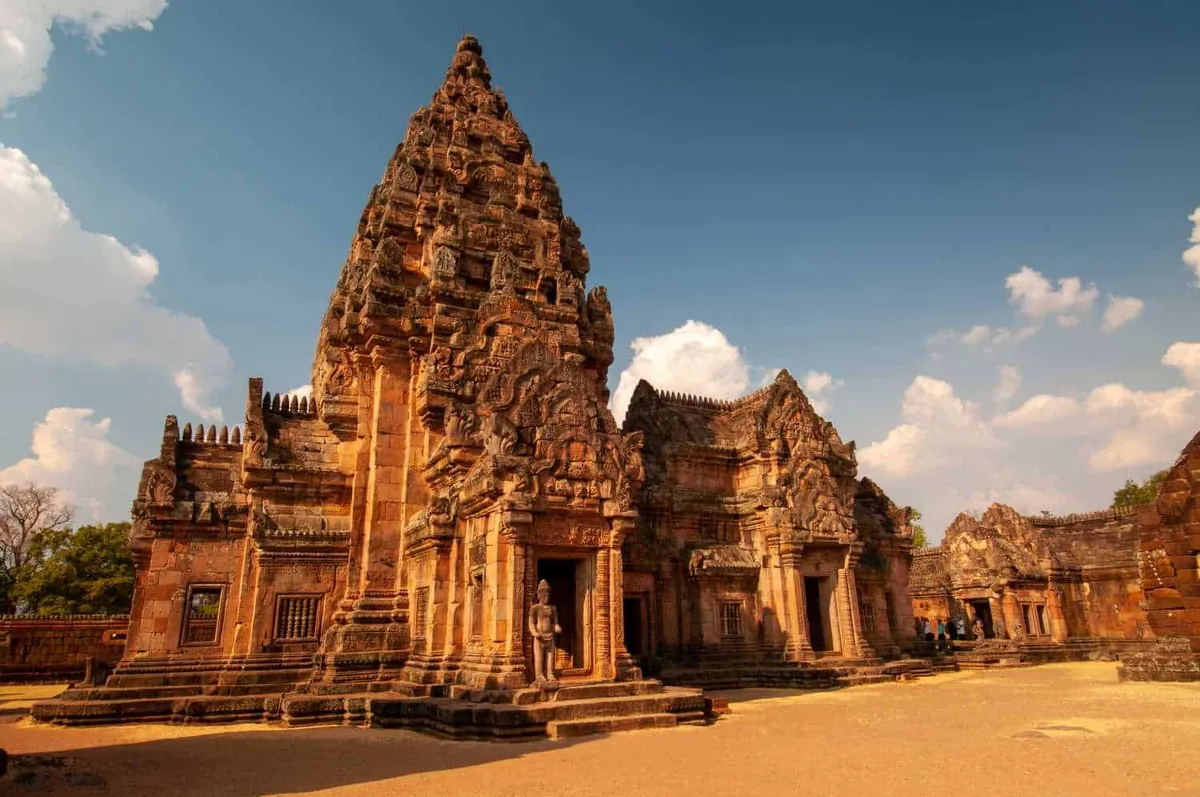
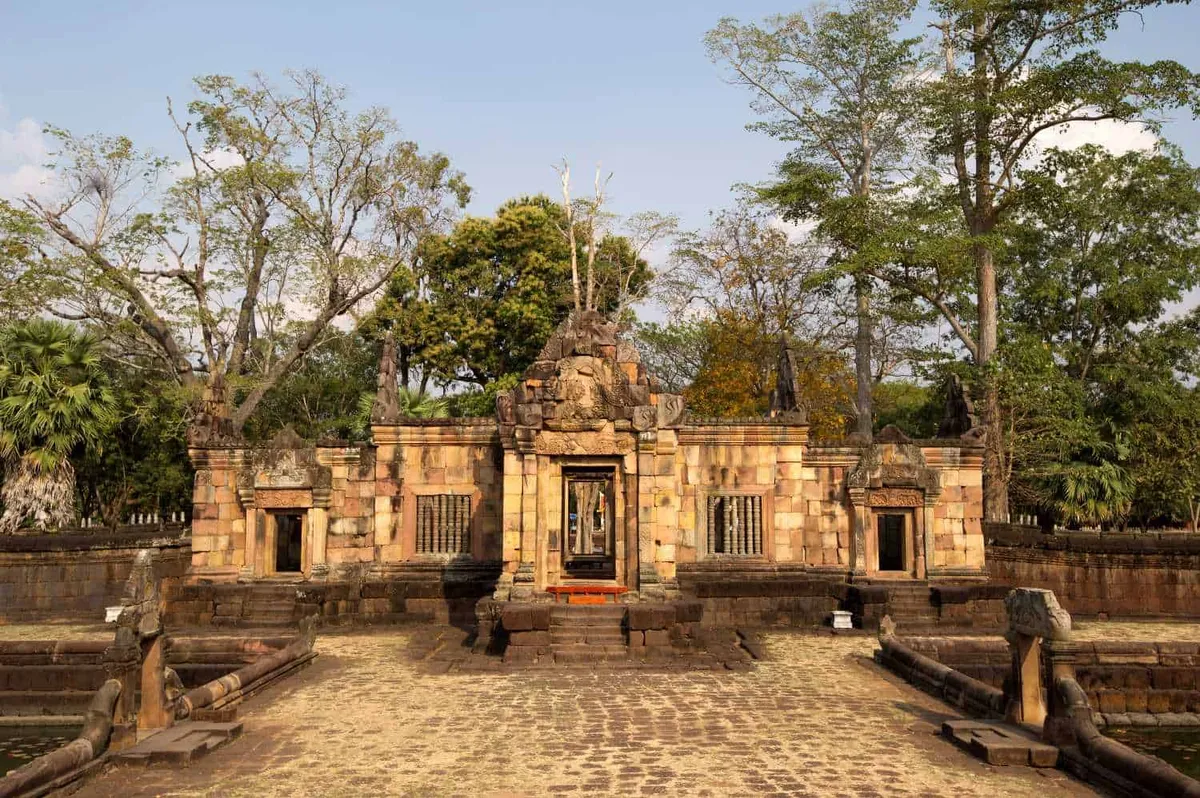
The scale here is modest compared with Phanom Rung or Prasat Hin Mueang Tam elsewhere in the province — this is a single sanctuary tower and its outbuildings, not a hilltop complex. That’s part of the appeal: there’s no ticket booth, no tour buses, just laterite ruins standing in a working temple yard with rice fields around it. Tree roots have worked into some of the older wall sections, and grass grows uneven around the tower base.
An inscription at Ta Prohm in Cambodia, dated 1186 CE, records that Jayavarman VII built 102 of these hospital chapels across his empire, each staffed with a director, physicians, and nurses, and open to any subject regardless of rank. Most were sited along the road network connecting Angkor to its provinces — which is why a modest site like this turns up in rural Buriram rather than a major temple town. Very little of that scale is visible on the ground today; what’s left is the sanctuary tower and its immediate surroundings, not the hospital buildings themselves.
Insider Tip: Combine it with Prasat Hin Mueang Tam or Prang Ku Suan Taeng elsewhere in Buriram — none of these smaller Khmer sites take long individually, and seeing two or three together gives a better sense of how widespread Angkor-period building was in this part of Thailand.
Watch out: There’s no shade shelter over the ruins and no facilities on site. Bring water and sun protection, and wear shoes with grip for the uneven stone and grass around the tower base.
- Entry: Free, open access
- Origin: Believed to be a Jayavarman VII-era arogyasala (hospital chapel), early 13th century
- Location: Highway 348, ~3 km before Pakham town, Pakham district
- Getting there: Own vehicle recommended — no public transport to the site
- What to see: Laterite sanctuary tower, vihara remains, carved physician-deity and Avalokiteshvara figures
Location & Directions
Pakham, Buri Ram
Buriram, Thailand
Show your taxi or Grab driver
ปราสาทวัดโคกงิ้ว
Frequently Asked Questions
Is Prasat Wat Khok Ngio the same as Phanom Rung?
What kind of building was this originally?
Is it free to visit?
How do I get there?
What can I actually see there?
Spotted something out of date or incorrect? Let us know
Stay Near Prasat Wat Khok Ngio
Live prices for places closest to Prasat Wat Khok Ngio — tap a pin to compare.