


Buriram
บุรีรัมย์
Khmer temples on an extinct volcano, Thailand's most successful football club, and the circuit that opens the MotoGP season.
Recommended by us
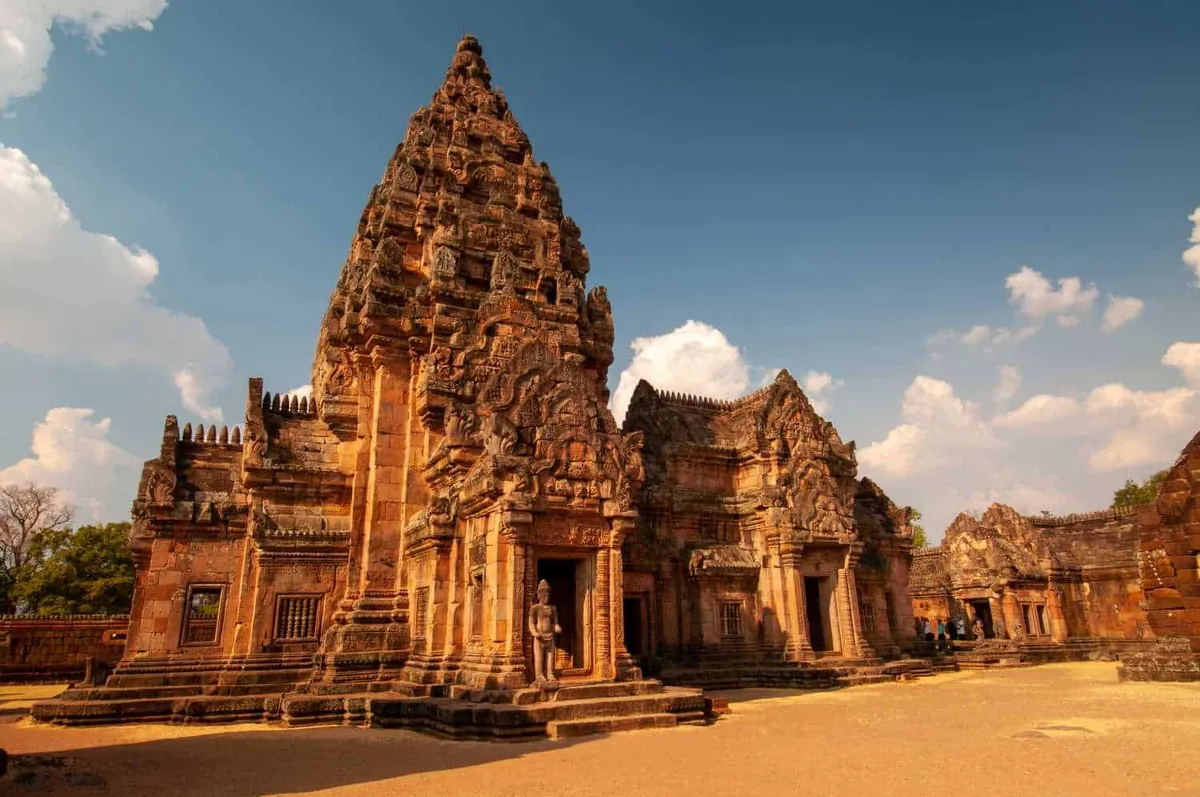
Phanom Rung Historical Park
An 11th-century Khmer temple on top of an extinct volcano — the long ceremonial staircase, the carved lintels, and the alignment with the sunrise at the spring equinox make it one of the best Khmer sites outside Cambodia.

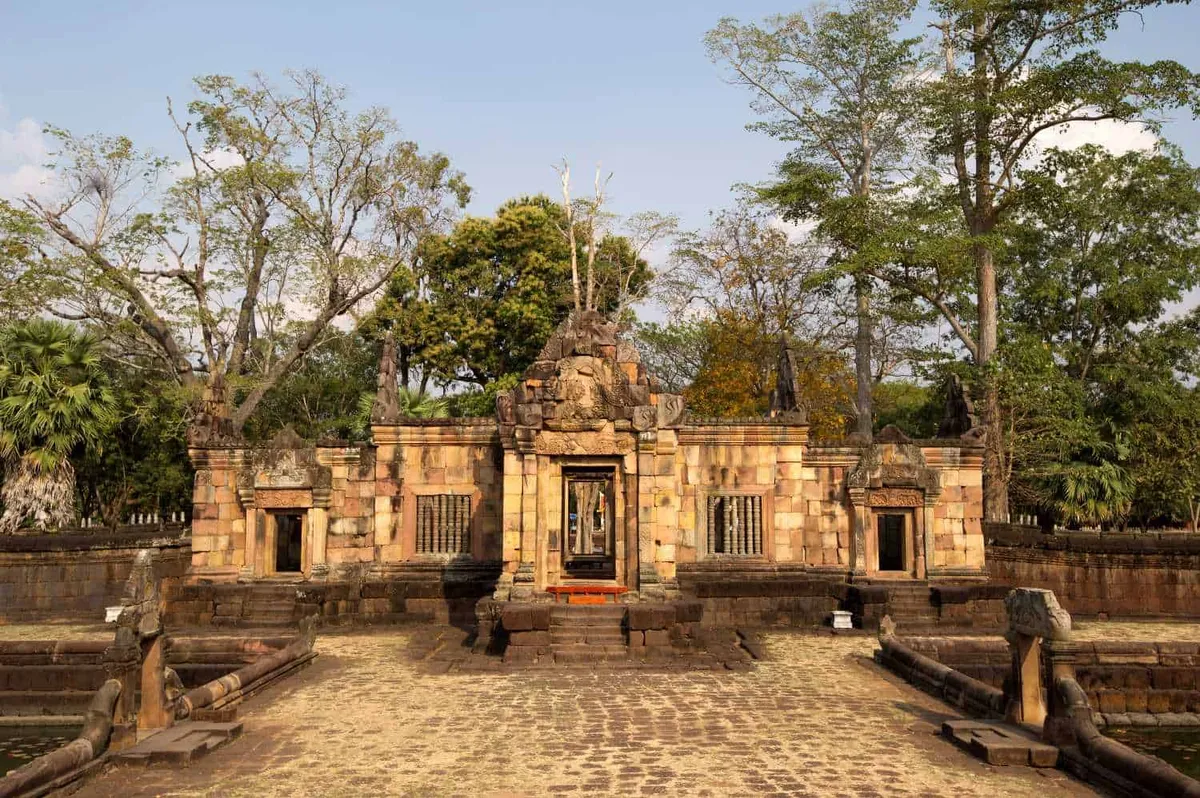
Prasat Hin Mueang Tam
A lower-lying Khmer sanctuary in the rice plains below Phanom Rung — combine both in a day trip. The lotus-pond reflecting pools are intact and the crowds here are a fraction of the hilltop site.

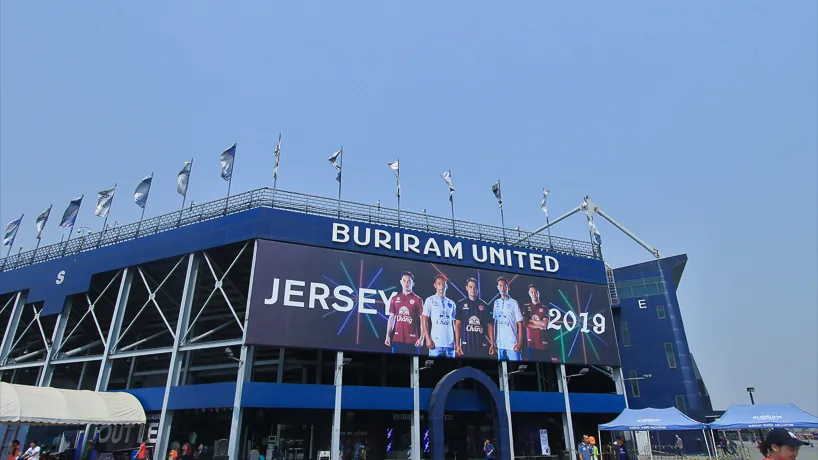
Chang Arena Stadium
Home of Buriram United, Thailand's most successful football club. Match-day atmosphere is among the best in Southeast Asian football — check fixtures and book in advance if your trip overlaps with a home game.

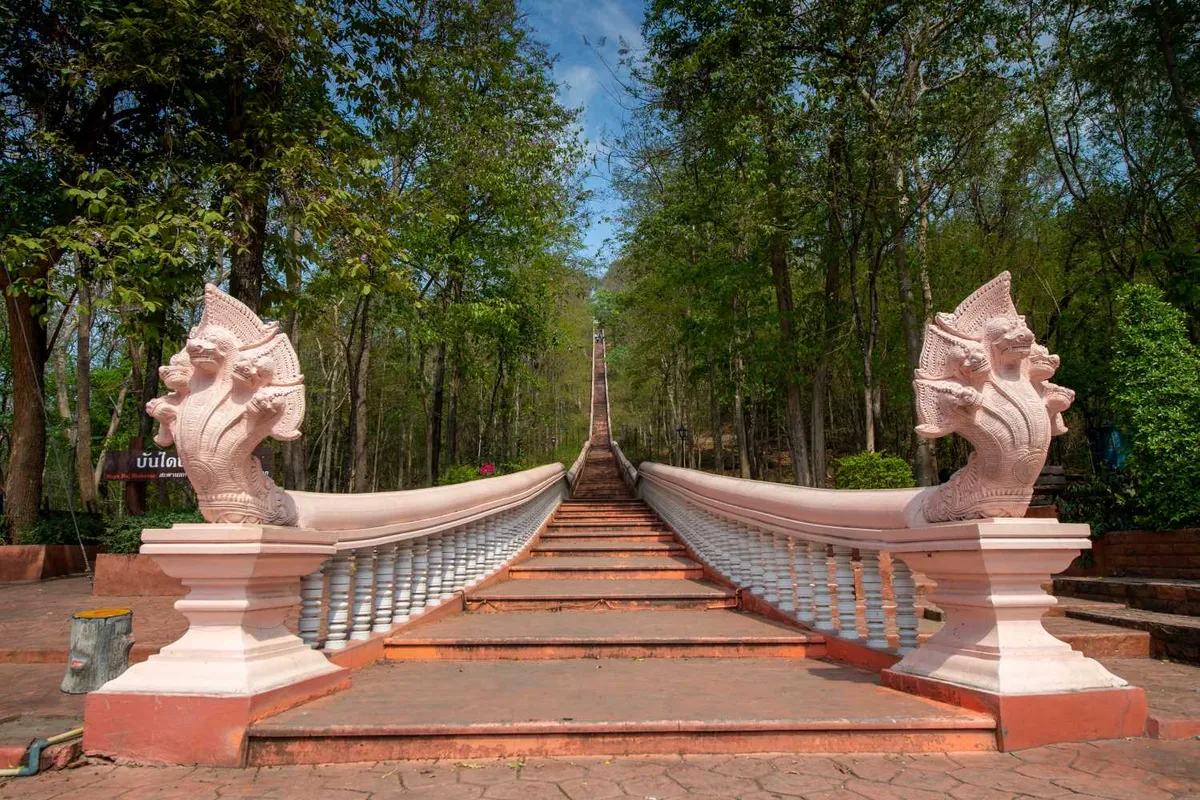
Phukhaofai Kradong Non-Hunting Area
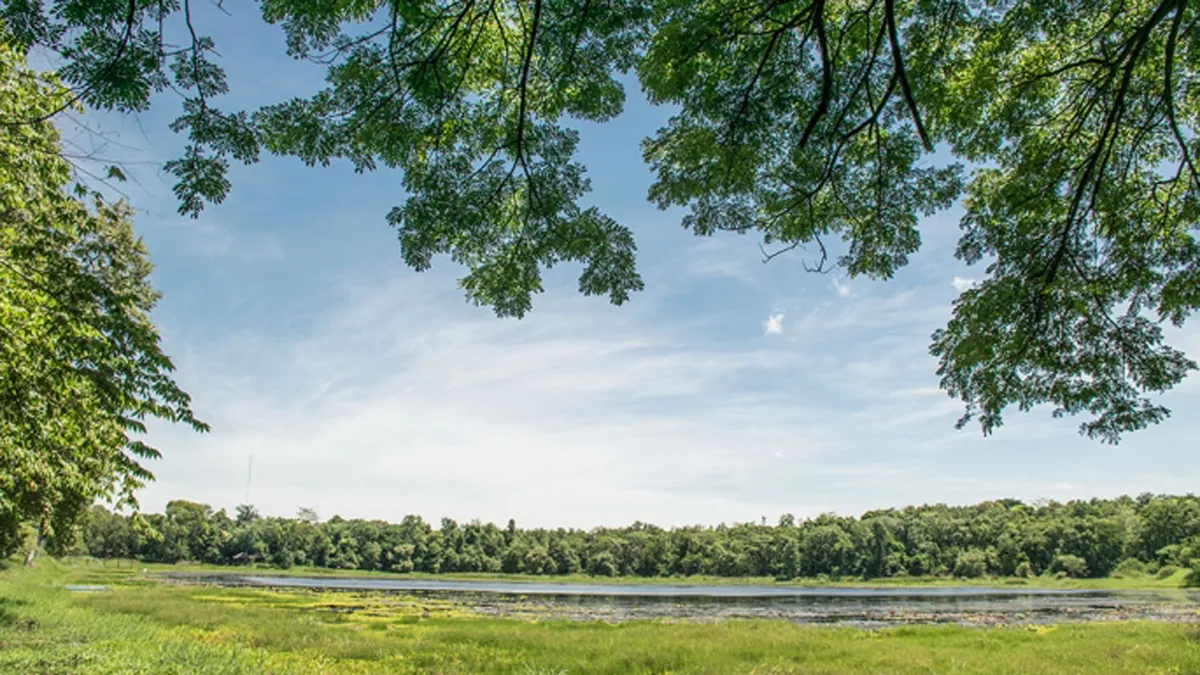
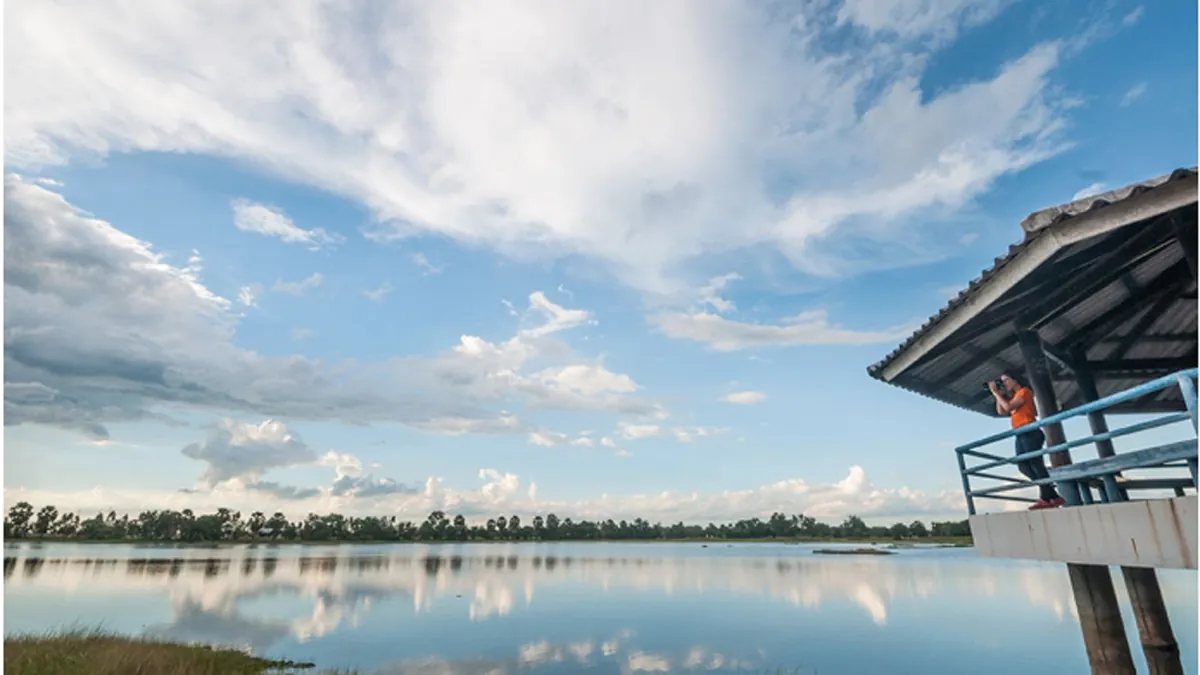
An extinct volcano crater lake on the edge of the city — good walking trails, birdwatching, and a viewpoint over the plains. The pine forests at the rim look out of place for central Thailand.

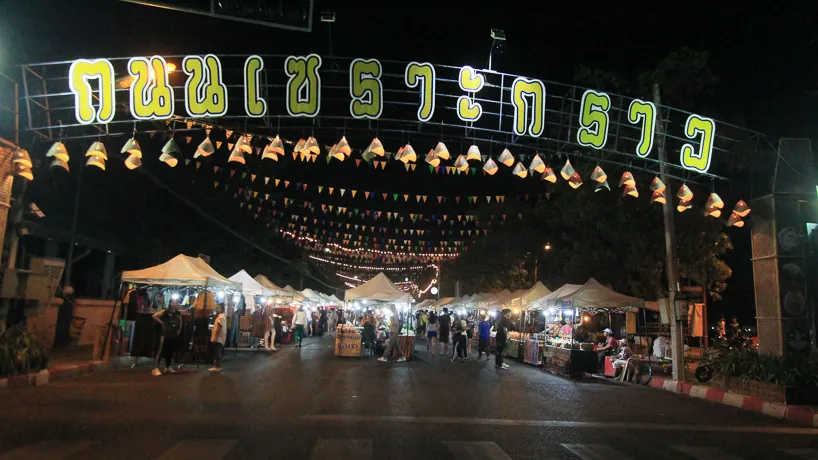
Sro Krao Walking Street
Buriram's Friday–Saturday walking street near the train station — local food, Isan snacks, and an easy evening stroll after a day at the temples.
Get to Buriram
Direct trains from Bangkok's Hua Lamphong run overnight to Buriram — around 5–6 hours. The daytime Sprinter is faster. Hire a driver in town for the Phanom Rung day trip.

eSIM for Thailand
Land with data already working and skip the airport SIM queue. We tested six plans — code THAIHOLIDAY saves 10%.

Travel insurance
Scooters to the temples and hiking the crater rim — sort cover before you go and check the motorbike clause.
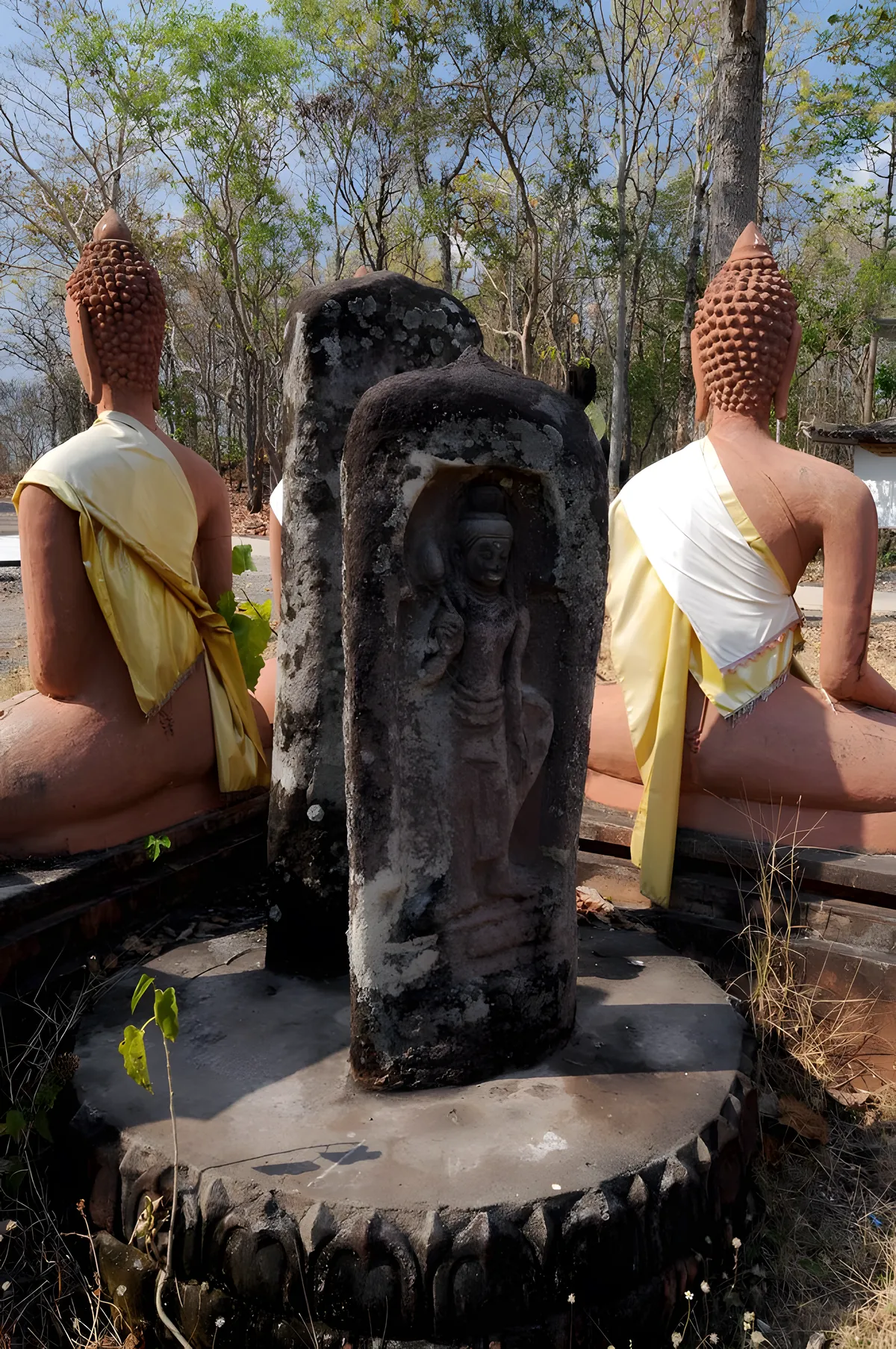
Wats, shrines & spiritual sites
Temples in Buriram

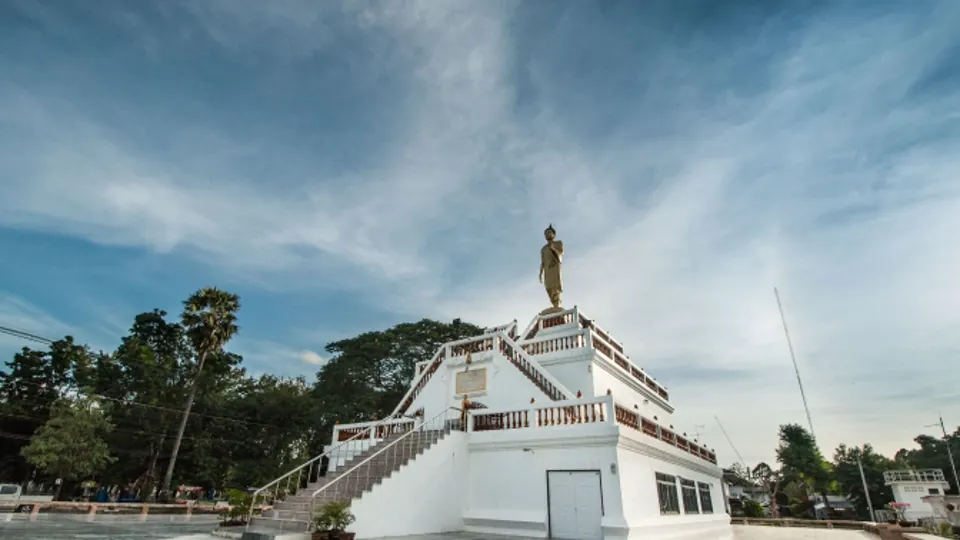
Big Buddha Image (Phra Phuttharup Patima Santayaphirom Satuek Udom Ratnimitmunin)

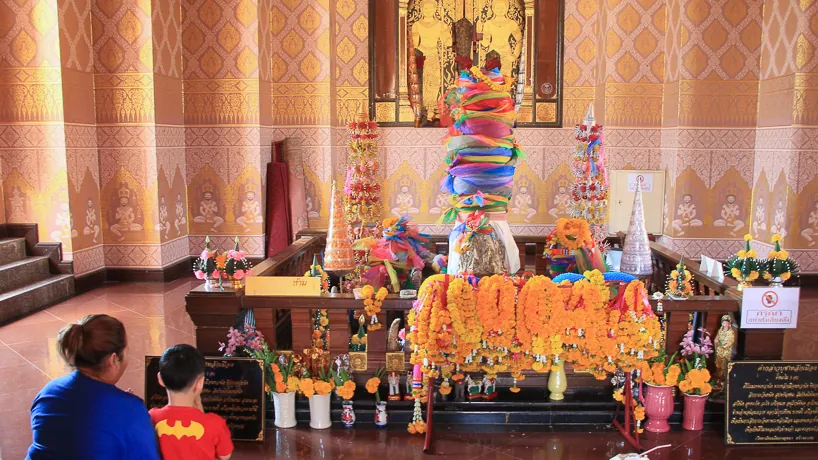
Lak Mueang Shrine, Buri Ram

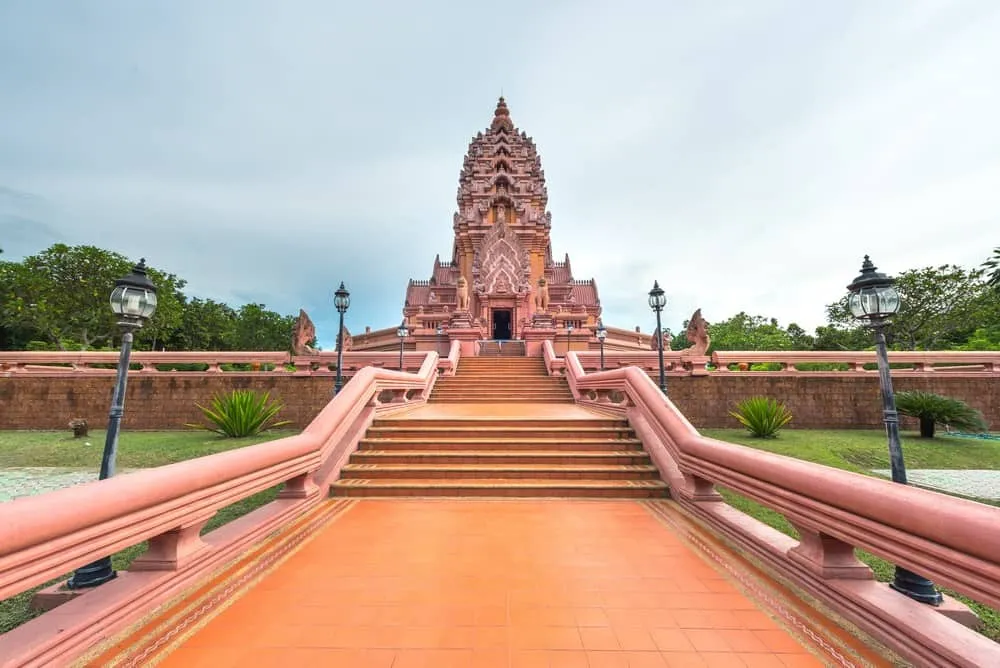
Phra Borommathat Chedi Si Suwachanakhunanuson, Wat Pa Khao Noi

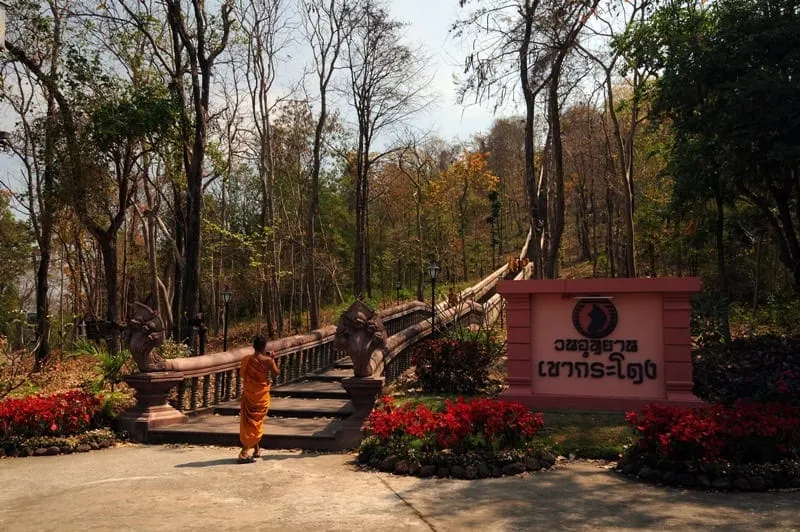
Phra Suphatthara Bophit

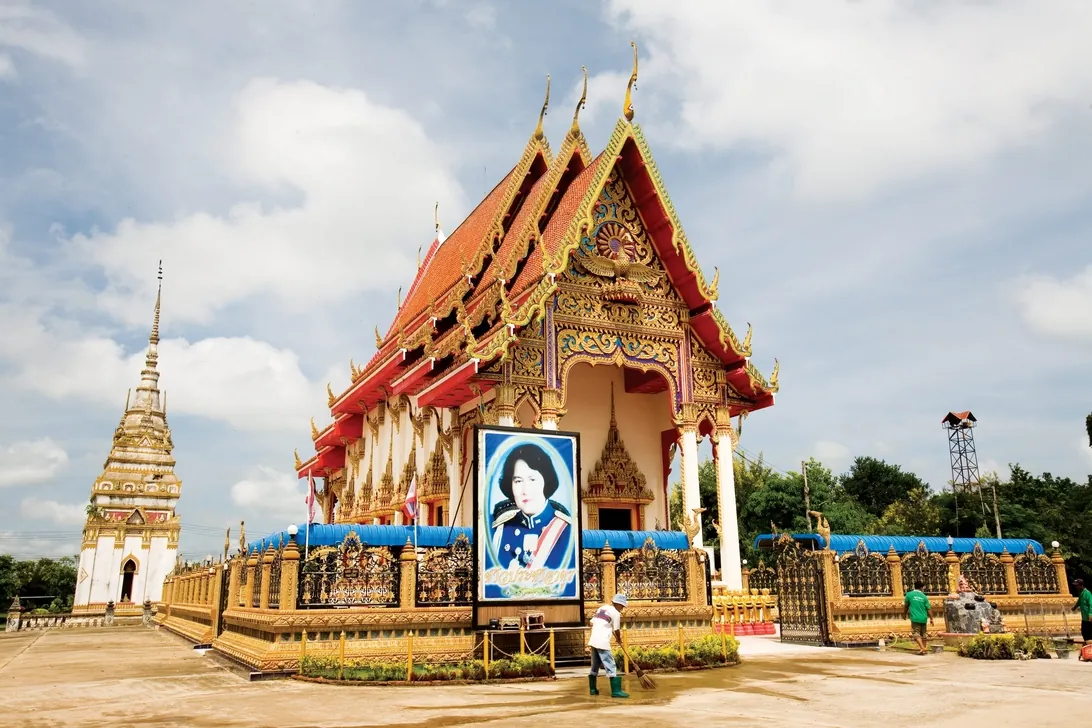
Phrachao Yai Wat Hong

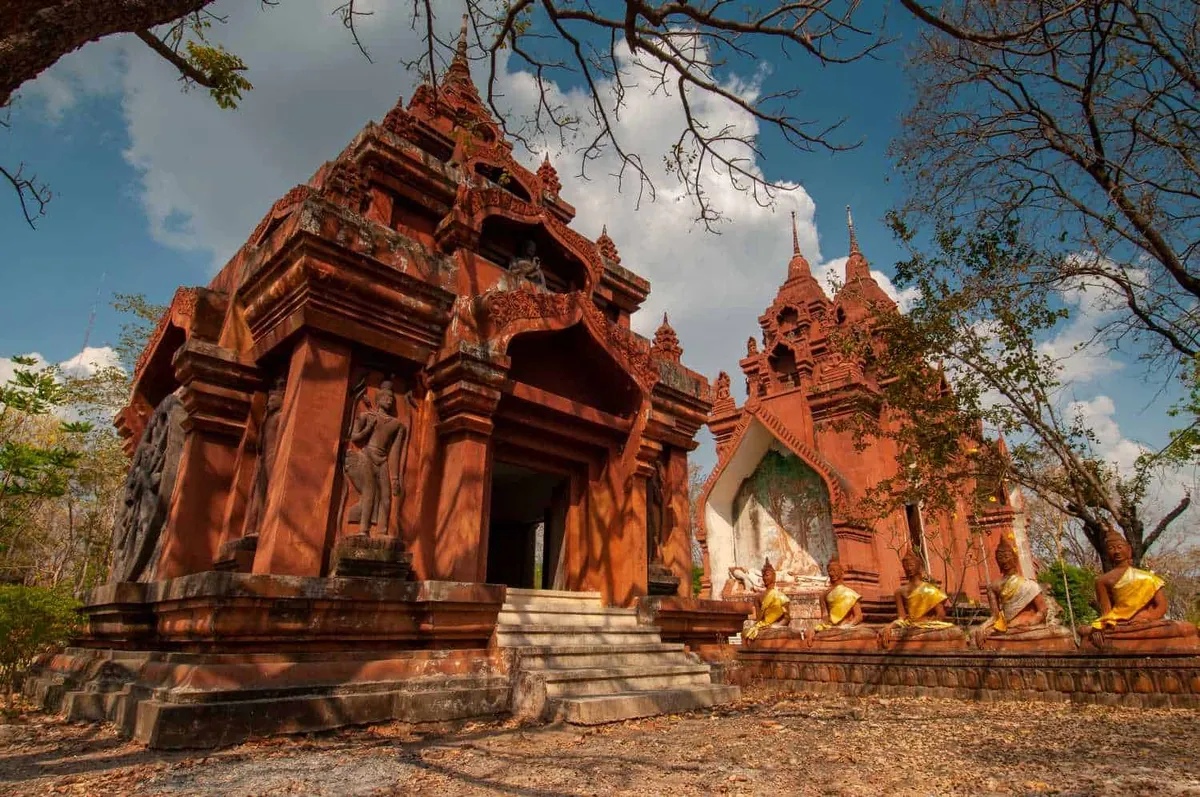
Wat Khao Angkarn

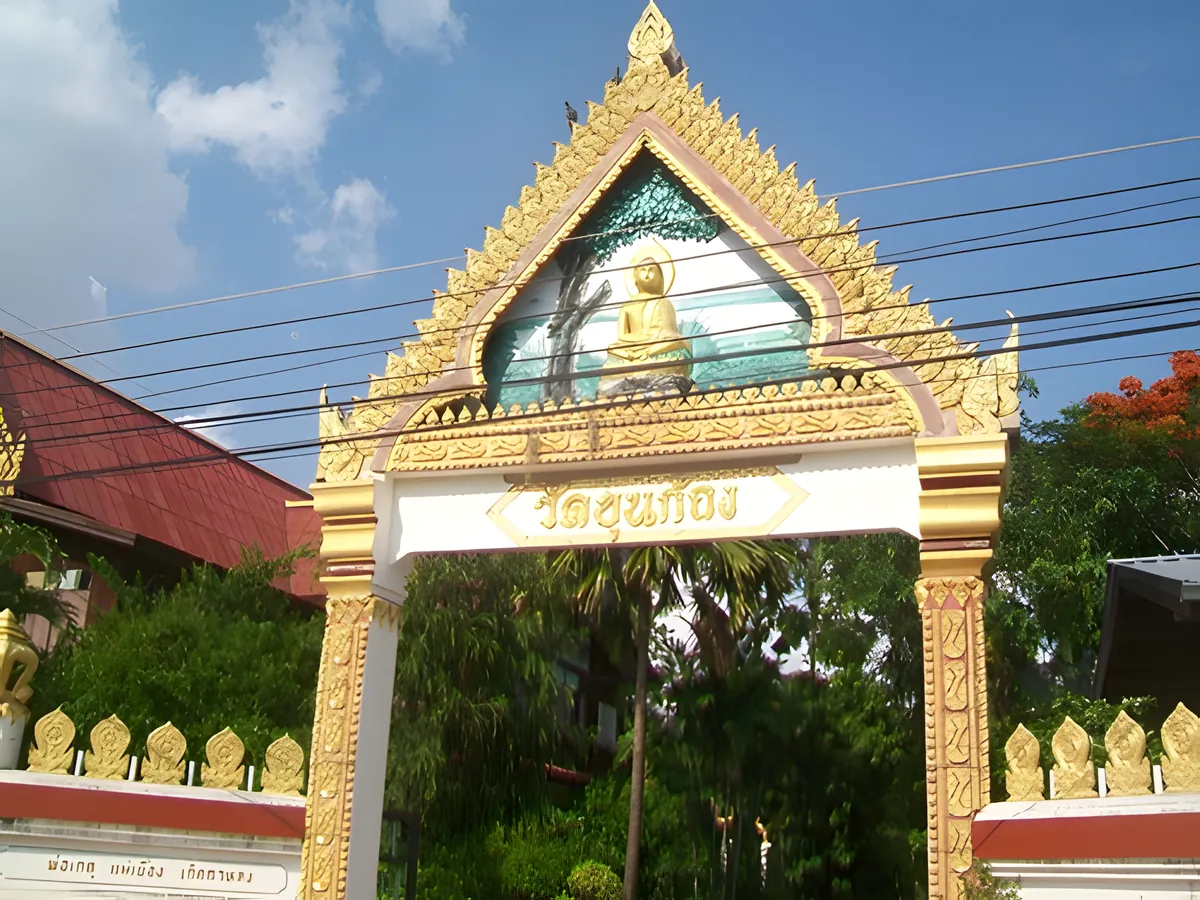
Wat Khun Gong

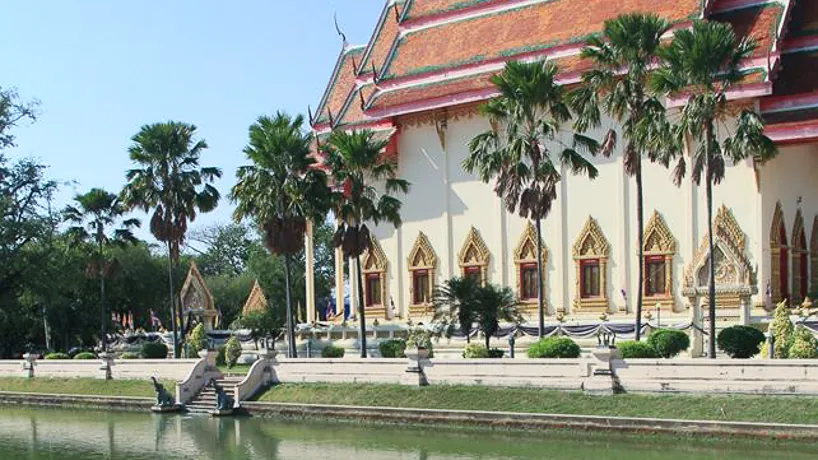
Wat Klang Phra Aram Luang

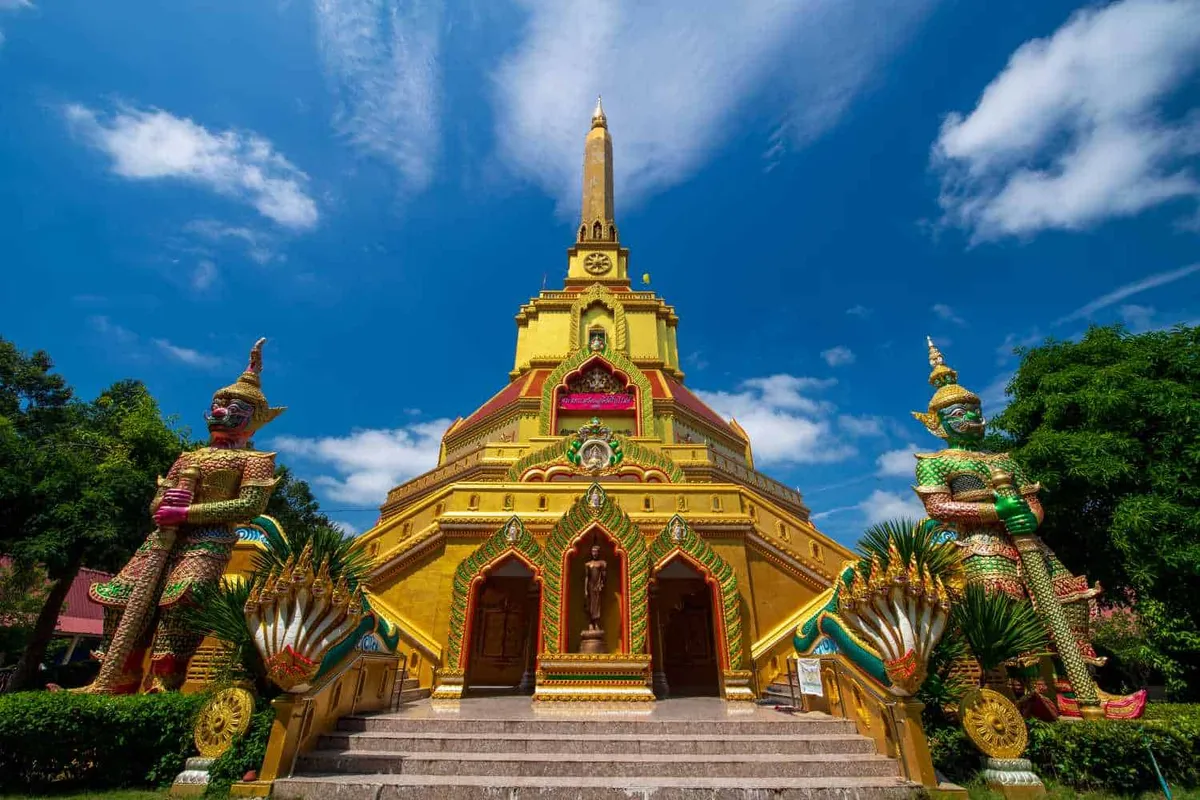
Wat Ko Kaeo Thudongkhasathan or Wat Rahan

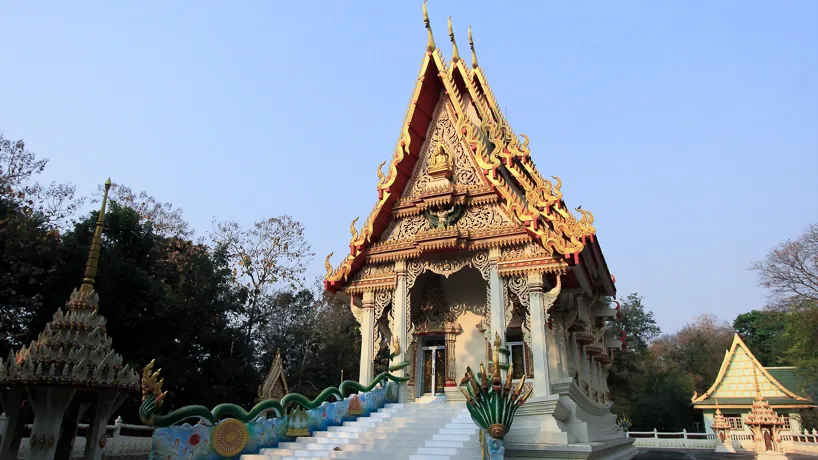
Wat Kradueng Thong
Waterfalls, peaks, caves & parks
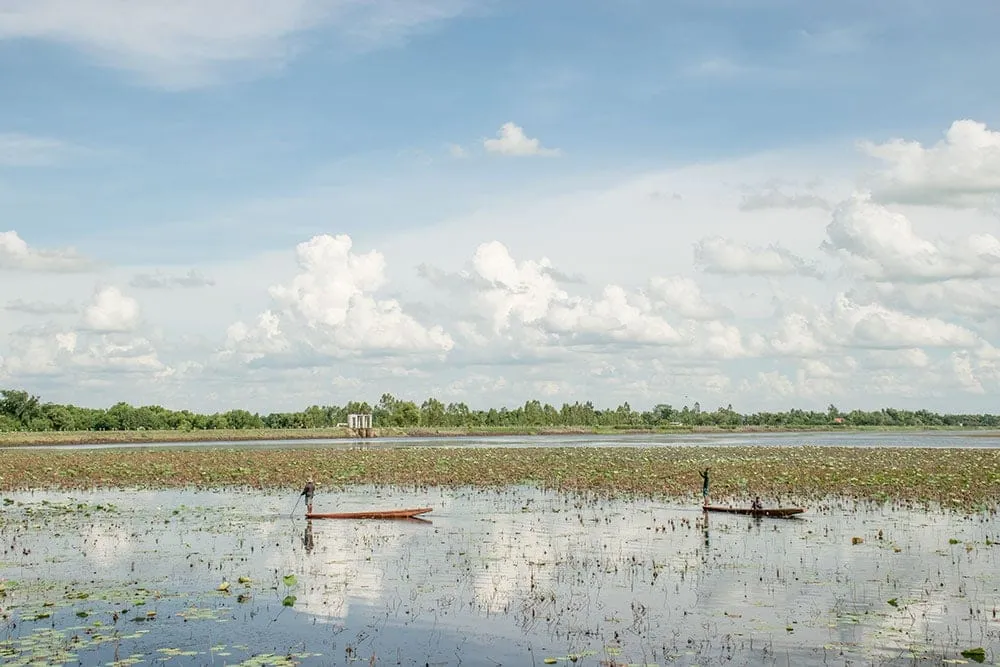
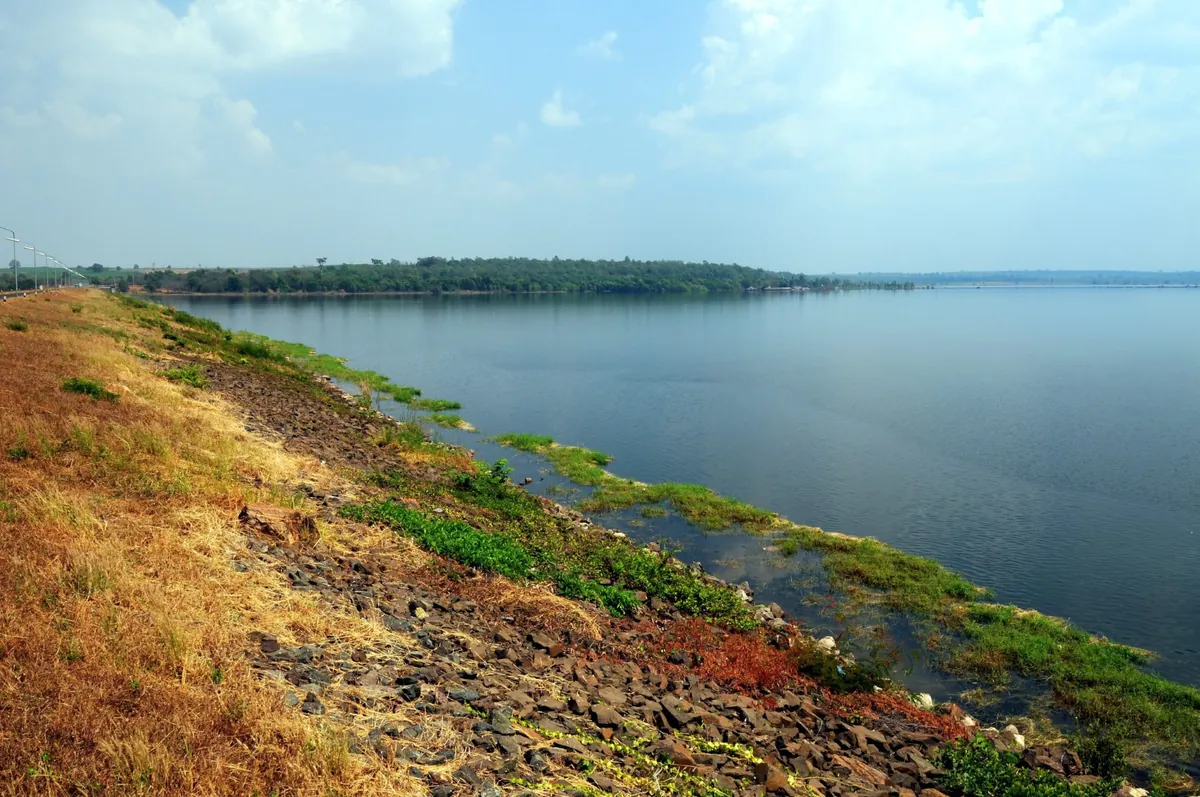
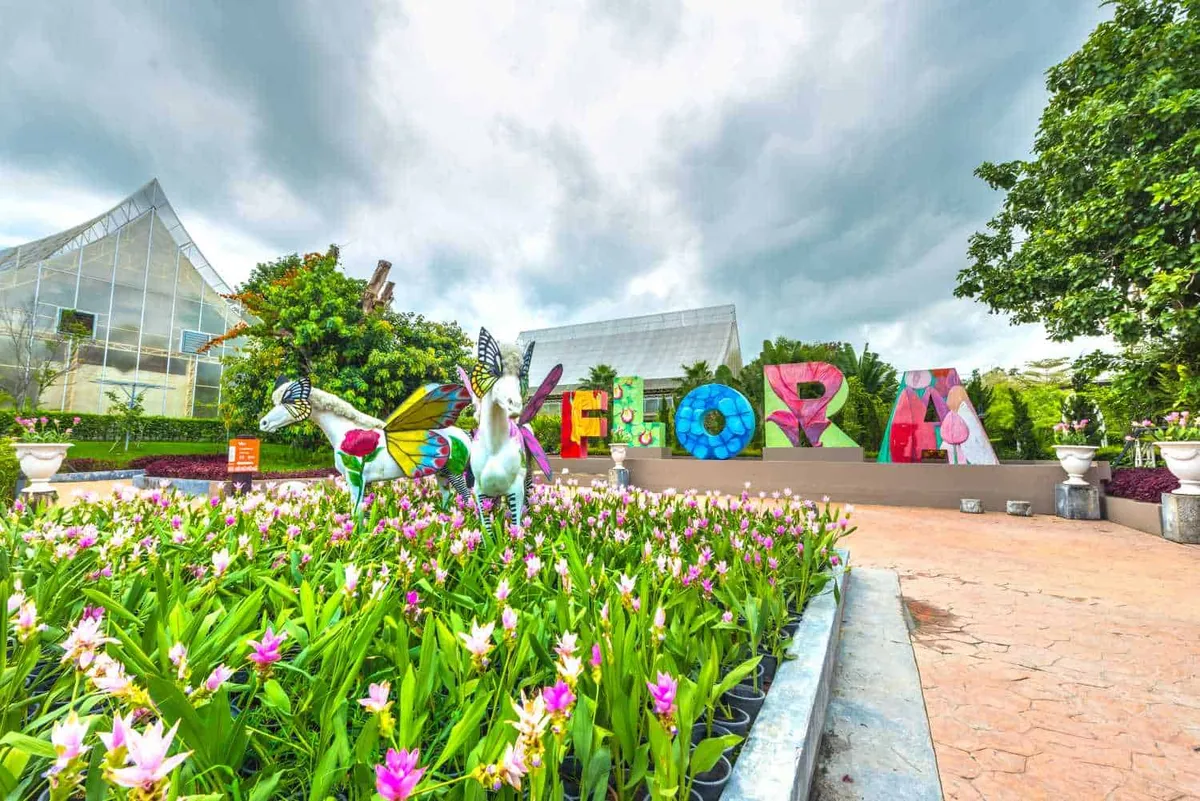
Nature & outdoors around Buriram






Museums, history & heritage
Museums & culture in Buriram












Things to do on the map
Tap a pin for details — 36 places in Buriram plotted.
When to go
Nov–Apr The dry season is the best window for Phanom Rung and the other Khmer sites — cool mornings, clear skies, and manageable temperatures by February and March. The April sunrise alignment (3–5 April) draws crowds to Phanom Rung but is worth planning around.
May–Oct Isan's southwest monsoon season. September is the wettest month with around 270mm. The Khmer ruins are still accessible and look dramatic against storm skies, but dirt roads to some secondary sites can become muddy — a 4WD or motorbike is useful.
Feb–Mar MotoGP race weekend at Chang International Circuit falls in late February to early March — book accommodation well in advance across the whole province.
About Buriram
Last updated September 2026
Overview
Buriram is an Isan province that punches above its weight. Most of Thailand’s northeast is known for temples and rice paddies, but Buriram adds three things that are genuinely unusual: a cluster of Khmer ruins centred on one of the finest temple complexes outside of Cambodia, a football club that has dominated Thai football for over a decade, and a purpose-built motorsport circuit that hosts the MotoGP season opener.
The name บุรีรัมย์ translates as “city of happiness”, and the province sits on the Khorat Plateau about 410 kilometres northeast of Bangkok, bordering Cambodia to the south. The terrain is mostly flat agricultural land, broken by the Phanom Rung volcanic outcrop rising 402 metres from the plain — the remnant of an ancient volcano that the Khmer chose as the site for their most ambitious Thai sanctuary.
The province has roughly 1.5 million residents. Buriram town itself is compact and navigable, with most visitors using it as a base rather than a destination in its own right. The real draws are spread across the southern half of the province, within an hour’s drive of town.
Top Things to Do
Phanom Rung Historical Park is the reason most people come to Buriram, and it justifies the journey entirely. Built on the rim of an extinct volcano between the 10th and 13th centuries, the Khmer sandstone complex was dedicated to Shiva and designed to represent Mount Kailash, his sacred abode. The Department of Fine Arts spent 17 years on restoration before the park opened officially in 1988, and the result is a temple complex in near-complete condition: a long ceremonial processional way, four Naga bridges, a series of galleries, and the main prasat with its intricate carved lintels. Four times a year the sun aligns with all 15 doorways, shooting a beam of light through the entire length of the sanctuary — the two sunrise events fall around 3–5 April and around 7–10 September. The April alignment coincides with the annual Phanom Rung Festival, when the site fills with costumed processions and traditional performances. Outside the festival, the park sees far fewer visitors than its quality deserves.
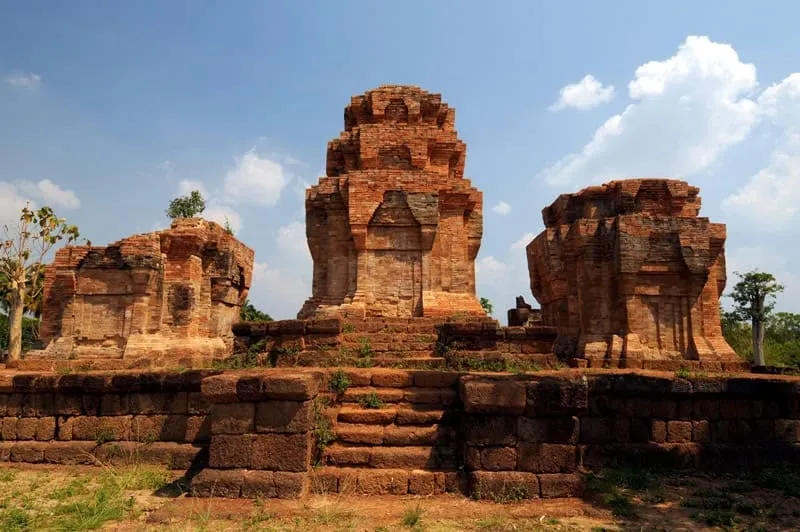
Prasat Hin Mueang Tam is 8 kilometres from Phanom Rung on the same road and belongs on any itinerary that includes the main complex. Built in the late 10th to early 11th centuries in the Khleang and Baphuon styles, Mueang Tam sits lower and quieter than its neighbour. The plan is centred on five sandstone towers surrounded by two enclosing walls, with four L-shaped ponds at the corners — each edged with stone nagas — creating a moat-like enclosure that makes the towers appear to float. It was dedicated to Shiva and stood on the ancient route between Angkor Thom and Phimai. Restoration used the anastylosis method from 1997. The site is rarely crowded even on weekends.
Chang Arena and Buriram United offer a different kind of pilgrimage. Buriram United is the most decorated club in Thai football history, with 12 Thai League 1 titles and a habit of winning domestic trebles. Their 32,600-seat stadium — Chang Arena, nicknamed Thunder Castle — is the largest club-owned stadium in the country. The club runs stadium tours and the football museum, and a match ticket (the team competes in Asian club competitions as well as the domestic league) is one of the most atmospheric sporting events in the region outside of a major tournament. Check the fixture list when planning — home matches bring the province to life.
Chang International Circuit hosts the MotoGP Thailand Grand Prix as the traditional season opener, typically held in late February or early March. The circuit is a 30-minute drive from Buriram town and welcome visitors for non-race events throughout the year — karting, track days, and the indoor attractions at the Chang International Circuit complex. Race weekend accommodation across the entire province sells out months in advance; book early or consider basing yourself in Nakhon Ratchasima (Korat), about two hours away.
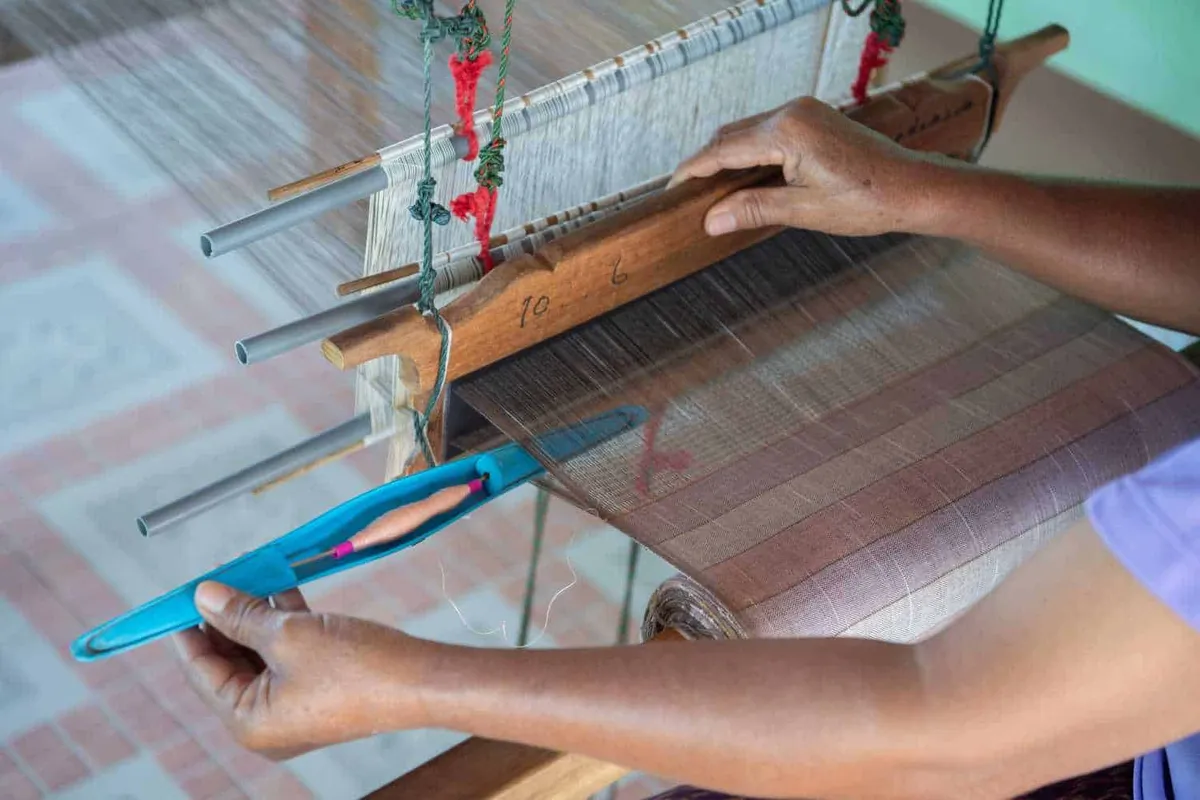
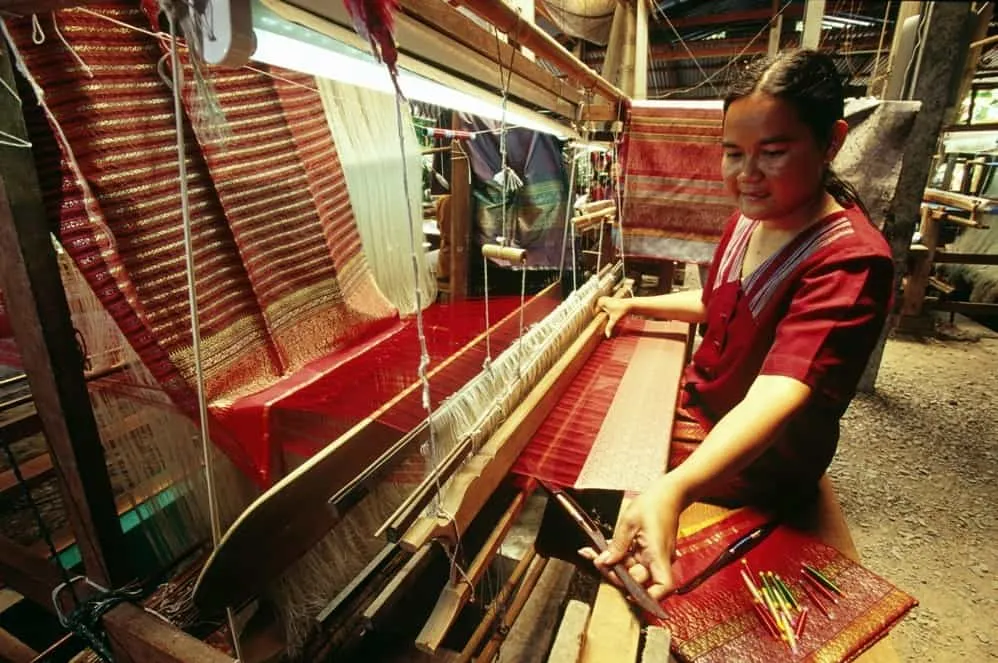
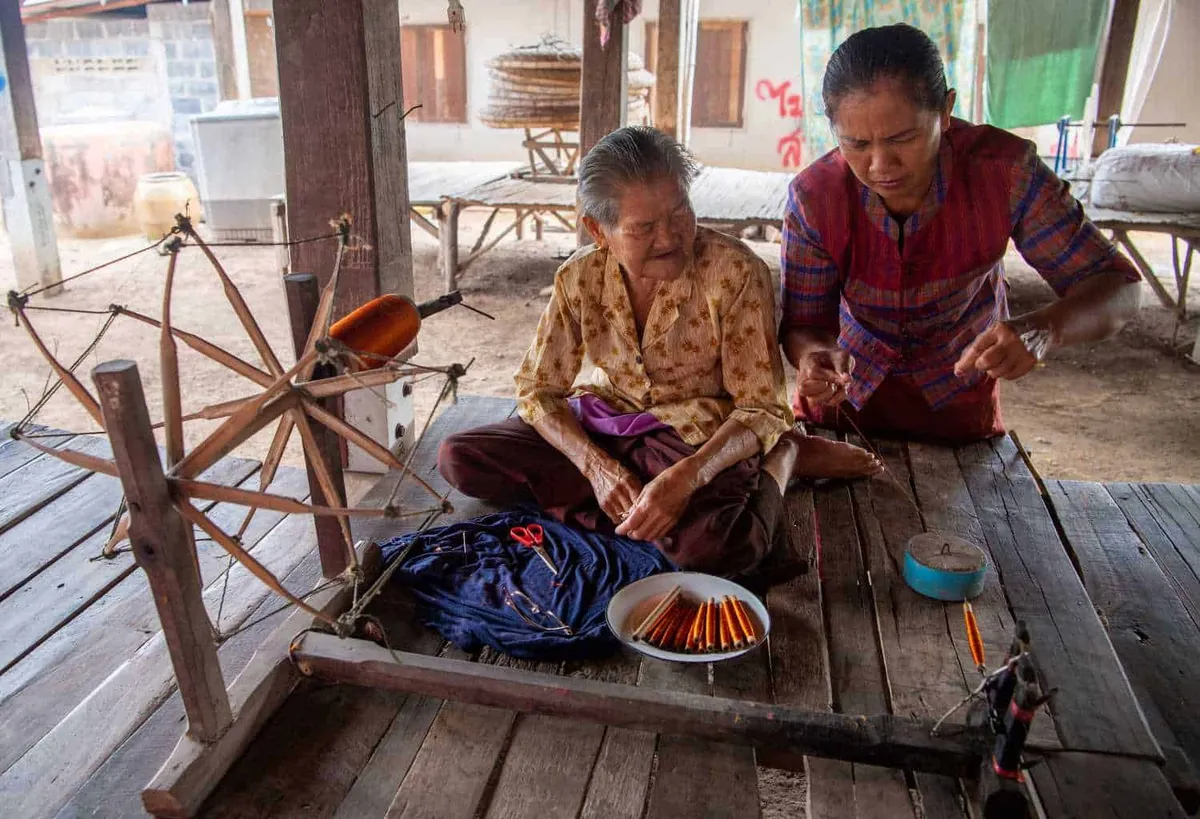
Silk weaving in Na Pho district is worth a half-day. The Baan Na Pho Weavers Collective has grown to nearly 900 members across 17 communities and exports mudmee ikat silk internationally. The mudmee technique resist-dyes threads before weaving — bundled threads are bound at precise intervals, dyed in vats using natural materials (indigo for blues, jackfruit heartwood for yellows, lac for reds), then woven on traditional looms to produce cloth with subtle colour gradations that machine production cannot replicate. You can visit workshops, watch the weaving process, and buy direct. Na Pho is about 45 kilometres north of Buriram town.
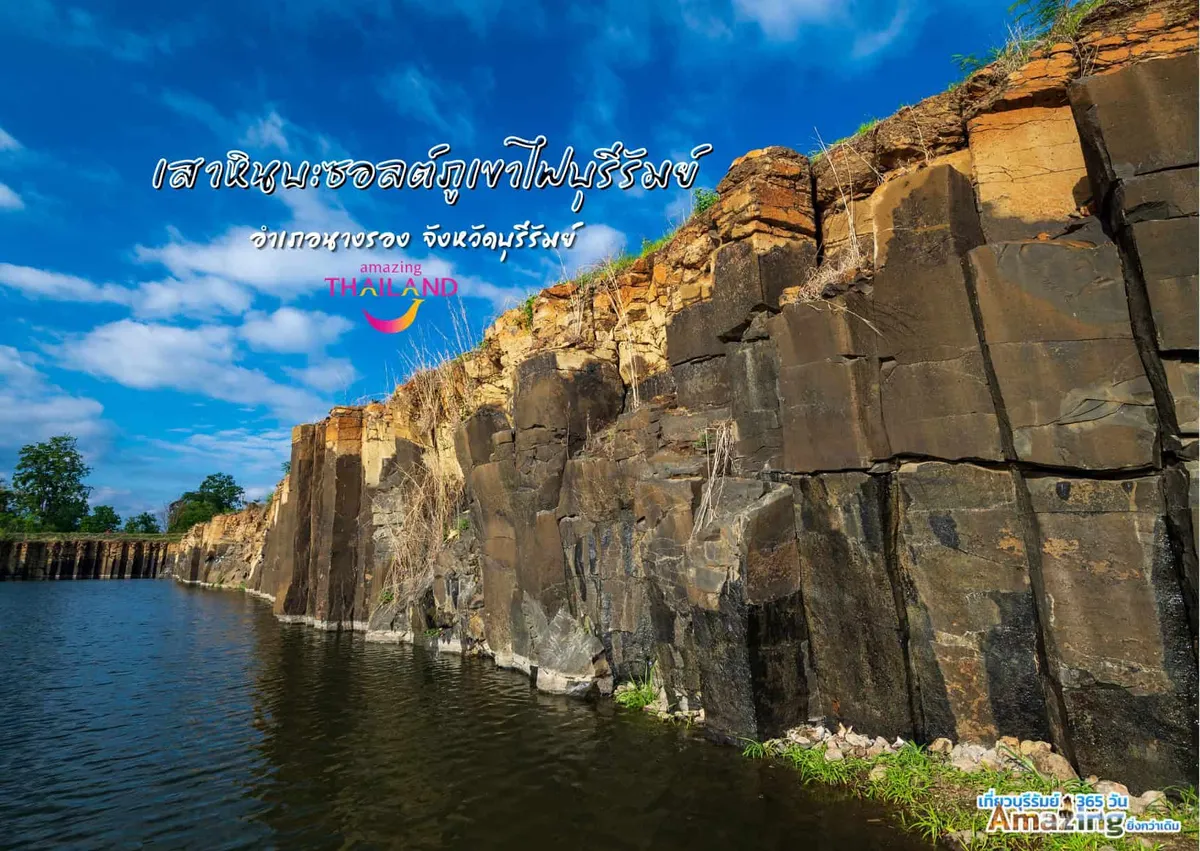
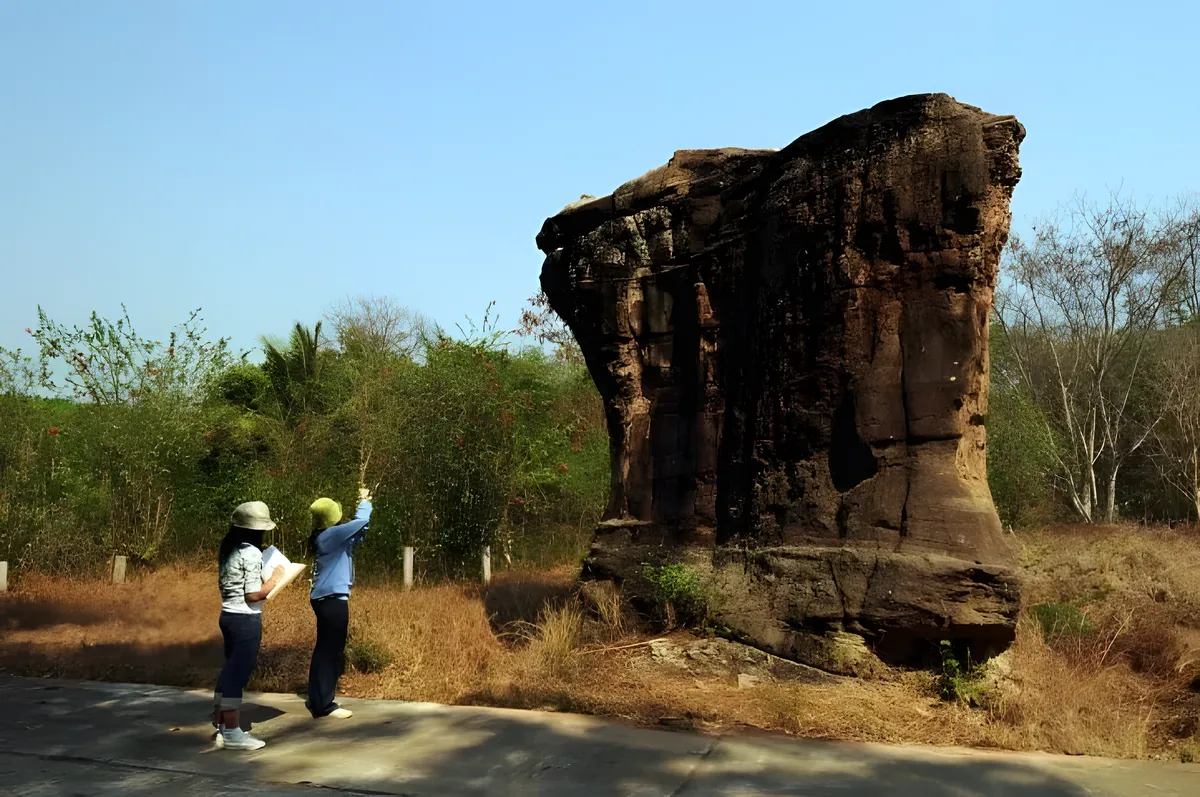
Khao Angkhan is a sandstone outcrop south of town with a hilltop temple complex that includes a satellite dish-shaped mondop and broad views over the plateau toward Cambodia on clear days. The basalt columns at Buri Ram Columnar Basalt (Laeng Hin Tat) — a geological curiosity where hexagonal basalt pillars formed by ancient lava cooling — are a short drive from the Phanom Rung area and take perhaps 20 minutes to walk around.
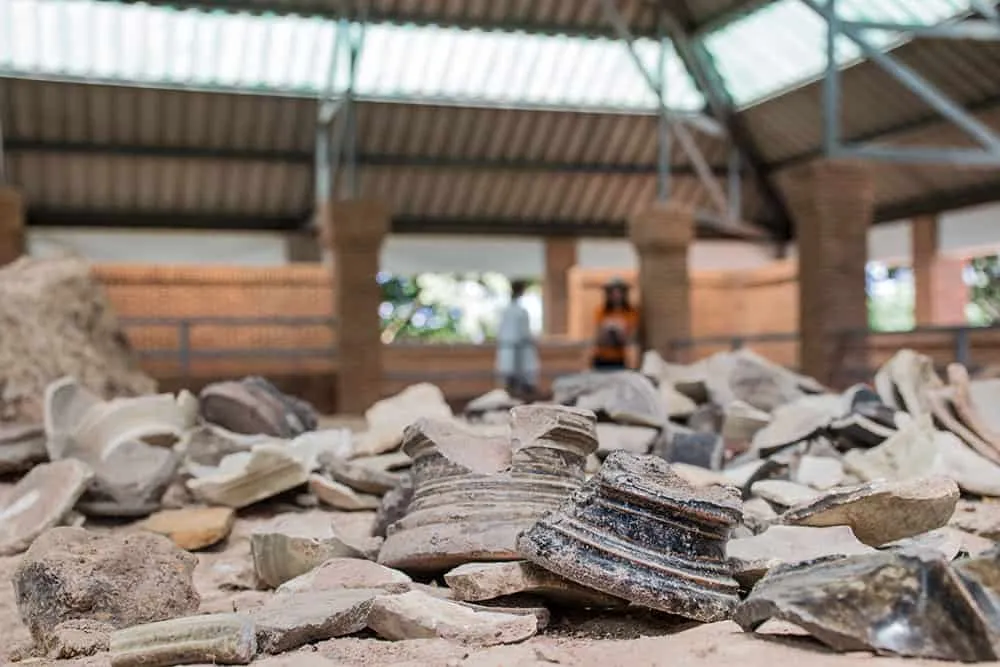
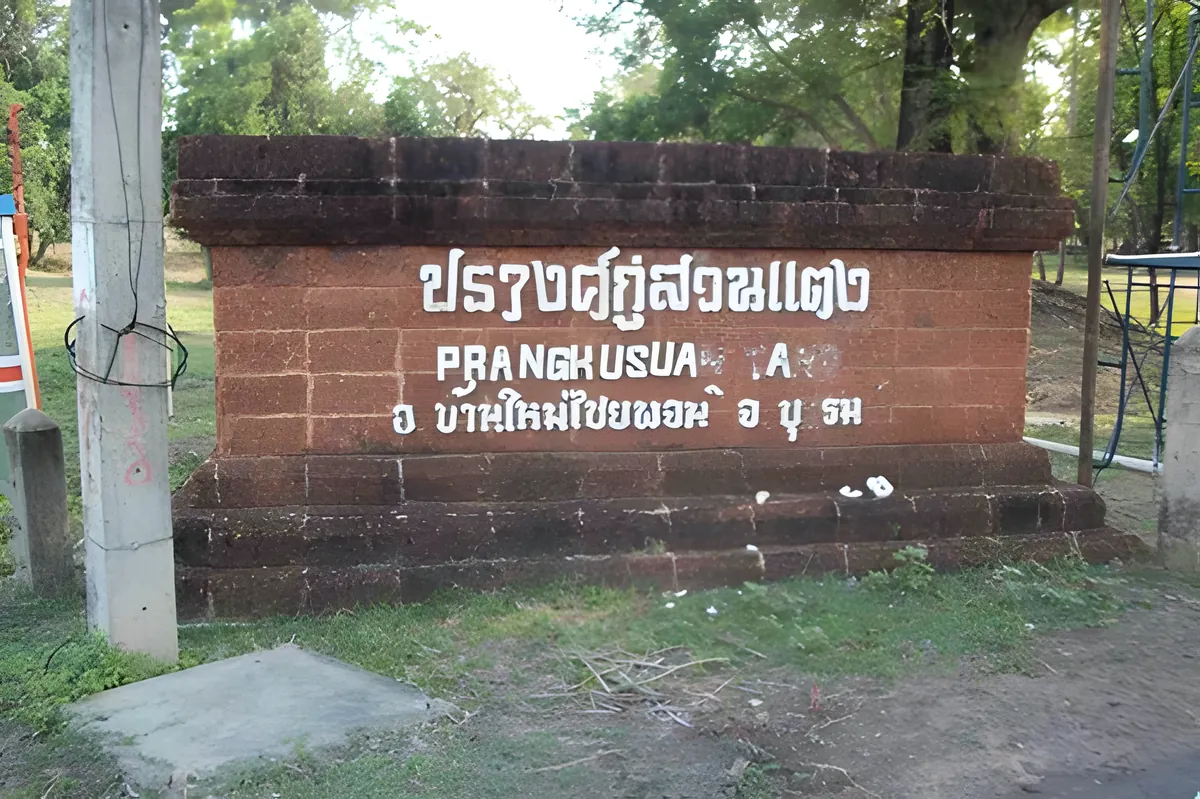
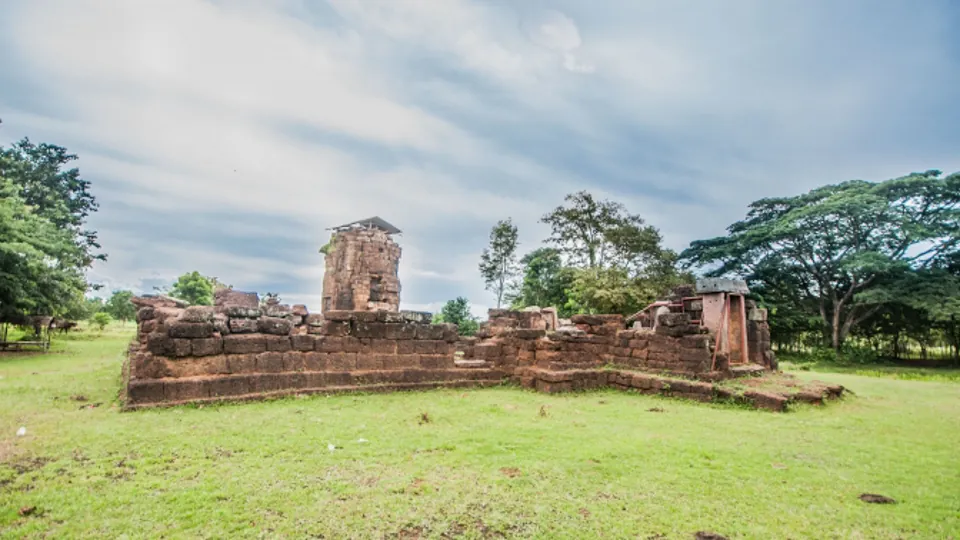
Prang Ku Suan Taeng is a smaller Khmer sanctuary in Suan Taeng district, for visitors who want to see how the temples thin out toward the provincial edges. Less restored than the main sites, it gives a clearer sense of what the excavation process looks like before anastylosis.
Where to Stay
Buriram town has grown considerably in accommodation options over the past decade, largely driven by Chang Arena match days and MotoGP weekends. Mid-range hotels and boutique properties have appeared alongside the standard Thai guesthouse tier. Modena by Fraser opened as one of the more polished options. For MotoGP weekends, book four to six months ahead — the town’s inventory clears quickly.
For Phanom Rung visits, staying closer to the Chaloem Phra Kiat district cuts the daily drive. A small number of guesthouses and homestays operate near Nang Rong town, which is the nearest service centre to the temple complex.
Budget travellers will find clean rooms at Thai guesthouses near the railway station in Buriram town; the price point is significantly lower than equivalent options in Chiang Mai or Bangkok.
Getting There
By train: Trains from Krung Thep Aphiwat Central Terminal on the northeastern line stop at Buriram station in around six to seven hours. An overnight sleeper is comfortable and drops you in town early. Trains continue to Surin and Si Saket if you’re doing a wider Isan circuit.
By bus: Long-distance buses from Bangkok’s Mo Chit Northern Bus Terminal reach Buriram in five to six hours. Nakhon Ratchasima (Korat) is a useful midpoint hub — you can change there for Buriram or continue directly.
By air: Thai AirAsia runs regular flights from Don Mueang and Suvarnabhumi to Buriram Airport (BFV), roughly one hour. The airport is a few kilometres from town. This is the fastest option if you’re travelling purely for the main sights and time is limited.
Getting around: Phanom Rung is 65 kilometres south of town and has no direct public bus connection — hire a car, motorbike, or arrange a driver from town for the day. Prasat Hin Mueang Tam is 8 kilometres further on the same road. The town circuit (Chang Arena, Lak Mueang, markets) is walkable or easily covered by songthaew and tuk-tuk.
Best Time to Visit
Buriram follows the standard Isan pattern. The dry season runs November through April, with cool mornings from November to February before temperatures climb through March and April. September is the wettest month, averaging around 270mm of rain.
The April window (roughly the first two weeks) is the peak cultural period: the 3–5 April sunrise alignment at Phanom Rung draws respectful crowds and the festival adds atmosphere without overwhelming the site. Combine this with Songkran (13–15 April) if you want the full Isan hot-season experience.
The February–March MotoGP weekend is a different kind of peak entirely — the province fills with motorsport fans from across Asia and prices rise sharply. Outside of race weekend, the cool-season months are quiet and pleasant.
The wet season (May–October) is not a reason to avoid Buriram. The Khmer ruins look extraordinary in stormy light, afternoon rains usually clear by evening, and accommodation prices drop. September and October are the most unpredictable months for road conditions to secondary sites.
Frequently Asked Questions about Buriram
How do I get to Buriram from Bangkok?
When is the best time to visit Buriram?
How long do you need in Buriram?
How do I get around Buriram province?
What is the sunrise alignment at Phanom Rung?
Spotted something out of date or incorrect? Let us know
Plan your
Buriram trip