

Sa Morakot Archaeological Site
กลุ่มโบราณสถานสระมรกต
Sa Morakot Archaeological Site centers on two things: a large ancient reservoir and a pair of Buddha footprint carvings that researchers consider the oldest found anywhere in Thailand. The footprints are cut directly into natural laterite bedrock, dated to somewhere between the 6th and 11th centuries CE on Dvaravati-Lopburi stylistic grounds, and were only properly excavated and identified in 1986 — making this one of Prachin Buri’s more recent archaeological discoveries rather than a long-known monument.
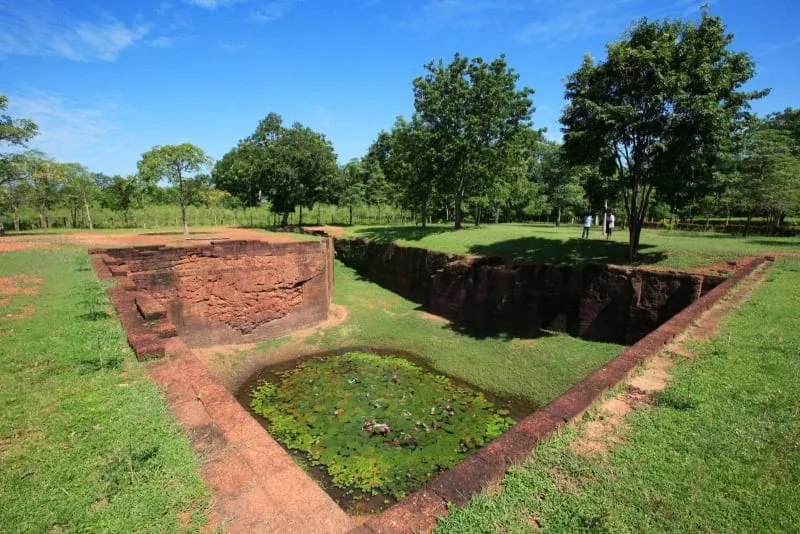
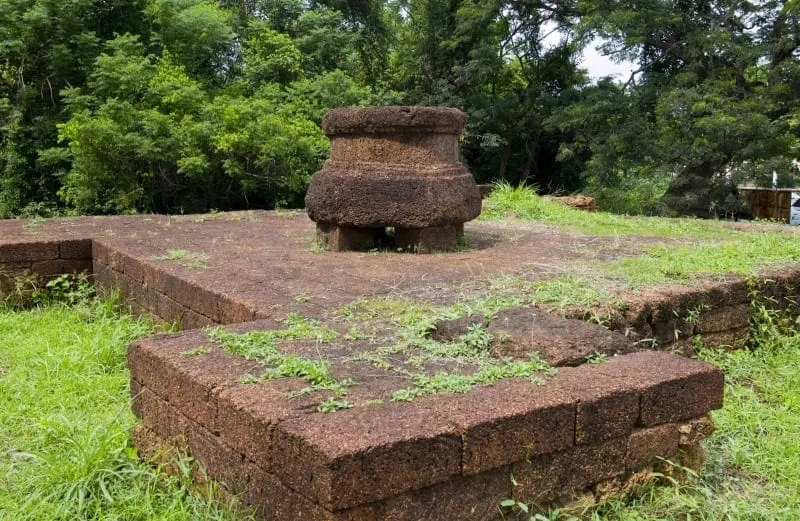
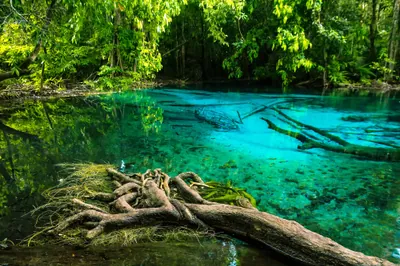
The site’s name, meaning “Emerald Pool,” comes from a rectangular ancient reservoir roughly 115 by 214 metres that anchors the complex — a scale that hints at a substantial religious settlement rather than a single isolated shrine. Construction here happened in overlapping phases from around the 8th through the 13th century CE, reflecting Dvaravati and Khmer-influenced building traditions layered on top of each other over five centuries, which is why the ruins read less as one coherent temple and more as the accumulated footprint of a community that kept building on the same ground. Around the pond, stone foundations, scattered laterite blocks, and worn carved fragments are what remain of the structures that once stood here; walking the grounds now means picking through low walls and column bases rather than intact buildings.
The twin footprints themselves are the site’s centerpiece: two carved impressions inside a circular border, each with a dharma wheel motif at the center of the sole, protected under a modern shelter near the main pond. They’re the reason a Magha Puja pilgrimage circuit (“Makha Purami Sri Prachin”) now runs through the site each year, drawing Buddhist visitors specifically to pay respects at the footprints rather than to tour the ruins generally.
Watch out: There’s minimal shade across the site, and the ground between the ruin clusters is uneven laterite and packed earth — comfortable closed shoes matter more here than at a paved historical park.
Few visitors make it out this way compared to Prachin Buri’s better-known stops, which means you can walk the pond’s perimeter and the footprint shelter without competing for space or photos. That quiet is the trade-off for limited signage in English and no on-site facilities beyond basic parking, so this suits travelers comfortable doing a bit of their own reading beforehand rather than expecting a guided-museum experience.
Insider Tip: Pair the visit with Si Mahosot Ancient Town nearby — it’s the wider Dvaravati-era settlement that Sa Morakot’s reservoir and footprints belonged to, and seeing both in one trip makes more sense of the scale of what was here.
Getting to Sa Morakot means driving to Khok Pip subdistrict in Si Mahosot district; there’s no direct public transport, so a private car, motorbike, or a tour arranged from Prachin Buri town is the realistic way in. Bring water and sun protection, since the open ground offers little cover in the middle of the day.
- Highlight: Twin Buddha footprint carvings, believed the oldest in Thailand, dated 6th-11th century CE, found 1986
- Site: Ancient reservoir ~115m x 214m plus scattered Dvaravati/Khmer-era ruin foundations, built up 8th-13th century CE
- Entry: Free, daily 09:00-16:00
- Access: Khok Pip subdistrict, Si Mahosot district — private transport needed
- Nearby: Si Mahosot Ancient Town, Ton Pho Si Maha Pho (the Great Bodhi Tree)
Location & Directions
Si Mahosot, Prachin Buri
Prachin Buri, Thailand
Show your taxi or Grab driver
กลุ่มโบราณสถานสระมรกต
Frequently Asked Questions
What makes Sa Morakot significant?
Is Sa Morakot a Khmer temple like Angkor?
How much time do you need?
Is there an entry fee?
How do you get there?
Spotted something out of date or incorrect? Let us know
Stay Near Sa Morakot Archaeological Site
Live prices for places closest to Sa Morakot Archaeological Site — tap a pin to compare.