

San Ta Pha Daeng
ศาลตาผาแดง
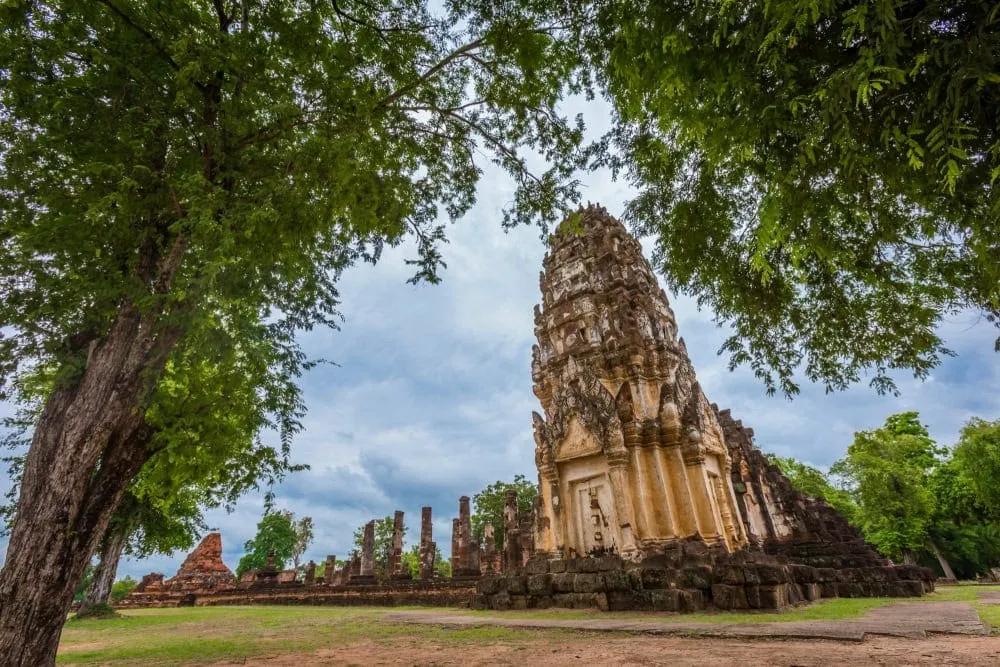
San Ta Pha Daeng is the oldest of the handful of Khmer-style monuments still standing inside Sukhothai Historical Park’s Central Zone — a single laterite prang built as a Hindu shrine in the Bayon style associated with the Angkorian king Jayavarman VII, likely in the late 12th or early 13th century, decades before the Sukhothai kingdom itself took shape here. It’s easy to mistake it for one of the surrounding Buddhist wats; it isn’t one.
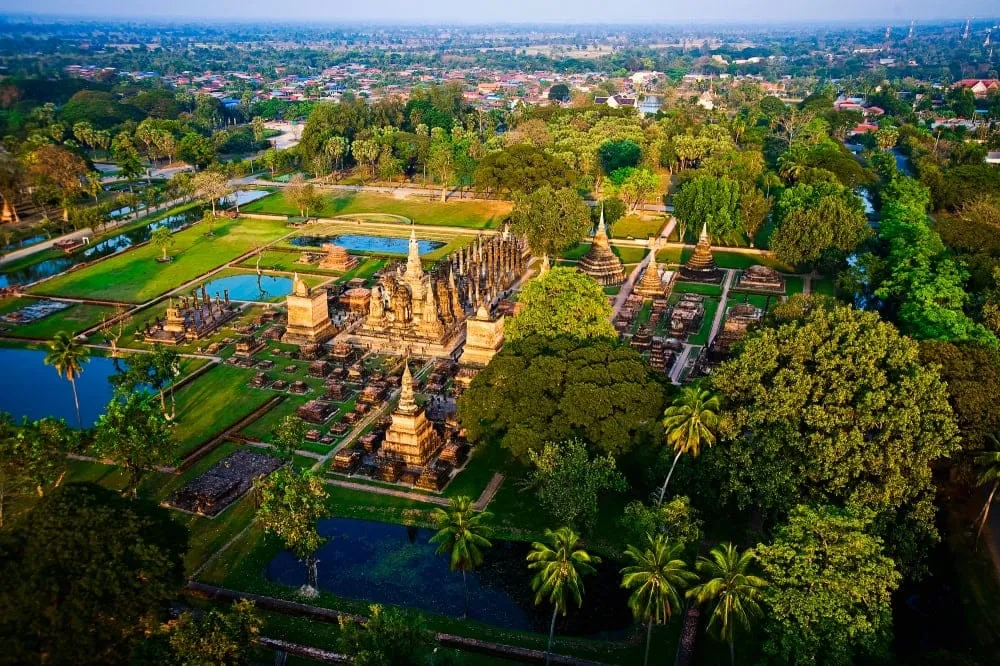
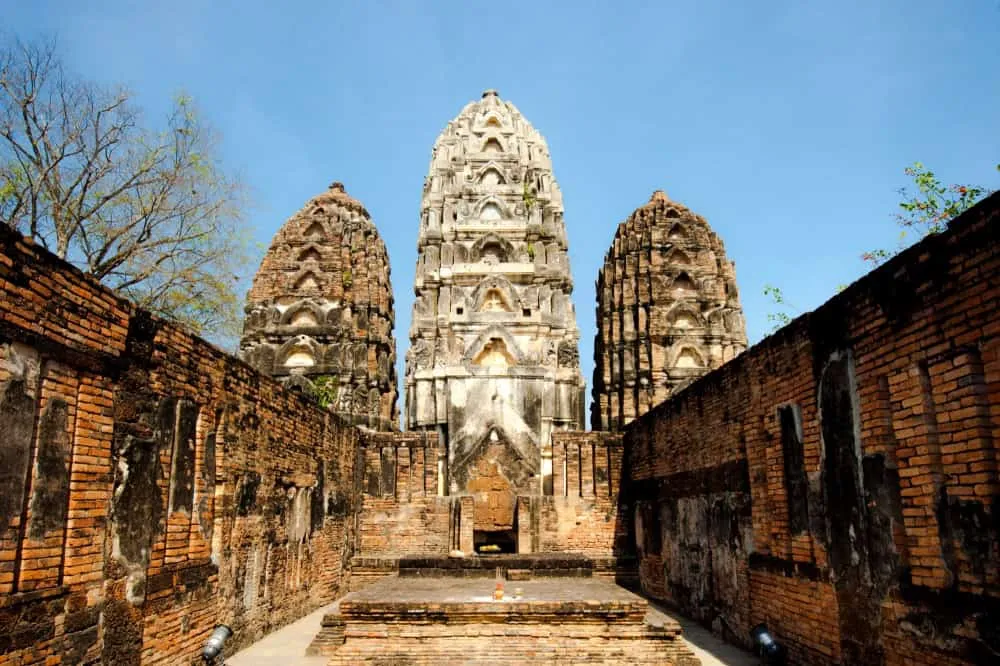
The shrine sits just inside the old city wall, in the northeast corner beside the Trapang Trakuan pond and Wat Sa Si, close to the park’s north gate. The single tower rises from a lotus-bud base, with two long chambers extending east and west from the central sanctuary — a layout art historians read as early Bayon-period Khmer work, closer in spirit to Angkor’s Hindu foundations than to the Buddhist stupas nearby. Fine Arts Department excavations here recovered carved fragments of Hindu deities, including apsaras and guardian figures, now on display a short walk away at the Ramkhamhaeng National Museum. For a second, later example of Khmer-influenced construction reworked for Buddhist use, Wat Si Sawai sits a few minutes further into the park.
Insider Tip: Arrive at opening or in the last two hours before closing — the tower faces open ground with no shade, and midday sun on bare laterite is unforgiving even by Sukhothai standards.
Watch out: There’s no ticket booth at the shrine itself. Buy your Central Zone ticket at Sukhothai Historical Park’s main gate before cycling out this way — the same ticket covers San Ta Pha Daeng, Wat Sa Si, and the rest of the walled Central Zone, so there’s nothing extra to pay here.
Most visitors fold San Ta Pha Daeng into a half-day bicycle loop through the Central Zone rather than visiting it on its own — bikes rent for a small daily fee from guesthouses near the New City, and the flat park roads make cycling between monuments straightforward. Ten to fifteen minutes is enough time at the shrine itself; the interest here is architectural and historical rather than a place to linger.
- What it is: A single Khmer-Bayon style laterite shrine, late 12th–early 13th century, built as a Hindu foundation predating the Sukhothai kingdom
- Location: Inside the Central Zone wall, northeast corner, beside Trapang Trakuan pond and Wat Sa Si
- Ticket: Covered by the Central Zone ticket — 200 THB foreigners, 20 THB Thai (40 THB combined 3-zone)
- Hours: Daily 06:30–19:30, Central Zone
- Nearby: Sukhothai Historical Park main cluster and Wat Si Sawai, both a short ride away
It’s a five-minute stop, not a destination in itself — but for anyone tracing how Khmer religious architecture arrived in Sukhothai before the Thai kingdom absorbed and transformed it, San Ta Pha Daeng is the clearest physical evidence left standing.
Location & Directions
Mueang Sukhothai, Sukhothai
Sukhothai, Thailand
Show your taxi or Grab driver
ศาลตาผาแดง
Frequently Asked Questions
Do I need a separate ticket for San Ta Pha Daeng?
Is San Ta Pha Daeng a Buddhist temple?
Where exactly is it inside the park?
How long does a visit take?
What's actually left standing?
Spotted something out of date or incorrect? Let us know
Stay Near San Ta Pha Daeng
Live prices for places closest to San Ta Pha Daeng — tap a pin to compare.