




Sukhothai Historical Park
อุทยานประวัติศาสตร์สุโขทัย
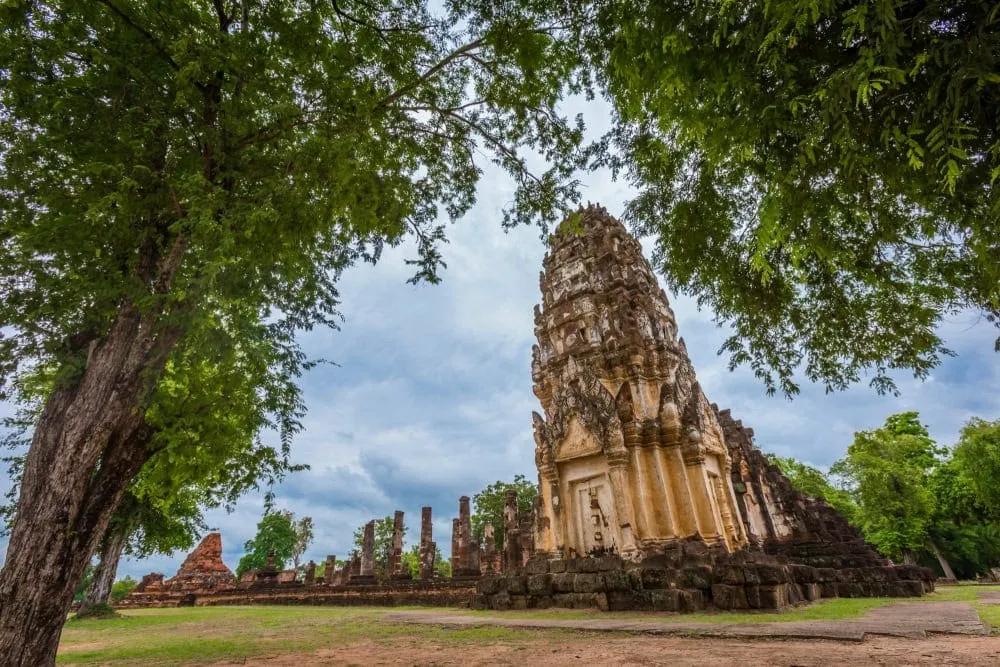
Sukhothai was the capital of the first Thai kingdom, which rose in the 13th century and is credited with the birth of Thai script, art, and Theravada Buddhist architecture. The historical park preserves the walled old city and the ruins of more than twenty temples across some 70 sq km, and it was inscribed as a UNESCO World Heritage Site in 1991. This is where the Thai identity (and, by tradition, the Loy Krathong festival) began, which is why Thais regard it as the cultural home of the nation.
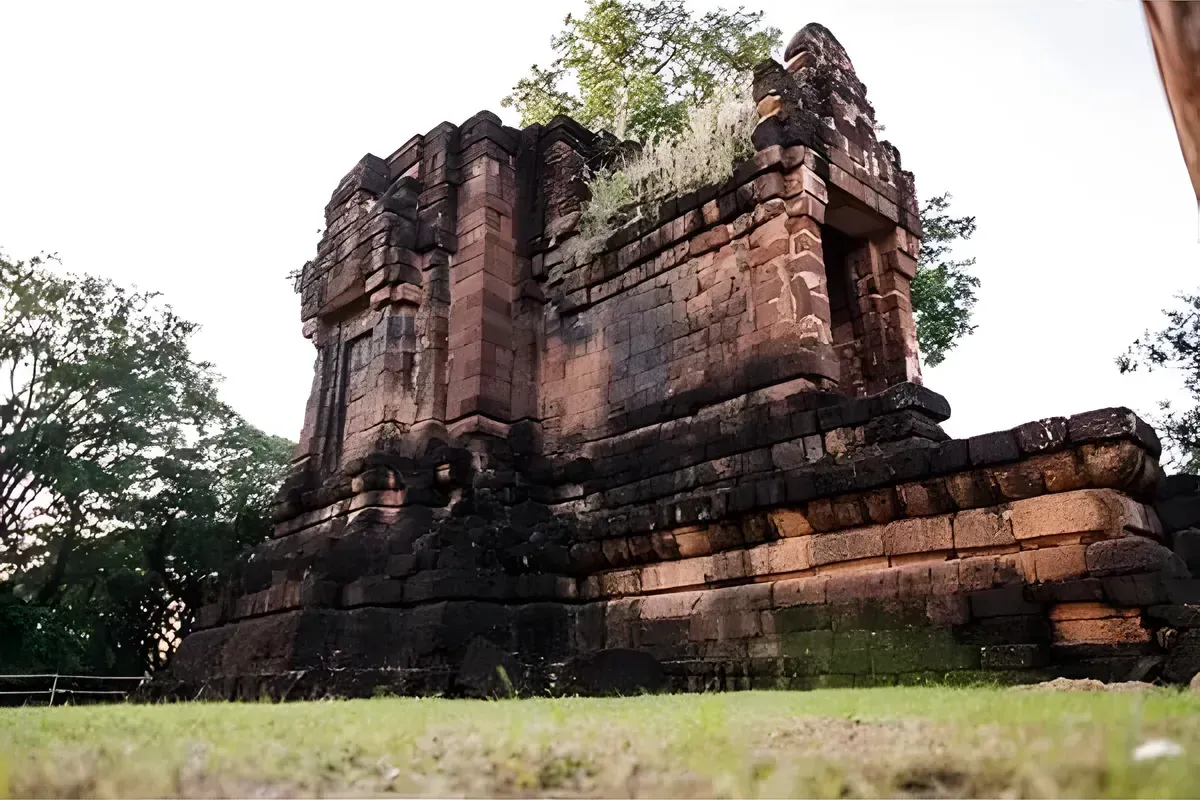
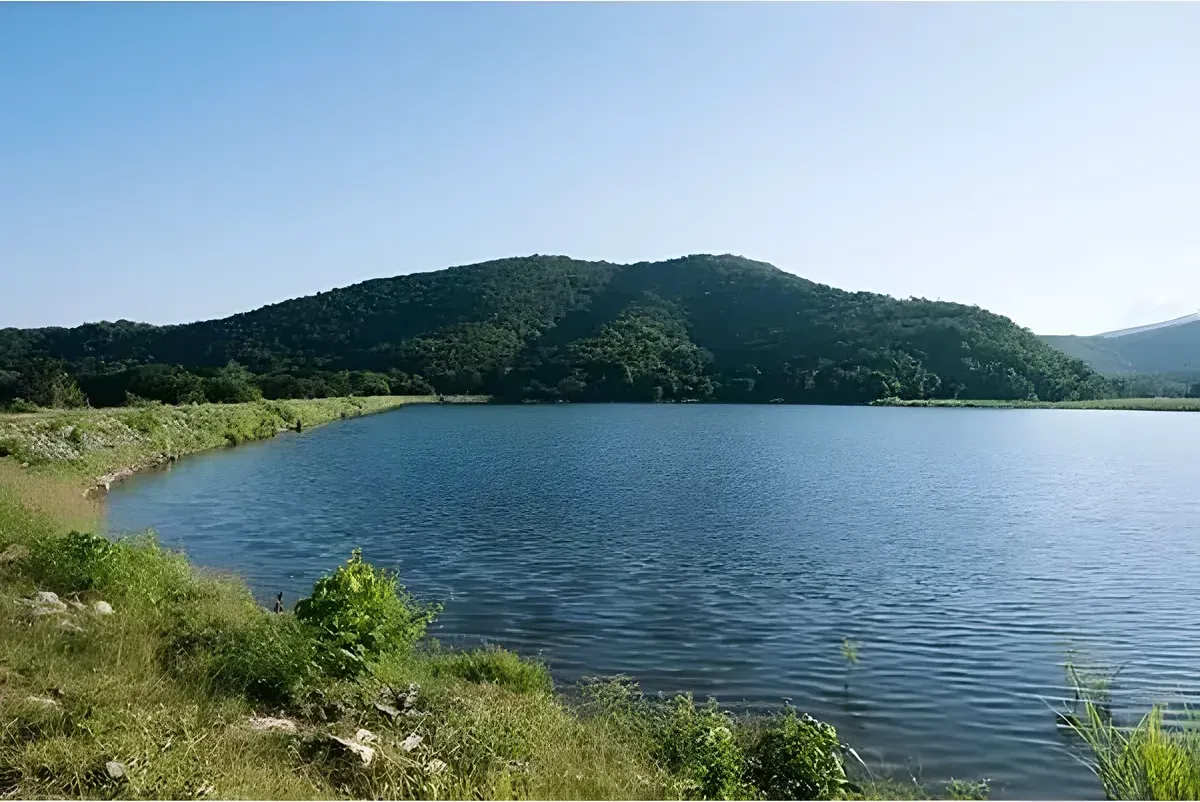
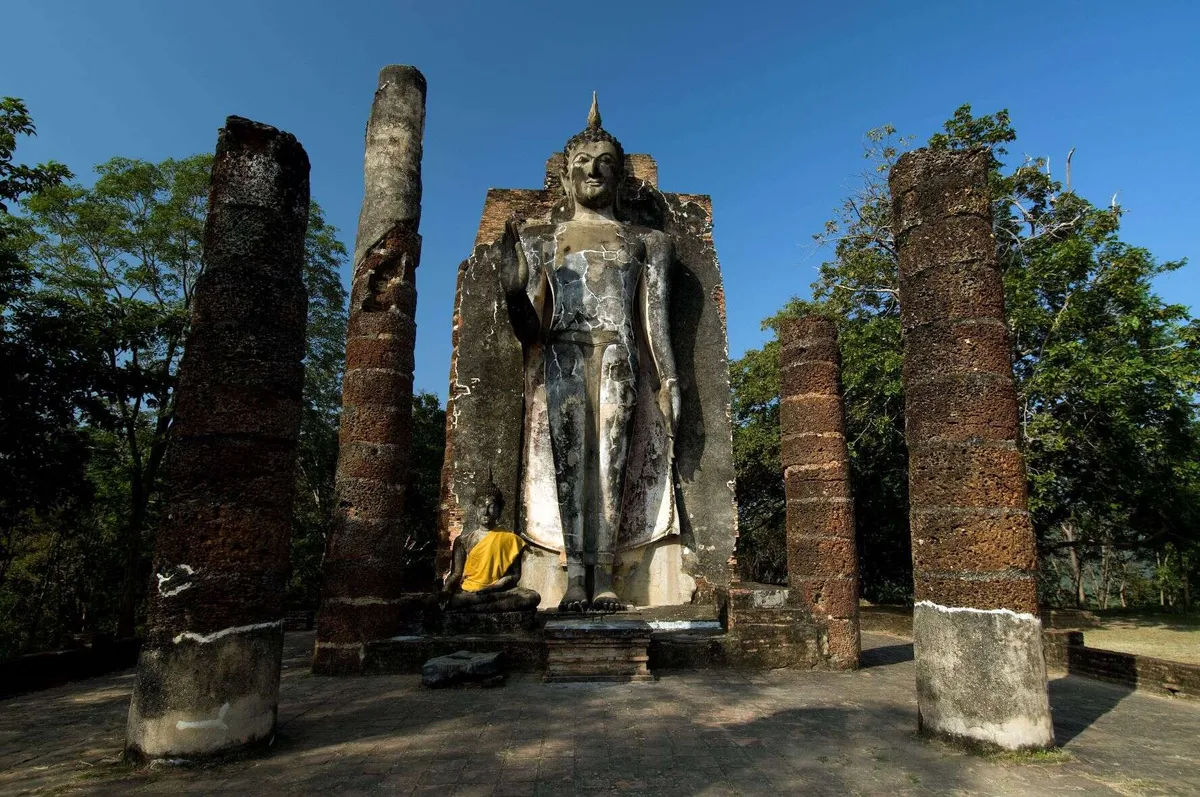
The ruins fall into three ticketed zones: central (200 THB foreigners / 20 THB Thai nationals), outer north (120 THB / 20 THB), and outer west (120 THB / 20 THB), or 400 THB / 40 THB combined for all three. The central zone, ringed by a moat, holds the showpieces: Wat Mahathat, the royal temple at the city’s heart, with its lotus-bud chedi and rows of seated Buddhas; and Wat Sa Si, a serene temple set on an island in a pond, with a walking Buddha that captures the graceful Sukhothai style. North of the walls, the north zone is worth the ride for Wat Si Chum alone: a towering seated Buddha, Phra Achana, almost 15 metres high, squeezed into a roofless brick mondop so that you meet its gaze through a narrow slot. The quieter west zone climbs into the hills toward Wat Saphan Hin.
The park is large and flat, and the standard way to see it is by bicycle. Rentals sit just outside the central-zone gate. Mornings bring mist over the moats and the softest light on the stone; the seated Buddhas catching first sun at Wat Mahathat are the classic photograph.
Insider Tip: Don’t stop at the central zone. Most tour groups do, but Wat Si Chum’s giant Phra Achana in the north zone is the single most striking sight in Sukhothai, and the western temples are nearly empty. A bicycle and a half-day let you reach all three.
Watch out: The zones are separately ticketed and spread out, with little shade between them. Start early, carry water, and bring sun cover. New Sukhothai town, where most hotels and the bus station are, lies about 12 km east of the old city; songthaews and Grab connect the two.
Sukhothai pairs naturally with the smaller, wilder ruins of Si Satchanalai to the north for travellers with a second day. For most visitors, a sunrise-to-midday loop of the three zones by bike is the heart of the trip.
- Status: UNESCO World Heritage Site, listed 1991
- Era: capital of the Sukhothai Kingdom, 13th–14th century
- Layout: central, north & west zones, bicycle to explore
- Entry: 200 THB central zone / 120 THB each outer zone (foreigners), 20 THB (Thai nationals) per zone; 400 THB / 40 THB combined for all three
- Don’t miss: Wat Mahathat; Wat Si Chum’s giant Phra Achana Buddha
- Hours: daily 06:00–18:00; New Sukhothai town ~12 km east
Watch Before You Go
Watch before you go: Sukhothai Historical Park
Location & Directions
Mueang Sukhothai, Sukhothai
Sukhothai, Thailand
Show your taxi or Grab driver
อุทยานประวัติศาสตร์สุโขทัย
Frequently Asked Questions
What are the opening hours and entrance fee for Sukhothai Historical Park?
What is the best time of day to visit?
What is there to see inside the park?
How do I get around the park?
Where is Sukhothai Historical Park located?
Is Sukhothai Historical Park a UNESCO World Heritage Site?
Spotted something out of date or incorrect? Let us know
Stay Near Sukhothai Historical Park
Live prices for places closest to Sukhothai Historical Park: tap a pin to compare.