




Wat Sa Phan Hin
วัดสะพานหิน
A stone stairway climbs about 200 metres up a bare hillside in the Western Zone of Sukhothai Historical Park to reach Wat Sa Phan Hin’s summit — and the 12.5-metre standing Buddha that gives the climb its point. The Western Zone ticket (120 THB foreigners, 20 THB Thai nationals) covers this and the zone’s other scattered ruins; there’s no separate fee at the temple itself.
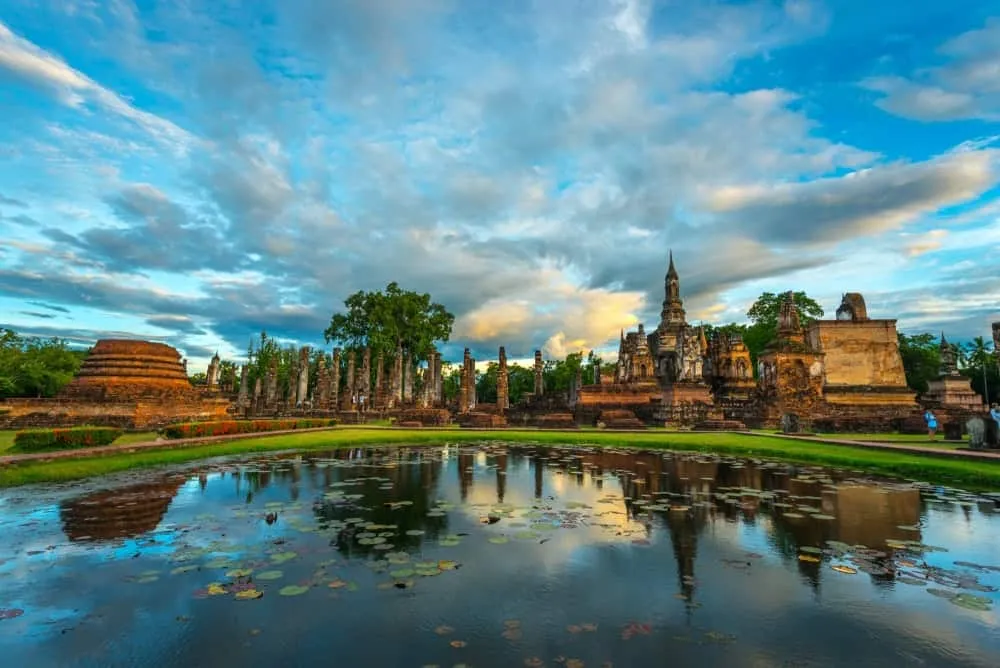
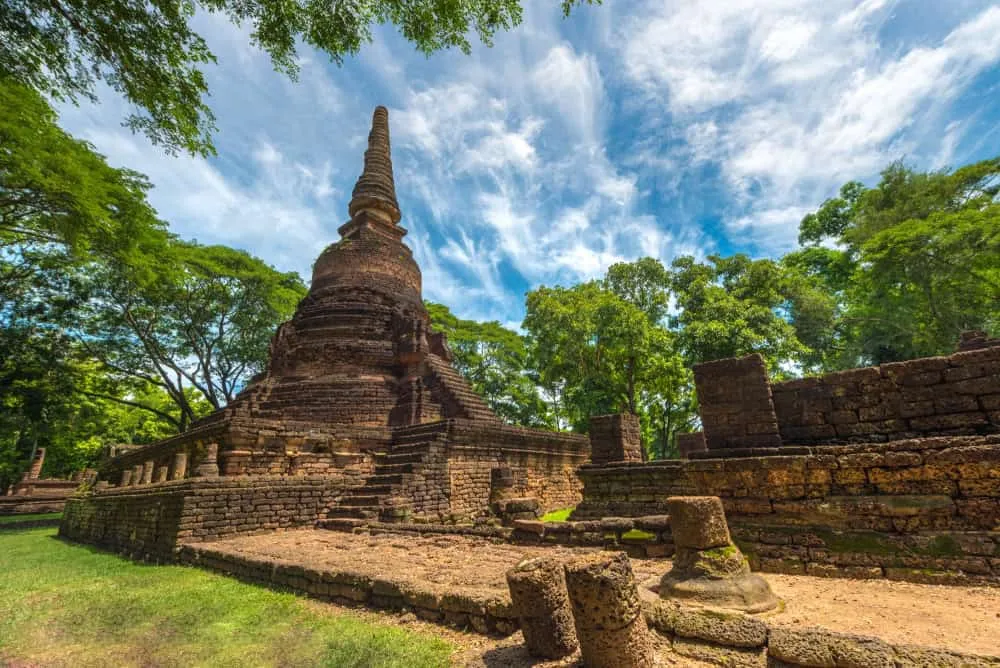
The Buddha image, known as Phra Attharot, stands with one hand raised in the abhaya mudra — the gesture for dispelling fear — and is widely believed to be the very image named in King Ramkhamhaeng’s 13th-century stone inscription. Local tradition holds that Ramkhamhaeng himself rode a white elephant called Ruchakhari up this hill every Buddhist sabbath to pay respects, a detail that gives the climb some historical weight beyond the view. The path up passes laterite foundation walls and low brick chedi bases, all that’s left of the surrounding monastery buildings after seven centuries of monsoon rain. At the top, the ground opens out and the plain below — dotted with the ruined temples of the central zone — spreads out in full.
Unlike Wat Mahathat and the other central-zone ruins, which draw steady tour-bus traffic, Wat Sa Phan Hin sees a fraction of the visitors — most people give up on the extra 15-20 minute climb after a full morning of flat cycling among the other ruins. That’s the appeal: quiet at the top even in high season, with enough elevation to catch a breeze that doesn’t reach the plain. Early morning is genuinely better here than at most Sukhothai temples, since there’s no shade on the stairway and the stone holds heat fast once the sun is up.
The name itself — sa phan hin, “stone bridge” — doesn’t refer to a bridge in the usual sense; it describes the slate-slab stairway underfoot, laid stone by stone up the hillside rather than cut into it. Some of that original slate paving is still there among the more recent repairs, worn smooth in the centre where centuries of footsteps have taken the same line up. Unlike the flat, formally landscaped central-zone temples, the western hill sites were left closer to how 19th- and 20th-century restorers found them, so the ruins here feel more like an excavation still in progress than a manicured park.
Insider Tip: Cycle the Western Zone loop clockwise and hit Wat Sa Phan Hin first, while you’ve still got energy for the climb and the morning light is at its best — save the flat, shaded central-zone temples for after.
Watch out: There’s no water vendor or shade on the stairway itself. Bring a bottle before you start climbing, and wear shoes with grip — the stone gets polished and slick in patches from decades of foot traffic.
- Entry: 120 THB foreigners / 20 THB Thai nationals (Western Zone ticket, covers other zone ruins too)
- Hours: 06:30-19:30 daily, until 21:00 on Saturdays
- Buddha height: 12.5m standing image (Phra Attharot), abhaya mudra
- Climb: Roughly 200m of stone stairway from the base, 15-20 minutes on foot
- Getting there: Bicycle or motorbike from Sukhothai’s central zone, roughly 2km
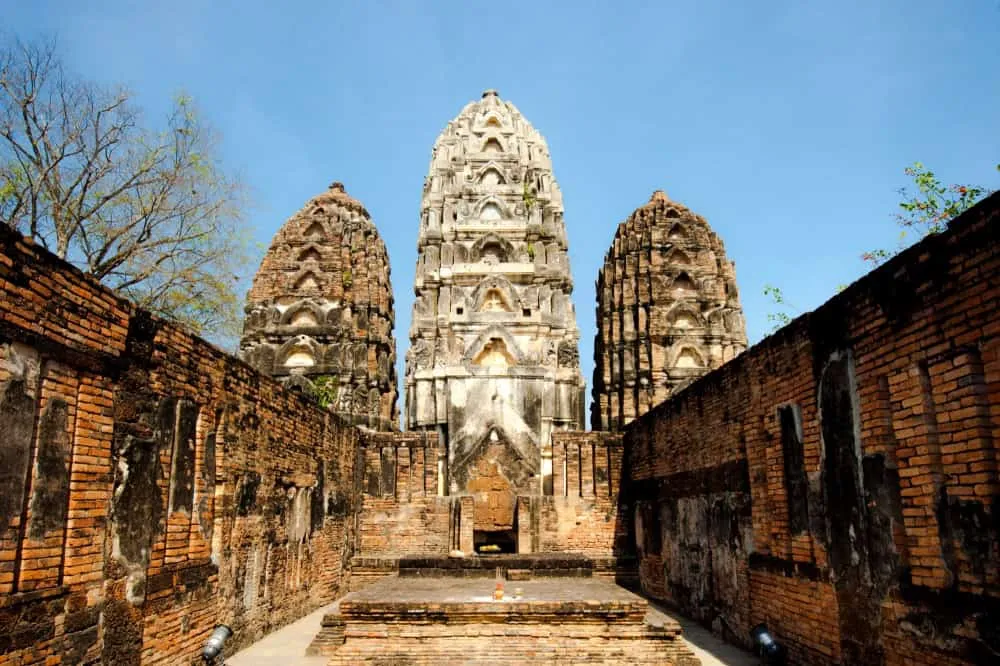
Dress modestly — covered shoulders and knees — and remove your shoes before stepping onto the platform around the Buddha image. Combine the visit with Wat Sa Si and the Ramkhamhaeng National Museum, both a short ride away in the central zone, to make a full half-day of Sukhothai’s ruins.
Location & Directions
Mueang Sukhothai, Sukhothai
Sukhothai, Thailand
Show your taxi or Grab driver
วัดสะพานหิน
Within Walking Distance




Frequently Asked Questions
How much does it cost to visit Wat Sa Phan Hin?
How tall is the standing Buddha at Wat Sa Phan Hin?
Is this the same Wat Saphan Hin that's in Trat?
How hard is the climb up to the temple?
What's the best time of day to visit?
Spotted something out of date or incorrect? Let us know
Stay Near Wat Sa Phan Hin
Compare places to stay in Sukhothai, or open the map for options closest to the attraction.