


Sim and Hup Taem Sin Sai, Wat Chaisri
สิมและฮูปแต้มสินไซ วัดไชยศรี
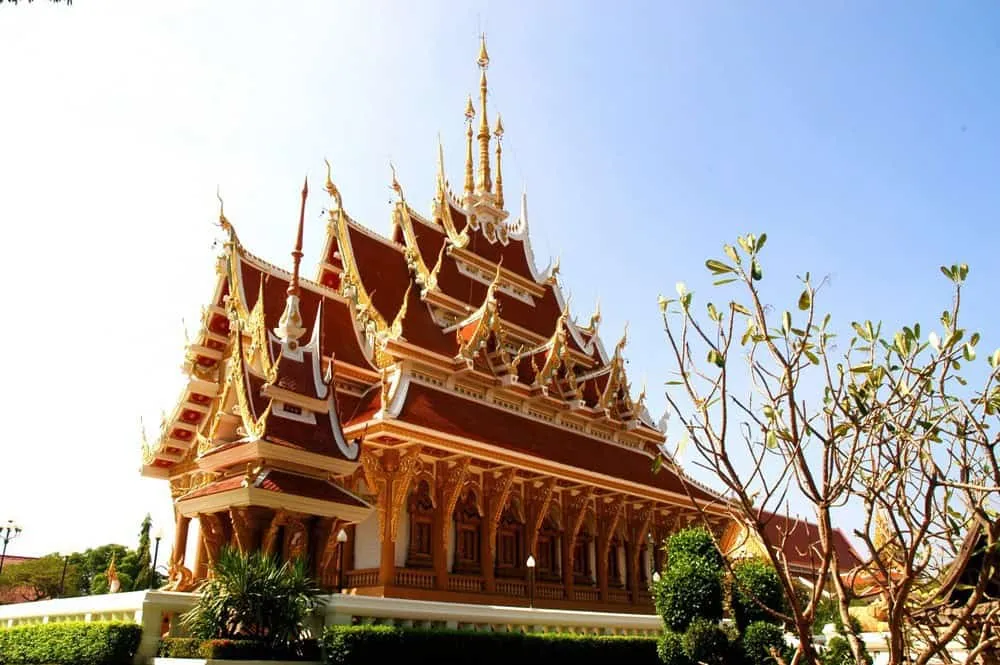
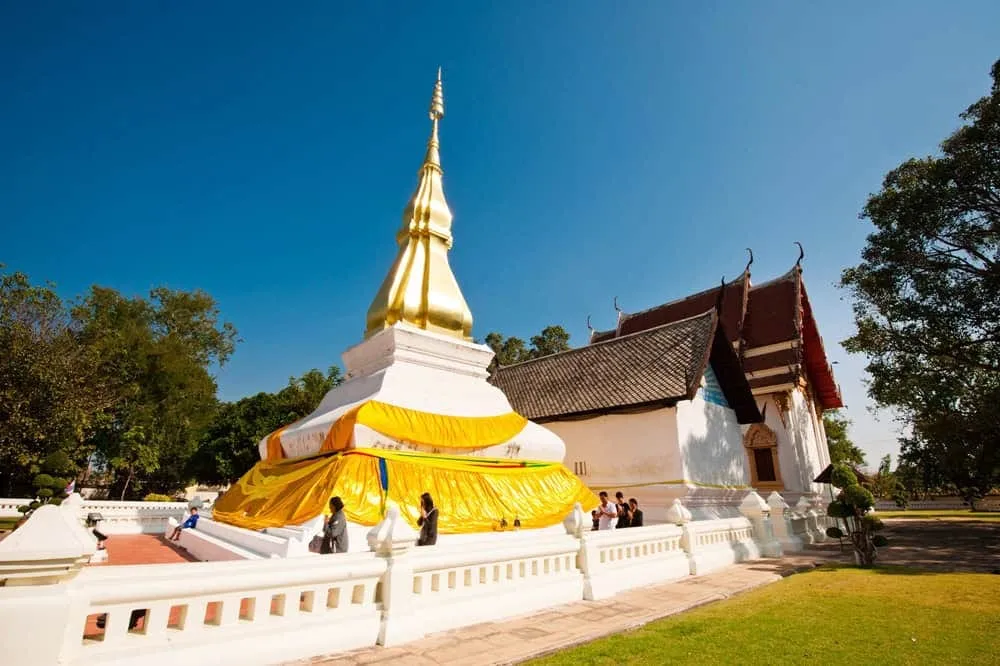
The Sim (ordination hall) at Wat Chaisri, in Ban Sawathi village outside Khon Kaen, is covered in hup taem — Isan folk murals painted around 1900, not the prehistoric rock art the temple’s unusual name sometimes suggests. The artist, Thong Thipcha, worked in a handful of pigments — black, indigo, white, and ochre-gold — to illustrate the Sinsai epic (Sang Sinxay, a well-loved Lao-Isan verse novel) alongside scenes from the Vessantara Jataka, the story of the Buddha’s second-to-last incarnation. Entry to the temple grounds is free, daily from 08:00 to 17:00.
The sim itself is roughly 150 years old, built under the direction of the temple’s first abbot, Luang Pu On Sa, in the low-roofed, thick-walled style typical of northeastern Thai ordination halls — a design that keeps the interior cool and dim. Inside, the murals show Hindu-Buddhist deities and court scenes from Sinsai that locals can usually identify character by character; on the exterior walls, a different set of scenes plays out for anyone walking past rather than just those who step inside — the Seven Hells (narok chet khum), soldiers guarding the doorway, and further Vessantara and Sinsai episodes.
Watch out: Women are traditionally not permitted to enter the sim’s interior — a rule tied to the building’s ordination status, not the artwork. You can still view and photograph the exterior murals from any angle.
The complex is a working temple, not a museum: expect monks going about their routines rather than a scripted tour. There’s no guide on staff, but a caretaker can usually point out which panel corresponds to which part of the story if you ask. More than a century of tropical humidity has faded some sections, and past conservation touch-ups mean the colour isn’t uniform across every wall — don’t expect postcard-crisp paintwork throughout.
Insider Tip: Aim for 8-10am. Direct midday sun washes out the exterior paintings, and the small windows keep the sim’s interior dark no matter the hour, so early light is the difference between seeing detail and squinting at silhouettes.
Wat Chaisri sits about 21 km from central Khon Kaen. There’s no direct public bus to Ban Sawathi, so a car, motorbike, or arranged taxi/songthaew is the practical way in — treat it as a half-day trip paired with other sights rather than a stand-alone destination. Dress modestly (shoulders and knees covered), as this remains an active place of worship. For more of the province’s cultural heritage, the Khon Kaen National Museum downtown covers the wider Isan collection, and Bueng Kaen Nakhon lake is an easy pairing if you’re based in town. Wat Chaisri is one of many sites worth exploring around Khon Kaen.
- Entry fee: Free
- Hours: Daily 08:00–17:00
- Murals painted: c. 1900, by folk artist Thong Thipcha
- Subject: The Sinsai epic and Vessantara Jataka — not prehistoric art
- Getting there: About 21 km from central Khon Kaen; car or motorbike recommended
Location & Directions
Mu 8
Khon Kaen, Thailand
Show your taxi or Grab driver
สิมและฮูปแต้มสินไซ วัดไชยศรี
Frequently Asked Questions
Are the murals at Wat Chaisri really prehistoric rock art?
Is Sim and Hup Taem Sin Sai Wat Chaisri free to visit?
Can women go inside the sim to see the murals?
How far is Wat Chaisri from Khon Kaen city?
What's the best time of day to see the murals clearly?
Spotted something out of date or incorrect? Let us know
Stay Near Sim and Hup Taem Sin Sai, Wat Chaisri
Live prices for places closest to Sim and Hup Taem Sin Sai, Wat Chaisri — tap a pin to compare.