





Tai-Yho Ban Phon Cultural Village
หมู่บ้านท่องเที่ยววัฒนธรรมไทญ้อ บ้านโพน
Ban Phon, a Tai Yo ethnic minority village in Tha Uthen district, Nakhon Phanom, preserves a distinct set of Isan crafts that have mostly disappeared elsewhere in the region: bark-dyed cotton textiles, wicker and rice-basket weaving, and traditional salt harvesting from the village’s own Sinthao salt sources. The Tai Yo settled here after migrating from Laos generations back. “Phon” refers to the raised ground the village occupies, “Yo” (sometimes spelled Yaw) is the ethnic name. Entry is free, daily from 09:00 to 16:00.
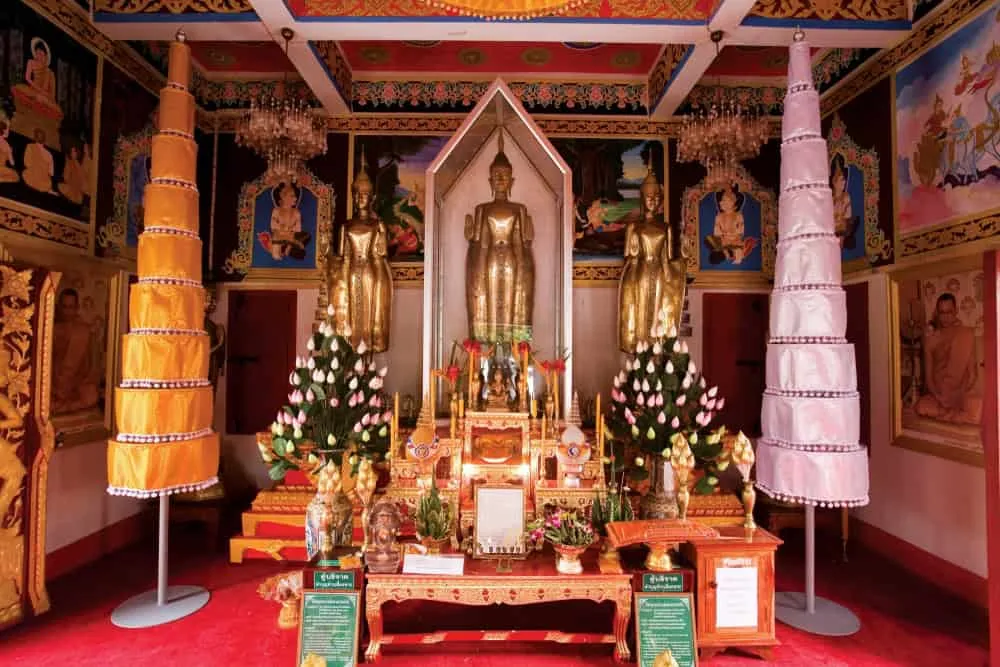
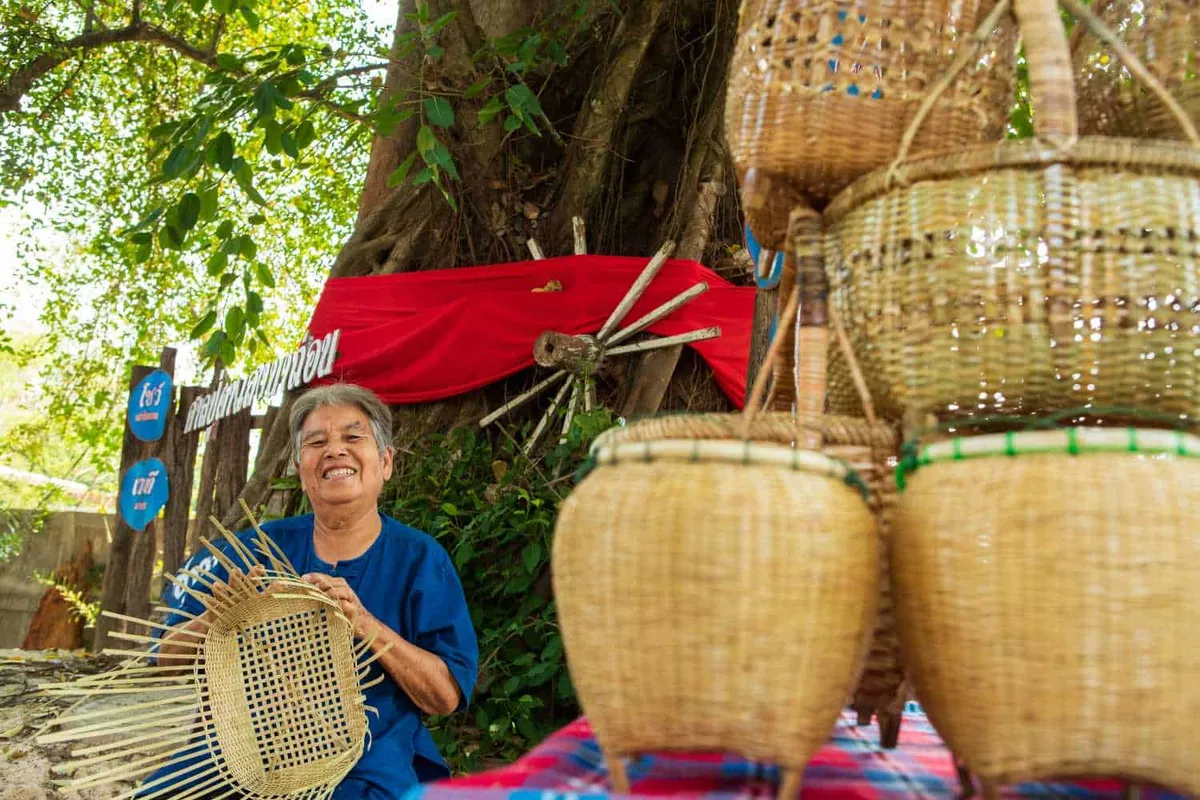
Wat Kamwasi functions as the village’s spiritual centre and the most visible marker of Tai Yo identity here: its wooden fang hod (a ceremonial rain gutter used during Buddhist rain-making rites) is carved in the shape of a naga, reflecting the serpent-deity beliefs that run through Isan Buddhist practice more broadly. Artisans in the village demonstrate cotton dyeing using bark from trees considered auspicious locally, alongside indigo dyeing, and weave the wicker baskets and rice containers the community is known for regionally. The salt-harvesting tradition, drawing from underground brine sources rather than seawater, is unusual this far from the coast and worth asking about specifically if you’re visiting with a guide.
Insider Tip: The rocket festival (Bun Bang Fai) held during Buddhist Lent is when the village is most active culturally. Visiting outside that window means a quieter, more observational experience focused on the crafts rather than festival performances.
This is a working village, not a recreated cultural park. Expect to see daily life alongside the craft demonstrations, and don’t expect every household to have something staged for visitors. Homestays are available through the community’s tourism group for anyone wanting to stay overnight rather than pass through.
Watch out: There’s little in the way of signage or English-language information on-site; arranging a local guide or joining an organised tour from Nakhon Phanom gets you far more out of the crafts and history than showing up independently.
Ban Phon is about 26 km from Nakhon Phanom city and roughly 6 km from Tha Uthen district town, reached via Highway 212 and a short stretch of Road 3014. A car or motorbike is the practical way in, as public transport options are limited. It pairs well with other Tha Uthen district sights, including Phra That Tha Uthen, if you’re making a day of the district rather than just the village. Ban Phon sits within the wider Nakhon Phanom area, alongside other ethnic-heritage stops like the Tai Guan Ban Na Thon Cultural Village.
- Entry fee: Free
- Hours: Daily 09:00–16:00
- Ethnic group: Tai Yo, originally migrants from Laos
- Known for: Bark-dyed textiles, wicker basketry, traditional salt harvesting
- Getting there: About 26 km from Nakhon Phanom city via Highway 212 and Road 3014
Location & Directions
Tha Uthen, Nakhon Phanom
Nakhon Phanom, Thailand
Show your taxi or Grab driver
หมู่บ้านท่องเที่ยววัฒนธรรมไทญ้อ บ้านโพน
Frequently Asked Questions
Who are the Tai Yo people?
What crafts can you see in the village?
How far is Ban Phon from Nakhon Phanom city?
Is there anywhere to stay in the village?
Is entry free?
Spotted something out of date or incorrect? Let us know
Stay Near Tai-Yho Ban Phon Cultural Village
Live prices for places closest to Tai-Yho Ban Phon Cultural Village: tap a pin to compare.