



Nakhon Phanom
นครพนม
The most revered Buddhist stupa in Isan, a Mekong riverfront facing Laos, Vietnamese revolutionary history, and the country's most spectacular illuminated boat festival.
Recommended by us
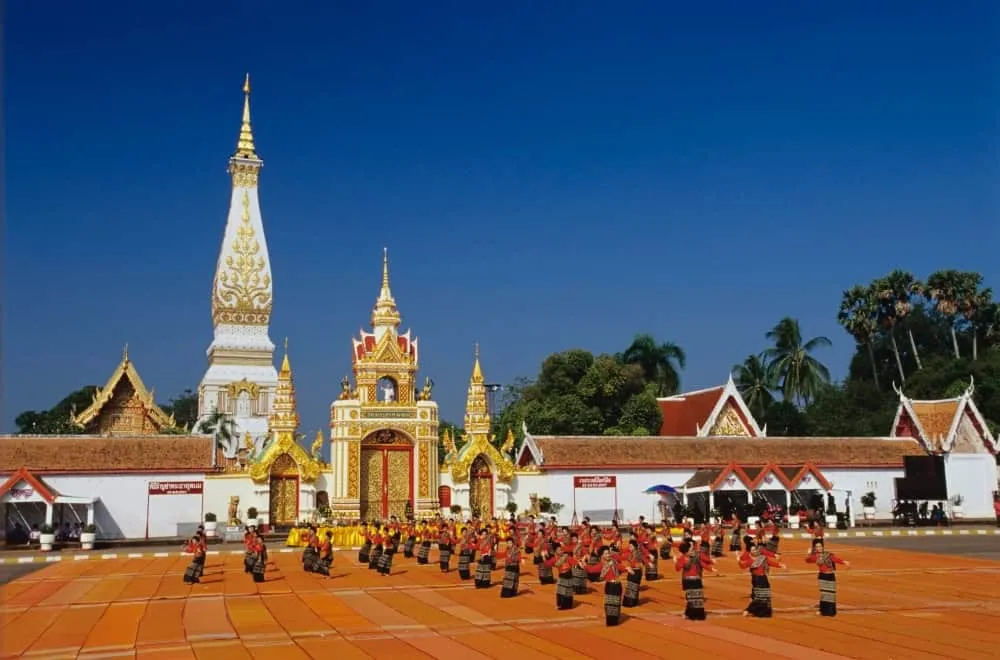
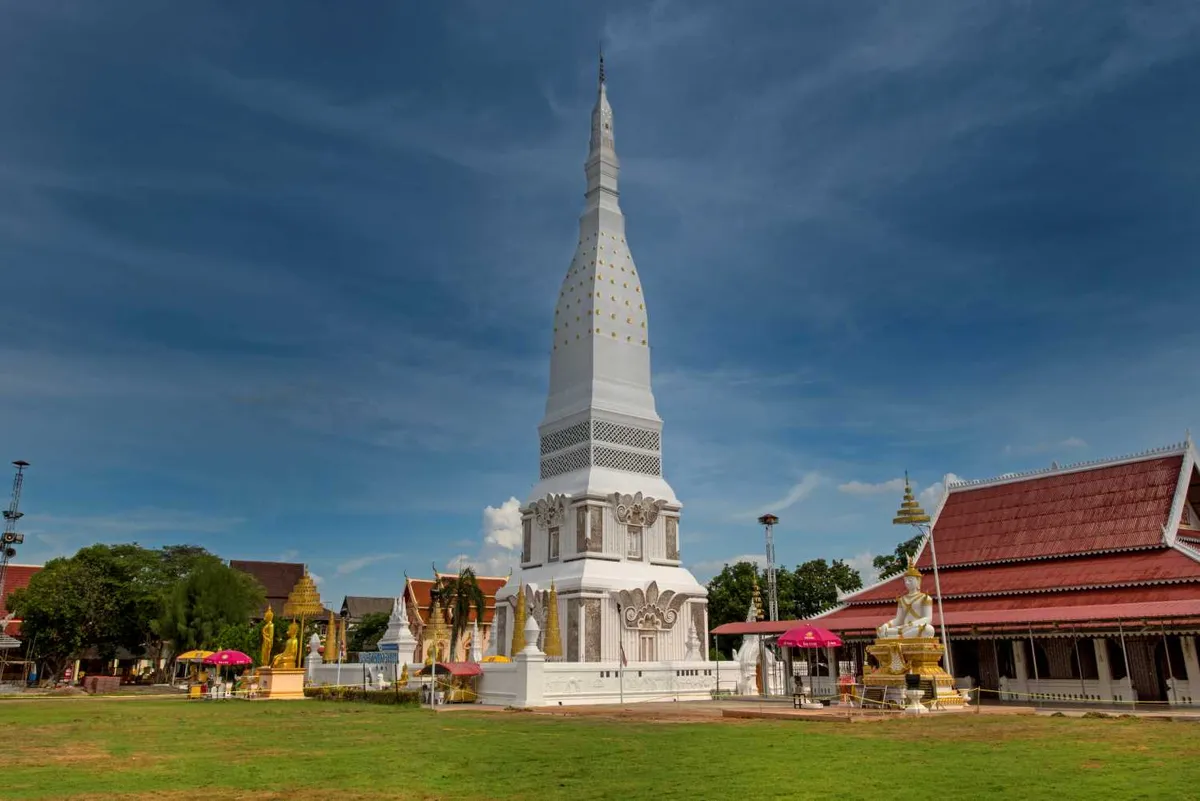
Phra That Phanom
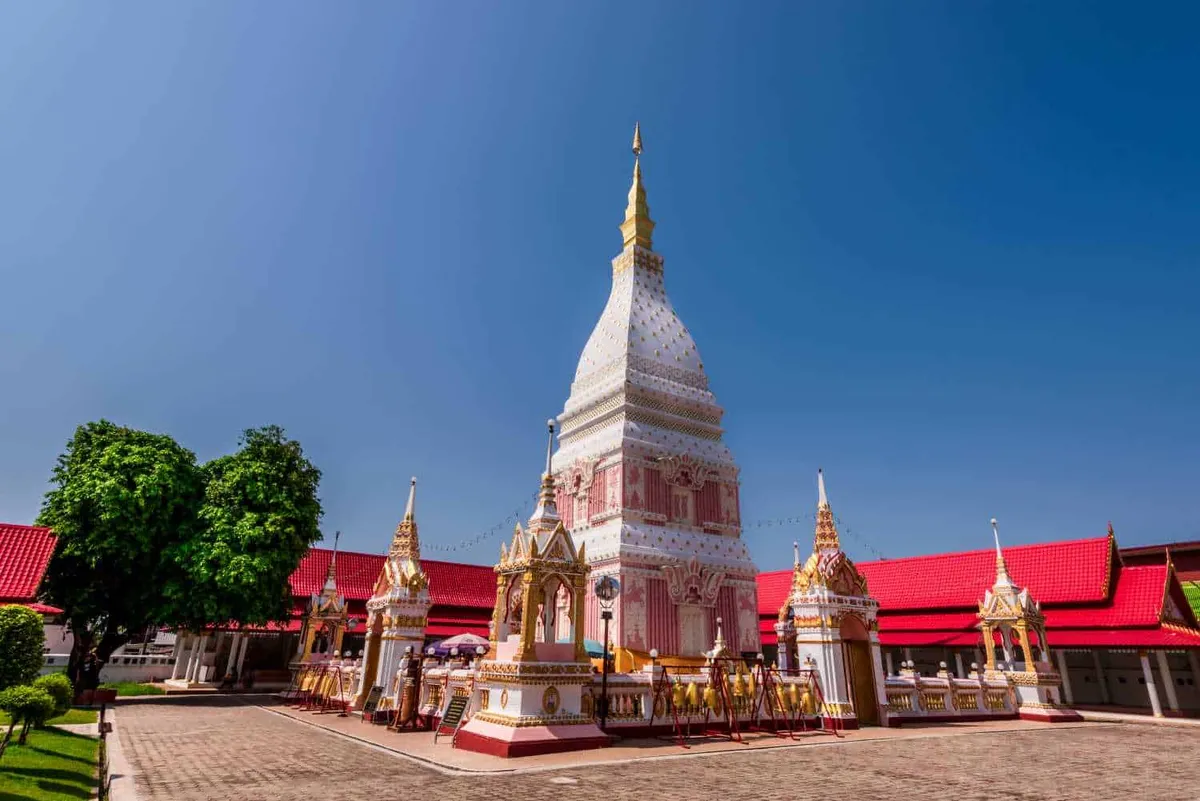
Isan's most revered stupa — the 57m gilded chedi was rebuilt after a 1975 collapse and draws pilgrims from across the region. Dress modestly; remove shoes before the inner courtyard.

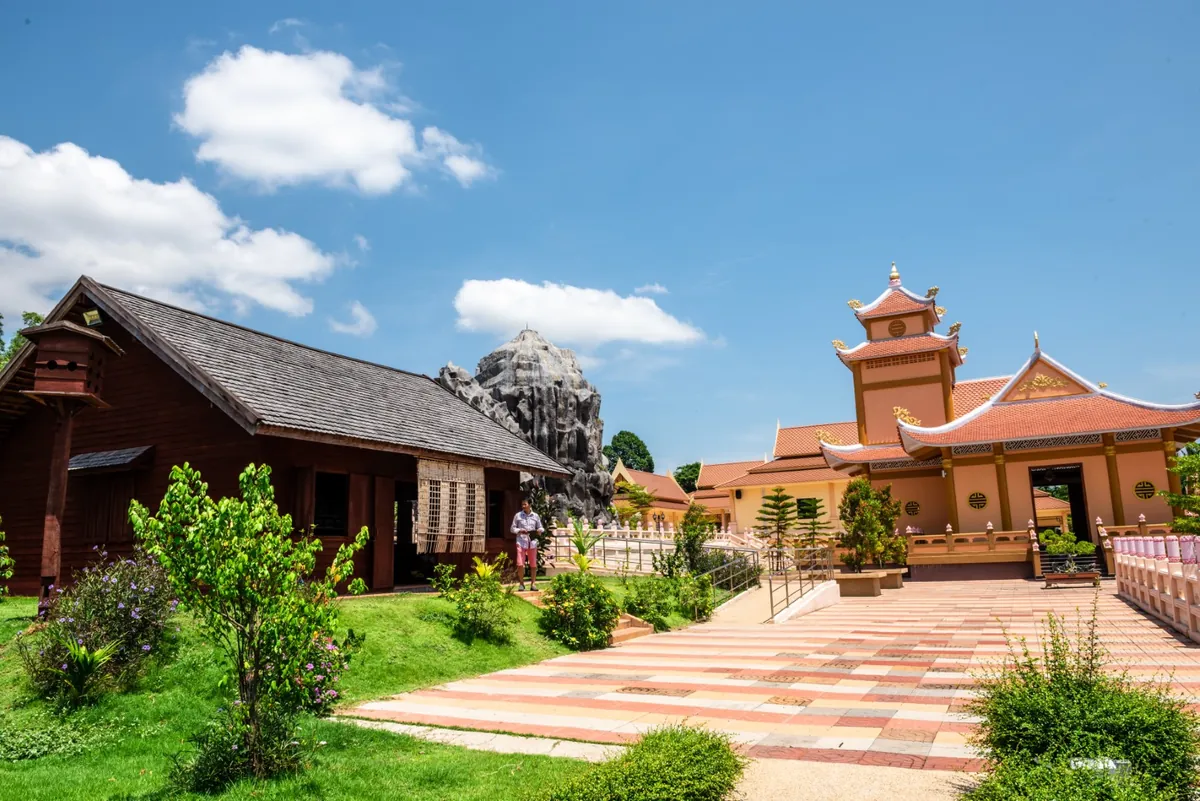
Memorial President Ho Chi Minh
Ho Chi Minh lived in exile in the Nakhon Phanom area during the 1920s — this memorial reconstructs that chapter and draws Vietnamese visitors on a kind of heritage pilgrimage.

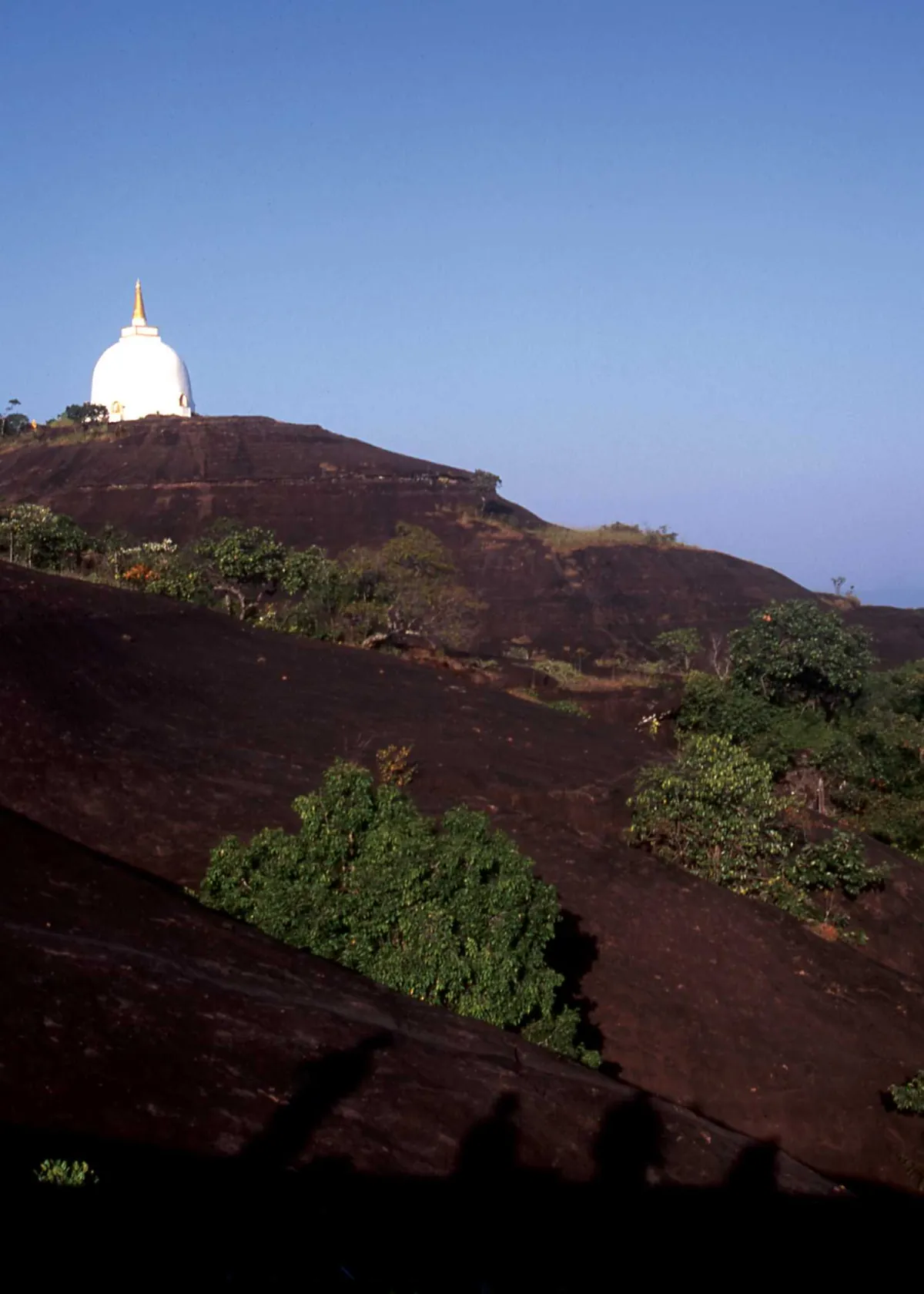
Phu Langka National Park
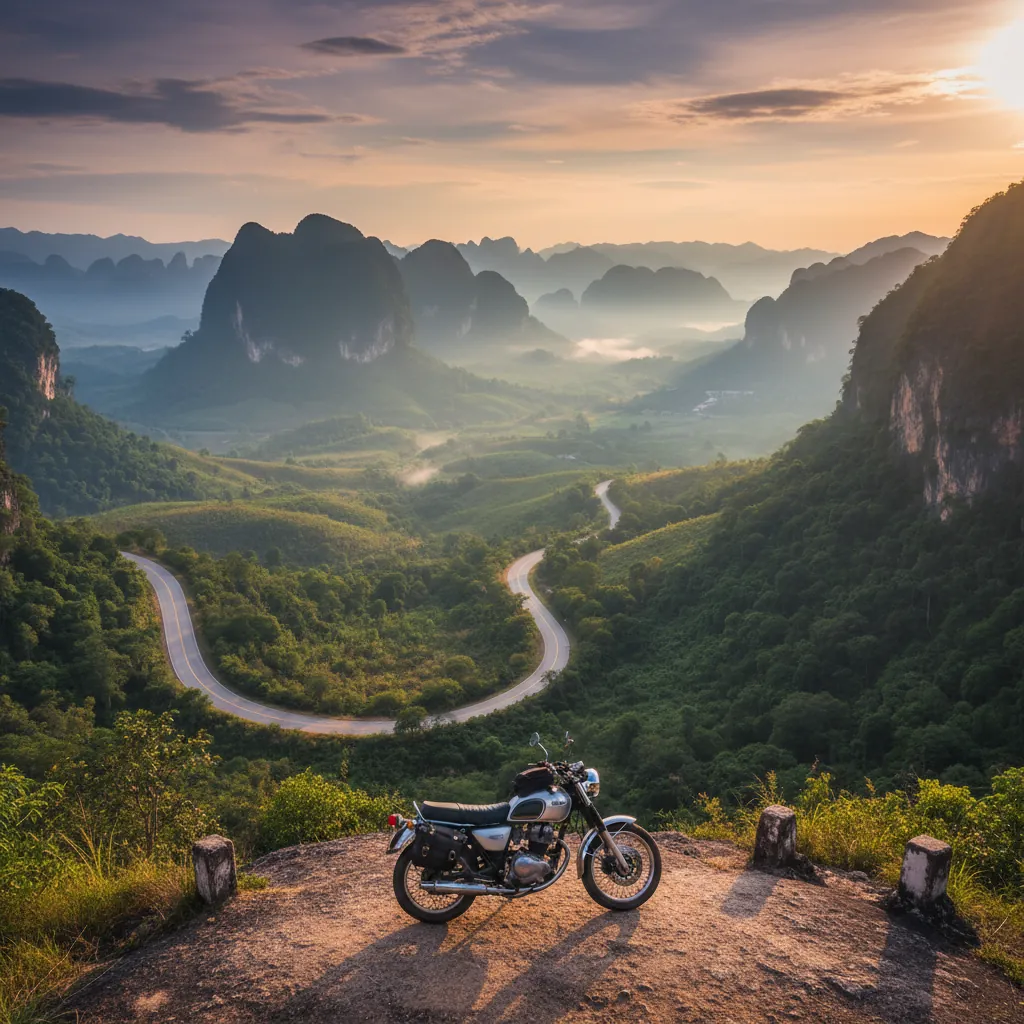
A forested mountain park with viewpoints over the Mekong plains — the sunrise from the ridge is the reason most people camp here.

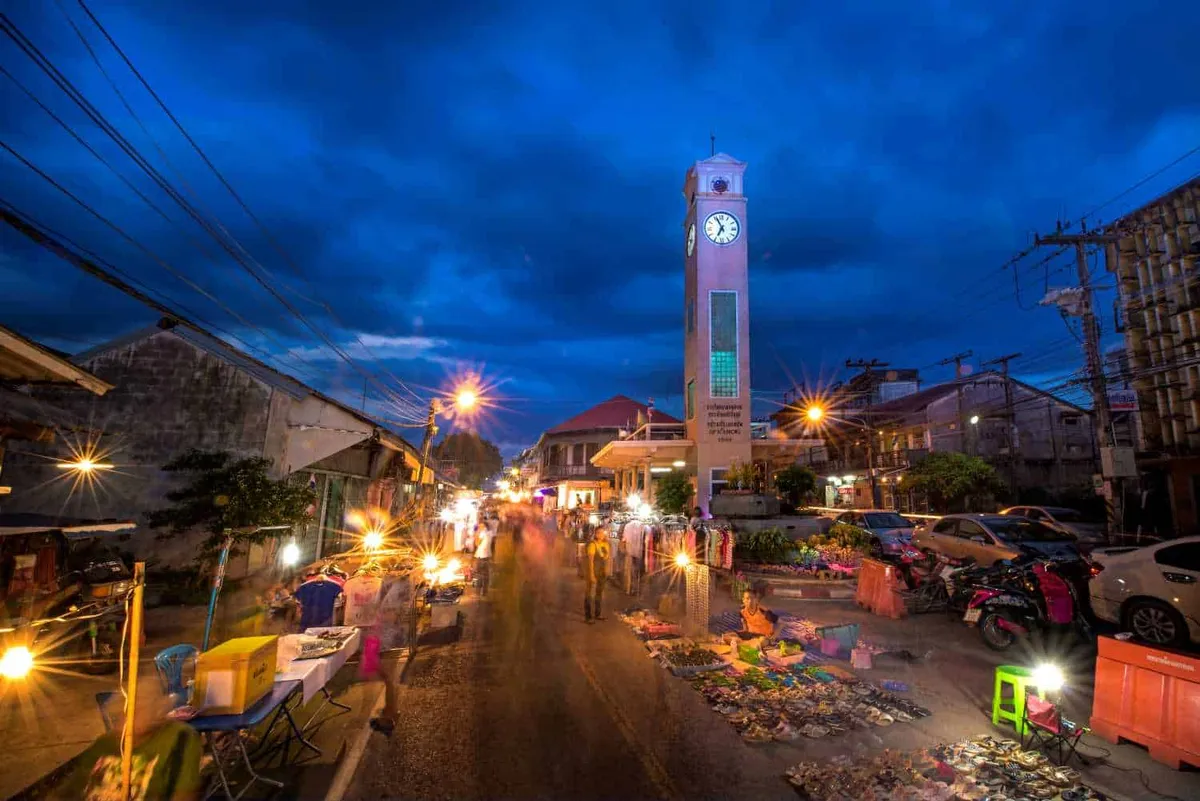
Nakhon Phanom Walking Street
The Friday–Sunday night market along the Mekong riverfront — Vietnamese-influenced food stalls, local craft, and a good people-watching stretch with the river as backdrop.

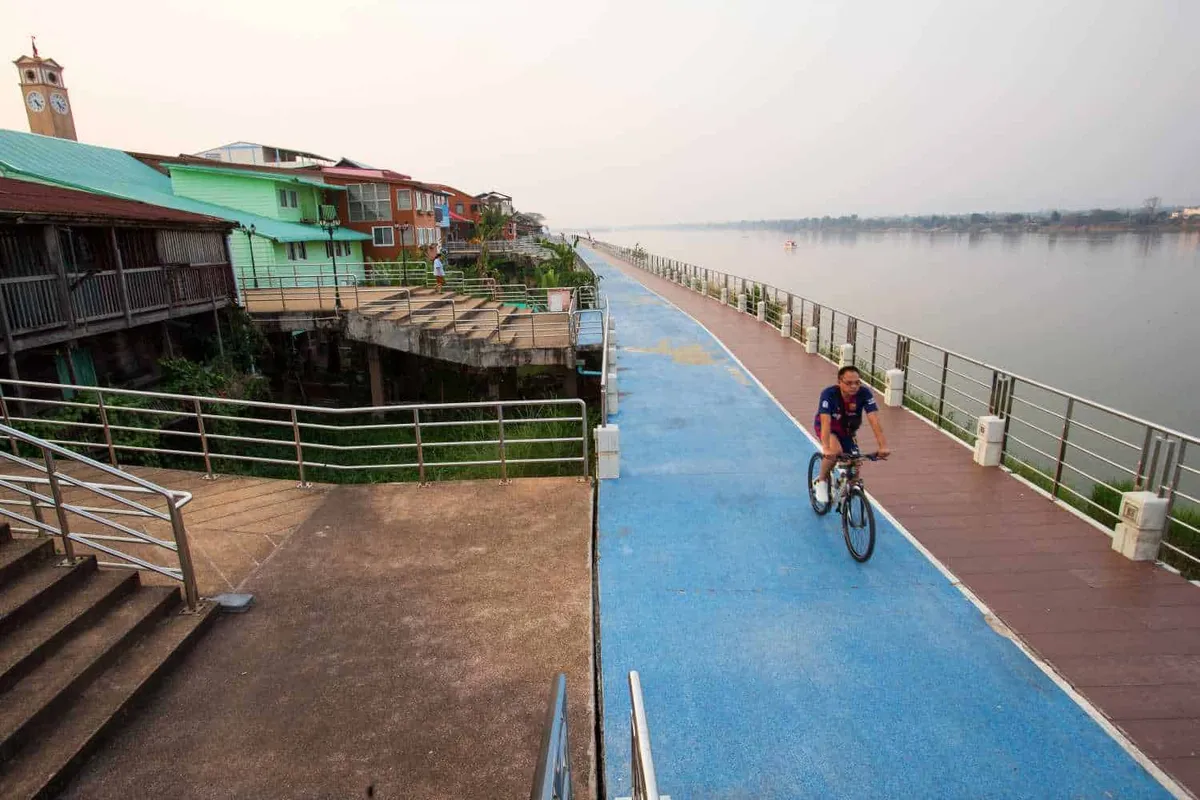
Mekong bicycle path
A flat riverside cycle track with Laos visible across the water the whole way — rent a bike in town and go early morning when the light is best.
Get to Nakhon Phanom
Nok Air and AirAsia fly direct from Bangkok (1h30) — far easier than the 10-hour bus for a long weekend trip.

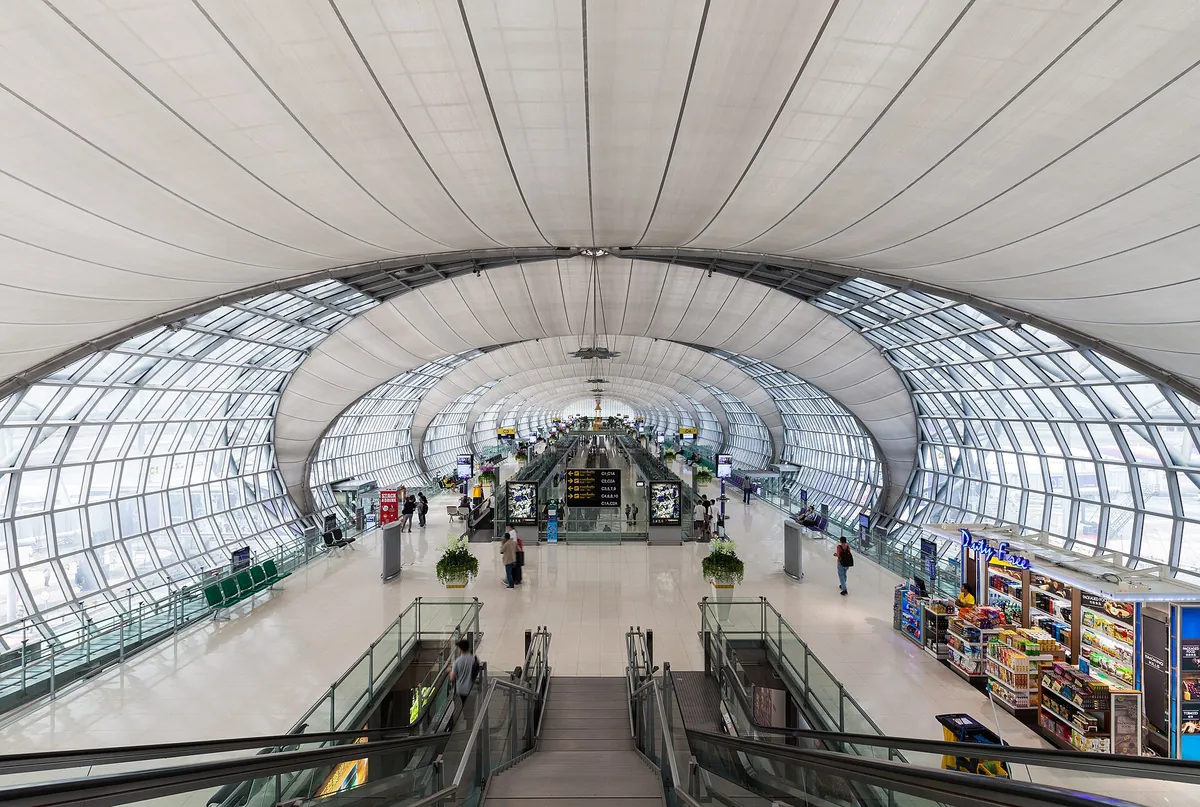
eSIM for Thailand
Land with data already working and skip the airport SIM queue. We tested six plans — code THAIHOLIDAY saves 10%.

Travel insurance
Cycling, trekking, and a remote border province — sort cover before you go, and check what applies if you cross into Laos.
Wats, shrines & spiritual sites
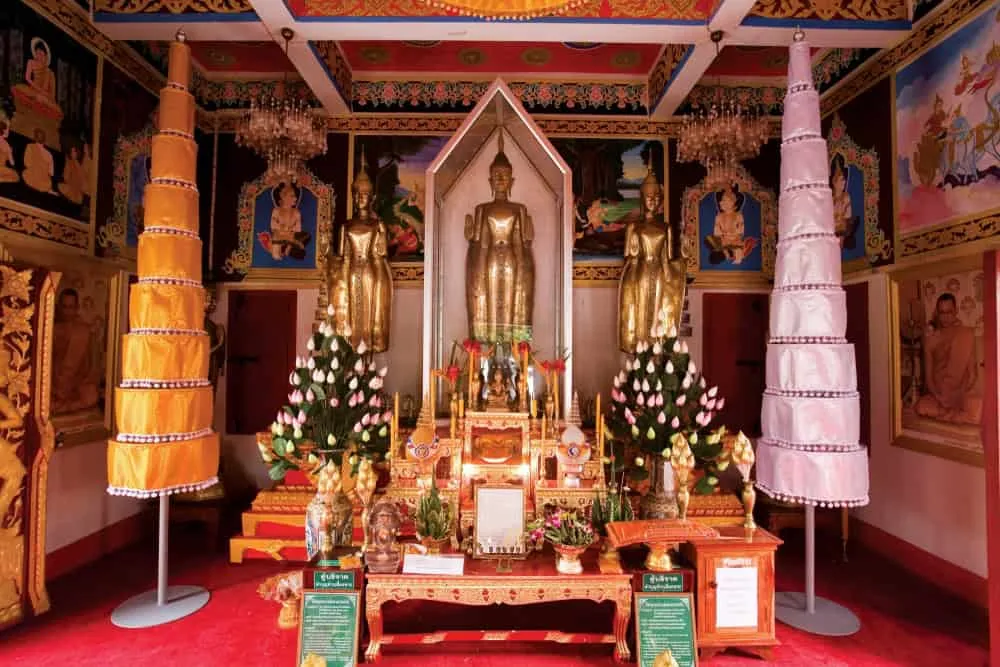
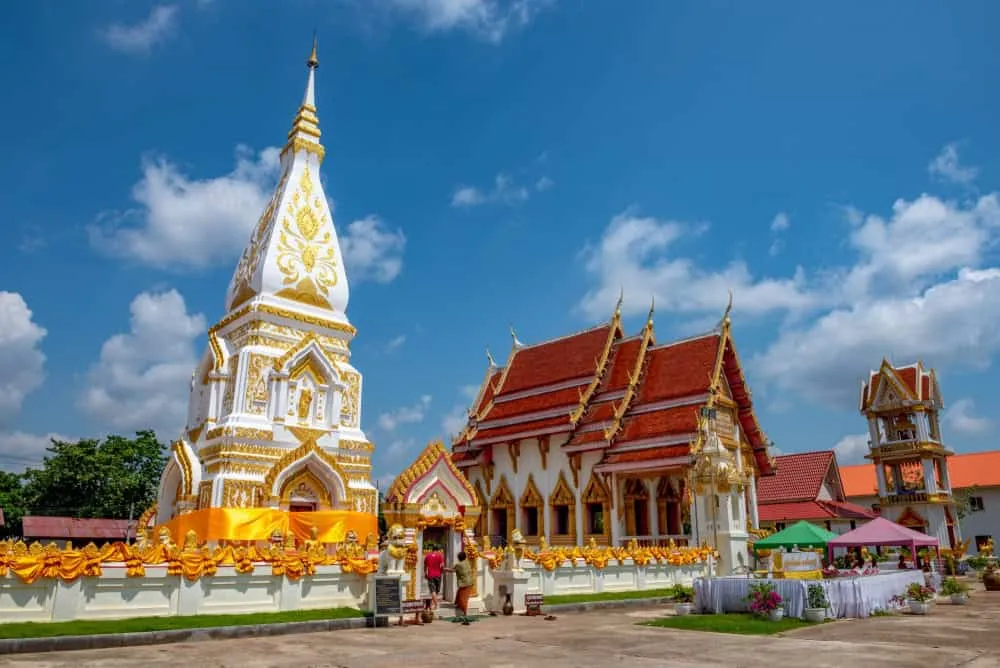
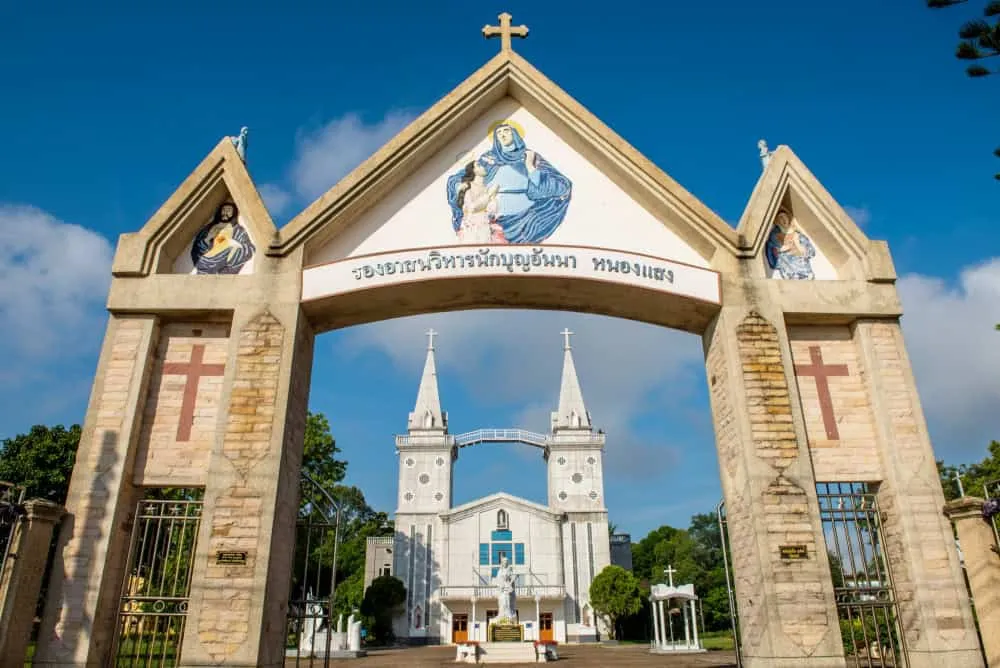
Temples in Nakhon Phanom












Museums, history & heritage
Museums & culture in Nakhon Phanom






Things to do on the map
Tap a pin for details — 33 places in Nakhon Phanom plotted.
When to go
Nov–Jan The cool dry season is the best window — comfortable temperatures, clear air, and the riverfront at its most pleasant. The Phra That Phanom Annual Worship Festival falls in late January to early February and draws pilgrims from across Isan and Laos; arrive early for accommodation.
Feb–Apr Cross-border burning in Laos drives severe smoke haze across the Mekong into Nakhon Phanom from late February through April. In March 2025, the province recorded AQI 251 — among the worst in Thailand. Check air quality before travelling and pack an N95 mask.
May–Oct The Isan wet season runs May through October, with July and August the heaviest months. The Mekong rises dramatically and the Lai Reua Fai illuminated boat procession takes place at Ok Phansa in late September or early October.
About Nakhon Phanom
Last updated September 2026
Overview
Nakhon Phanom sits on the upper Mekong in the far northeast of Thailand, directly across the river from Thakhek in Laos. The forested Lao mountains visible from the riverfront give the town a border character that few Thai provincial capitals share. The province is lightly touristed despite holding what is, for most Thai and Lao Buddhists, the single most important pilgrimage site in the entire Isan region — Phra That Phanom.
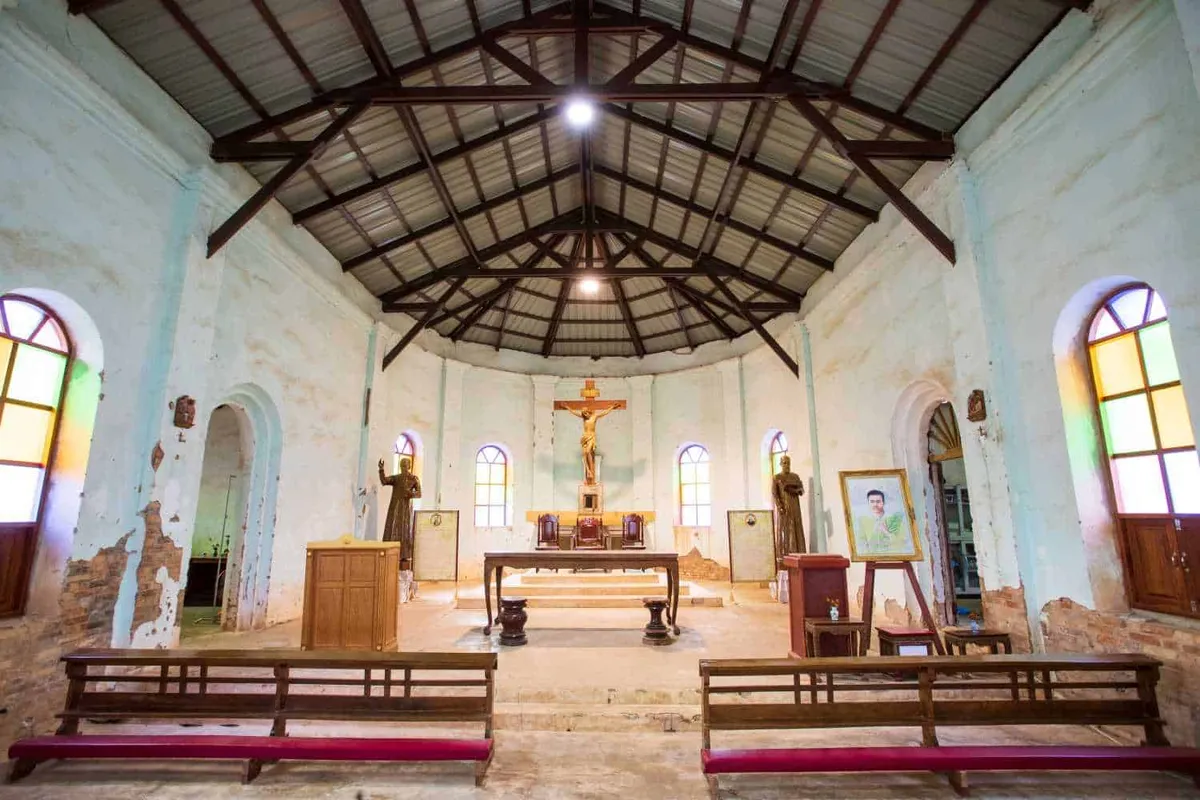
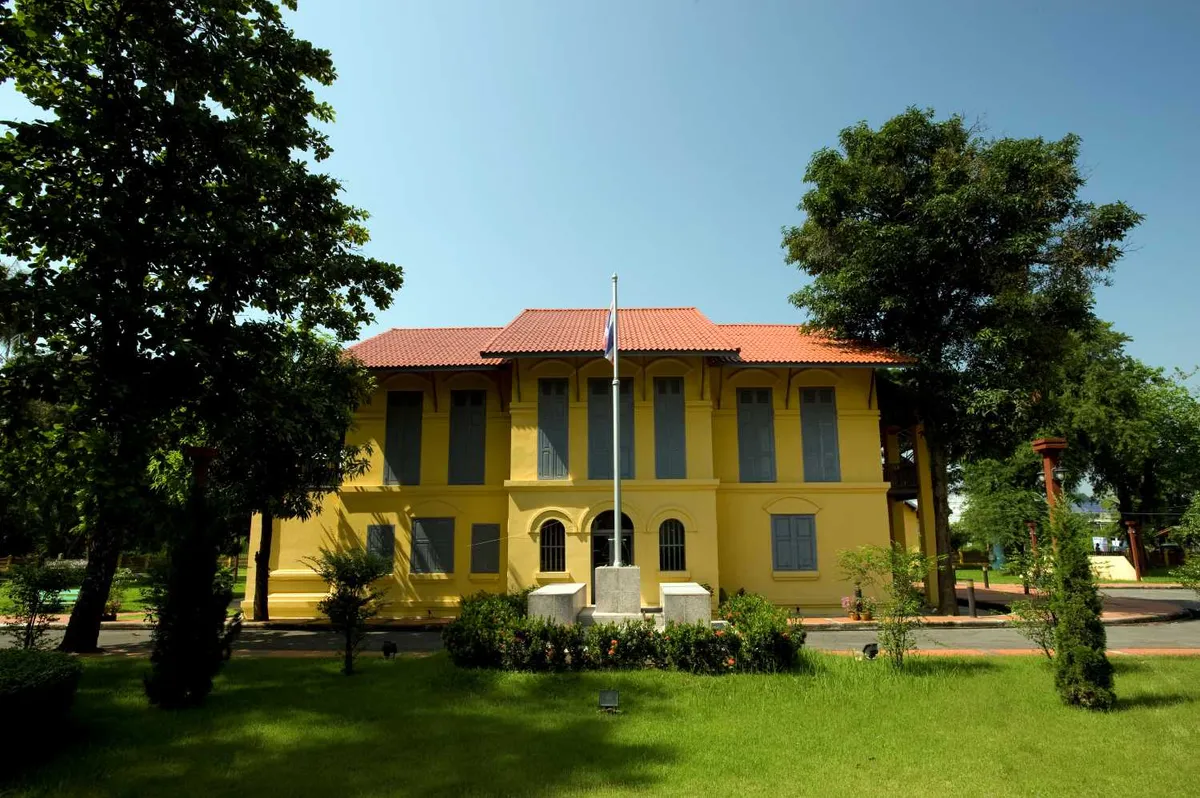
The province is also notable for its ethnic and historical diversity. Vietnamese communities settled along this stretch of the Mekong in the early 20th century, and Ho Chi Minh himself lived in the village of Ban Na Chok during the late 1920s while organising Vietnamese nationalist activity from exile in Siam. French colonial and Indochinese influences are visible in some of the older buildings and in the Catholic churches that dot the riverfront districts.
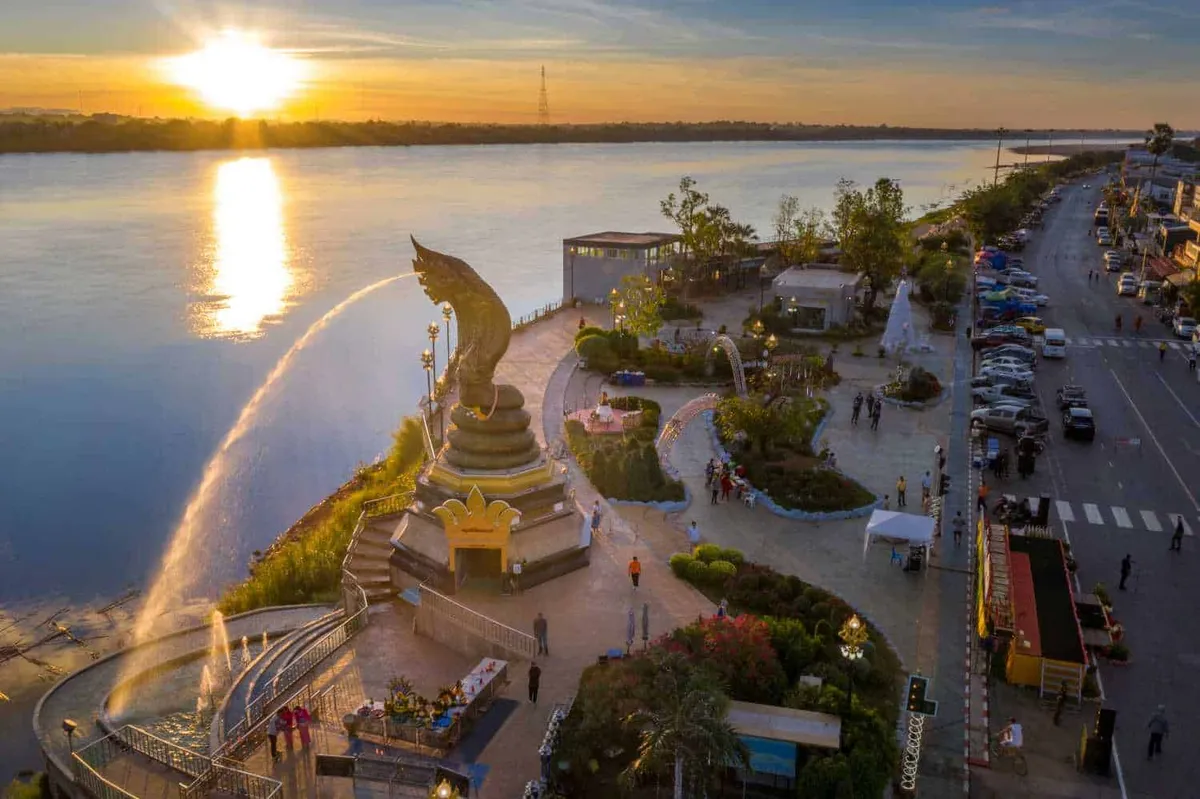
For most of the year the pace is unhurried. The riverfront promenade is the social heart of the town, busy in the evenings with food stalls, the walking street market, and locals watching the sun set over the Lao hills. In late September or early October, at the end of Buddhist Lent, the province hosts the Lai Reua Fai — an illuminated boat procession on the Mekong that draws visitors from across northeast Thailand and is one of the most visually striking cultural events in the country.
Top Things to Do
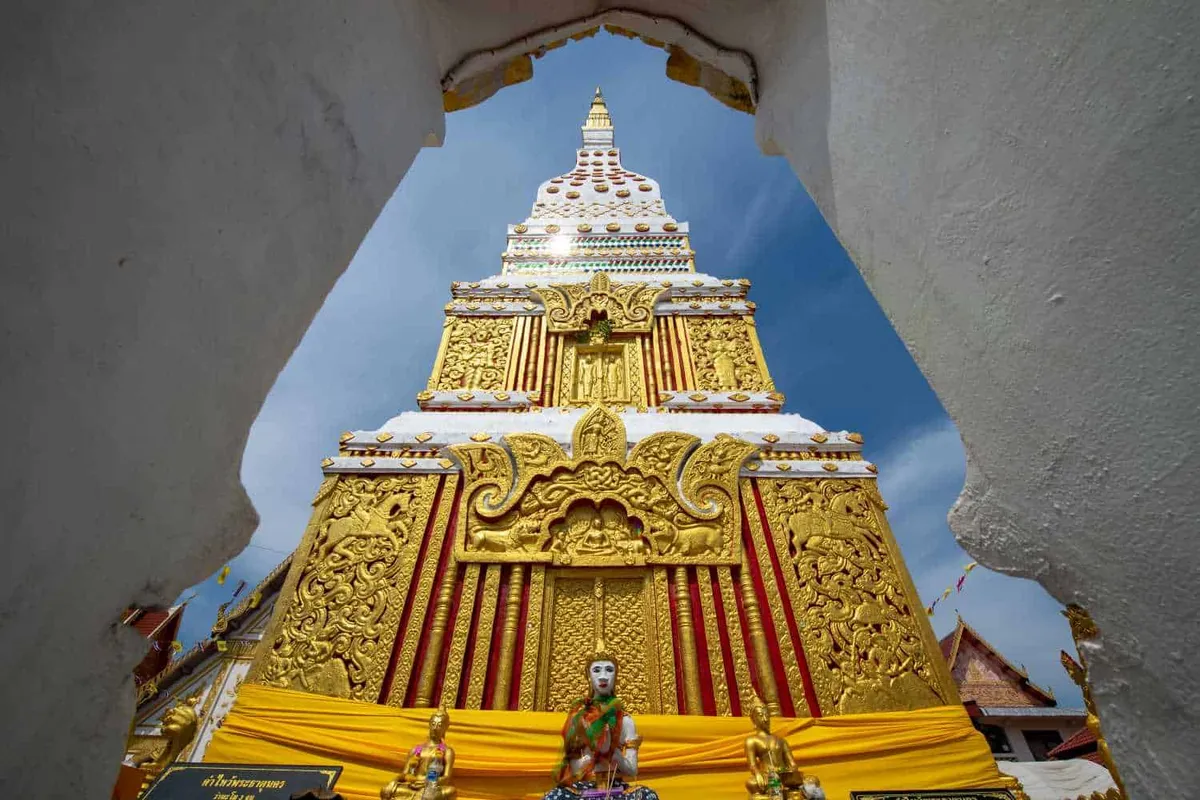
Phra That Phanom is the reason most visitors come to the province, whether or not they frame it as a pilgrimage. The Lao-style chedi in That Phanom district, 52km south of the capital along the Mekong road, rises 53 metres and is gilded at its upper section. The base enshrines what tradition describes as a breast-bone relic of the Buddha, and for Theravada Buddhists across northeastern Thailand and Laos this is the holiest site in the region. The stupa collapsed after weeks of heavy rain in August 1975 and was completely restored by 1979 — the present form closely follows the Lao renovation of 1940. The annual Phra That Phanom Worship Festival (late January to early February) fills the surrounding grounds with pilgrims, incense, and merit-making for seven to ten days. Even outside festival season, the chedi is active with Thai and Lao visitors throughout the day.
Renu Nakhon, a few kilometres from That Phanom, is a village dominated by the Phu Thai ethnic minority and known for hand-woven cotton textiles in distinctive dark-blue and red patterns. Looms are visible in the houses along the main lane, and finished cloth is sold from stalls around Wat Phra That Renu — a scaled-down chedi in similar style to That Phanom. The market here is genuine rather than staged, and prices are a fraction of Bangkok souvenir shops.
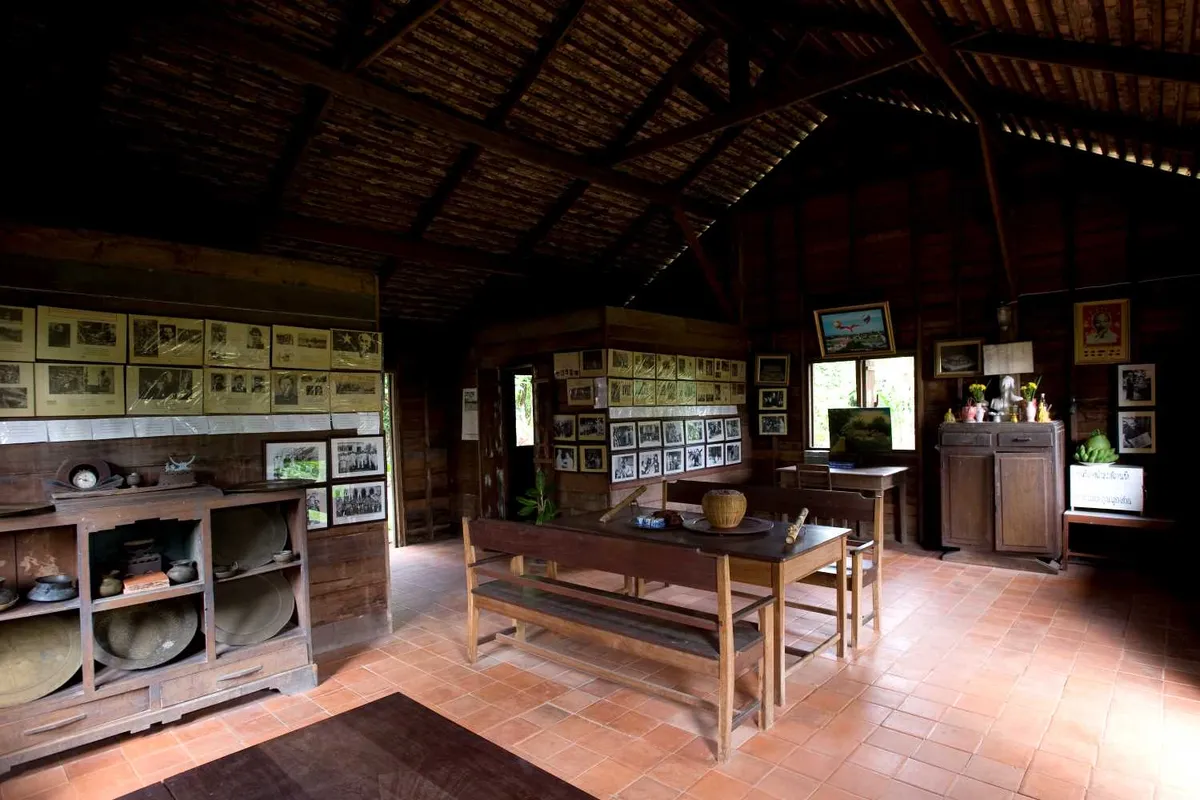
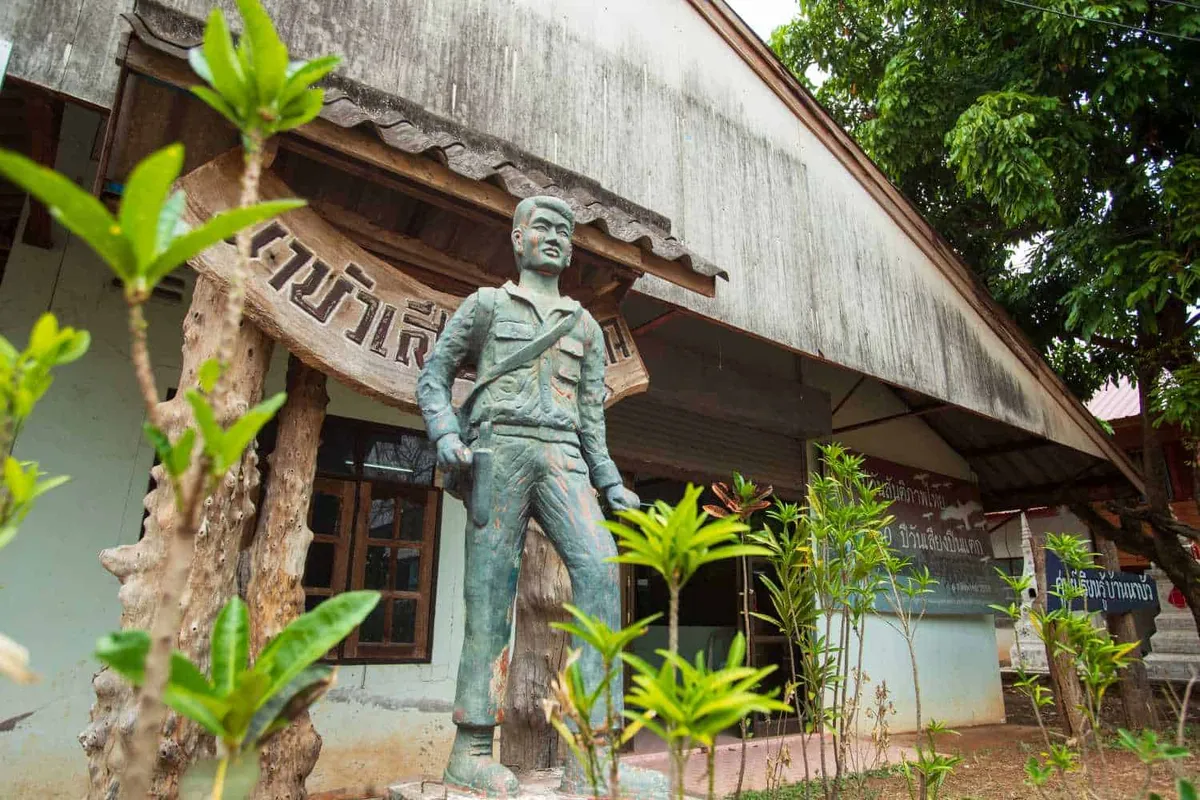
Ho Chi Minh’s House (Ban Na Chok) is a modest wooden dwelling in Nong Yat sub-district, about 3km west of the provincial capital, where the Vietnamese leader lived in the late 1920s under the alias Thầu Chín while organising resistance activity from exile. The house has been preserved with a few period pieces — wooden platform beds, pipes, a desk — and a small adjacent museum displays photographs and documents about his time in Thailand. Entry is free and Vietnamese tour groups visit regularly. The surrounding Ban Na Chok village retains a Vietnamese community character with its own language and customs.
The Mekong riverfront promenade runs through the centre of town and is the most pleasant way to spend an evening. The view across the river to the Lao mountains changes hour by hour, and food stalls set up from late afternoon. The Nakhon Phanom Walking Street operates on weekends and fills the promenade with local food vendors, crafts, and Phu Thai performance — less frenetic than walking streets in larger cities.
Lai Reua Fai — the illuminated boat procession — is the province’s signature event. At Ok Phansa (the end of Buddhist Lent, late September or early October), boats from across the province’s districts are floated on the Mekong at Phanom Naga Park. The boats are fitted with thousands of lanterns, candles, and carved wax sculptures, and the procession on the river at night draws crowds from across Isan. The 2025 festival ran 27 September to 8 October — dates align with the lunar calendar so check TAT announcements for each year.
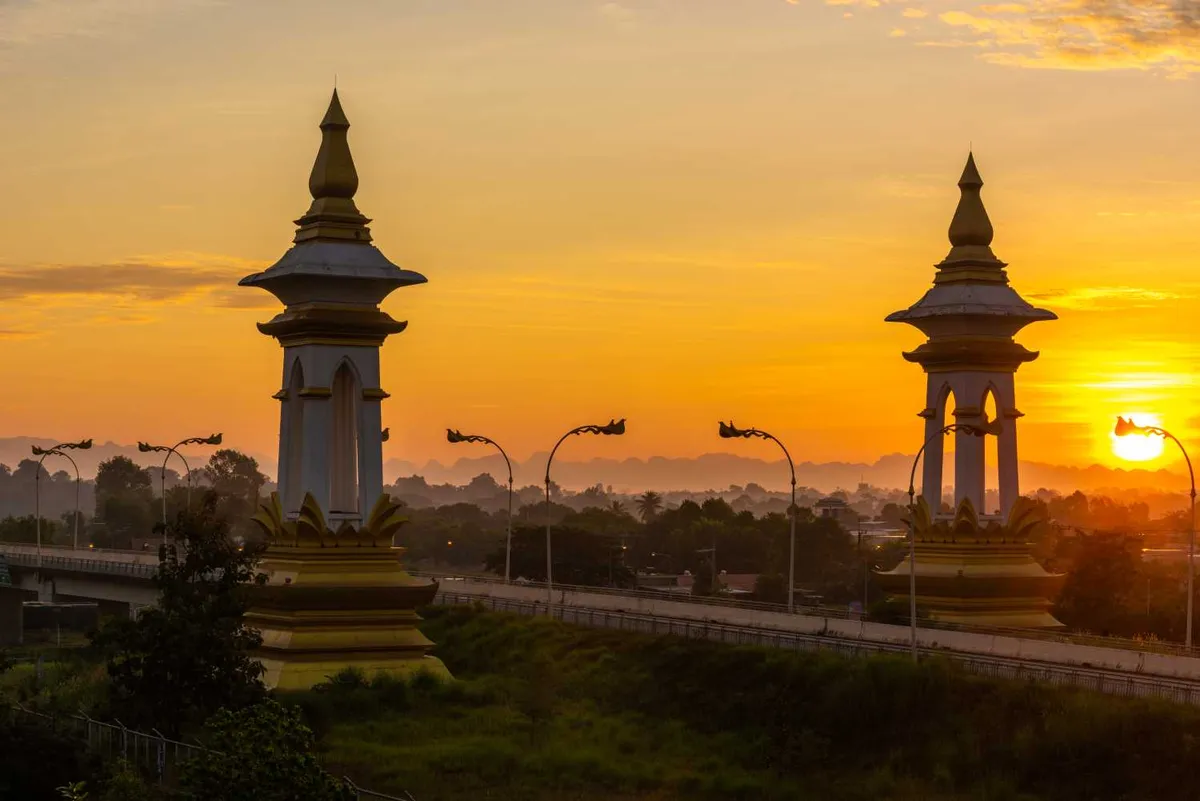
The Third Thai-Lao Friendship Bridge opened in November 2011 and connects Nakhon Phanom with Thakhek across the Mekong at 1,423 metres. The bridge is visible from the town’s northern end and is used by both cross-border commuters and tourists heading to Laos. Most nationalities can obtain a Lao visa on arrival. Thakhek is the starting point for the Kong Lor cave loop, one of the best motorcycle circuits in Laos.
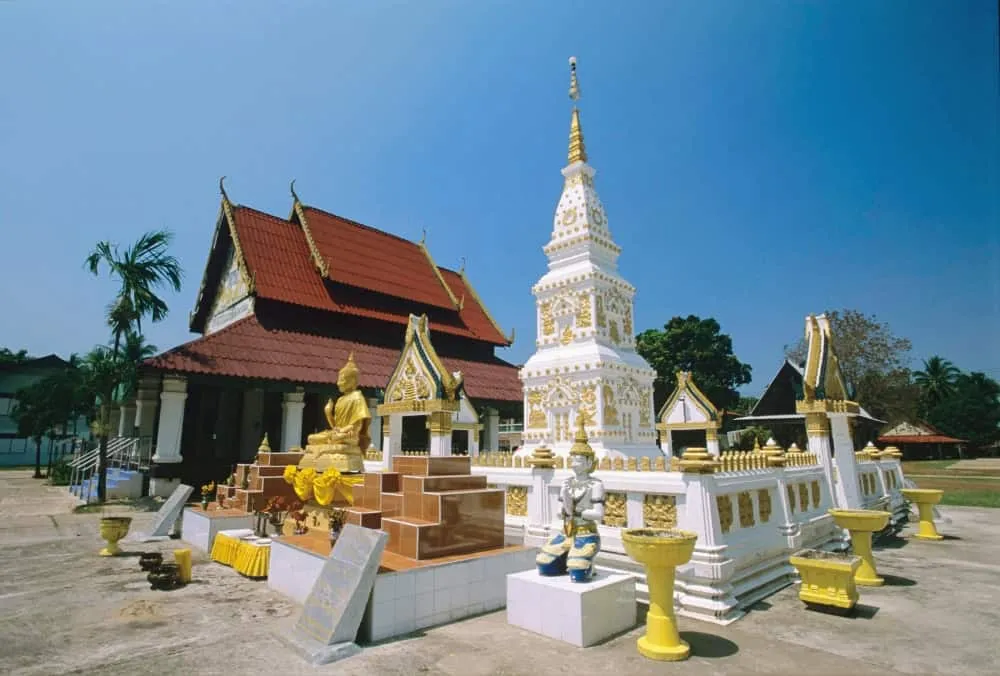
Kaeng Kabao is a rocky stretch of rapids on the Mekong south of town that locals use as a sunset picnic spot and where you can hire river kayaks. Phu Tham Phra is a forest hill with cave shrines about 35km north of the capital — a short hike through dry dipterocarp forest to viewpoints over the Mekong plain. The smaller town chedis — Pra That Tha Uthen, Phra That Sri Khun, and Phrathat Nakhon — are all active pilgrimage sites within the province worth visiting if time allows.
Where to Stay
The town has a decent range of riverfront and near-river hotels at mid-range prices. Fortune River View Hotel is the best-known property, with an outdoor pool and Mekong-facing rooms. Several smaller riverside guesthouses offer good value. There is nothing in the luxury bracket. For the Phra That Phanom festival period, book months ahead — accommodation within 30km fills completely.
Getting There
By air is the practical choice from Bangkok. Thai AirAsia and Thai Lion Air both fly direct from Don Mueang (DMK) to Nakhon Phanom (KOP) in around 1 hour 25 minutes, with multiple daily departures. Book ahead — flights can sell out, and the airport is small. By overnight bus from Mo Chit terminal takes 10 to 12 hours and is affordable; the journey arrives in the early morning. There is no passenger rail to Nakhon Phanom — the nearest mainline train station is Nakhon Ratchasima (Khorat), which is still several hours away by road.
Within the province, a hired songthaew or motorbike taxi covers the town. For Phra That Phanom, Renu Nakhon, and the outlying sights you need a rental motorbike or hired car — the roads are flat and straightforward.
Best Time to Visit
November through January is the best period. The air is clear, temperatures are cool enough for outdoor sightseeing, and the dry riverfront is at its most pleasant. The Phra That Phanom festival falls at the end of this window, typically late January to early February — worth planning around if the pilgrimage atmosphere appeals.
February through April brings serious smoke. Cross-border agricultural burning in Laos sends PM2.5 concentrations into very unhealthy territory across the Mekong provinces — Nakhon Phanom recorded some of the highest AQI readings in Thailand in early 2025. If you must visit during these months, pack an N95 mask and monitor air quality daily.
May through October is the wet season. The Mekong rises substantially and the landscape turns intensely green. July and August are the heaviest months. The Lai Reua Fai boat festival at Ok Phansa — late September or early October — is the one compelling reason to visit during the rainy season, and many visitors time their trip specifically to see it.
Frequently Asked Questions about Nakhon Phanom
How do I get to Nakhon Phanom from Bangkok?
What is the best time of year to visit Nakhon Phanom?
How long do you need in Nakhon Phanom?
Is it possible to cross into Laos from Nakhon Phanom?
What is Phra That Phanom and why is it significant?
Spotted something out of date or incorrect? Let us know
Plan your
Nakhon Phanom trip