





Thai Style Kuti at Wat Wang Tawan Tok
กุฏิทรงไทย วัดวังตะวันตก
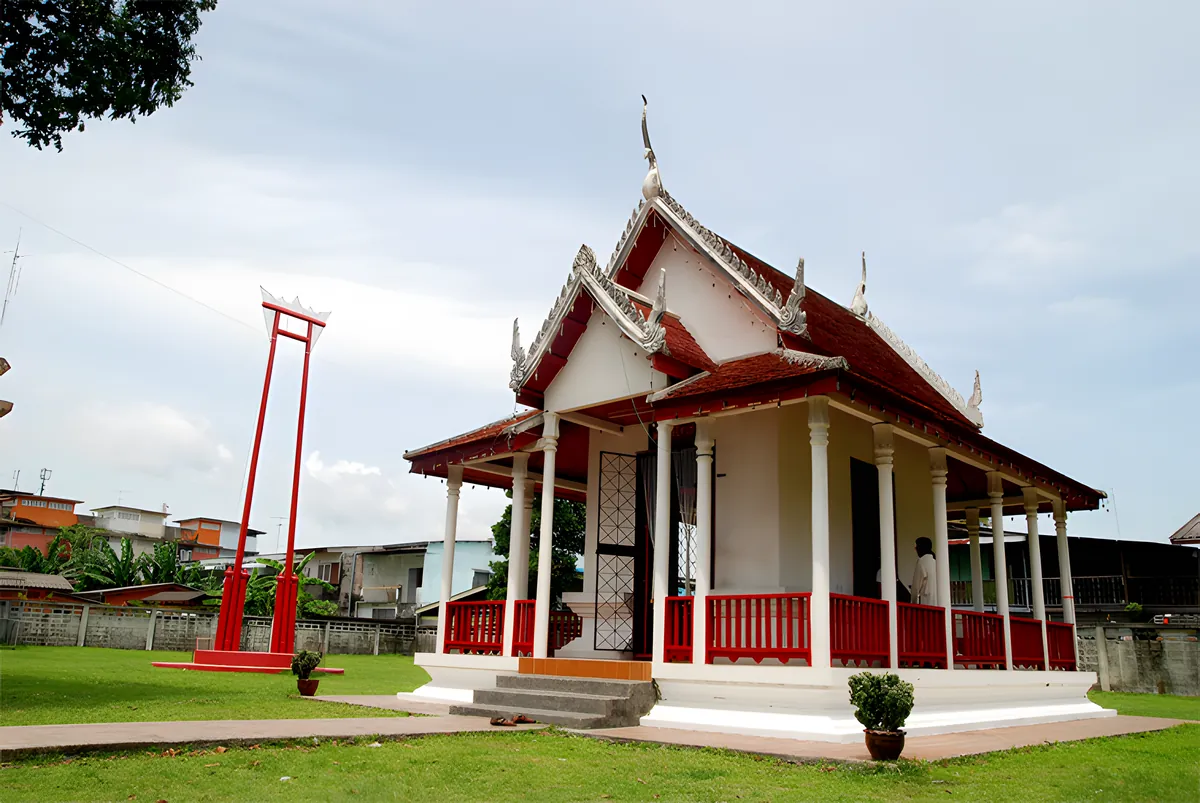
Wat Wang Tawan Tok’s kuti is a working monk’s residence, not a reconstruction — three raised teak buildings, joined under a shared run of gabled roofs, standing on the same site since 1888. Phra Kru Kachat (Yong) and his disciples built it without a single nail, using interlocking wooden joints throughout, and the job took roughly 13 years to finish. It’s one of the best-preserved examples of a southern Thai monastic kuti still in daily use, on Nakhon Si Thammarat’s Ratchadamnoen Road.
The three connected sections are linked by open walkways, each roofed separately so the gable ends step down in a distinctive silhouette — a construction style specific to this region rather than generic Thai temple architecture. Carved gables, fretwork window panels, and ventilation grilles carry decorative patterns particular to Nakhon Si Thammarat craftsmanship. The building sits raised on stilts, a standard feature of traditional southern Thai houses that keeps living quarters above floodwater and lets air move underneath in the heat. The Association of Siamese Architects, under royal patronage, later gave the kuti a conservation award for how faithfully it’s been maintained.
The temple compound itself dates back further — Chaophraya Nakhon (Noi), a former governor of Nakhon Si Thammarat, used the grounds for a royal cremation before converting the site into a temple. Its twin, Wat Wang Tawan Ok, sits directly across the road, and the two were established as a pair, splitting the old royal grounds down the middle of what’s now Ratchadamnoen Road. The kuti is what survives in its original form from that era — most of the temple’s other buildings have been rebuilt or renovated over the decades, which is part of why the wooden kuti draws heritage attention that the rest of the compound doesn’t.
Insider Tip: Go before 9 AM. This is a lived-in monastery — monks use the walkways and courtyards through the day — so early visits give you the clearest look at the building without getting in the way of temple routine.
Watch out: The kuti houses monks, not a display exhibit, so treat it as someone’s home. Stick to the courtyard and exterior unless a monk invites you further in, and don’t photograph anyone without asking first.
Dress modestly — covered shoulders, no shorts — as this is an active religious site, and Ratchadamnoen Road has street parking within a short walk of the entrance.
- Entry fee: Free
- Built: 1888 (2431 BE), took ~13 years to complete
- Address: Ratchadamnoen Road, Khlang, Mueang Nakhon Si Thammarat
- Construction: Three raised teak sections, joined without nails
- Nearby: Wat Wang Tawan Ok, directly across the road
Location & Directions
Ratchadamnoen Road
Nakhon Si Thammarat, Thailand
Show your taxi or Grab driver
กุฏิทรงไทย วัดวังตะวันตก
Frequently Asked Questions
How old is the kuti at Wat Wang Tawan Tok?
Is it free to visit?
What makes this kuti unusual?
Has it received any recognition?
Is there a temple on the other side of the road too?
Spotted something out of date or incorrect? Let us know
Stay Near Thai Style Kuti at Wat Wang Tawan Tok
Live prices for places closest to Thai Style Kuti at Wat Wang Tawan Tok — tap a pin to compare.