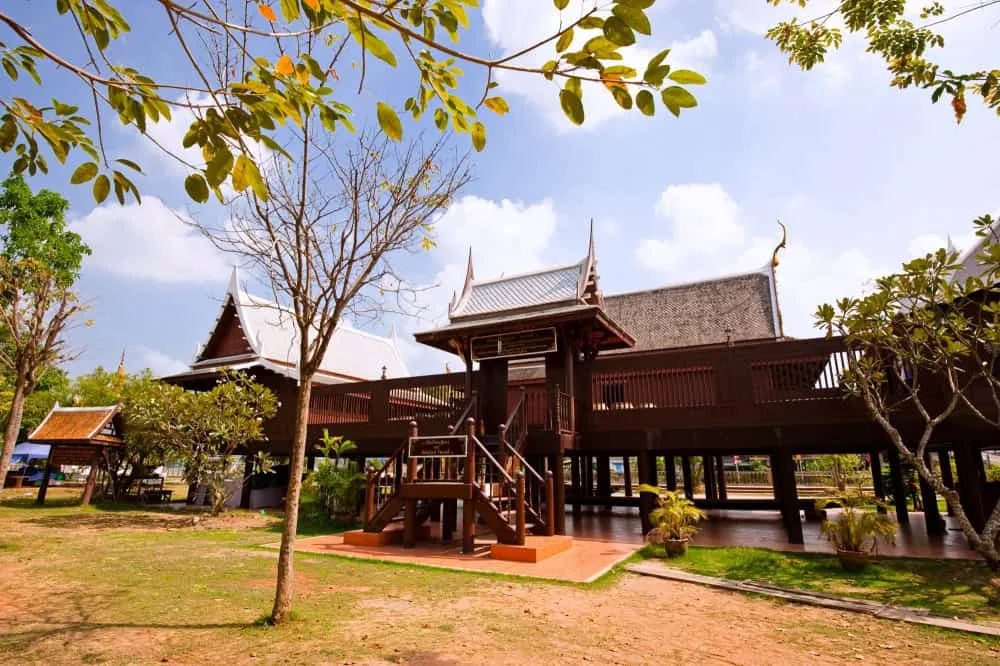




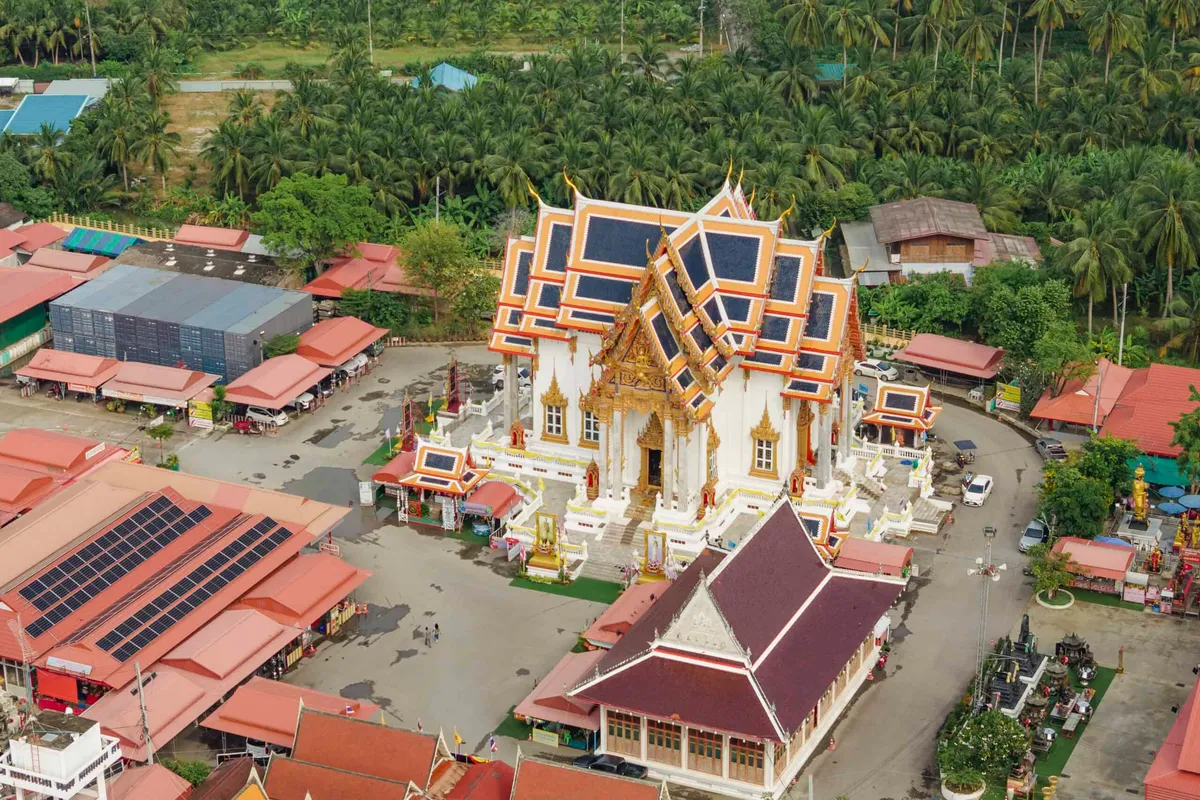
Wat Bangkapom is a free, working temple on a canal in Amphawa, a short walk from the district’s well-known floating market. It dates to the late Ayutthaya period, founded around 1769, and takes its name from a local legend: a couple fleeing the fall of Ayutthaya in 1767 are said to have hidden inside a woven “kapom” grain basket here, survived, and built the temple in gratitude.
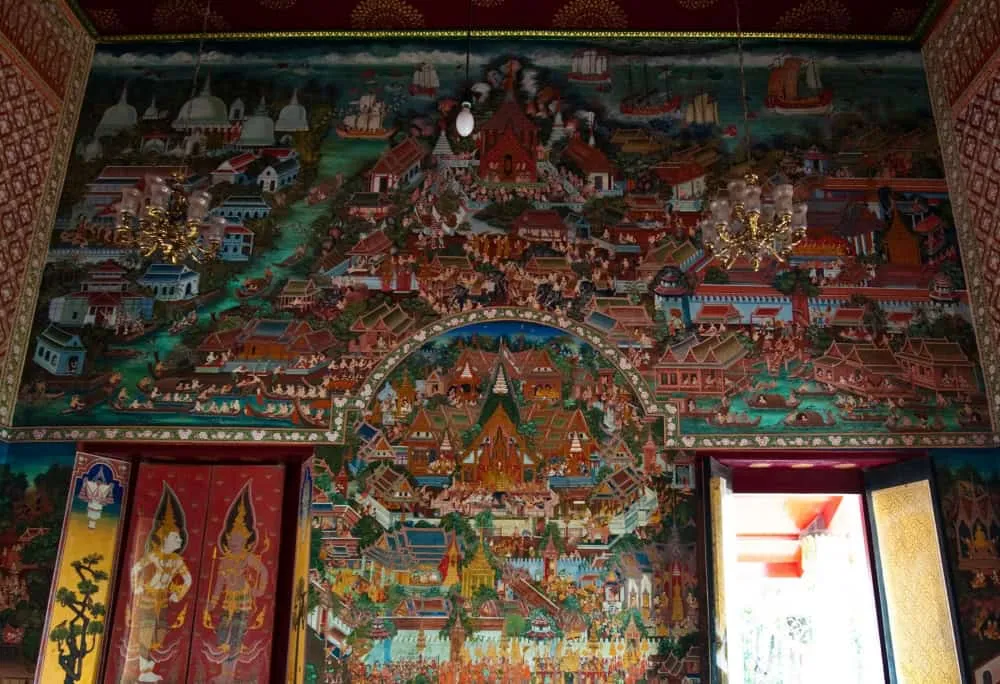
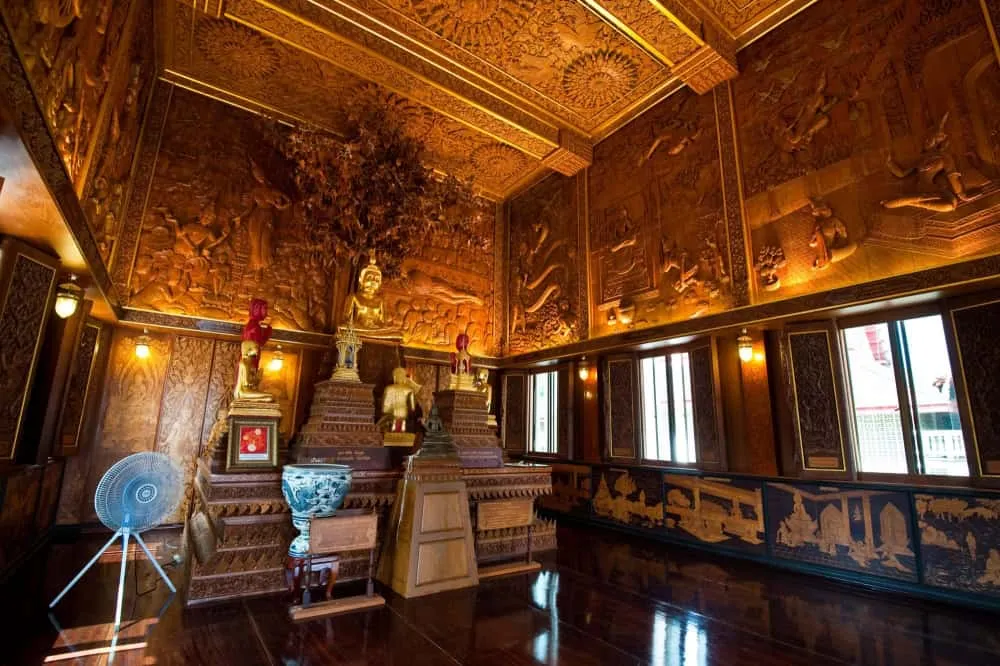
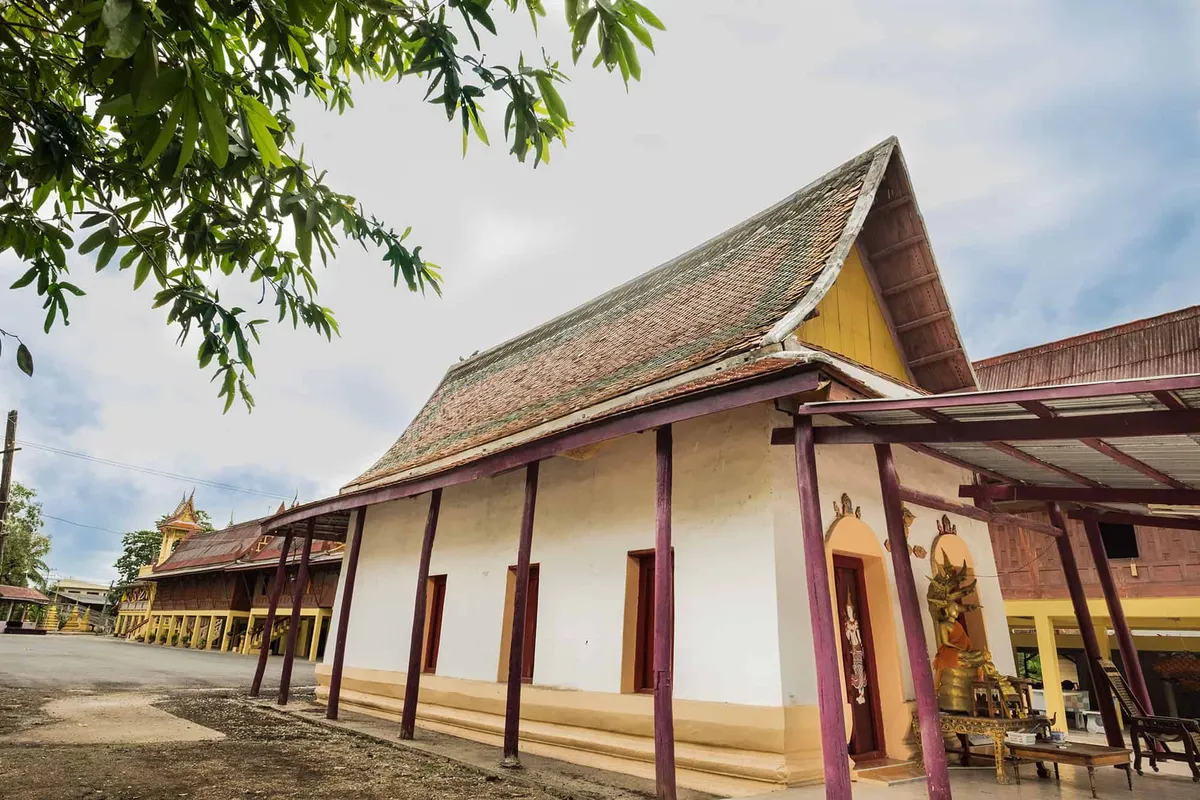
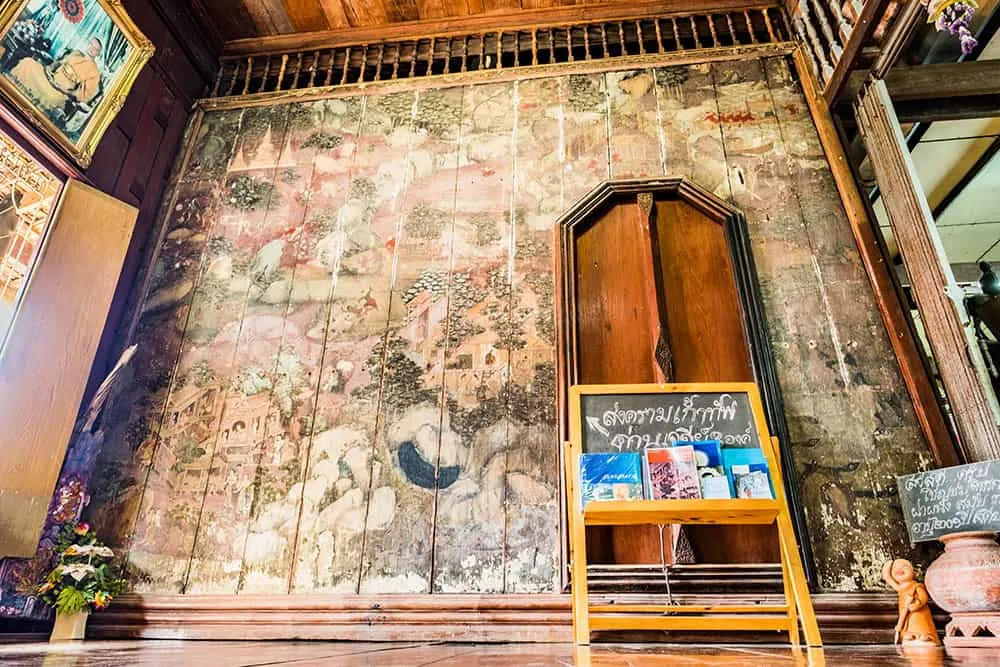
The temple’s viharn (assembly hall) is the reason to detour here rather than just browsing the market stalls. It’s built in an old Thai-Chinese style with a round moon-gate doorway and stucco guardian figures standing either side — a different look from the standard Rattanakosin-style ordination halls found at most Thai temples, and one that reflects the Chinese trading community historically active along the Mae Klong river. Inside, relief stucco work and older murals cover the walls. The complex also holds a large riverside Buddha image linked to a former abbot, Luang Pho Khong, remembered locally for his reputed spiritual power — his image draws a steady trickle of worshippers making merit with flowers, candles and incense.
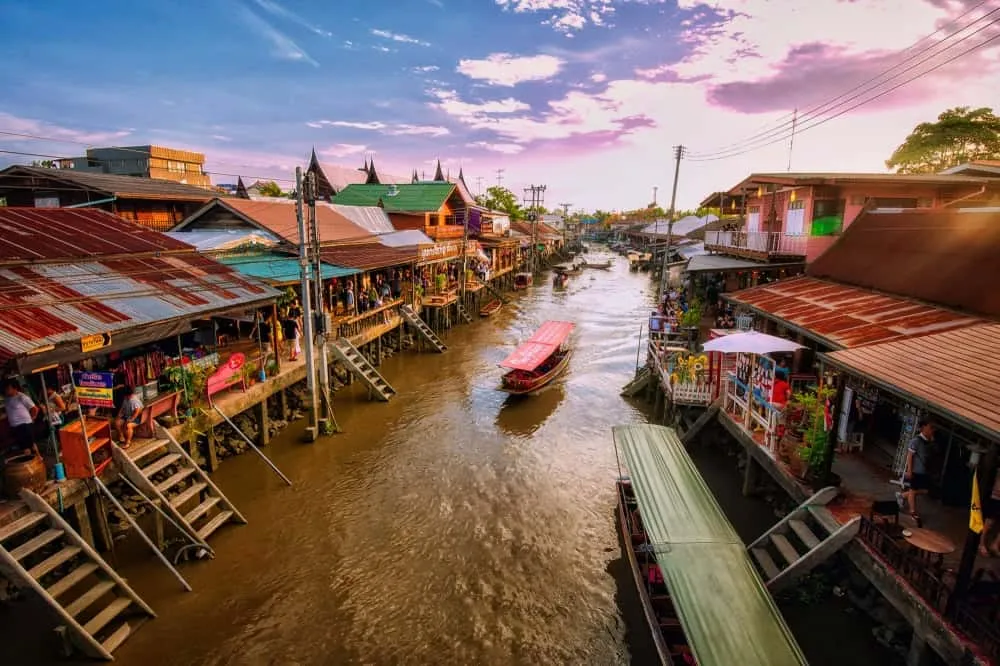
Morning is the best time to visit: monks chant during the early hours, and the canal is busiest with boat traffic heading to the floating market a short distance away. Outside of that window, the grounds are quiet — a handful of resident monks, the occasional local dropping in to pray, and canal water lapping against the pier posts.
Insider Tip: Visit before 9 AM, ahead of the Amphawa floating market crowds, then walk the few minutes to the market once the temple’s had its moment of relative calm.
- Entry fee: Free
- Founded: Circa 1769 (late Ayutthaya period)
- Highlight: Chinese-style viharn with moon-gate entrance and stucco guardians
- Location: Amphawa, Samut Songkhram, a short walk/boat ride from the floating market
- Dress code: Shoulders and knees covered, shoes off inside buildings
Pair the visit with the Amphawa Floating Market itself, or Wat Amphawan Chetiyaram, another temple in the same riverside district.
Location & Directions
Amphawa, Samut Songkhram
Samut Songkhram, Thailand
Show your taxi or Grab driver
วัดบางกะพ้อม
Within Walking Distance




Frequently Asked Questions
What does the name Wat Bangkapom mean?
Is Wat Bangkapom free to visit?
What's the main thing to see?
How do I combine it with the Amphawa floating market?
What should I wear?
Spotted something out of date or incorrect? Let us know
Stay Near Wat Bangkapom
Compare places to stay in Samut Songkhram, or open the map for options closest to the attraction.