



Samut Songkhram
สมุทรสงคราม
Thailand's smallest province — canal life, a market on a railway track, firefly evenings at Amphawa, and the birthplace of a king.
Recommended by us

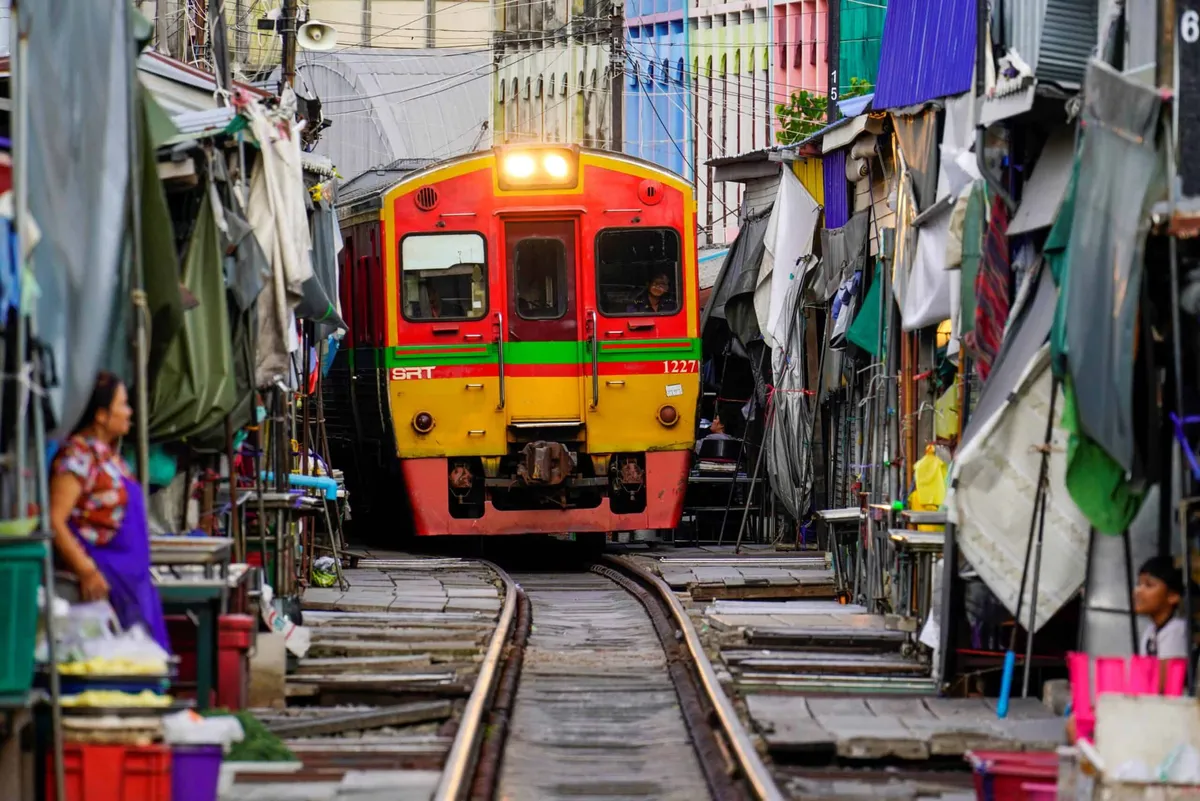
Mae Klong Railway Market
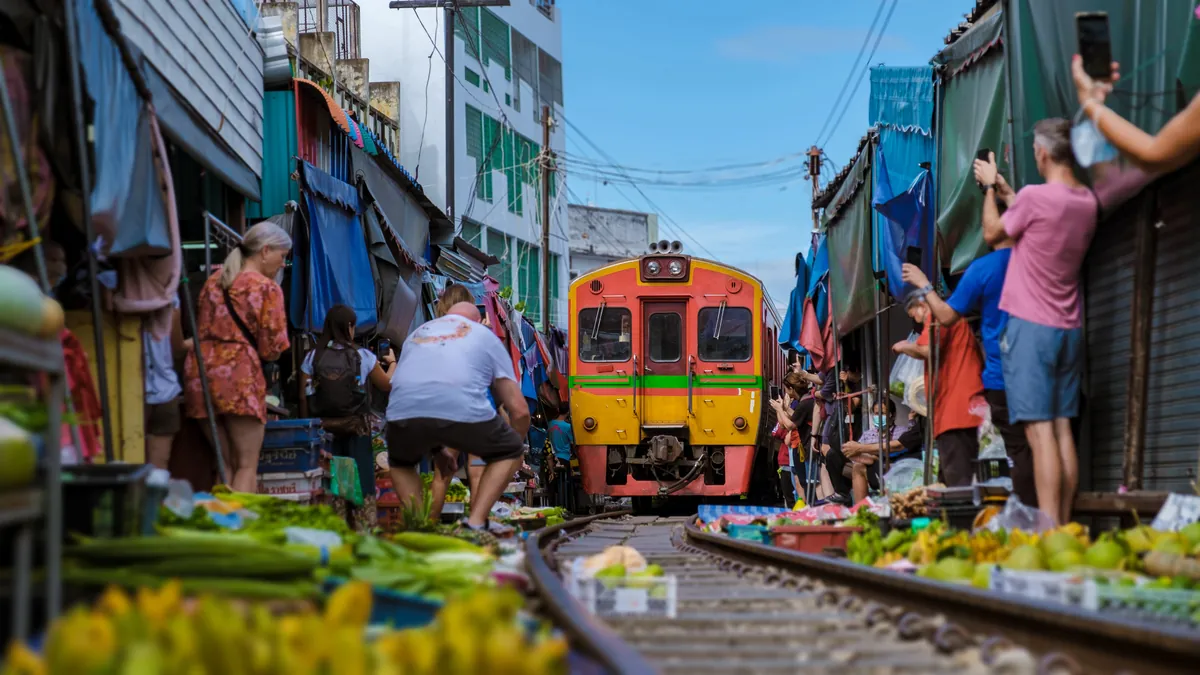
The market stalls that fold their awnings back four times a day to let the train through — the umbrella sequence is the photo everyone comes for. Arrive 10 minutes before a departure for the best position.

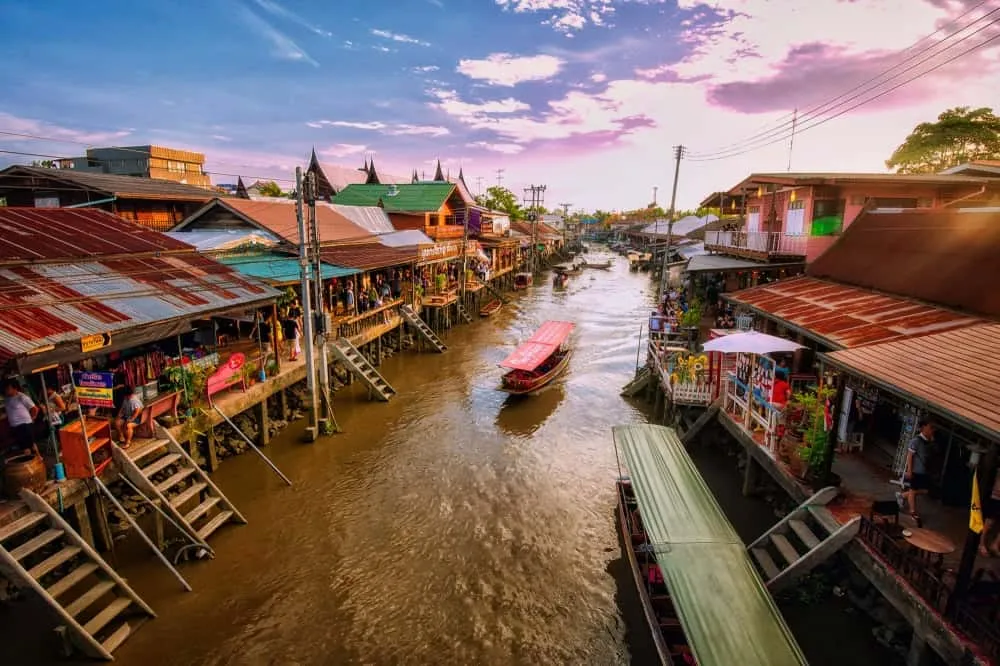
Amphawa Floating Market
Canal-side food stalls on weekends, with firefly boat trips running after dark. More local in character than Damnoen Saduak — the evening boat ride is the bit worth staying for.
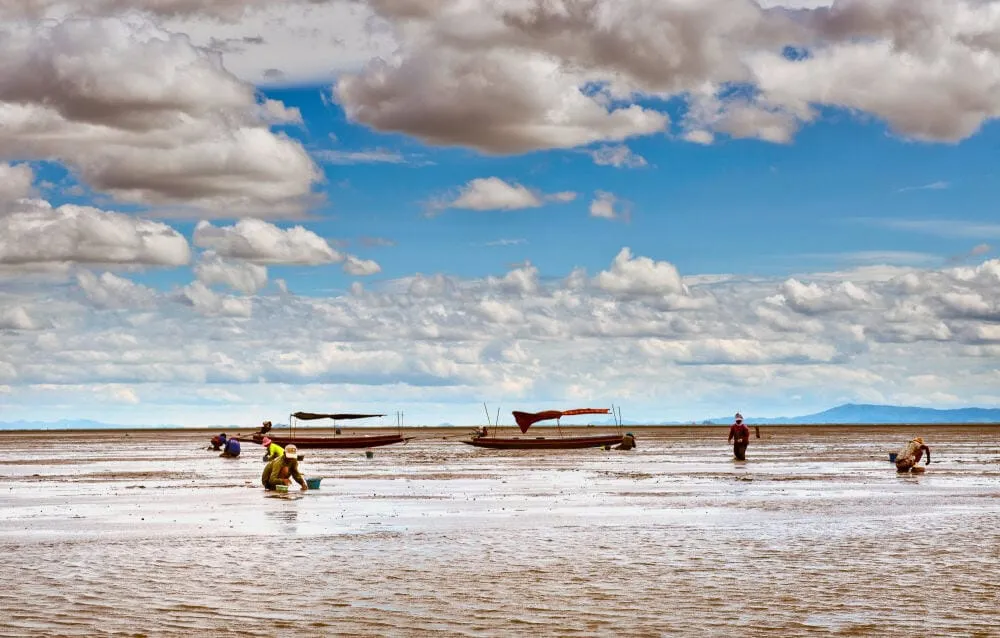
Don Hoi Lot
A sandbar at the mouth of the Mae Klong River, famous for hoiphai razor clams sold grilled at roadside stalls. The view of fishing boats against the river mouth at low tide is a good reason to linger.

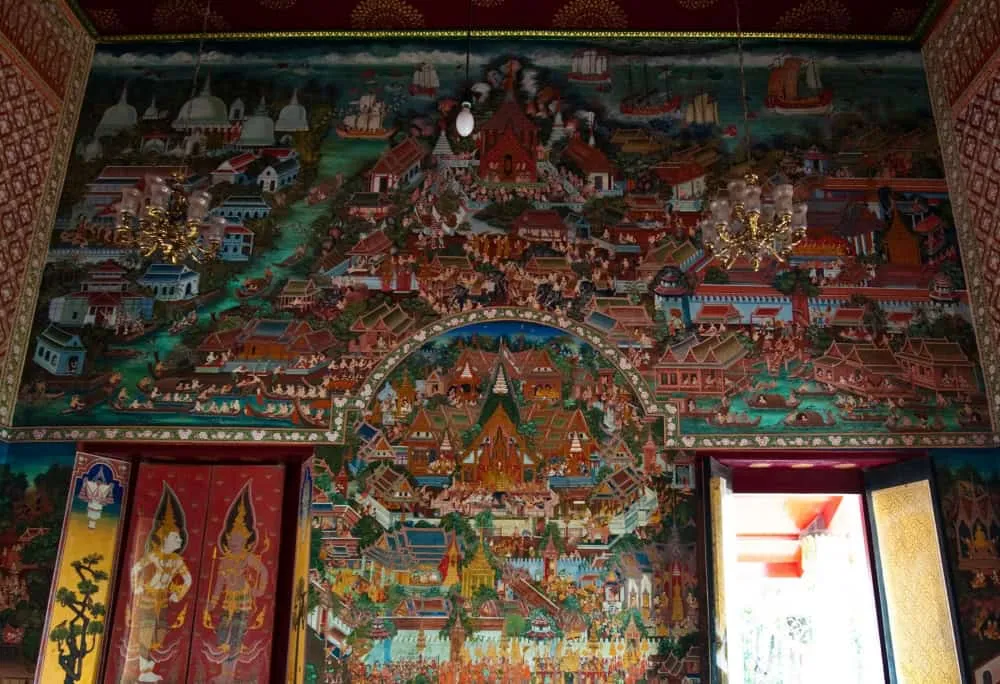
Wat Amphawan Chetiyaram
The birthplace temple of Rama II — a royal temple in the heart of Amphawa town, with a riverside setting and the king's memorial in the grounds. Combine with the floating market visit next door.
Get to Samut Songkhram
Minivans from Bangkok's Victory Monument reach Samut Songkhram in about 90 minutes — the standard route for a day trip to the railway market and Amphawa.

eSIM for Thailand
Land with data already working and skip the airport SIM queue. We tested six plans — code THAIHOLIDAY saves 10%.

Travel insurance
Canal boat tours and longtail trips are the main activity here — sort cover before you go and check that boat excursions are included.
Wats, shrines & spiritual sites
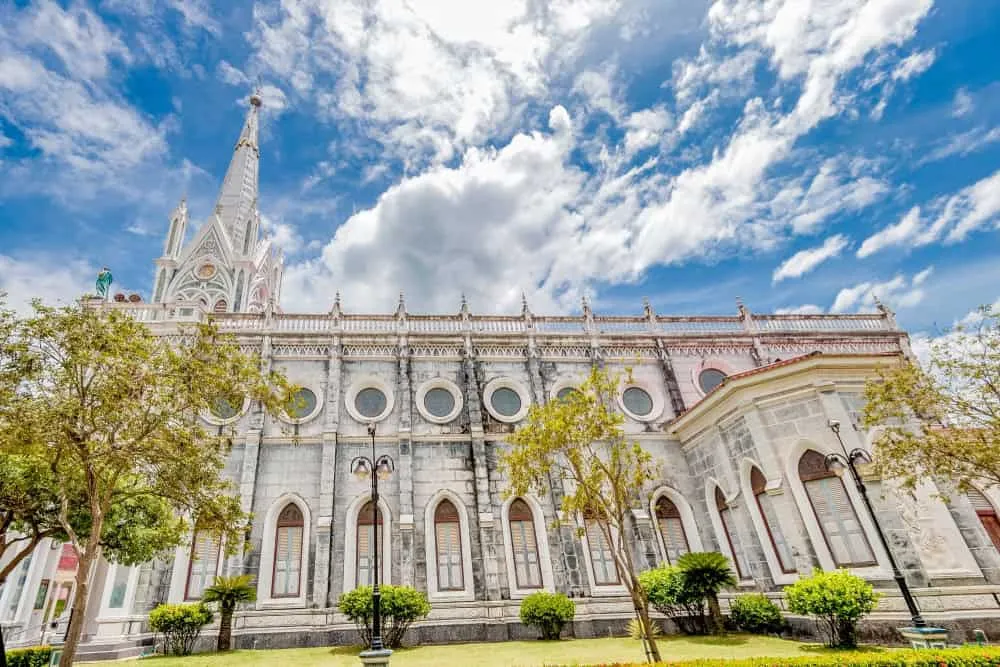
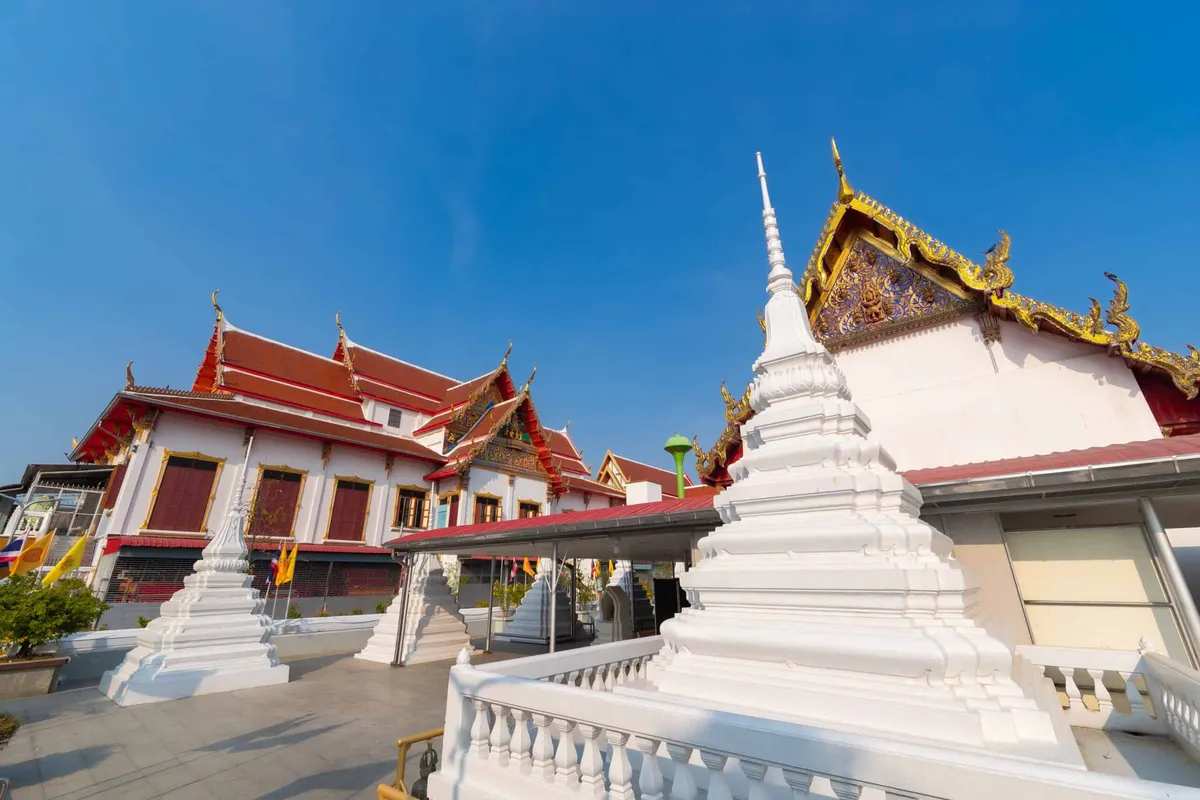
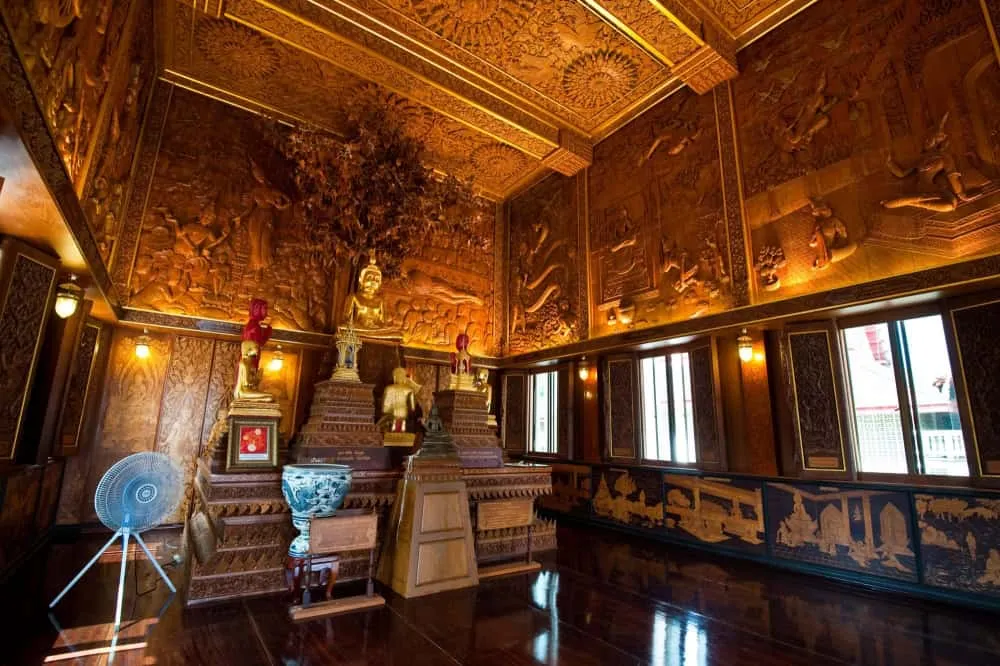
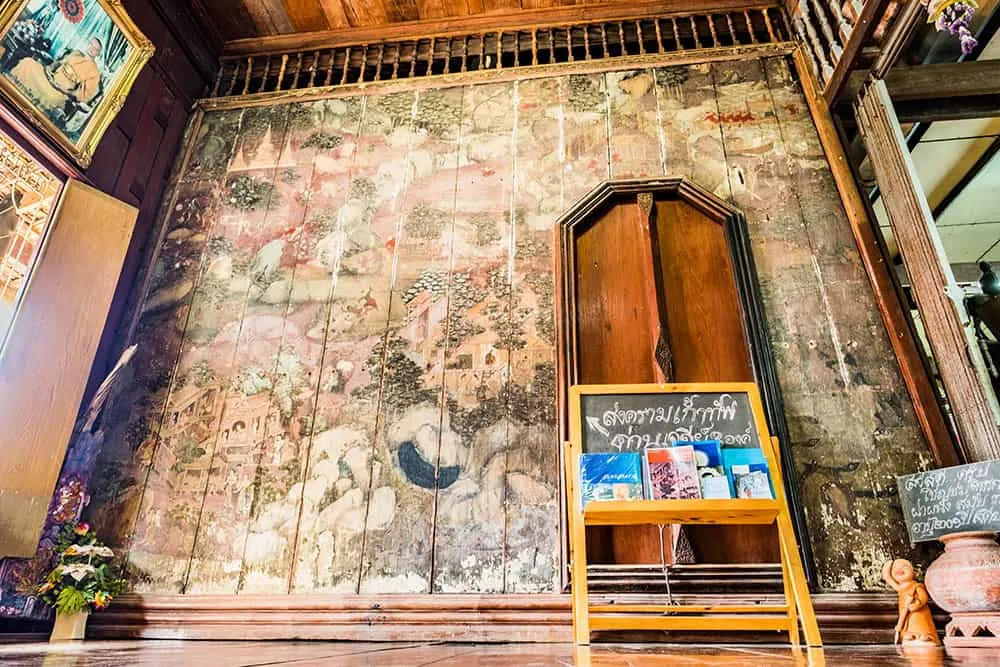
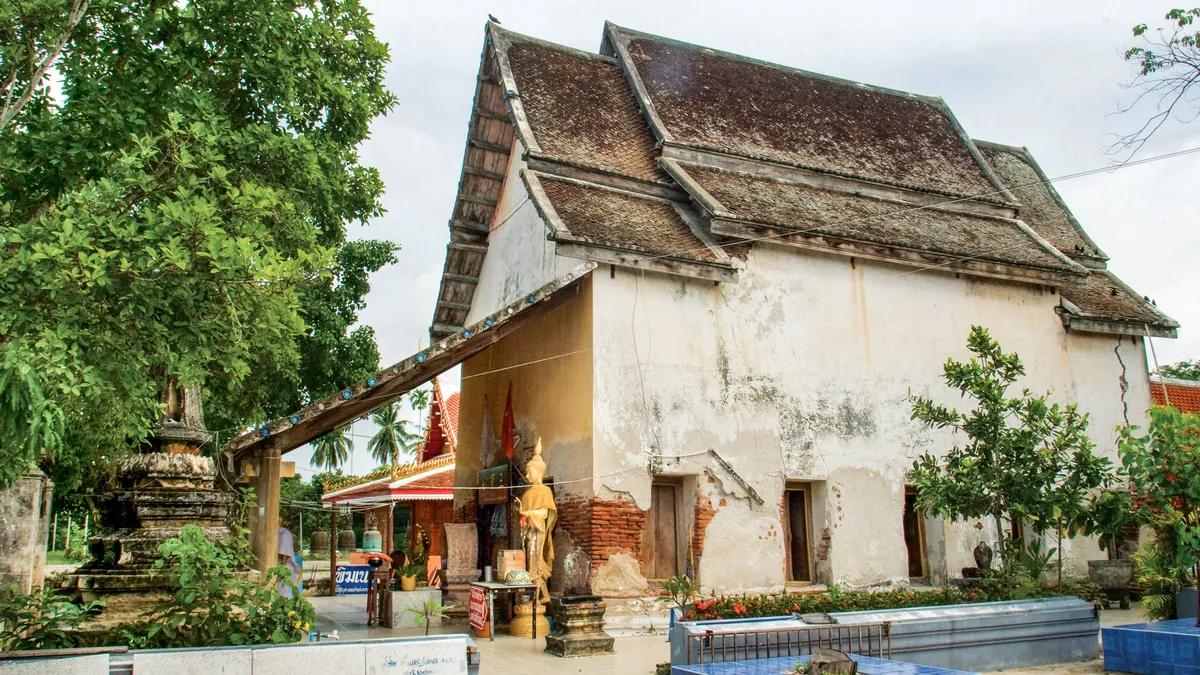
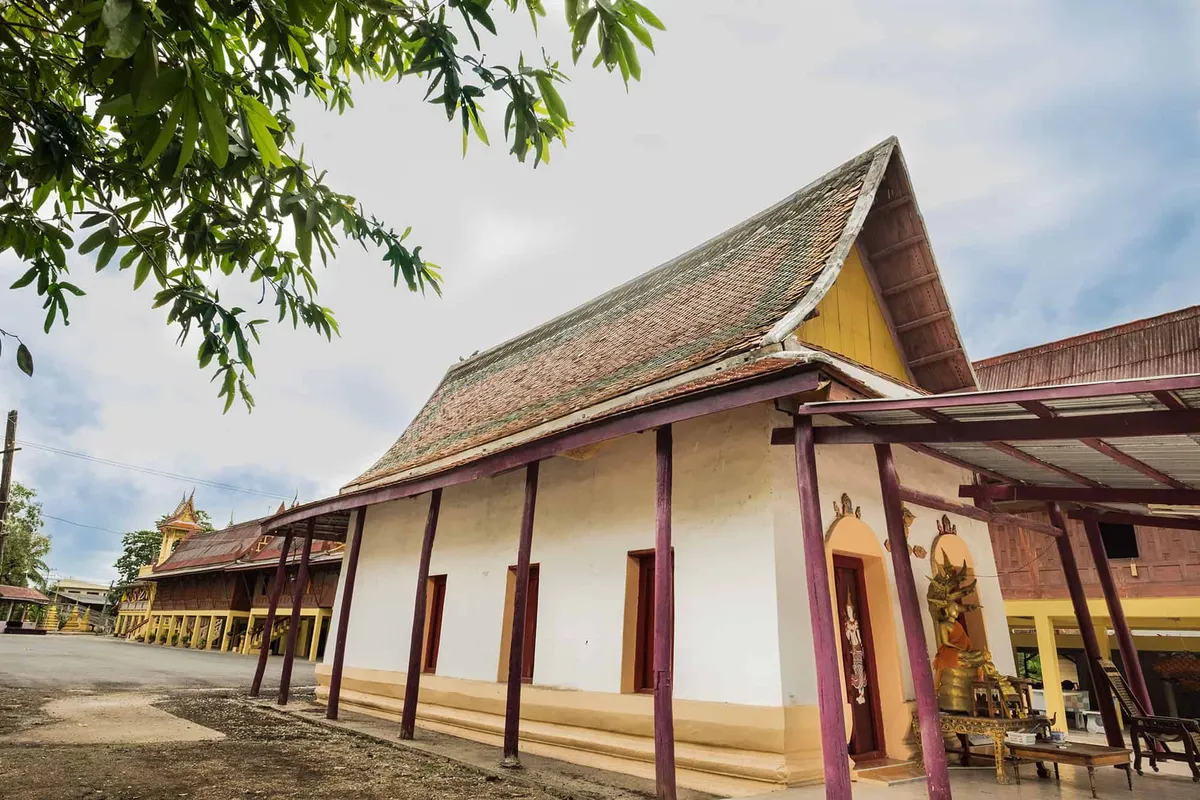
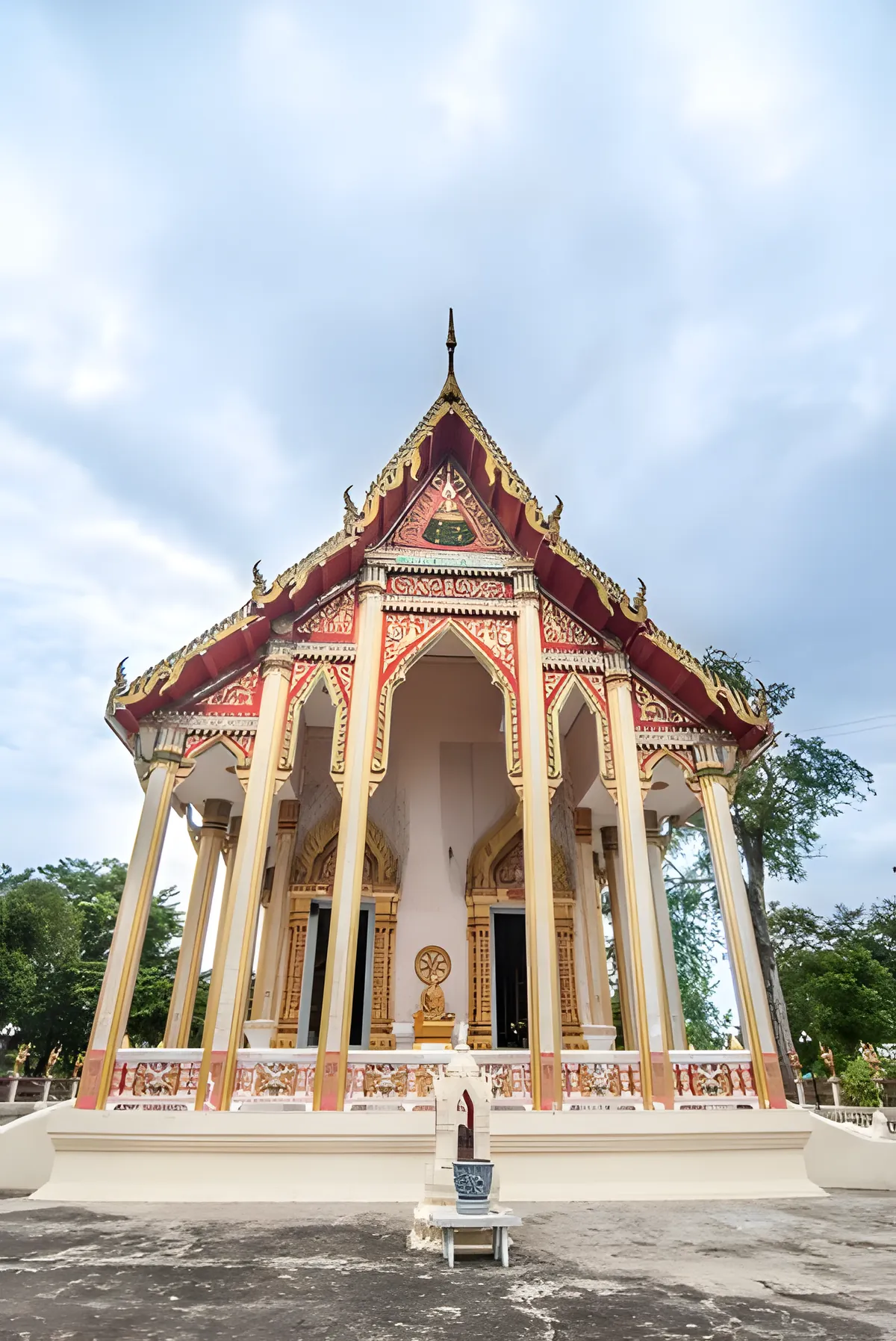
Temples in Samut Songkhram












Night markets, street food & shopping
Markets & bazaars in Samut Songkhram




Museums, history & heritage
Museums & culture in Samut Songkhram








Things to do on the map
Tap a pin for details — 30 places in Samut Songkhram plotted.
When to go
Nov–Feb Dry and relatively cool — the best window for combining Maeklong Railway Market, Amphawa, and Don Hoi Lot without rain interruptions. Don Hoi Lot's sandbank is most accessible at low tide throughout the cool season.
Mar–May Hot before the rains; the floating markets and canal rides are still pleasant in the morning, but midday at Don Hoi Lot or the railway market is intense. Razor-clam hunting is actually best March to May when tides expose the mudflats by day.
May–Oct Upper-Gulf wet season, with September and October the heaviest months. Afternoon downpours are typical rather than all-day rain, so morning visits to the markets work well. Firefly boat trips from Amphawa run year-round but numbers are higher during the wet months when the forest is dense and humid.
From the blog
Samut Songkhram guides & reading

About Samut Songkhram
Last updated September 2026
Overview
Samut Songkhram sits at the mouth of the Mae Klong River where it meets the upper Gulf of Thailand, roughly 80 kilometres southwest of Bangkok. At 416.7 square kilometres it is the smallest of Thailand’s 77 provinces — a compact triangle of canal-laced agricultural land between Samut Sakhon to the northeast and Ratchaburi and Phetchaburi to the west. The population is under 200,000. It doesn’t feel like a tourist destination, which is part of why a visit here works.
The province is known across Thailand for three things: Amphawa floating market (the one Bangkokians actually go to on weekends), the Maeklong Railway Market where the train rolls through an active food market twice a morning, and Don Hoi Lot — the razor-clam sandbank at the river mouth, a Ramsar-listed wetland of genuine ecological importance. A fourth thread runs through all of it: King Rama II, the poet-king and second monarch of the Chakri dynasty, was born in Amphawa district in 1768. His memorial park sits beside the floating market canal.
The canal system is the landscape here. Coconut palms line the waterways, wooden houses project on stilts over the water, and small boats carry produce to market as they have for centuries. Damnoen Saduak, the more commercially developed floating market often shown in travel photographs, is actually in neighbouring Ratchaburi — about 25 kilometres west. Samut Songkhram’s markets are quieter and less staged.
Top Things to Do
Maeklong Railway Market (Talat Rom Hub) is the province’s most photogenic sight. A working retail market lines both sides of an active train track, with awnings, vegetable stalls, and hanging goods extending directly over the rails. When a train approaches, vendors retract their awnings and pull their displays back in a choreographed routine that takes under two minutes, then immediately reset once it passes. The train runs through eight times daily; times are publicly listed but subject to change — arrive early and you will not have to wait long. The market is in Mae Klong town, about 8 kilometres from Amphawa.
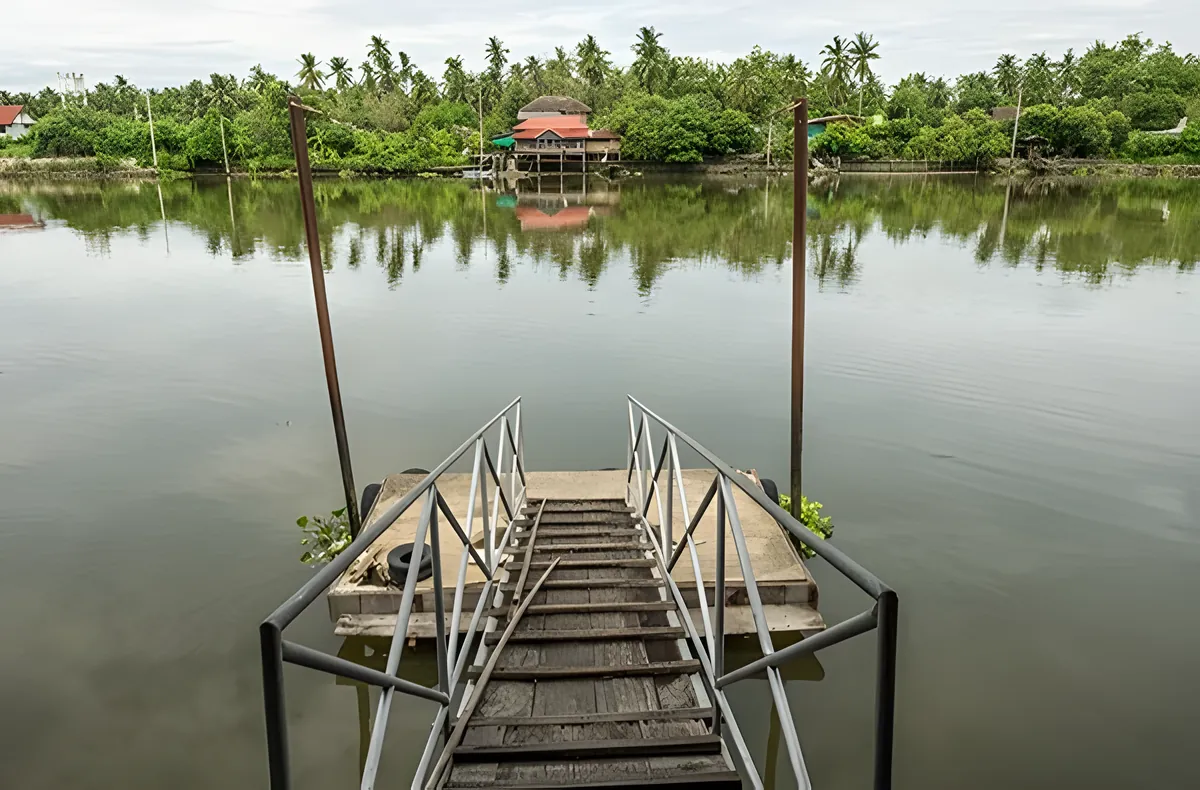
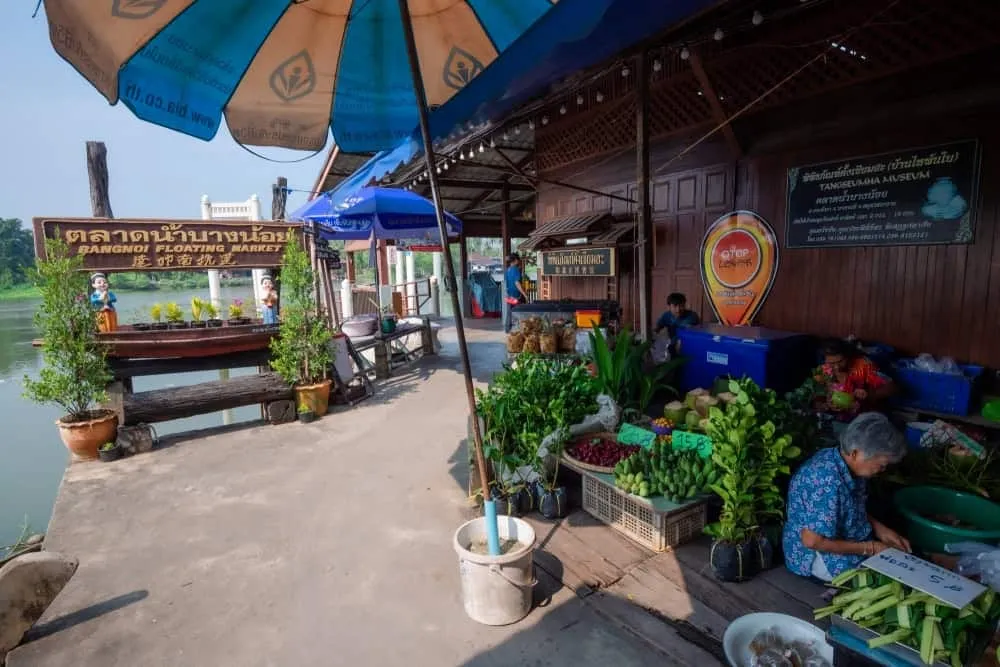
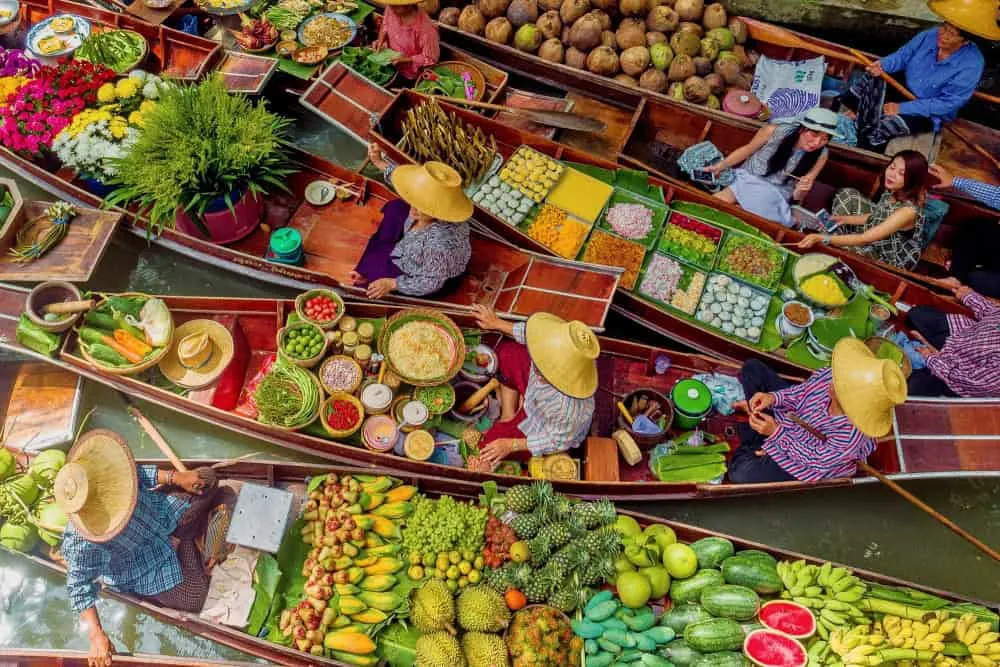
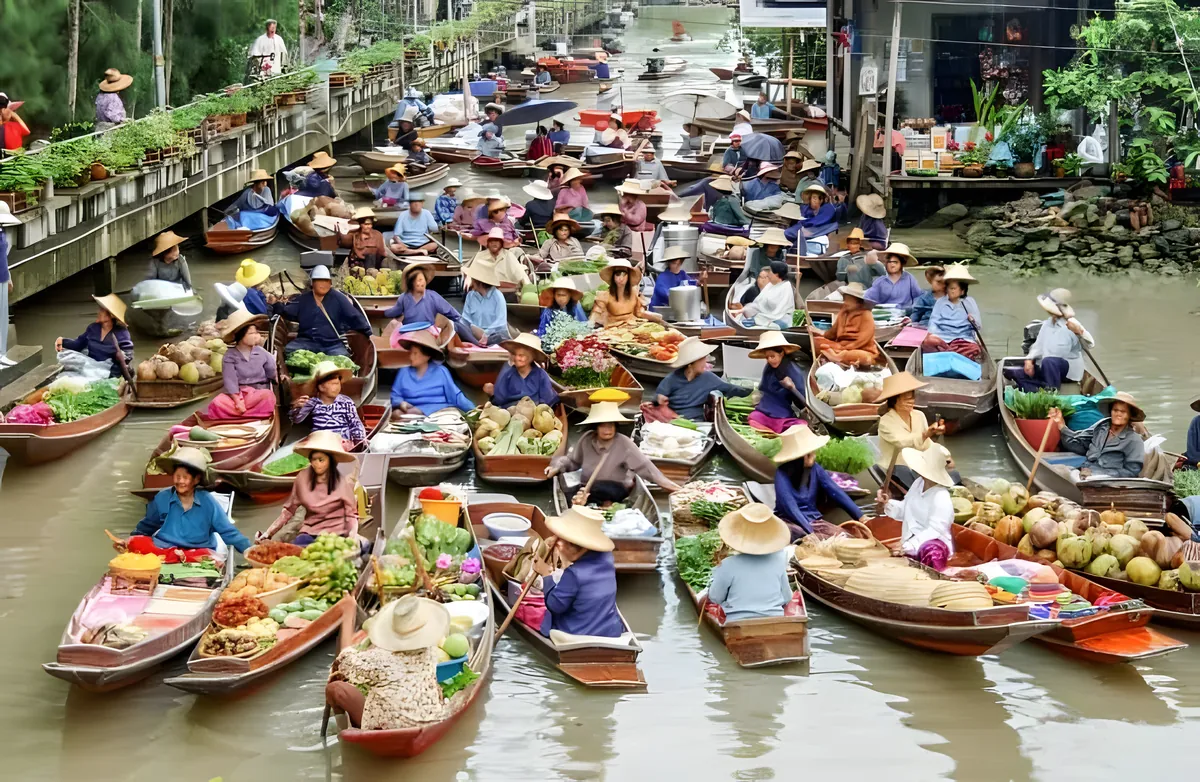
Amphawa Floating Market opens Friday through Sunday afternoons and evenings (roughly noon to 9 pm), with the evening being the most atmospheric. The setting is a canal running through the old Amphawa district centre, with wooden shophouses on both banks and boats selling freshly grilled seafood from the water. It is more commercialised than it was a decade ago, but it remains a functioning local market with a genuine neighbourhood character. The evening canal-side eating — river prawns, grilled oysters, boat noodles — is the reason to stay late.
Firefly boat trips depart from the Amphawa canal-side after dark, typically from around 6.30 pm. Shared boats cost around 60–80 baht per person for an hour on the water; the route runs through sections of the canal bank where fireflies congregate in trees, producing a slow, rhythmic light show. It is quiet, unhurried, and unlike anything else near Bangkok. The trips run year-round, with more active firefly populations during the wetter months of May to October.
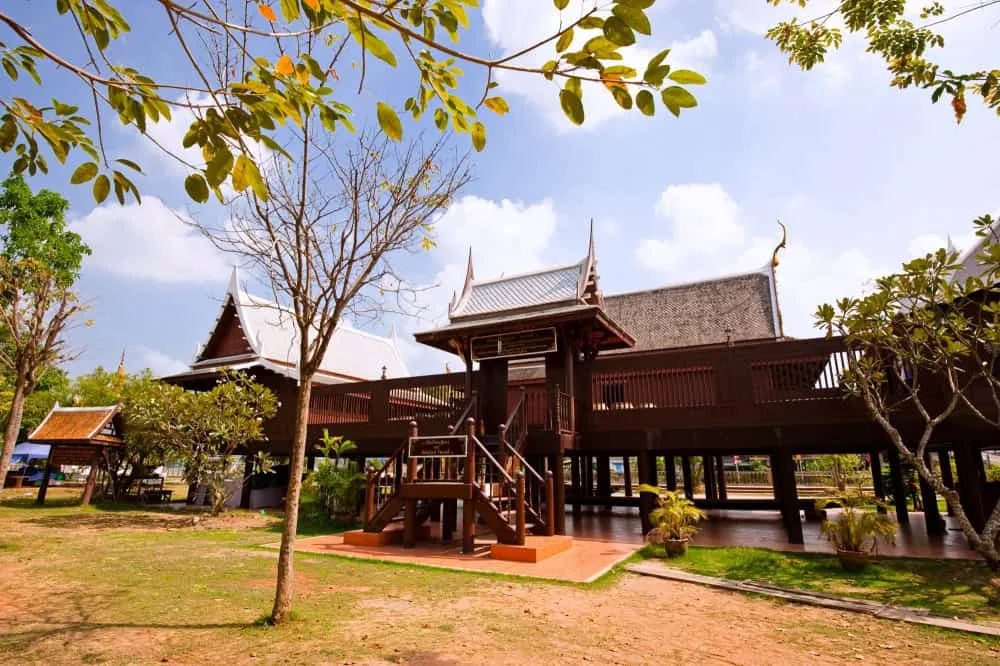
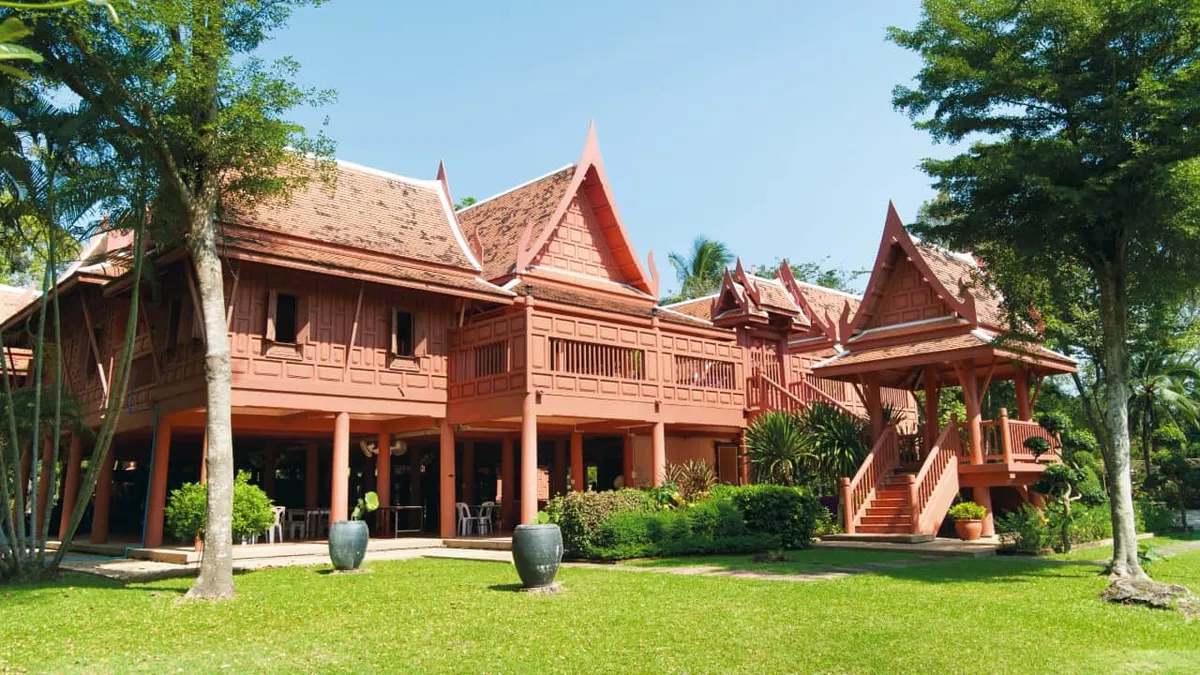
King Rama II Memorial Park is a short walk from Amphawa floating market and easy to combine. The park marks the birthplace of King Rama II (1768–1824), whose reign is associated with the flowering of classical Thai literature and the revival of Khon masked dance. The grounds include traditional Rattanakosin-era central Thai houses, a library of rare Thai manuscripts, theatrical puppets connected to the king’s literary works, and a botanical garden. It is calm and well-maintained, and often uncrowded when the floating market is busy.
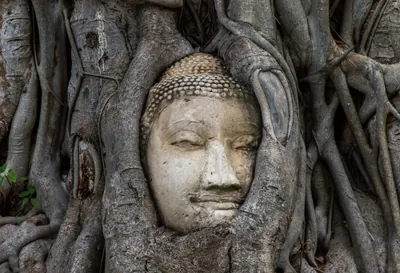
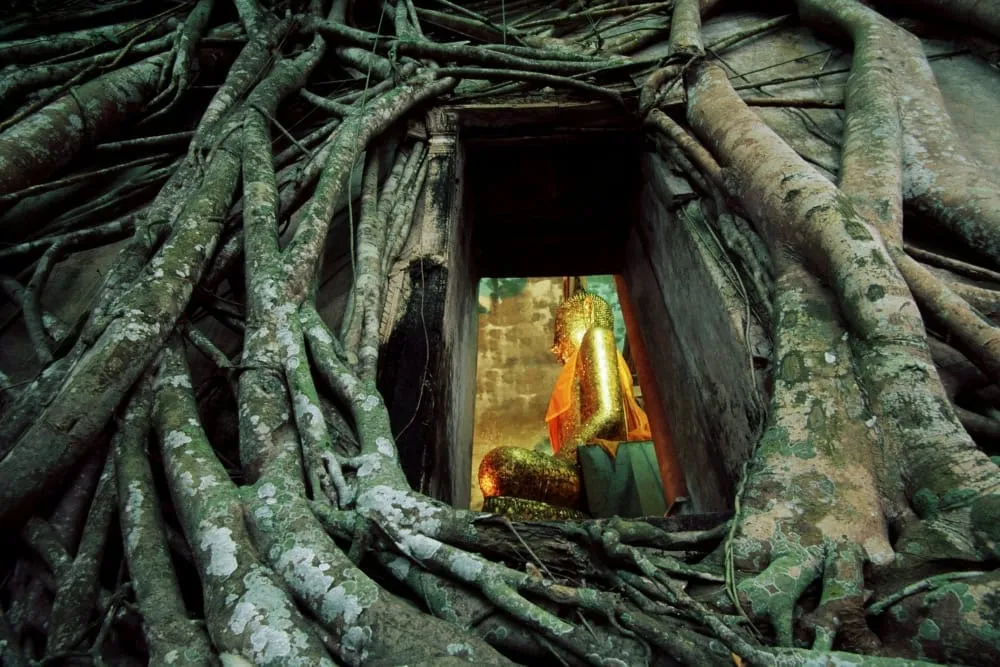
Wat Bang Kung is a temple in Bang Khonthi district where the ordination hall (ubosot) has been encased by the roots and trunk of a banyan tree over centuries. The result is a building held in a living embrace of aerial roots — the two have grown so intertwined that the tree now supports the structure. Inside, a golden Buddha image remains in active veneration. The temple has military significance: it served as a fortified position for General Taksin’s forces after the fall of Ayutthaya to the Burmese in 1767, and it was declared a national archaeological site in 1996.
Don Hoi Lot is a sandbar and mudflat system at the Mae Klong river mouth, named after the razor clam (hoi lot, Solen regularis) that the tidal flats here support in exceptional numbers. The site is a Ramsar wetland (registered 2001) and holds the largest known population of this species, which is endemic to the northern Gulf of Thailand. At low tide — particularly from March to May when daytime tides are lowest — visitors can walk the exposed mudflats and find razor clams at the surface. The site also supports 18 recorded bird species and 42 invertebrate species in the adjoining coastal mangrove. The seafood restaurants at Don Nai (the road-accessible section) serve the catch fresh.
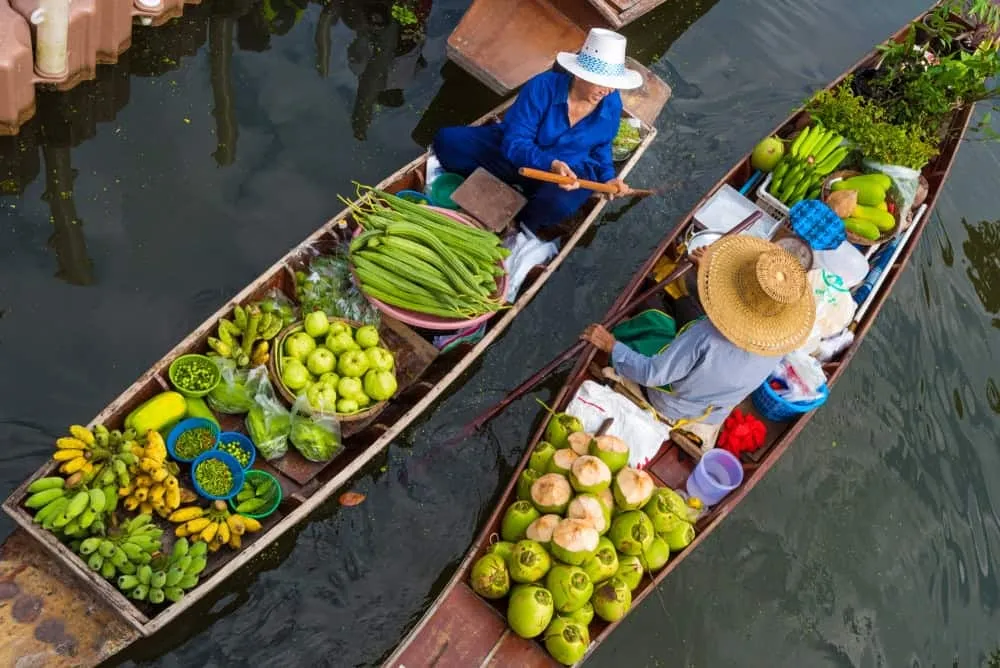
Tha Kha Floating Market is the quieter counterpart to Amphawa, 10 kilometres further along the canal network. It opens Saturday and Sunday mornings from around 6 am to noon, and attracts almost exclusively Thai visitors — mostly local residents and Bangkok weekenders looking for something without tour-group crowds. Vendors arrive by boat from the surrounding coconut farms and orchards; the canal-side setting, lined with old wooden houses and coconut palms, has changed little in the past century.
Where to Stay
Amphawa has a cluster of canal-side guesthouses and small resorts — mostly wooden structures on the water, oriented around the floating market. Prices are reasonable; quality is variable, so checking recent reviews helps. The Asita Eco Resort is consistently well-regarded for its setting and service. For budget stays, several guesthouses in central Amphawa walk you to the market in under five minutes.
Most visitors do Samut Songkhram as a day trip from Bangkok, and the logistics support it — the province is compact enough to cover two or three main sights in a day. If you want the firefly boats in the evening and breakfast at Tha Kha market the next morning, an overnight makes the most sense.
Getting There
From Bangkok, the fastest option is a minivan from the Southern Bus Terminal (Sai Tai Mai, on the Thonburi side of the river), which takes around 1.5 to 2 hours. By car, Highway 35 (Rama II Road) runs southwest from Bangkok and connects via local roads — roughly 80 km and 1.5 hours in clear traffic.
The scenic public transport route goes: BTS to Wongwian Yai, then train to Ban Laem, then a connecting Mae Klong Railway line to Samut Songkhram town. The final Mae Klong Railway leg is 10 baht and runs through the famous railway market — though the combined journey easily takes three hours or more. Many Bangkok tour operators run combined day trips pairing Maeklong Railway Market with Amphawa; this is often the most time-efficient approach for a first visit.
Samut Songkhram pairs logically with Phetchaburi, which is about 60 kilometres south along the Phetkasem Road. Damnoen Saduak in Ratchaburi is 25 kilometres to the west — a common Bangkok day-trip combination, though note that Damnoen Saduak is a separate province and a more commercial operation.
Best Time to Visit
The wet season runs May through October, matching the upper Gulf pattern, with September and October the heaviest rainfall months. November through February is dry and comfortable — the best window for a relaxed day covering the markets, Don Hoi Lot, and the cultural sites without afternoon downpours.
The province’s core attractions are all-weather: the railway market is open daily, Amphawa runs Friday to Sunday regardless of season, and the canal and river rides are available year-round. What changes is comfort and firefly intensity — the latter peaks in the wetter months when conditions favour higher populations. The razor-clam hunting at Don Hoi Lot is best from March to May, when low daytime tides expose the mudflats during visiting hours.
Frequently Asked Questions about Samut Songkhram
How do I get to Samut Songkhram from Bangkok?
What is the best time of year to visit Samut Songkhram?
How long do you need in Samut Songkhram?
How do I get around within the province?
Are the firefly boat trips at Amphawa worth it?
Spotted something out of date or incorrect? Let us know
Plan your
Samut Songkhram trip