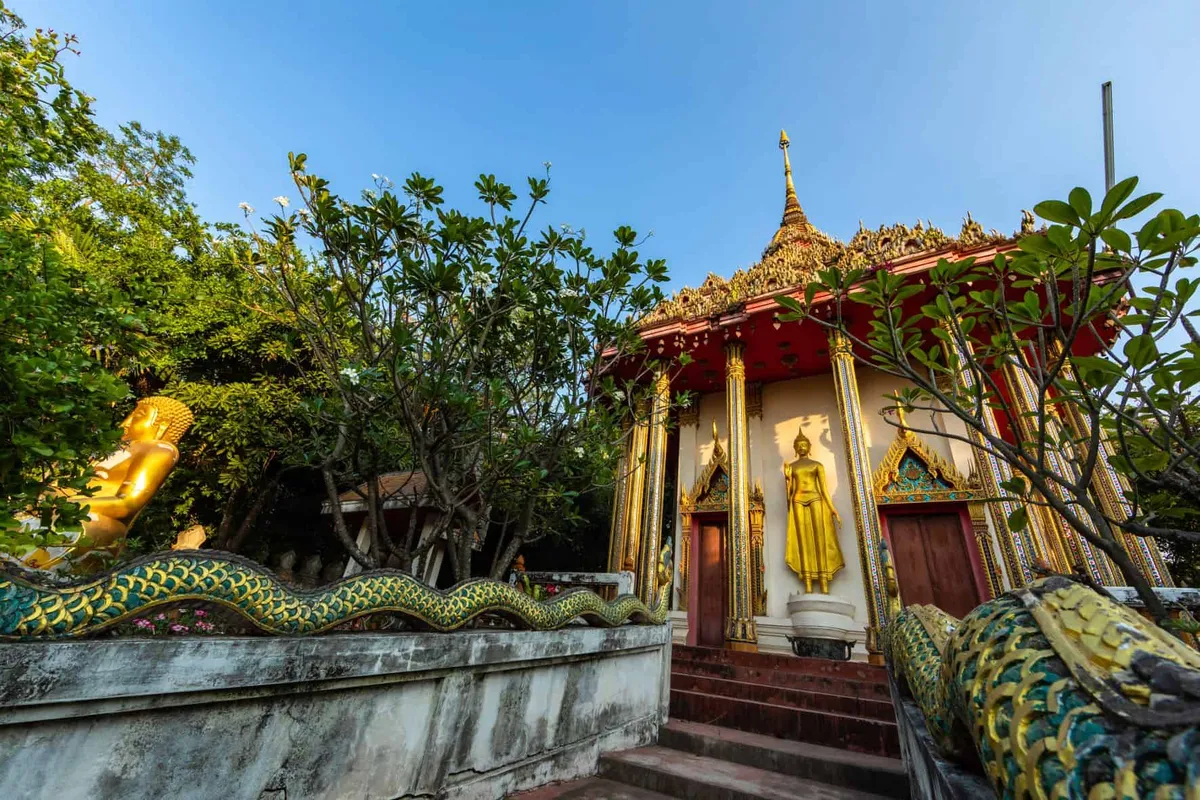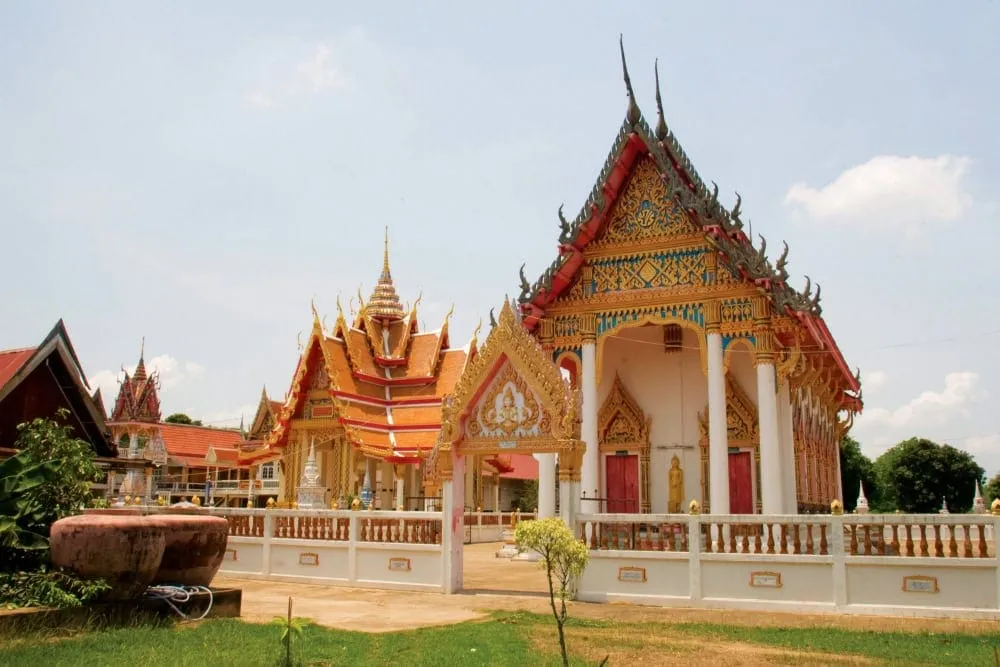
Wat Chula Mani sits in Tambon Ongkharak, Pho Thong district, Ang Thong — a working community temple, not a ruin, despite what older listings suggest. Its full original name was Wat Chula Mani Si Ongkharak Ratsadon Bamrung, founded in 1832 (BE 2375) under King Rama III, though the site is thought to have been used since not long after Ayutthaya fell to Burmese forces in 1767. Entry is free, open daily 09:00-17:00.
The viharn follows Ayutthaya-period architectural convention: a distinctive curved, boat-shaped (“samphao”) foundation that dips in the middle and rises at both ends, paired with tall arched window openings rather than the rectangular frames of later Rattanakosin-style buildings. The real landmark, though, is the temple’s chedi — at 38 metres, it’s the tallest stupa anywhere in Ang Thong province, built on a two-tiered base with staircases climbing the lower tier and an underground passage running beneath it. It’s a genuinely large structure for a district-level community temple, and it dominates the otherwise modest, low-rise temple grounds around it.
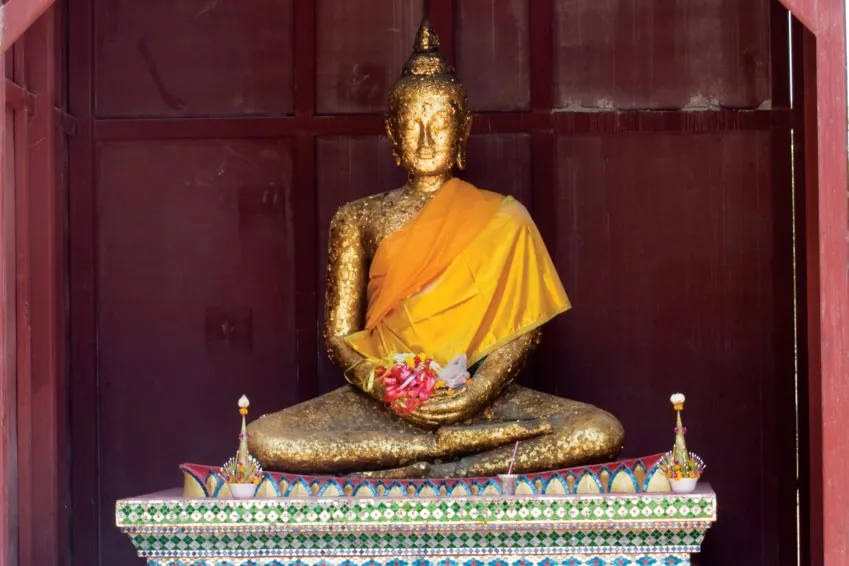
Inside, the temple holds a Buddha image with a quietly remarkable backstory: for years it was assumed to be an ordinary statue coated in red lacquer, the standard finish for countless Buddha images across the region. A closer look revealed solid gold underneath the red coating — a golden Buddha image believed to originate from Lamphun, hiding in plain sight under a layer meant, deliberately or not, to keep it from standing out. It’s now a modest but genuine draw for visitors who know to ask about it, since the temple itself doesn’t heavily promote the discovery.
Insider Tip: Pair the visit with Wat Pho Thong, a few kilometres away in the same district — between the two you get Pho Thong’s tallest stupa and one of its most active community temples in a single loop, without backtracking through Ang Thong town.
Mornings are quieter and cooler for walking the grounds, and since this is an active place of worship rather than a fenced monument, modest dress — covered shoulders and knees — is expected, particularly if you plan to go inside the viharn. The temple sits a short drive from central Ang Thong, reachable by car or motorbike; there’s no direct public transport to the gate, so self-driving or a hired ride is the practical option. Allow 30-45 minutes to see the chedi and viharn properly, longer if you want to talk to temple staff about the gold Buddha image’s history.
Location & Directions
Mu 3
Ang Thong, Thailand
Show your taxi or Grab driver
วัดจุฬามณี
Frequently Asked Questions
Is this the same Wat Chulamani as the famous one in Phitsanulok or Samut Songkhram?
Is Wat Chula Mani a ruin?
What's the main thing to see?
Is it free to visit?
How do I get there?
Spotted something out of date or incorrect? Let us know
Stay Near Wat Chula Mani
Live prices for places closest to Wat Chula Mani — tap a pin to compare.