

Wat Elephant — properly Wat Khao Rup Chang, or Wat Tham Khao Rup Chang including the cave in its name — sits on the foothills of the Kaew mountain range in Padang Besar subdistrict, about 13 km from the Padang Besar border crossing into Malaysia. Entry is free, and the temple’s cave and marble stupa are open daily.
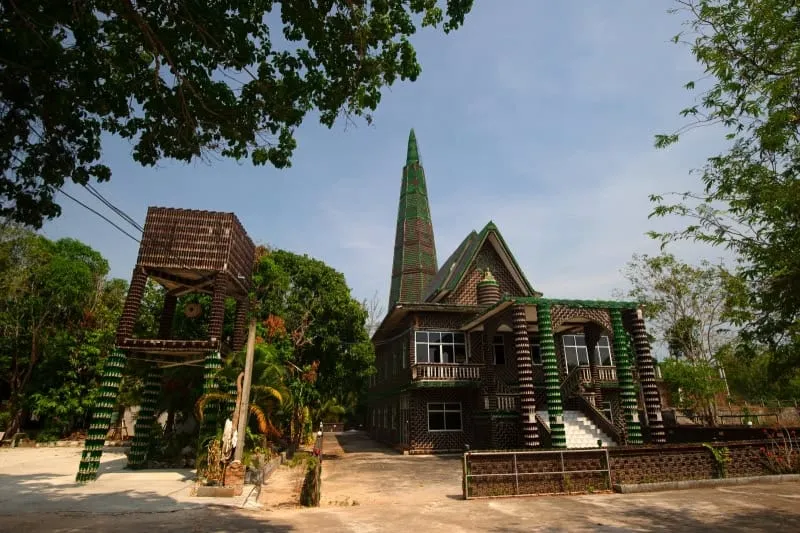
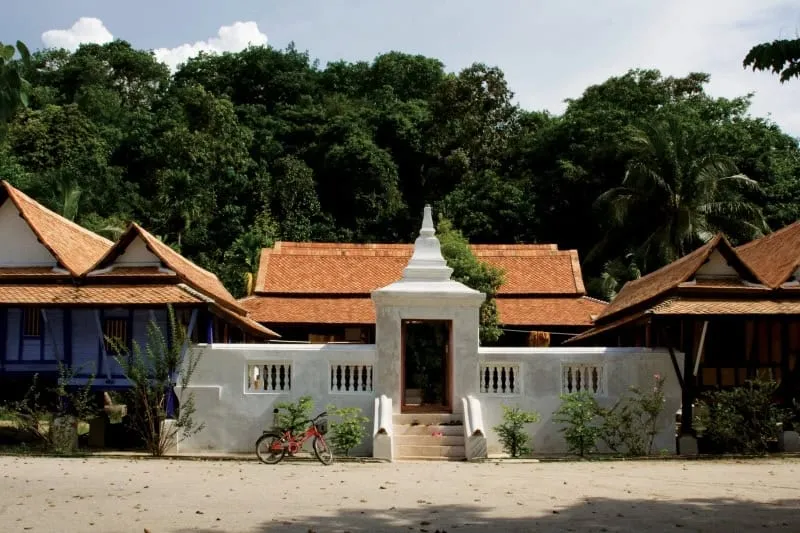
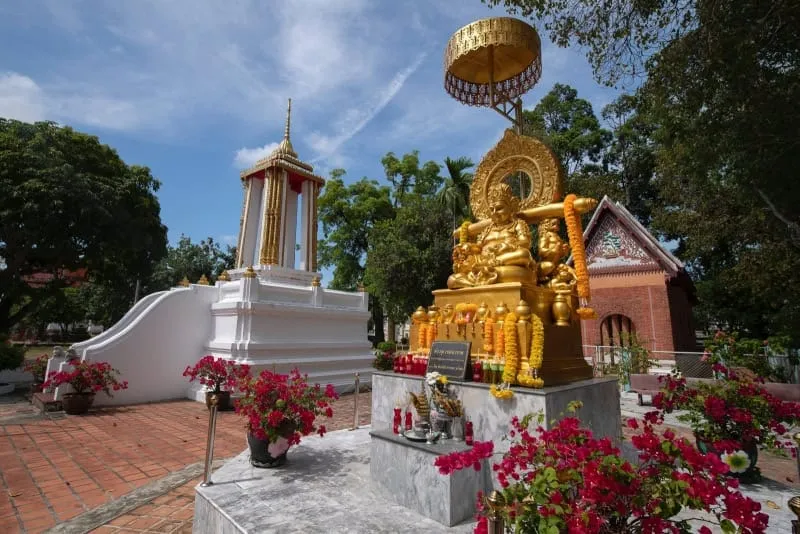
Construction began in early 1968, led by the temple’s founding abbot with disciples who had travelled from Singapore, which explains the mix of Chinese and Thai architectural styles across the grounds — something unusual for a rural Songkhla temple this far south. The centrepiece is a white marble stupa built as a scaled reproduction of the Mahabodhi Temple in Bodh Gaya, India, the site where the Buddha is said to have attained enlightenment. Around it, the grounds are shaded and spacious, with a stream running through — a more open, garden-like layout than the tightly packed temple compounds common elsewhere in the south.
The temple’s name and main draw come from its cave: Khao Rup Chang means “elephant-shaped mountain,” a reference to limestone formations inside that resemble an elephant, trunk raised toward the ceiling. Walking through the cave passages, you’ll find stalactites and stalagmites in various stages of formation alongside Buddha images and a statue of Avalokiteshvara set into alcoves for visitors to pay respects to. The contrast between the cool, dim cave interior and the bright marble stupa outside is part of what draws day-trippers from Malaysia and Singapore as well as Thai visitors — this is a working temple with a genuine cross-border following, not an obscure back-road stop.
Insider Tip: Bring a torch or use your phone light for the deeper cave chambers — lighting inside is minimal, and the uneven, sometimes damp rock floor is easier to navigate with your own light source.
Watch out: As with any cave temple, footing can be slick near the entrance after rain, and low sections mean watching your head in places.
- Entry fee: Free
- Distance from Padang Besar border: About 13 km
- Highlights: Marble Mahabodhi-style stupa, limestone cave with Buddha and Avalokiteshvara images
- Getting there: By car or motorbike from Sadao or Padang Besar; limited public transport this far into the district
- Dress code: Covered shoulders and knees, shoes off before entering shrine buildings
The temple works well combined with a Padang Besar day trip — the border market and rail crossing sit a short drive away, and both fall within Songkhla province despite feeling like their own frontier town.
Location & Directions
Padang Besar, Sadao, Songkhla
Songkhla, Thailand
Show your taxi or Grab driver
วัดถ้ำเขารูปช้าง
Frequently Asked Questions
Why is it called "Wat Elephant" when there are no elephants?
What's inside the cave?
How far is the temple from the Malaysian border?
Is there an entry fee?
Is this the same as Wat Khao Rup Chang in other parts of Songkhla province?
Spotted something out of date or incorrect? Let us know
Stay Near Wat Elephant
Compare places to stay in Songkhla, or open the map for options closest to the attraction.