




Wat Ja Ting Phra is the town temple of Sathing Phra, on the narrow spit of land between the Gulf of Thailand and Songkhla Lake that gives the district its name. The temple’s own name is a soft corruption of “Wat Sathing Phra”: generations of local speech wore the syllables down until “Sathing” became “Jathing” (จะทิ้ง). Tradition dates the founding to 999 CE, under a ruler remembered as Chao Phraya Krung Ong, when this coast was part of the wider Srivijaya trading world linking it to Sumatra and the Malay peninsula. Raiders later sacked the complex; it was rebuilt during the reign of Ayutthaya’s King Ekathotsarot in the early 1600s, and what stands today reflects that Ayutthaya-period restoration layered over Srivijaya-era foundations.
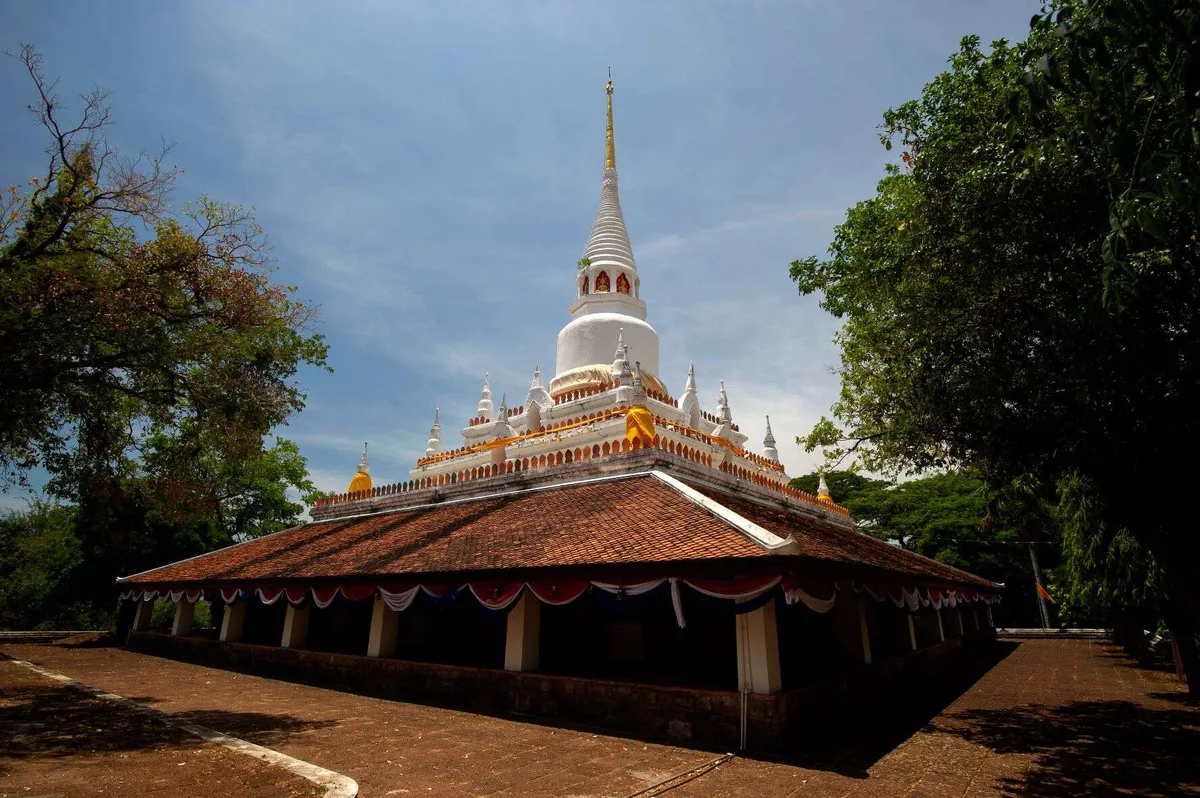
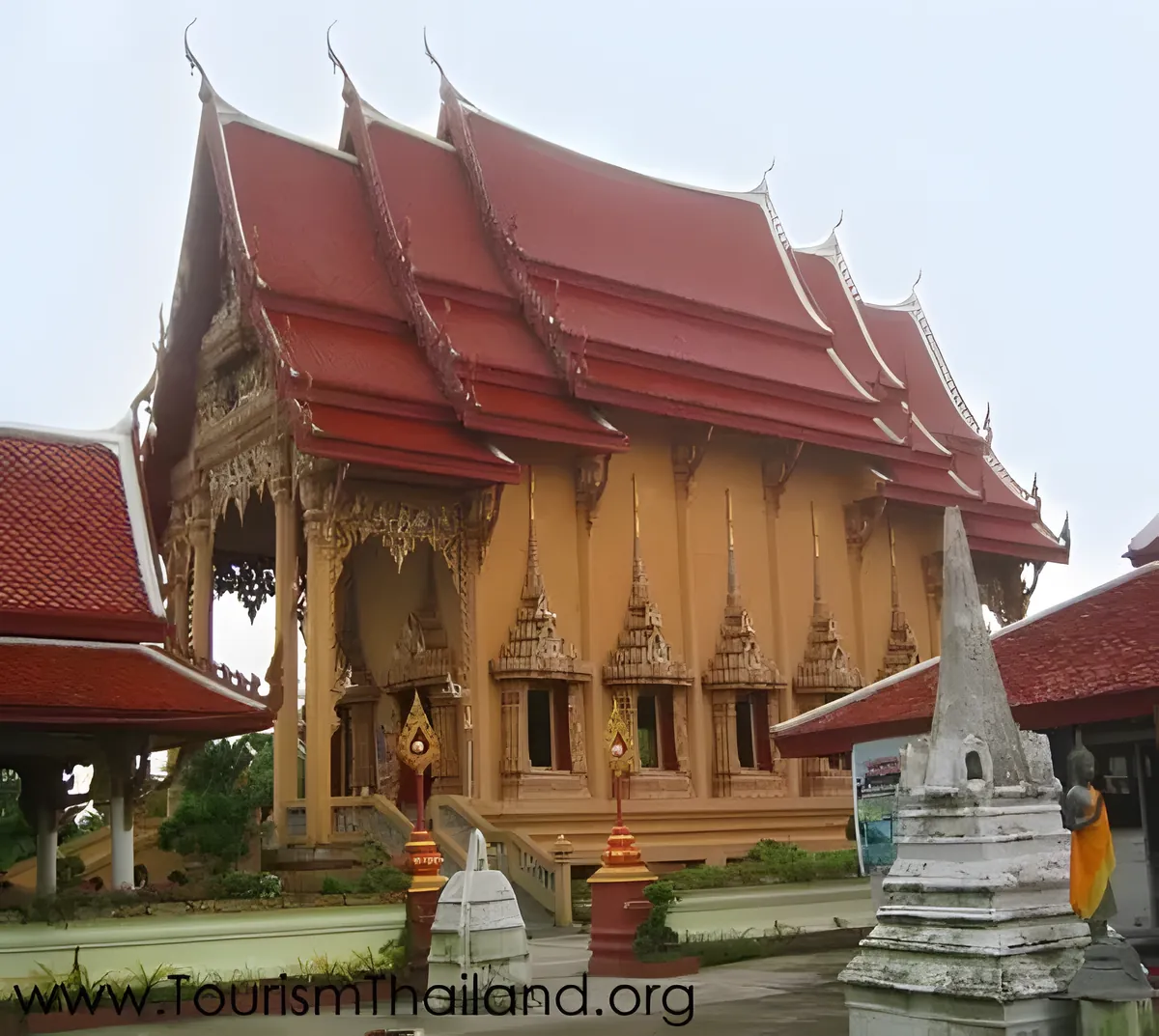
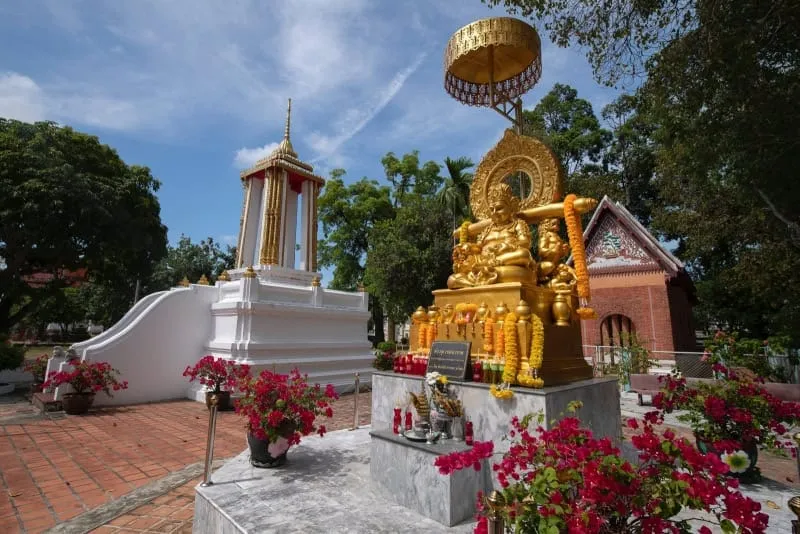
The centrepiece is Phra Maha That Chedi, a brick-and-coral-stone stupa about 20 metres tall on a 17-metre square base, squat and heavy compared with the slender chedis further north, a style historians tie to the old Srivijaya influence along this coast. A smaller subsidiary chedi stands nearby. In the main viharn, a reclining Buddha (Phra Phutthasaiyat) lies beneath murals depicting episodes from the Buddha’s life; the paintings have held their colour well and reward the extra ten minutes with a torch if the hall is dim.
Insider Tip: Visit on the first night of the sixth lunar month (roughly May, check the year’s lunar calendar) for the temple’s annual fair honouring the chedi and the reclining Buddha, the only time the grounds are genuinely busy.
Most days the temple sees a trickle of local worshippers rather than tour buses, so plan on the quiet of a working neighbourhood wat rather than a headline monument. The grounds are compact, twenty minutes covers the chedi, the viharn, and the smaller shrines, which makes it an easy stop if you’re driving the Sathing Phra peninsula road between Songkhla and the older ruins further north at Wat Pha Kho.
Watch out: There’s no dedicated parking area or vendor stalls outside the annual fair, so this isn’t a place to plan a meal around. Bring water and eat in Sathing Phra town, a short drive south.
Cover shoulders and knees before entering the viharn, and remove shoes at the door. Entry is free, and the temple keeps no fixed public schedule beyond general daylight hours: 08:00-17:00 is a safe window, though monks may be at chores or study in the mid-afternoon.
- Founded: Traditionally dated to 999 CE, rebuilt under King Ekathotsarot (early 1600s)
- Main chedi: Phra Maha That, about 20 m tall, brick and coral stone, Srivijaya-influenced style
- Reclining Buddha: Housed in the main viharn beneath old murals
- Annual fair: First night of the sixth lunar month
- Entry: Free, daily roughly 08:00-17:00
Location & Directions
Sathing Phra, Songkhla
Songkhla, Thailand
Show your taxi or Grab driver
วัดจะทิ้งพระ
Frequently Asked Questions
Is Wat Ja Ting Phra the same as Wat Chathing Phra?
What's the significance of the chedi?
Is there an entry fee?
When's the best time to visit?
How do I get there?
Spotted something out of date or incorrect? Let us know
Stay Near Wat Ja Ting Phra
Live prices for places closest to Wat Ja Ting Phra: tap a pin to compare.