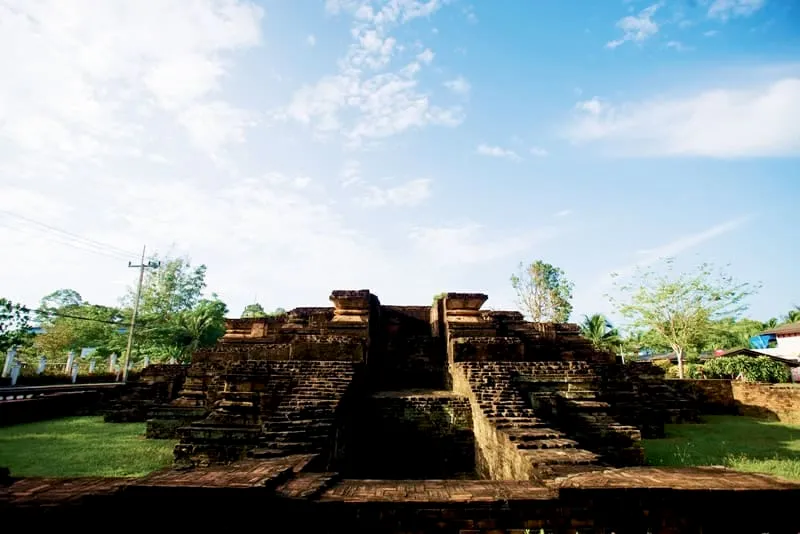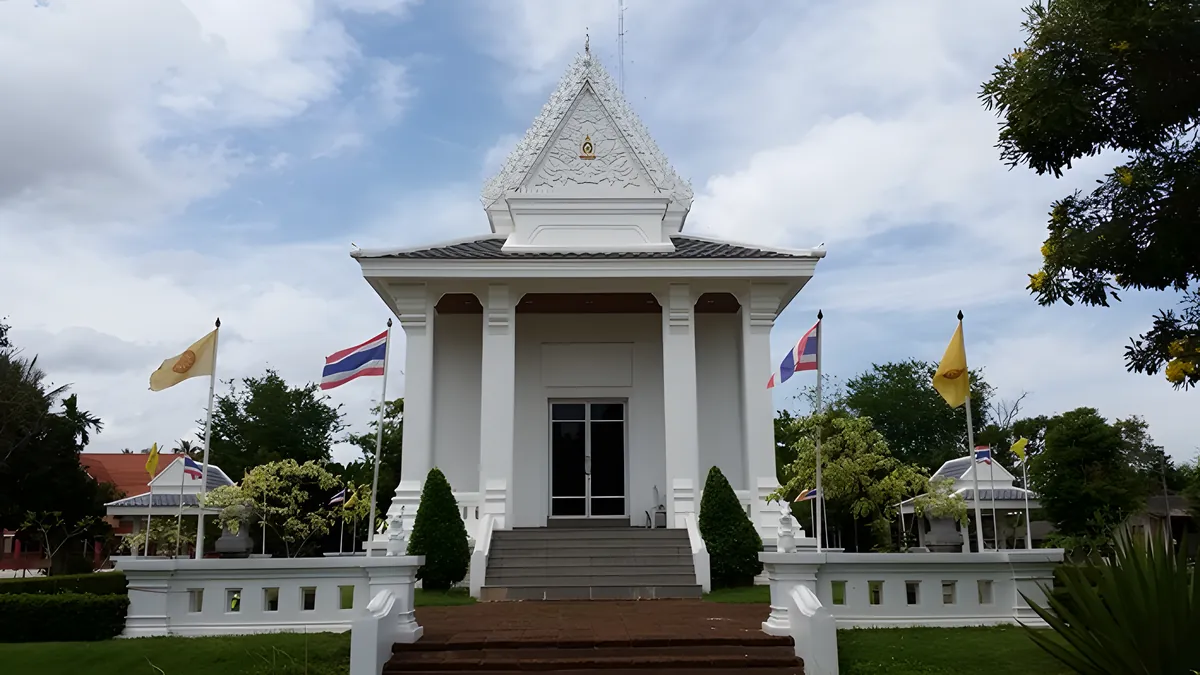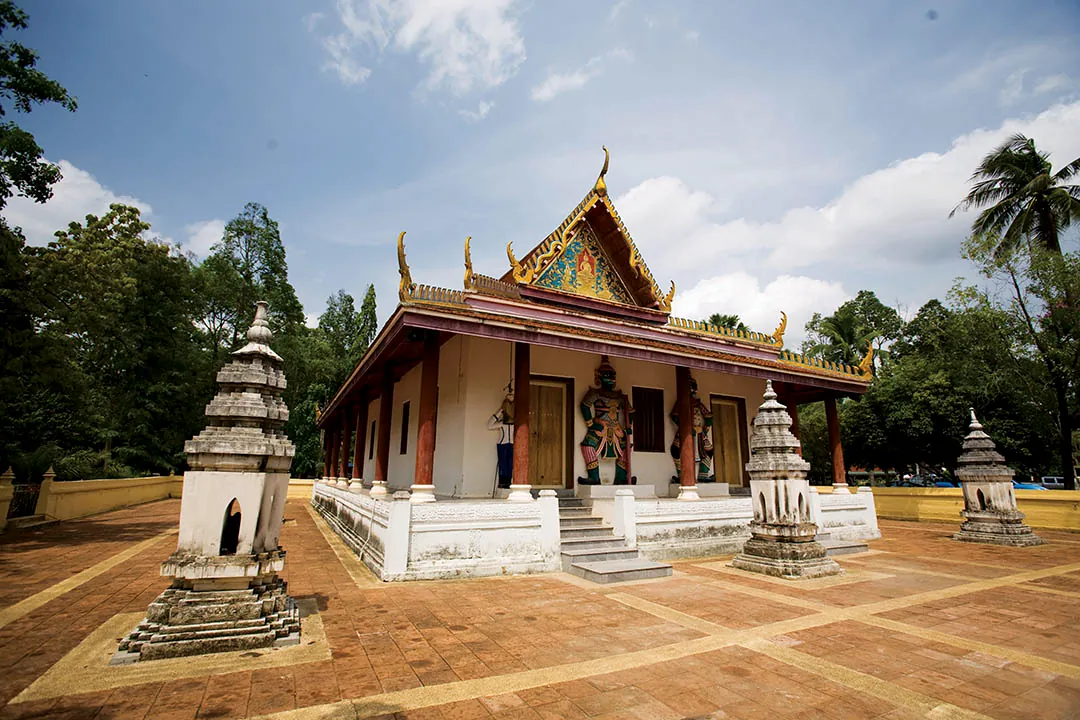




Wat Khao Si Srivijaya sits on a low hill in Si Wichai subdistrict, Surat Thani’s Phunphin district, the same hill locals call Khao Hua Bon, and which archaeologists label Khao Phra Narai after the Hindu god Narayana (Vishnu) once worshipped here. Entry is free.
The temple’s own founding is dated to B.E. 1125 (roughly the 6th century CE), with a formal sangha boundary granted about a dozen years later, but the hill’s history goes back further. Before this became a Buddhist temple, excavations uncovered a Vishnu shrine and artefacts consistent with the Srivijaya trading network that once controlled this stretch of the peninsula: stone Buddha-image moulds and beads turned up when a road was cut past the temple in 1975, evidence of workshop activity here over a thousand years ago. It is one of the more concrete physical links between modern Surat Thani and the Srivijaya-era trade routes that gave the wider region its name.
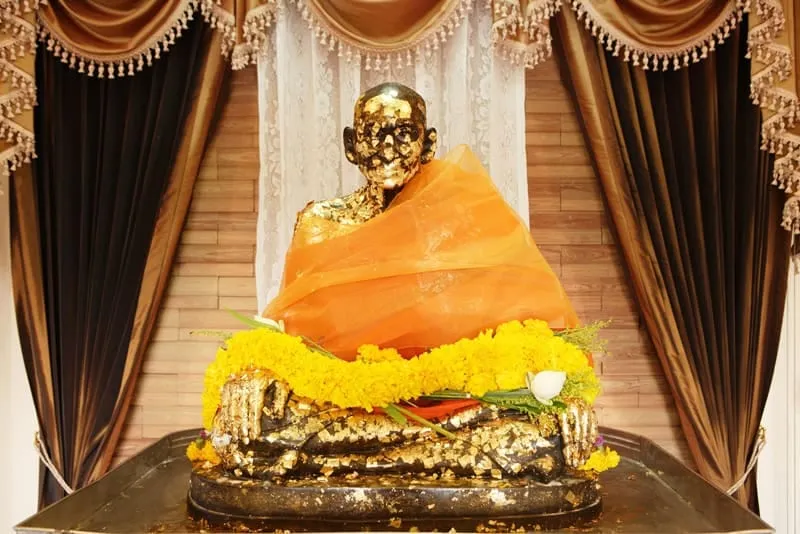
The current ordination hall is a plainer, more recent brick-and-mortar structure with a tiled wooden roof, holding eleven gilded Buddha images seated in the Mara Vijaya (calling-the-earth-to-witness) pose, a modest but well-kept working temple rather than a museum piece. Because it sits on high ground, the compound catches a breeze most of the year and looks out over more of the surrounding rice country than most temples in the district.
There is no formal visitor centre or English signage explaining the archaeological finds, so what you are seeing is mostly the temple as it functions today (active worship layered over a much older site) rather than a curated historical exhibit. Pair it with Phra That Si Surat in Surat Thani city for another angle on the province’s Buddhist history.
Insider Tip: Ask locally for “Khao Hua Bon” rather than the formal temple name. It is the name most Phunphin residents actually use, and taxi or songthaew drivers will recognise it faster.
Watch out: There is minimal shade on the climb up in the middle of the day; an early-morning or late-afternoon visit is far more comfortable than a midday one.
- Entry fee: Free
- Local name: Khao Hua Bon (also Khao Phra Narai)
- Founded: B.E. 1125, sangha boundary granted B.E. 1137
- Significance: Srivijaya-era archaeological finds (stone Buddha moulds and beads) near the site
- Location: Si Wichai subdistrict, Phunphin district, Surat Thani
Location & Directions
Moo 1
Surat Thani, Thailand
Show your taxi or Grab driver
วัดเขาศรีวิชัย
Frequently Asked Questions
Is Wat Khao Si Srivijaya related to the Srivijaya empire?
What is Khao Hua Bon?
Is there an entry fee?
What will I actually see inside the temple?
When is the best time to visit?
Spotted something out of date or incorrect? Let us know
Stay Near Wat Khao Si Srivijaya
Live prices for places closest to Wat Khao Si Srivijaya: tap a pin to compare.