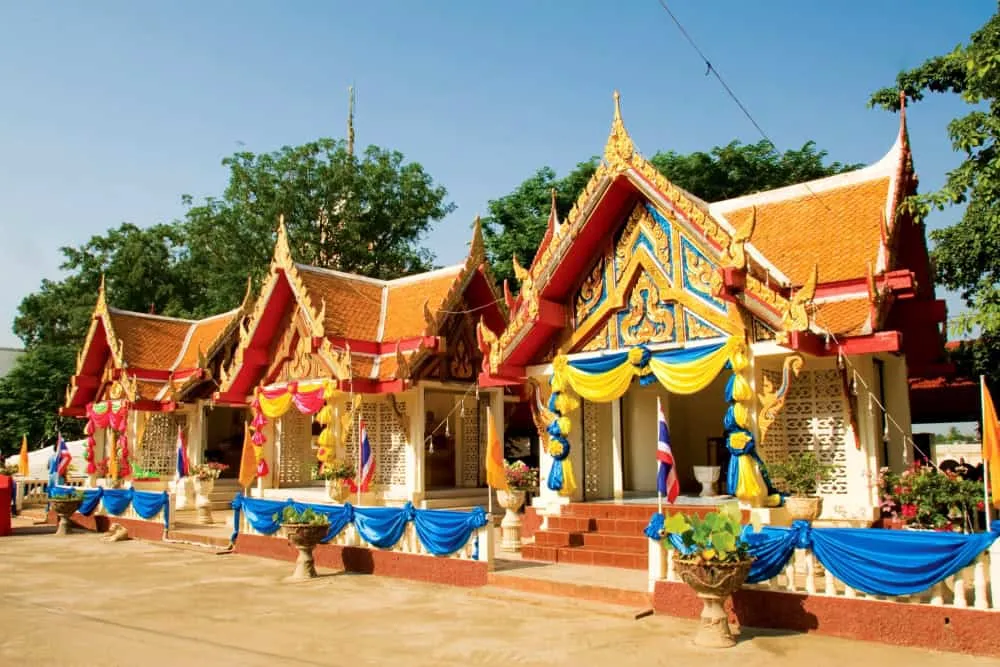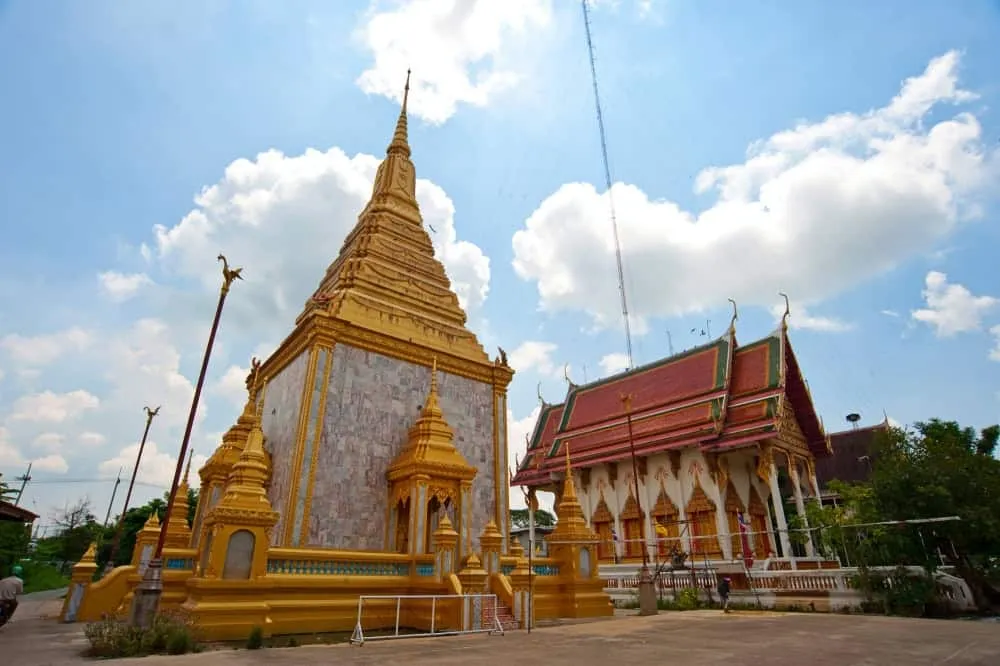

Sing Buri locals call it the Golden Temple: Wat Phra Prang Muni’s pagoda and shrine buildings are painted brilliant gold, distinguishing it from the province’s other prang-style temples. It sits just off the Asia Highway (Route 32) on the edge of Sing Buri town — not to be confused with Wat Phra Prang, a separate, older temple about 20 km away in Bang Rachan district that shares part of the name.
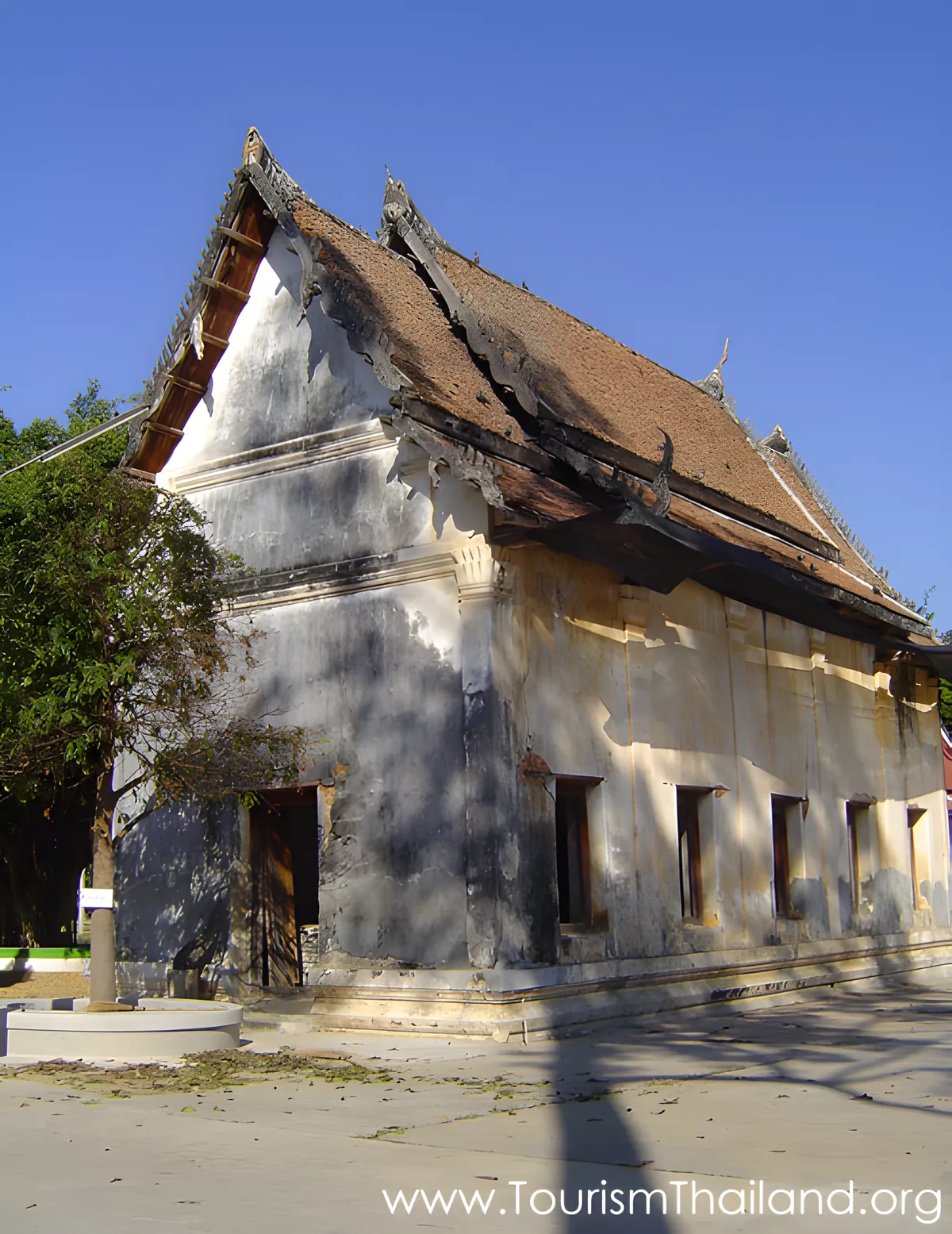
The temple’s founding is genuinely unclear. Historians place its construction in the late Ayutthaya period based on the prang’s style, but no record survives of who built it or when. What is documented is a 1937 origin story: a wandering monk is said to have planted his long-handled umbrella on the site and begun praying there, and the temple grew from that spot. The murals inside the ordination hall are dated more precisely — painted around 1919 by an artist named Peng, believed to have been Laotian, depicting the Buddha’s life story, the Jataka tales, and scenes of heaven and hell in a style typical of early 20th-century central Thai temple painting.
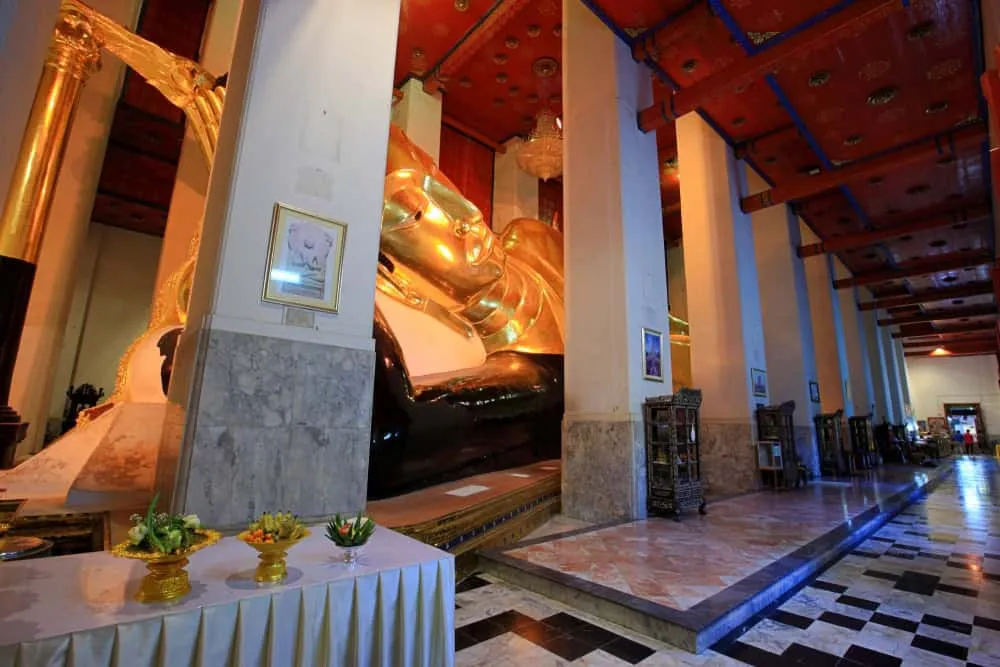
The gold-leafed prang is tall and slender, tapering toward the top, its base ringed with statues of deities drawn from across Southeast Asian folk religion — Brahma, Guan Yin, Thao Wessuwan, Rahu, and Mae Nang Kwak among them, reflecting the mix of Buddhist and folk-spirit devotion common at rural Thai temples. Inside the main hall, a large reclining Buddha dominates the space, and the temple’s two most venerated images — Phra Prang Muni and a stucco Buddha known as Luang Pho Yen — draw a steady stream of local worshippers praying for prosperity rather than tour groups working through an itinerary.
Insider Tip: Photograph the prang in late afternoon, when low sun catches the gold leaf directly — midday light flattens it into a dull yellow.
Watch out: There’s no dedicated visitor centre or English signage. Bring small bills if you want to make a donation or buy incense from the stalls near the entrance.
The temple is a short drive from central Sing Buri town along Route 32. Dress modestly — covered shoulders and knees — before entering the ordination hall, and remove your shoes at the door.
- Entry fee: Free
- Hours: Daily, approximately 08:00–16:30
- Known for: Gold-painted prang, reclining Buddha, 1919 murals
- Location: Muang Mu subdistrict, Mueang Sing Buri district, beside Route 32
- Not to confuse with: Wat Phra Prang in Bang Rachan district (different temple, ~20 km away)
Location & Directions
Moo 7
Sing Buri, Thailand
Show your taxi or Grab driver
วัดพระปรางค์มุนี
Frequently Asked Questions
Why is it called the Golden Temple?
How old is Wat Phra Prang Muni?
Is Wat Phra Prang Muni the same as Wat Phra Prang in Sing Buri?
Is there an entry fee?
What are the main things to see?
Spotted something out of date or incorrect? Let us know
Stay Near Wat Phra Prang Muni
Live prices for places closest to Wat Phra Prang Muni — tap a pin to compare.