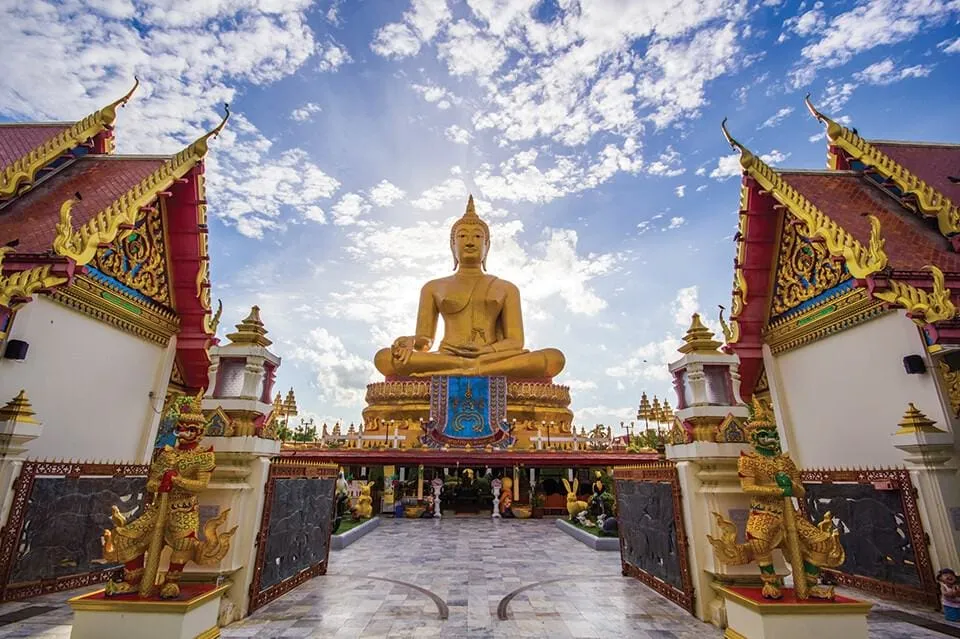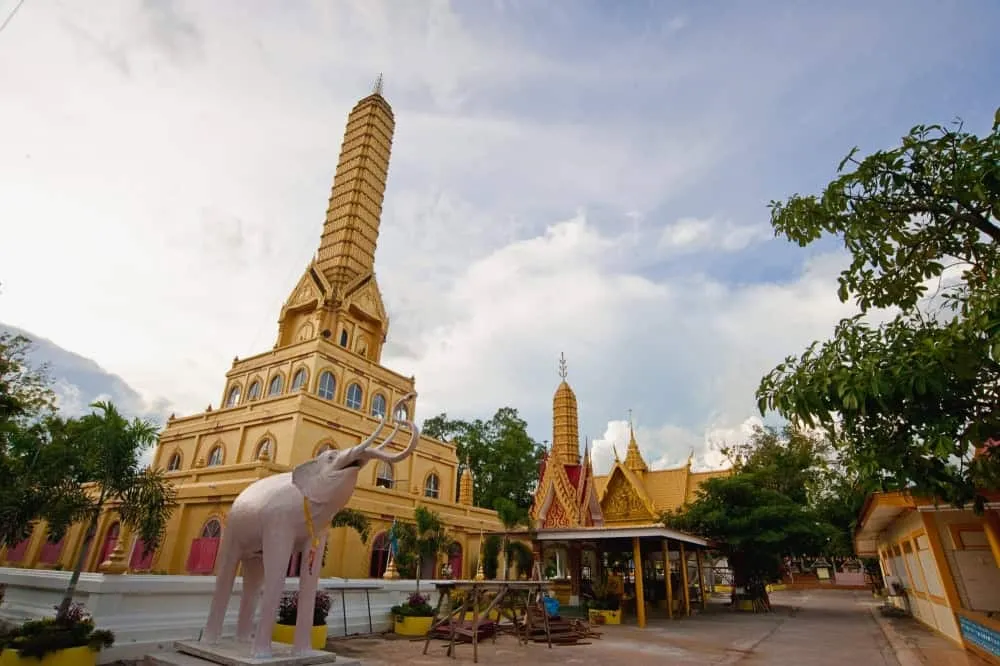





Wat Kudi Thong sits on Highway 32 in Phrom Buri district, Sing Buri, not Ayutthaya, despite the shared highway. Free to enter, open daily 08:00–19:00, its landmark is a twelve-sided chedi built around 1900 that’s said to hold Buddhist relics and a bronze replica of the Buddha’s footprint.
The temple began life in 1832 as Wat Pho Chai, though locals called it Wat Ban Sai after the original riverside site started eroding into the Chao Phraya’s floodplain. It was relocated and rebuilt under its current name: kudi thong translates roughly to “golden monk’s residence.” The centerpiece chedi, commissioned by the monk Luang Pho Panya Uttamapichay, breaks from the usual bell-shaped Ayutthaya style with its twelve-sided base tapering to a slender spire. A handful of older brick structures and boundary stones (bai sema) survive around the compound, shaded by mature bodhi trees.
What sets Wat Kudi Thong apart from Sing Buri’s other temple-hop stops is the folk-art center tucked into the grounds: a small museum dedicated to the Thai Puan people, an ethnic Lao-Thai group who settled this stretch of the Chao Phraya centuries ago. Cases of hand-woven textiles, farm tools, wooden ox-carts, and river boats trace a way of life that’s mostly vanished from daily use but is still marked at local festivals.
None of this is heavily signposted for foreign visitors: there’s no English-language placard system, and the museum keeps informal hours tied loosely to the temple’s own. That’s part of the appeal: this isn’t a curated heritage site built for tour buses, it’s a working temple that happens to have kept its community’s material history intact. Monks still live and study on the grounds, and the sound of the highway rarely intrudes past the outer wall.
Insider Tip: Combine Wat Kudi Thong with Maenam Noi Kiln nearby: one covers Sing Buri’s temple and folk-craft history, the other its centuries-old pottery tradition.
- Entry fee: Free
- Hours: Daily 08:00–19:00
- Landmark: Twelve-sided chedi (c. 1900) said to enshrine relics and a bronze Buddha footprint replica
- Also on site: Thai Puan folk-art and culture center
- Location: Bang Nam Chiao, Phrom Buri district, Sing Buri, on Highway 32
Morning visits, before the highway traffic builds, give the best light for photographing the chedi and the chance to see monks receiving alms. Dress modestly and remove shoes before entering any building housing a Buddha image. The temple is a straightforward stop by car when touring Sing Buri’s other historic wats, including Inburi National Museum a short distance away.
Location & Directions
Moo 3 Highway 32 Km.125-126
Sing Buri, Thailand
Show your taxi or Grab driver
วัดกุฎีทอง
Frequently Asked Questions
Is Wat Kudi Thong free to enter?
How old is the temple?
What is the twelve-sided chedi?
What is the folk-art center on site?
Is Wat Kudi Thong in Ayutthaya or Sing Buri?
Spotted something out of date or incorrect? Let us know
Stay Near Wat Kudi Thong
Live prices for places closest to Wat Kudi Thong: tap a pin to compare.