





Wat Phu Lon is a hillside forest monastery in Ubon Ratchathani’s Si Mueang Mai district, about 78km from the provincial town via Highway 2135. Its significance is historical rather than architectural: in 1897, Ajahn Mun Bhuridatta, the monk credited with founding Thailand’s Forest Tradition, travelled here on foot with his teacher Ajahn Sao Kantasilo and spent several years in intensive meditation practice. Thai Buddhists regard it as the foundational site of a monk whose teaching lineage still shapes forest monasteries across the country.
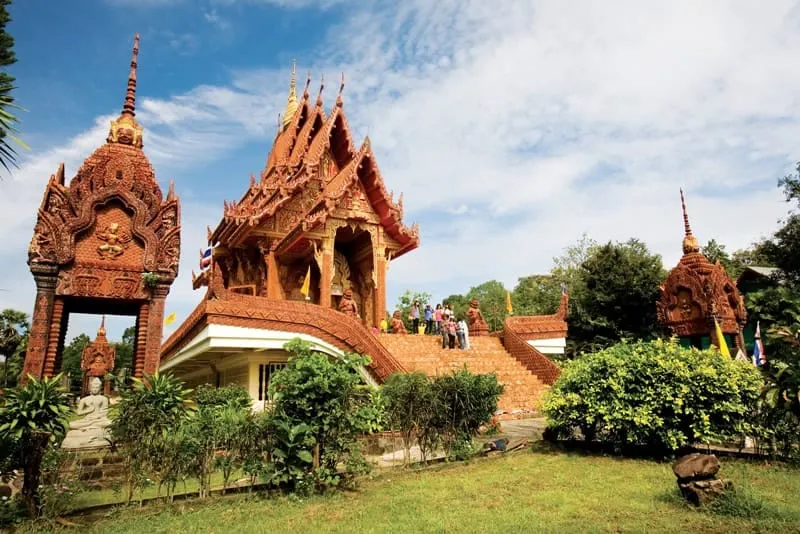
A laterite stone staircase climbs the hillside to a series of rock overhangs and shaded ledges, the kind of sheltered outcrops forest monks traditionally used for meditation, since they offer cover without the comfort of a built structure. Shrine buildings and markers along the way commemorate Ajahn Mun and Ajahn Sao’s time here. The climb itself is unhurried rather than strenuous, through tree cover that keeps most of it shaded even at midday.
This is a working monastery, not a museum piece: meditation retreats are still held on site, and monks in residence continue a practice tradition that traces directly back to the 1897 visit. If a retreat is in session, keep your distance and your voice down; this isn’t a backdrop for a rushed photo stop, and the site’s whole character rests on being left undisturbed for its actual purpose.
Insider Tip: Go for the history, not the architecture. There’s no grand temple complex here. The value is standing where Thailand’s Forest Tradition effectively began, on the same laterite steps and rock shelters Ajahn Mun used.
Watch out: There’s no public transport to Wat Phu Lon and no confirmed set of opening hours. Arrange your own vehicle from Ubon Ratchathani or Si Mueang Mai, and don’t expect facilities like a visitor centre or food stalls at the site.
Dress modestly (covered shoulders and knees) as you would for any working temple, and wear shoes suited to a stone staircase rather than sandals. The nearest town with services is Si Mueang Mai, about 20km back along Highway 2135.
- Location: Song Yang subdistrict, Si Mueang Mai district, ~78km from Ubon Ratchathani town via Highway 2135
- Significance: Site of Ajahn Mun Bhuridatta’s foundational meditation practice with Ajahn Sao Kantasilo, 1897
- Access: Own vehicle or hired driver required; no public transport
- What’s there: Laterite stone staircase, rock overhangs used for meditation, shrine markers
- Fee: No confirmed entrance fee; donations welcome
Location & Directions
Si Mueang Mai, Ubon Ratchathani
Ubon Ratchathani, Thailand
Show your taxi or Grab driver
วัดภูหล่น
Frequently Asked Questions
Why is Wat Phu Lon significant?
Is Wat Phu Lon still an active meditation site?
How do you get to Wat Phu Lon from Ubon Ratchathani?
What will you actually see at Wat Phu Lon?
Is there an entrance fee?
Spotted something out of date or incorrect? Let us know
Stay Near Wat Phu Lon
Live prices for places closest to Wat Phu Lon: tap a pin to compare.