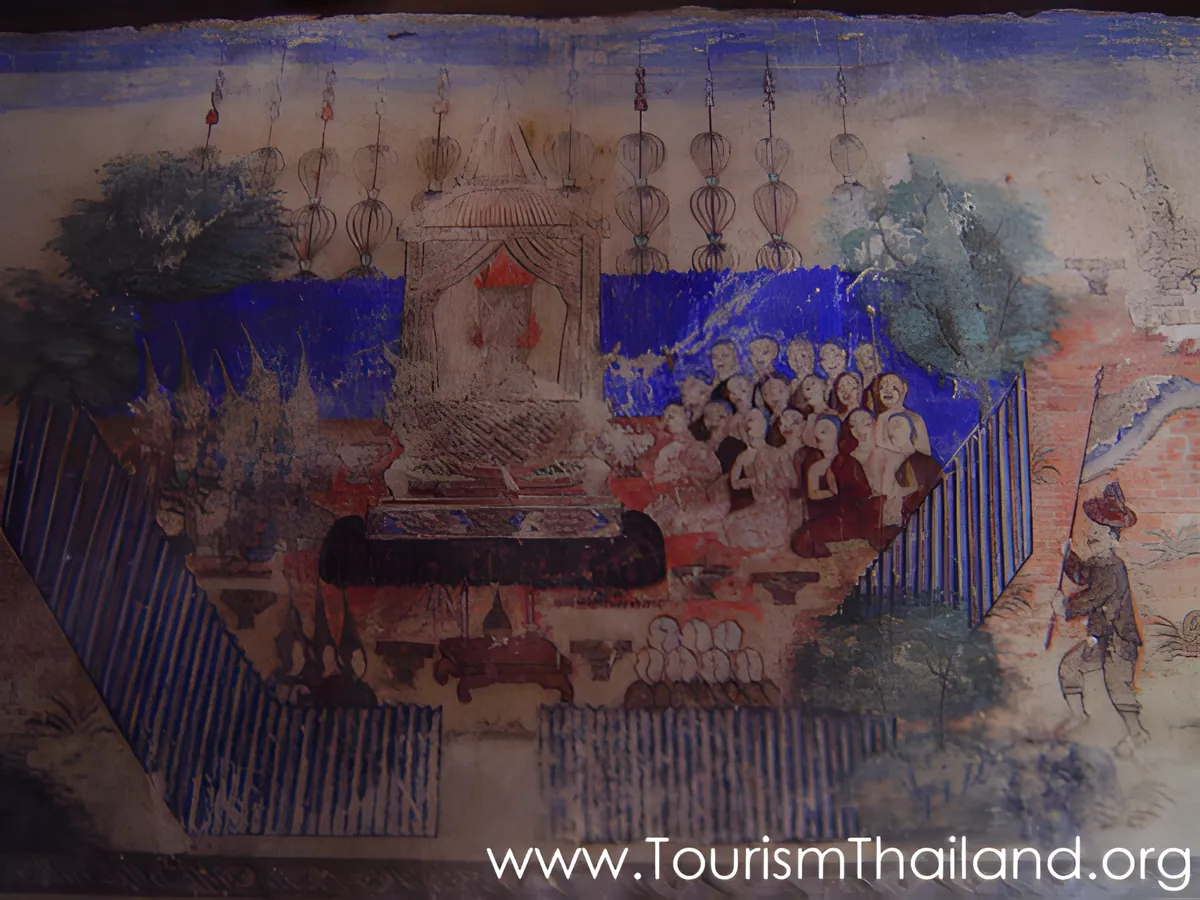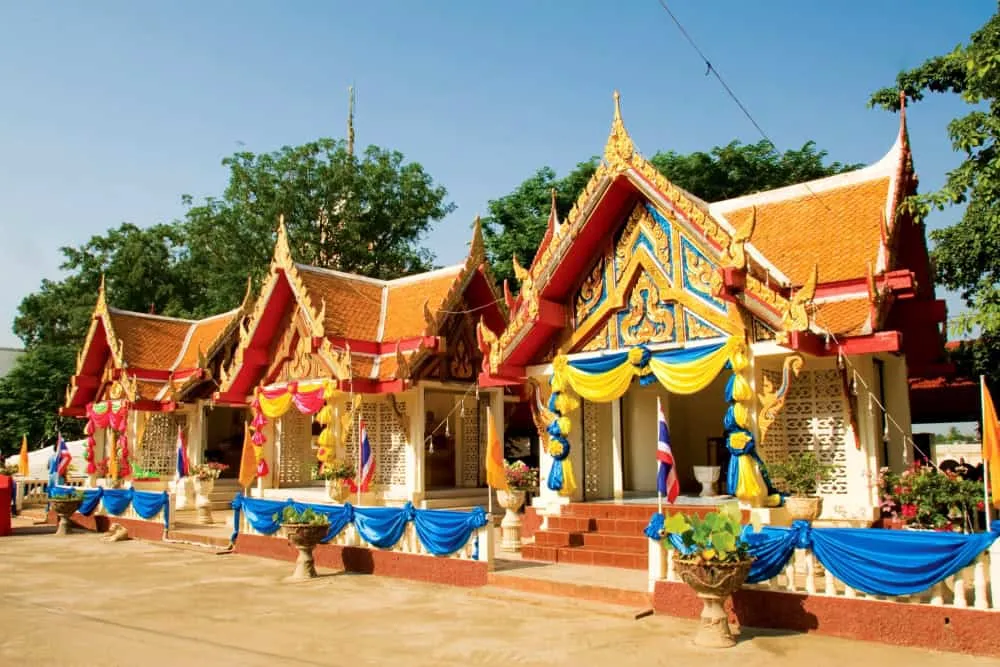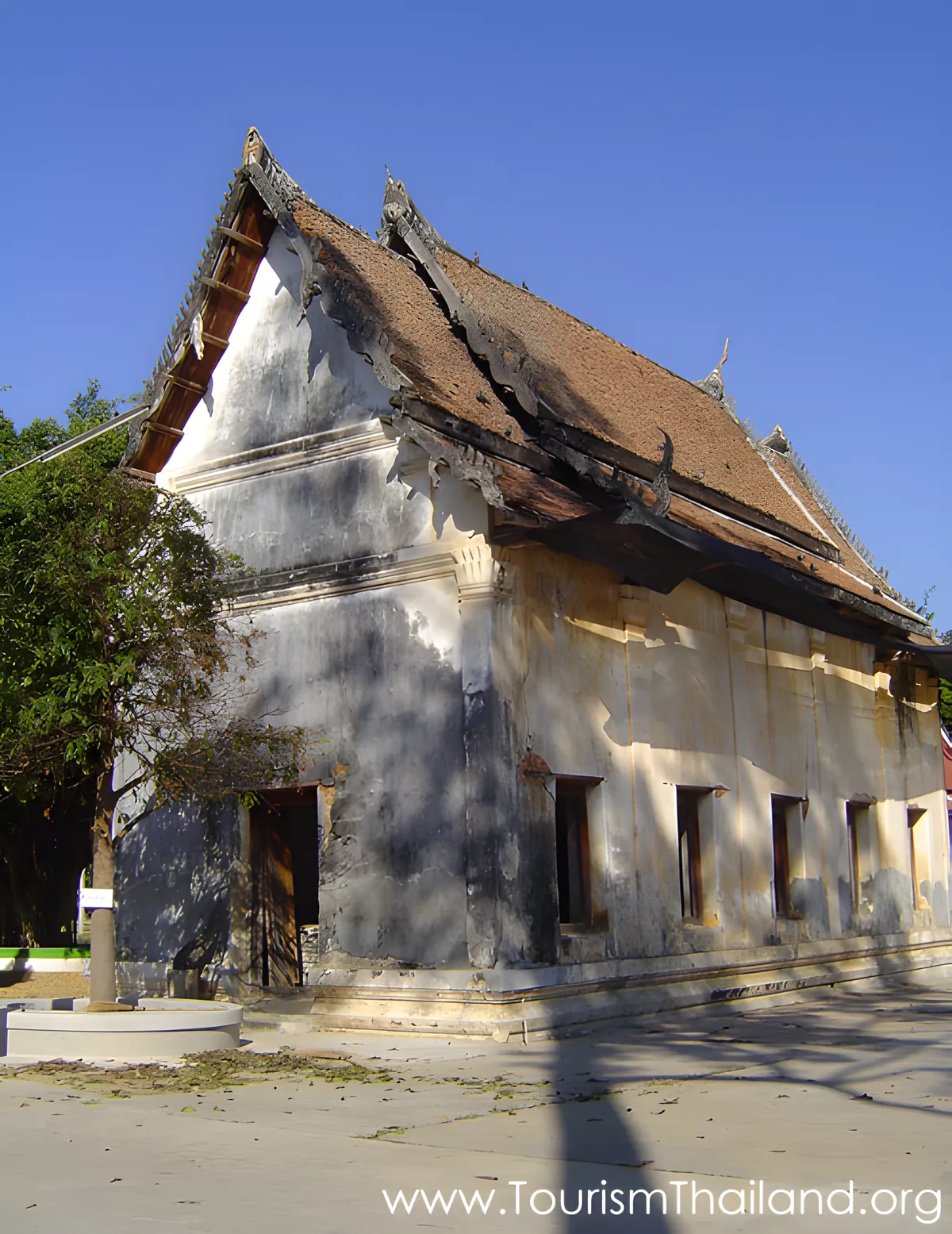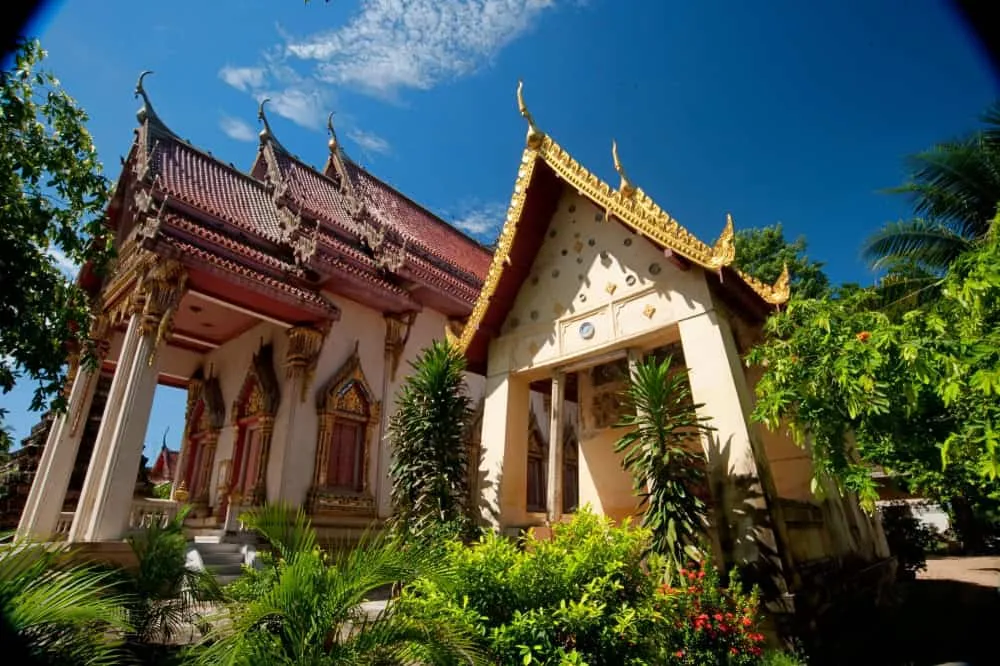

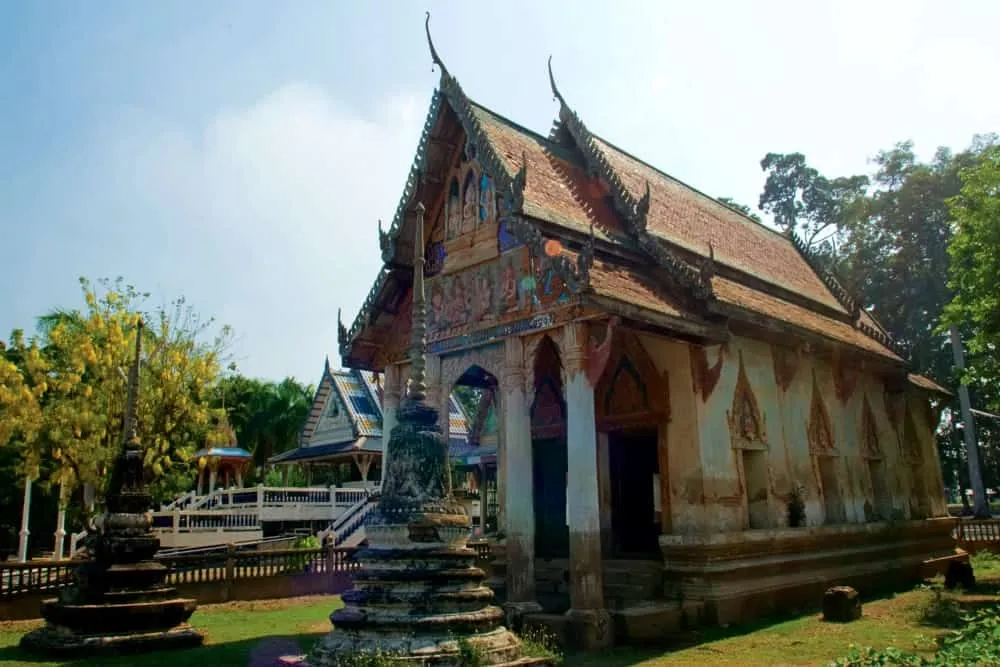
Wat Prachot Tikaram’s reputation rests on two oversized standing Buddha images rather than any chedi. Luang Pho Sap and Luang Pho Sin stand in the Pang Ham Yat pose — one palm raised, forbidding relatives from following the Buddha into ascetic life — carved in Sukhothai style rather than the Ayutthaya-period forms more commonly associated with temples this far south. Luang Pho Sap is the larger of the two at around 13-14 metres; Luang Pho Sin comes in at roughly 7 metres. Together they’re the actual reason this temple gets a mention over Sing Buri’s dozens of other village wats.
Records date the temple’s formal establishment to 1857, with royal recognition as an ordained monastery (Wisungkhamsima) following in 1950. Local tradition claims the site itself is far older — up to 700 years by some accounts — which would put the ground here well before the formal 1857 founding date. That’s a common pattern at Thai temples where a sacred site predates its administrative registration, but it’s worth treating the 700-year figure as local lore rather than a verified date; the 1857/1950 records are what’s actually documented.
Watch out: Older write-ups of this temple describe “classic Ayutthaya-style chedis with bell-shaped domes” as the highlight — that’s not what draws visitors here. The two Sukhothai-style standing Buddhas are the temple’s actual claim to fame, and framing this as an Ayutthaya chedi site sets the wrong expectation before you arrive.
The temple’s name carries its own local legend, tied to how Sing Buri province got its name: a lion (สิงห์, sing) is said to have fathered a human son, Singhaphahu, who built this temple later in life to atone for a past wrong. It’s foundation myth rather than documented history, but it’s the story you’ll hear from anyone local who knows the temple.
Insider Tip: Come specifically to see the two standing Buddha images up close — their scale is easy to underestimate from photos, and the Pang Ham Yat gesture (less commonly seen than seated meditation poses) is worth knowing to look for before you go.
- Signature feature: Luang Pho Sap and Luang Pho Sin, two large standing Sukhothai-style Buddha images
- Established: 1857 (Wisungkhamsima granted 1950); site itself locally claimed much older
- Distance from town: About 5 km from central Sing Buri
- Hours: Daily, roughly 08:00-16:00
- Entry: Free, donation-based
For a fuller Sing Buri temple circuit, pair this with Wat Phra Non Chakkrasi Worawihan for the province’s famous reclining Buddha, or Wat Phra Prang if you do want to see an Ayutthaya-style prang nearby — the two temples make a useful contrast in style within a short drive of each other, all anchored to Sing Buri itself rather than requiring a trip toward Ayutthaya.
Location & Directions
1 Moo 3
Sing Buri, Thailand
Show your taxi or Grab driver
วัดประโชติการาม
Within Walking Distance

Frequently Asked Questions
What are the two big Buddha images at Wat Prachot Tikaram?
How old is the temple really?
Where does the name Sing Buri come from, and does this temple connect to it?
Is this an Ayutthaya-style temple?
What are the hours and is it free?
Spotted something out of date or incorrect? Let us know
Stay Near Wat Prachot Tikaram
Compare places to stay in Sing Buri, or open the map for options closest to the attraction.