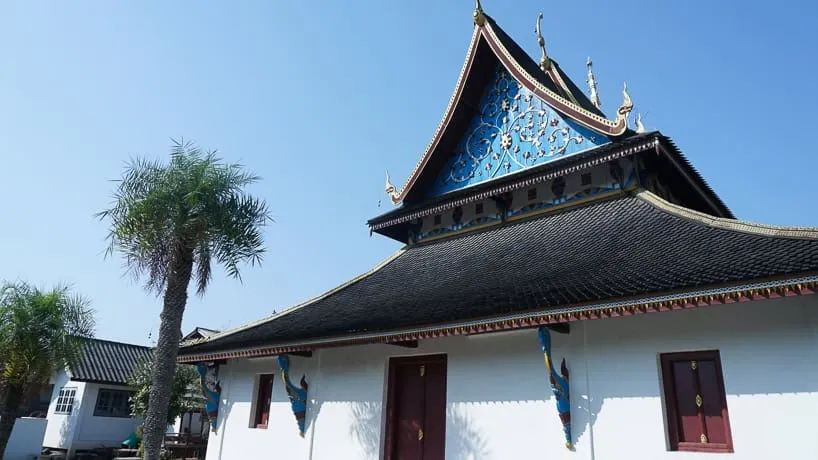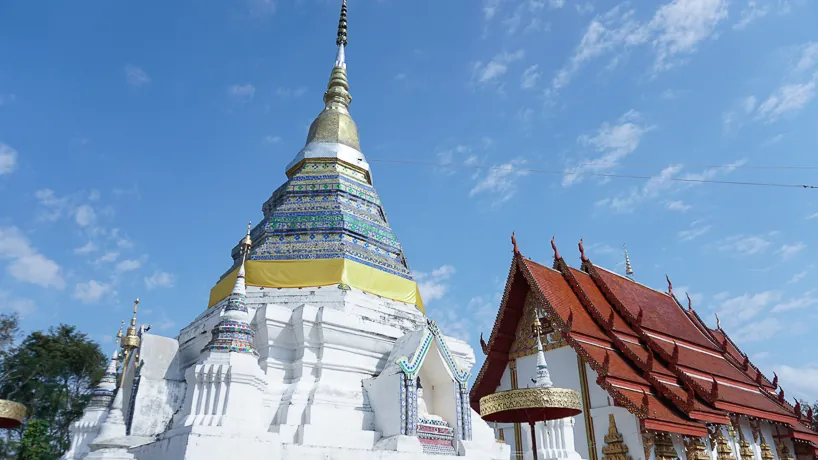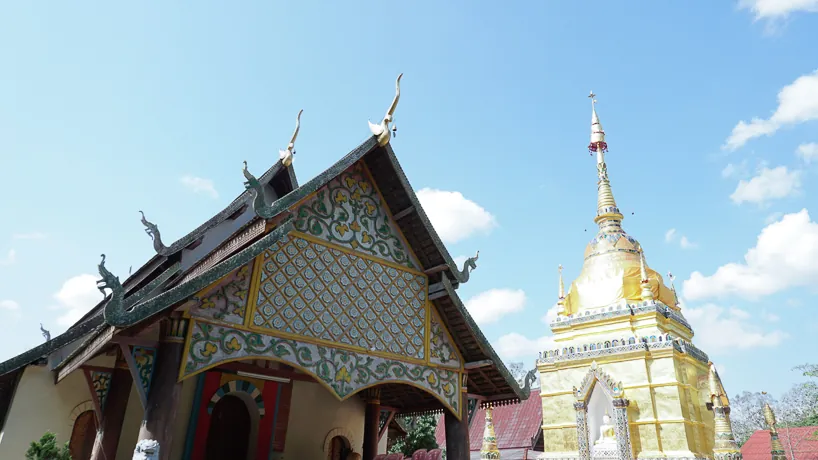




Wat Saen Mueang Ma sits in the Tai Lue village of Ban Mang, Chiang Kham district, in Phayao province’s far northeast, not to be confused with the similarly named Wat Saen Mueang Ma Luang inside Chiang Mai’s old city, 140km to the west. This temple was built around 1808, during the reign of King Rama I, by Tai Lue settlers relocated from Mang City in Yunnan Province by the ruler of Nan. It was originally known as Wat Mang before taking its current name, and the Fine Arts Department registered it as a national historic site in 1984. Entry is free, as at most working Thai temples.
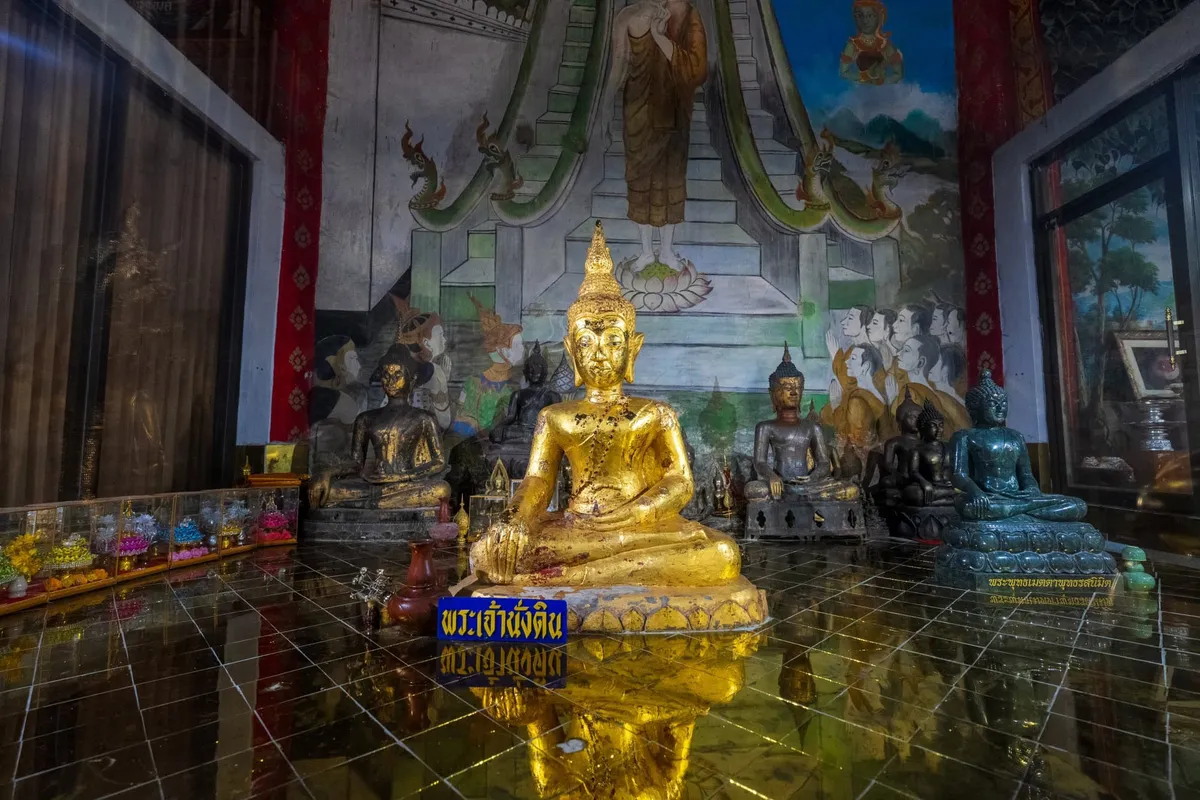
The vihara is the temple’s standout feature: a tri-directional hall with entrances on three sides, roofed in cascading, low-pitched tiers rather than the single steep gable typical of central Lanna temples. Naga, tiger, and lion figures line the entrance stairways. The style is Tai Lue rather than pure Lanna: the two share roots but diverge in roofline and ornament, and this is one of the more legible examples of that distinction in Phayao. Inside, wall paintings depict everyday Tai Lue life alongside the usual Buddhist scripture scenes, and the main Buddha image follows a regional casting style that looks noticeably different from a standard Lanna or central Thai figure. A small on-site museum, established in 1991, holds a replica Tai Lue house, farming tools, ceramics, and textiles from the community that built the temple.
Insider Tip: The museum building is easy to miss if you only walk to the vihara. Ask a temple caretaker to point you toward it, since it isn’t always signed clearly from the car park.
Chiang Kham is a working district town rather than a tourist stop, so the temple stays genuinely quiet outside Thai holidays: there’s no ticket booth, no vendor row, and little English signage. Bring modest dress (covered shoulders and knees), remove shoes before entering the vihara, and avoid pointing your feet at the Buddha image, as at any Thai temple.
The temple is roughly 45 minutes by road from the Phu Chi Fa viewpoint area, making it a workable stop on the way in or out if you’re driving the Chiang Kham–Wiang Kaen route rather than a dedicated day trip. Wat Phra Nang Din and Wat Phra That Sop Waen, both also in Chiang Kham district, are worth pairing with it if you’re covering the area’s temples in one trip. Own transport is the practical way to reach it: public songthaews serve Chiang Kham town but not the temple directly.
- Entry fee: Free
- Built: c. 1808, as Wat Mang; renamed and listed as a national historic site in 1984
- Style: Tai Lue architecture (distinct from standard Lanna)
- Location: Ban Mang, Chiang Kham district, Phayao, not Chiang Mai or Loei
- On-site museum: Tai Lue heritage exhibits, established 1991
Location & Directions
Ban Mang, Tambon Yuan, Chiang Kham, Phayao
Phayao, Thailand
Show your taxi or Grab driver
วัดแสนเมืองมา
Frequently Asked Questions
Is this the same temple as Wat Saen Mueang Ma Luang in Chiang Mai?
What does Wat Saen Mueang Ma cost to enter?
What is Tai Lue architecture?
Was this temple originally called something else?
Spotted something out of date or incorrect? Let us know
Stay Near Wat Saen Mueang Ma
Live prices for places closest to Wat Saen Mueang Ma: tap a pin to compare.