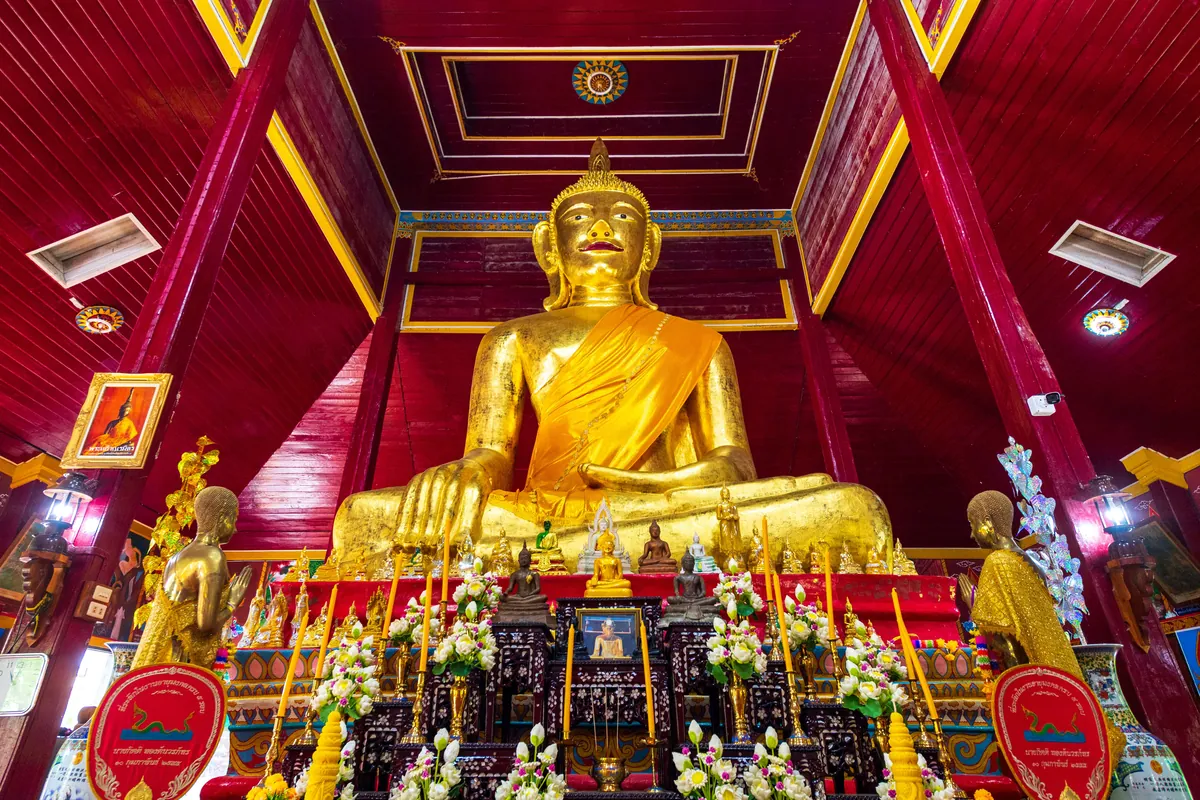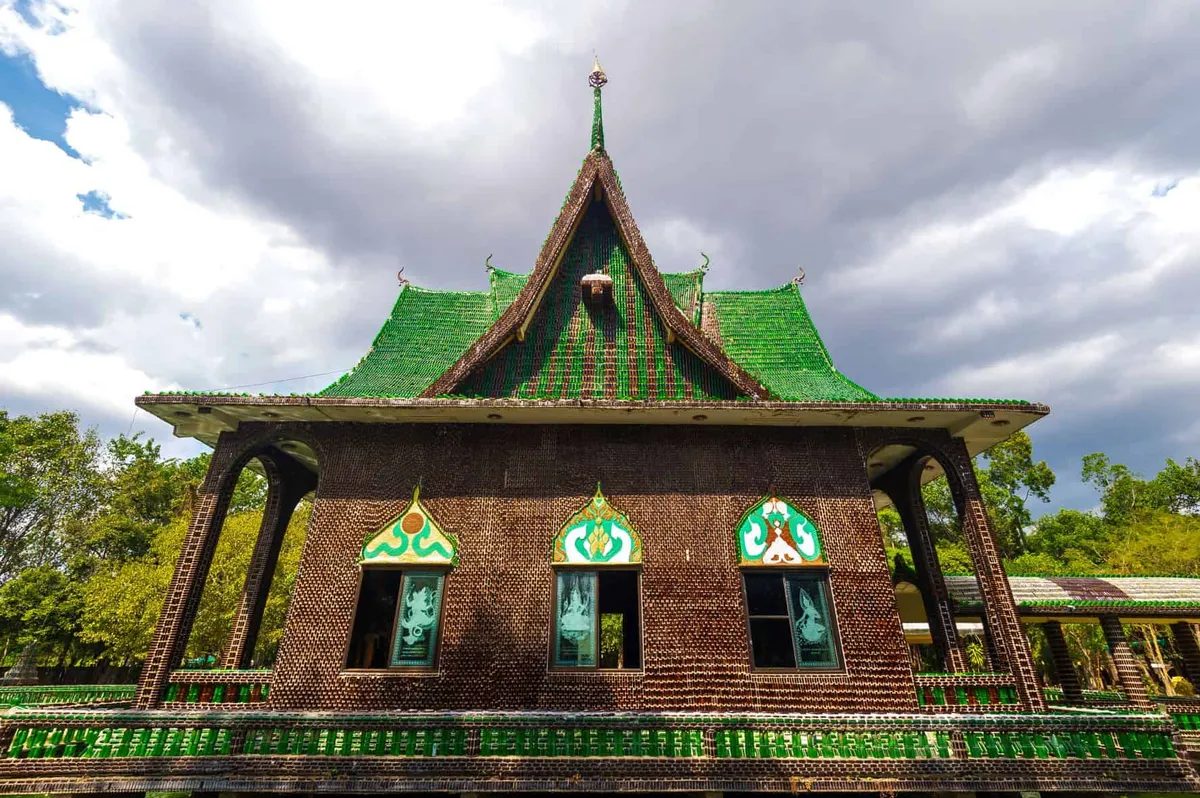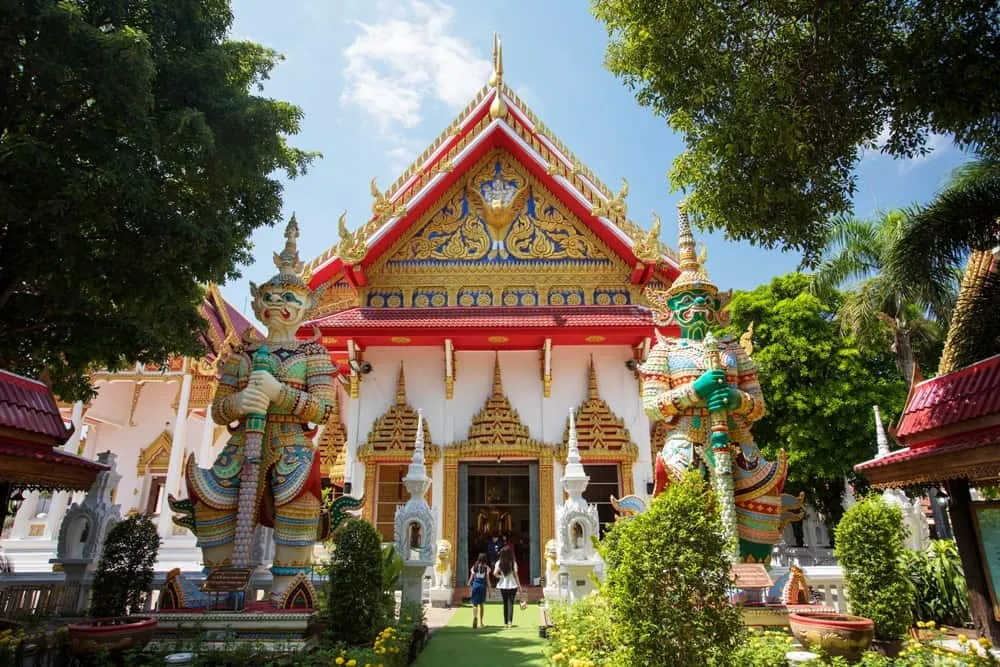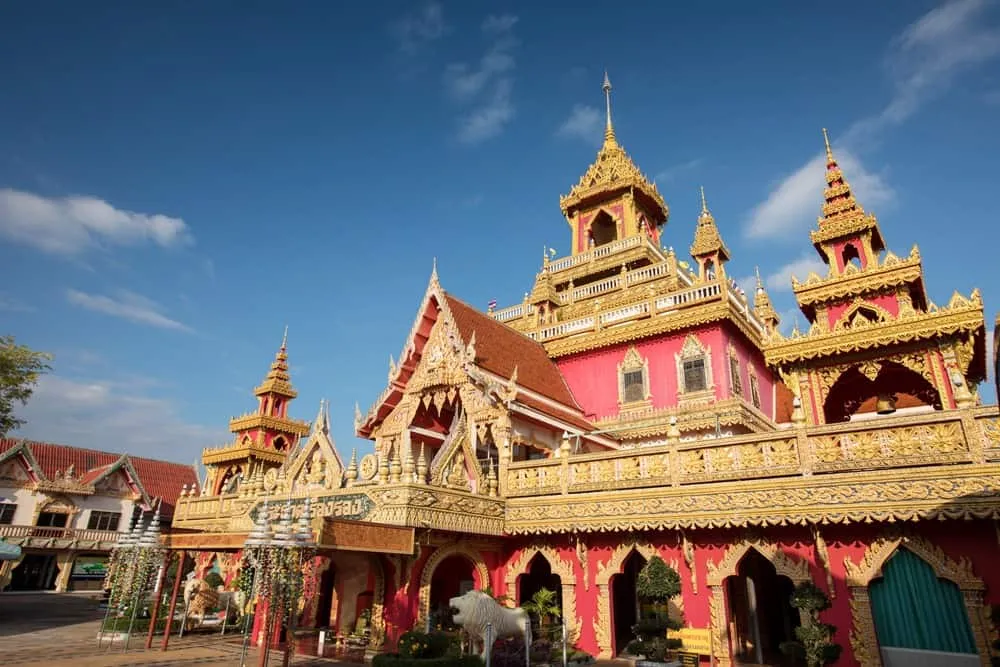






Wat Sophon Wihan’s original hall was built with wooden pillars and no roof at all — a design later covered first with hardwood, then with the ceramic tile and cement plaster visible today. The temple, in Kanthararom subdistrict of Khukhan district, traces back to around 1867 under its first name, Wat Rom Phuk, predating the founding of Kanthararom town itself. Entry is free.
The rectangular viharn has three staircases — north, south and east — each lined with carved balustrades that layer three tiers of figures: a kneeling woman with her hands pressed together at the base, lions in the middle tier, and nagas at the top. Between a pair of chedis raised in 1888 sits the ubosot, home to twin Buddha images known together as Phra Phuttha Sophon; the architecture leans on Khmer influences common across this stretch of Si Sa Ket near the Cambodian border, rather than the Lao style found further north in Isan.
Insider Tip: Time a visit for Khao Phansa (the start of Buddhist Lent, usually July) if you can — the temple runs its annual reading and inscription of ancient Khom-script palm-leaf manuscripts then, one of the few places in the province keeping that tradition alive. Outside festival dates, the grounds are quiet enough that you’ll likely have the viharn’s carvings to yourself.
Remove your shoes before the ubosot and dress modestly — shoulders and knees covered. There’s no posted admission fee or fixed visiting hours; like most working village temples in Si Sa Ket, the grounds are most active in the early morning and quiet by mid-afternoon. Diggings on the temple grounds and at a nearby pond called Nong Pru turned up ancient ceramic kiln remains and prehistoric stone tools, suggesting the area was a ceramics production site long before the current temple existed — a detail local guides mention more often than tourist listings do. Combine the visit with Wat Maha Phuttharam or the Khmer ruins at Sa Kamphaeng Yai, both within Si Sa Ket province.
- Location: Kanthararom subdistrict, Khukhan district, Si Sa Ket
- Entry fee: Free
- Founded: c. 1867, originally named Wat Rom Phuk
- Chedis: twin chedis dated 1888, flanking the ubosot
- Notable: original wooden-pillar, roofless viharn design; annual Khom palm-leaf manuscript tradition at Khao Phansa
Location & Directions
Khukhan, Si Sa Ket
Si Sa Ket, Thailand
Show your taxi or Grab driver
วัดโสภณวิหาร (วัดลำพุก)
Frequently Asked Questions
Is Wat Sophon Wihan free to visit?
Why is it known for wooden pillars?
What's inside the ubosot?
When's the best time to visit?
How old is the temple?
Spotted something out of date or incorrect? Let us know
Stay Near Wat Sophon Wihan
Live prices for places closest to Wat Sophon Wihan — tap a pin to compare.