


Si Sa Ket
ศรีสะเกษ
Isan's Khmer heartland — a million-bottle temple, forested border escarpments, and four living ethnic traditions blossoming every March.
Recommended by us
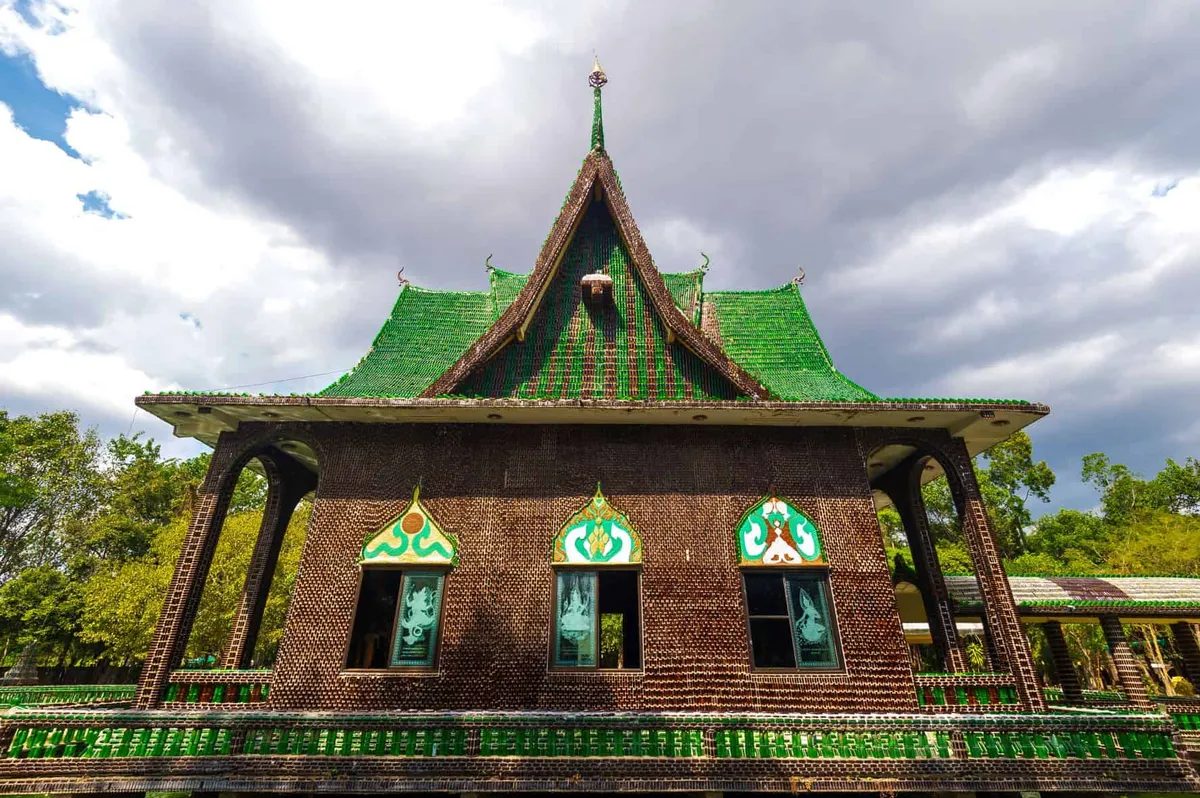
Wat Lan Khuat
A forest temple built from over a million recycled glass bottles — the mosaics catch the light in a way no tiled temple does. Quiet on weekdays.

Khao Phra Viharn NP
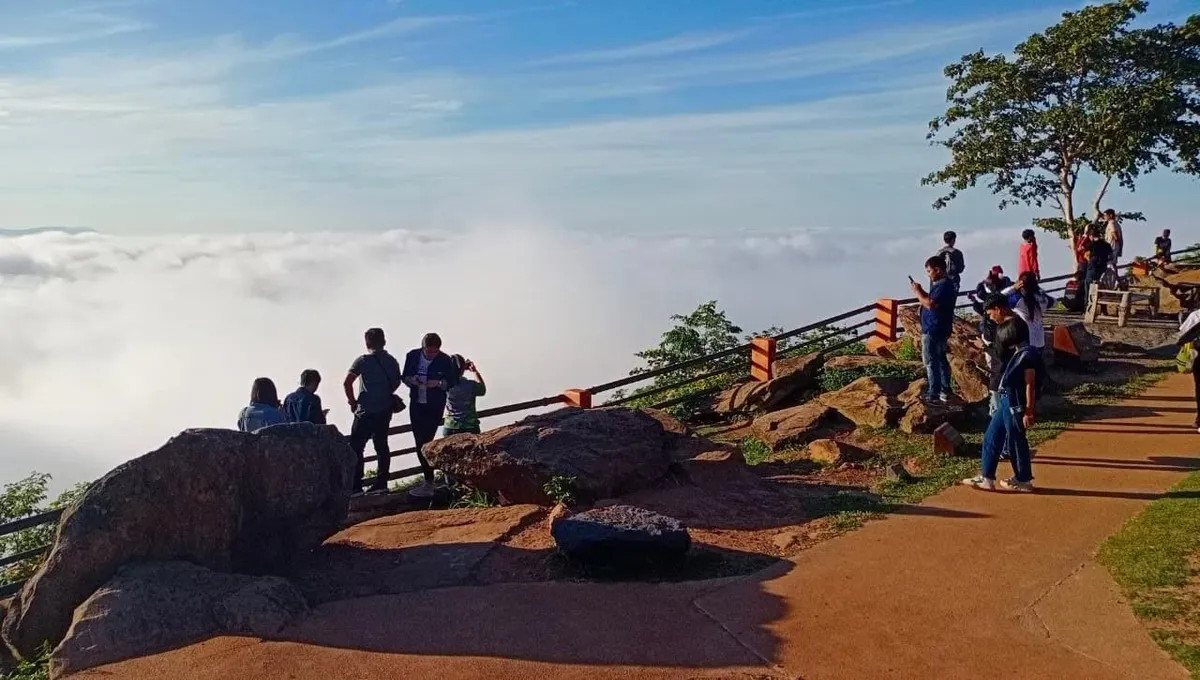
The park frames the cliff-top Khmer sanctuary of Preah Vihear on the Cambodian border. Come for the escarpment views even if the temple-side access varies by season.

Sa Kamphaeng Yai Khmer Ruins
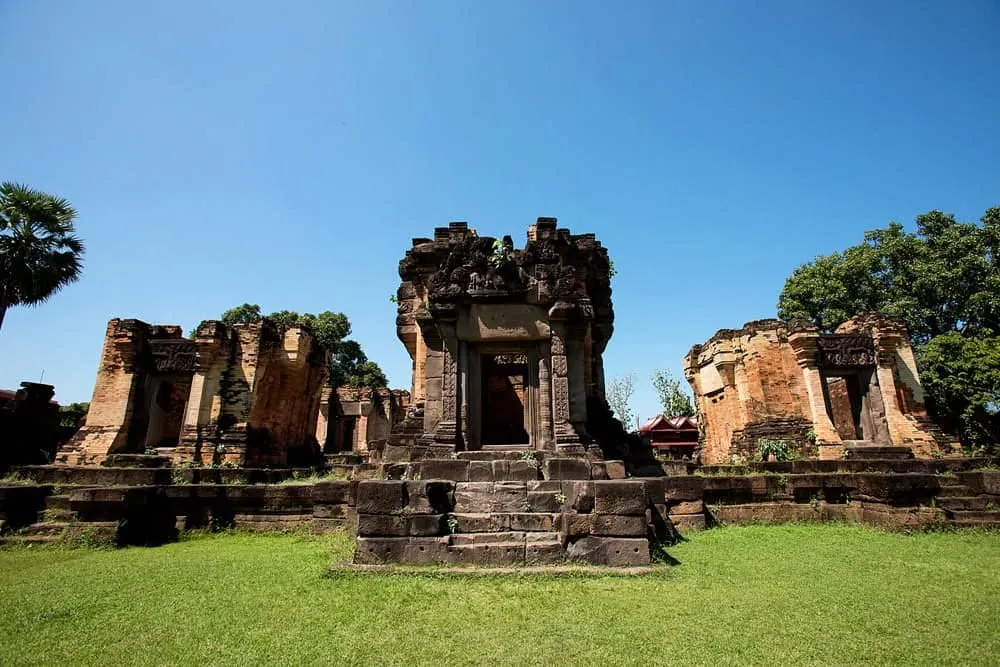
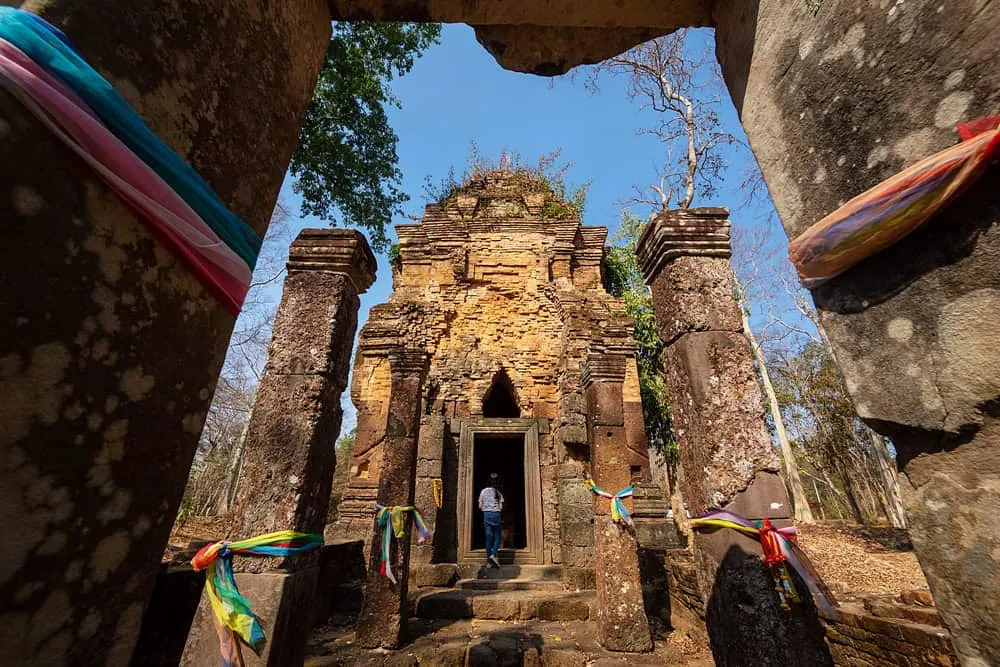
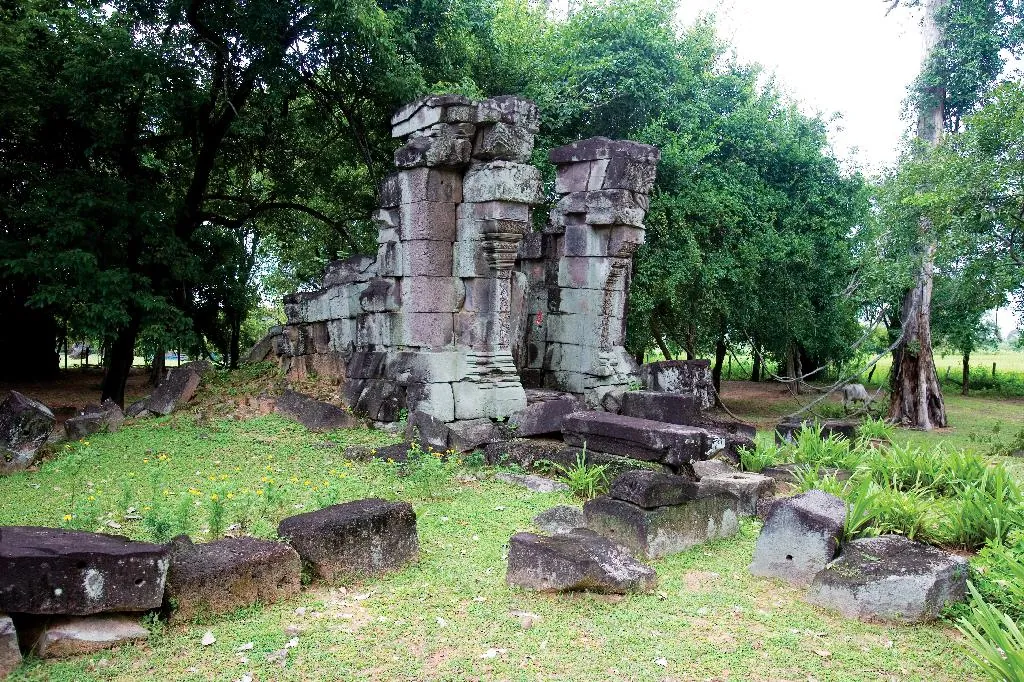
One of Si Sa Ket's more complete Khmer complexes — sandstone prangs still standing in a rice-field setting. Few tour groups make it out here.

Prang Ku Khmer Ruins
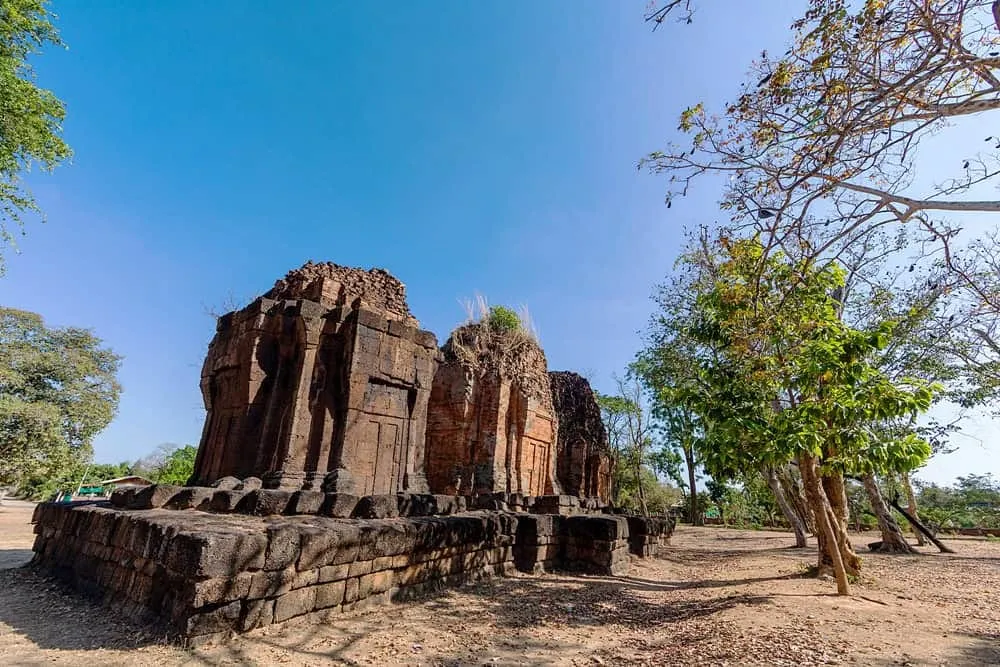
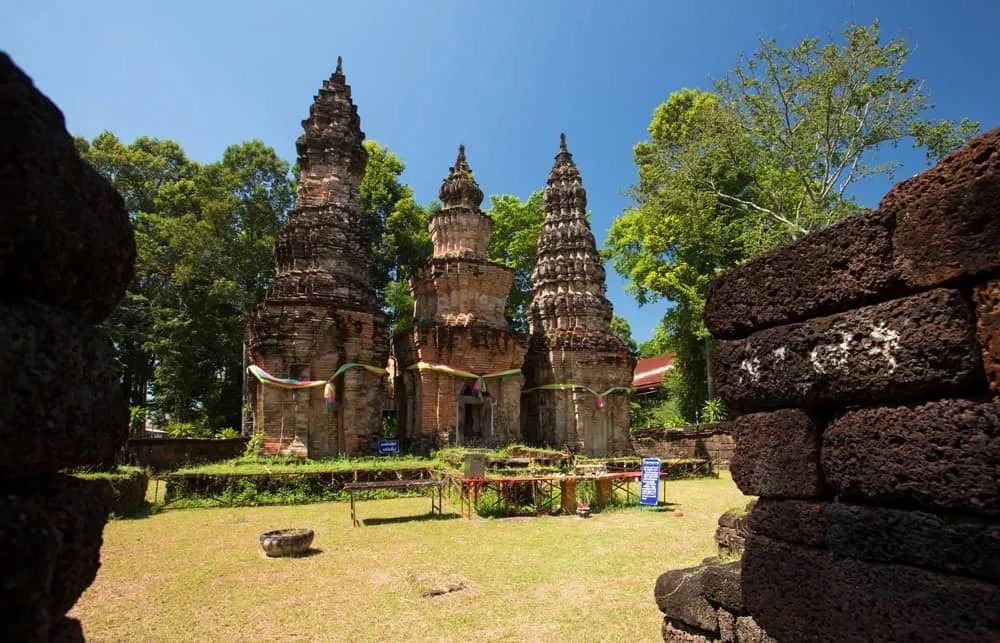
Three laterite towers in the middle of town — an easy stop that gives the province's Khmer lineage quick context before you head further out.
Get to Si Sa Ket
The overnight train from Bangkok takes roughly 10 hours and drops you in the centre of town — cheaper and easier than flying into Ubon Ratchathani.

eSIM for Thailand
Land with data already working and skip the airport SIM queue. We tested six plans — code THAIHOLIDAY saves 10%.

Travel insurance
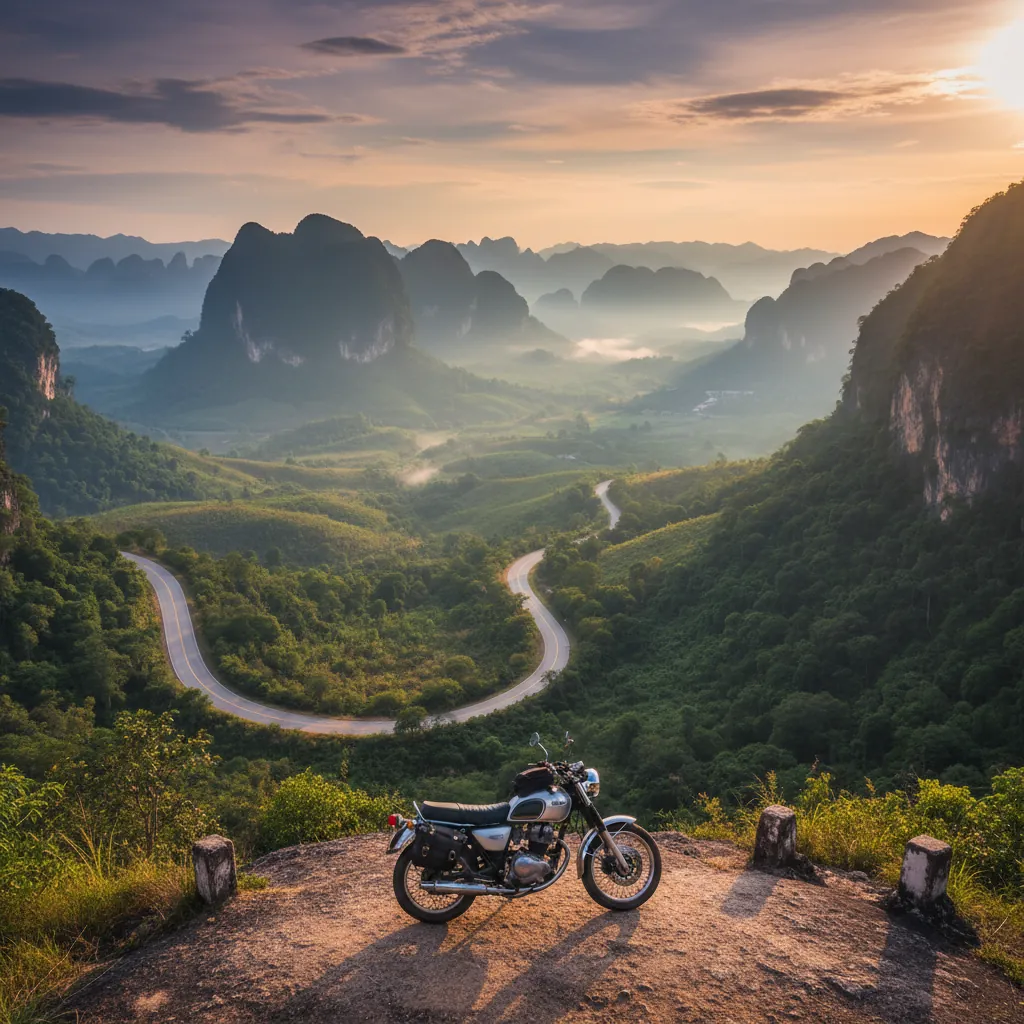
Motorbike is the only practical way to reach scattered Khmer ruins in the countryside — sort cover before you go and check the motorbike clause.
Wats, shrines & spiritual sites
Temples in Si Sa Ket






Waterfalls, peaks, caves & parks
Nature & outdoors around Si Sa Ket




Museums, history & heritage
Museums & culture in Si Sa Ket






Things to do on the map
Tap a pin for details — 22 places in Si Sa Ket plotted.
When to go
Nov–Feb The dry cool season is the most comfortable time — ideal for temple touring and walking the Pha Mo E Daeng escarpment. The Lamduan trees begin blooming in late February, peaking at the festival in early March.
Mar–Apr March is festival month: the Lamduan Flower Festival fills Somdet Phra Srinakarindra Park with pale yellow blossoms and four-ethnic cultural performances. April turns hot (35°C+) and is the least comfortable month outdoors.
May–Oct The Isan wet season brings afternoon downpours from May through October, peaking August and September. The temple ruins and bottle temple remain accessible; dirt roads into forested areas can be impassable after heavy rain.
About Si Sa Ket
Last updated September 2026
Overview
Si Sa Ket sits in the southern corner of Isan, where the flat Khorat Plateau gives way to the forested Dangrek mountains that mark the Cambodian border. The province is less visited than its neighbours — Surin to the west, Ubon Ratchathani to the east — but it rewards the travellers who make it out here with a concentration of Khmer heritage, an extraordinary recycled-bottle temple, and a culture shaped by four distinct ethnic communities: Lao, Khmer, Kui, and Yer.
More than a dozen Angkorian-era ruins are scattered across the province, dating from the 10th to 13th centuries. Most sit within working Buddhist monasteries, their ancient sandstone towers surrounded by monks’ quarters and family-lit incense sticks — a continuity of sacred function that the more-visited Phimai or Phanom Rung lack. The provincial capital is quiet and navigable, and the borderland escarpment to the south offers some of the most dramatic landscape in the northeast.
Si Sa Ket’s official flower is the lamduan (Wrightia religiosa), a pale yellow, sweet-scented bloom. Tens of thousands of lamduan trees grow across the province, and when they flower together in late February and early March the event is celebrated with a full festival in the provincial capital.
Top Things to Do
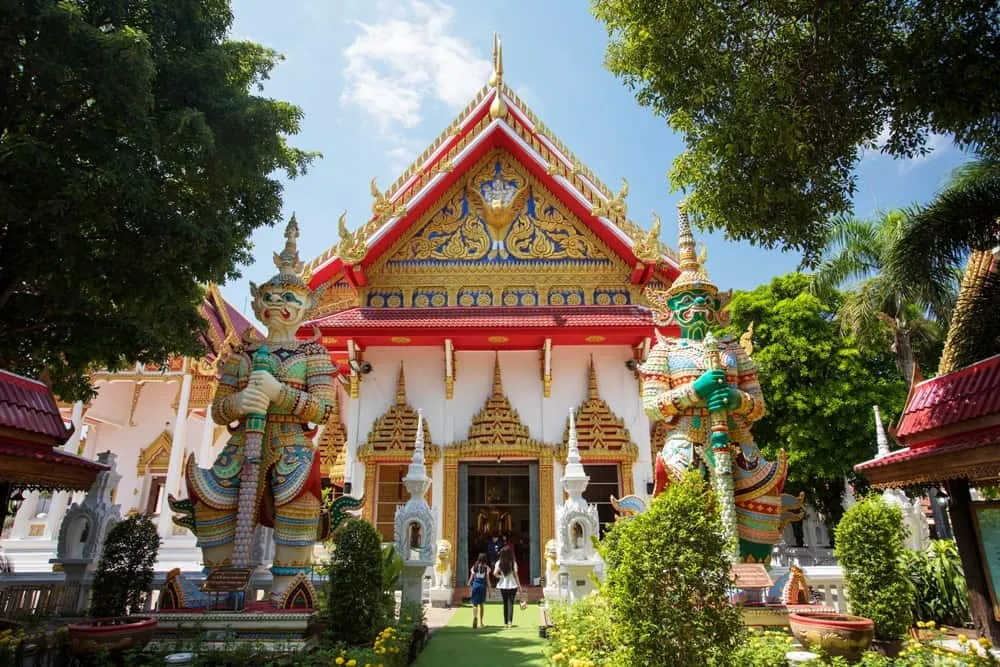
Wat Pa Maha Chedi Kaeo (Wat Lan Khuat) is the province’s most unexpected sight. Starting in 1984, the abbot of this forest monastery in Khun Han district began collecting empty glass bottles — Heineken and Chang beer, primarily — and incorporating them into every building on the complex. By 2009 more than 1.5 million bottles had been used. The result is a working monastery where the ubosot, chedis, monks’ quarters, crematorium, and even the bathrooms are tiled with bottle caps and encrusted with bottle-end mosaic. The green and brown glass catches the light in a way that is genuinely different from any other temple in Thailand. Entry is free. It remains a project animated by Buddhist principles rather than tourism.
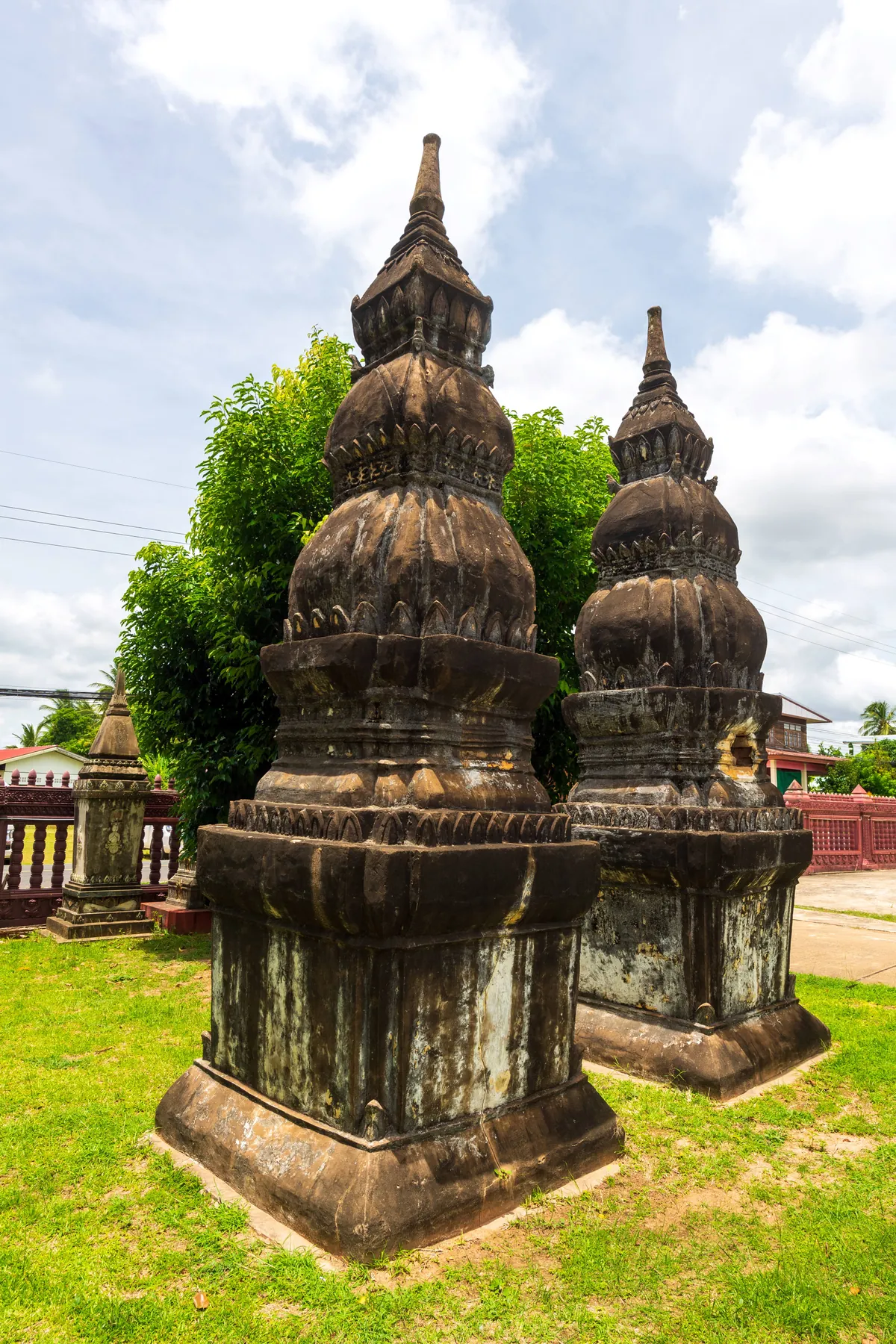
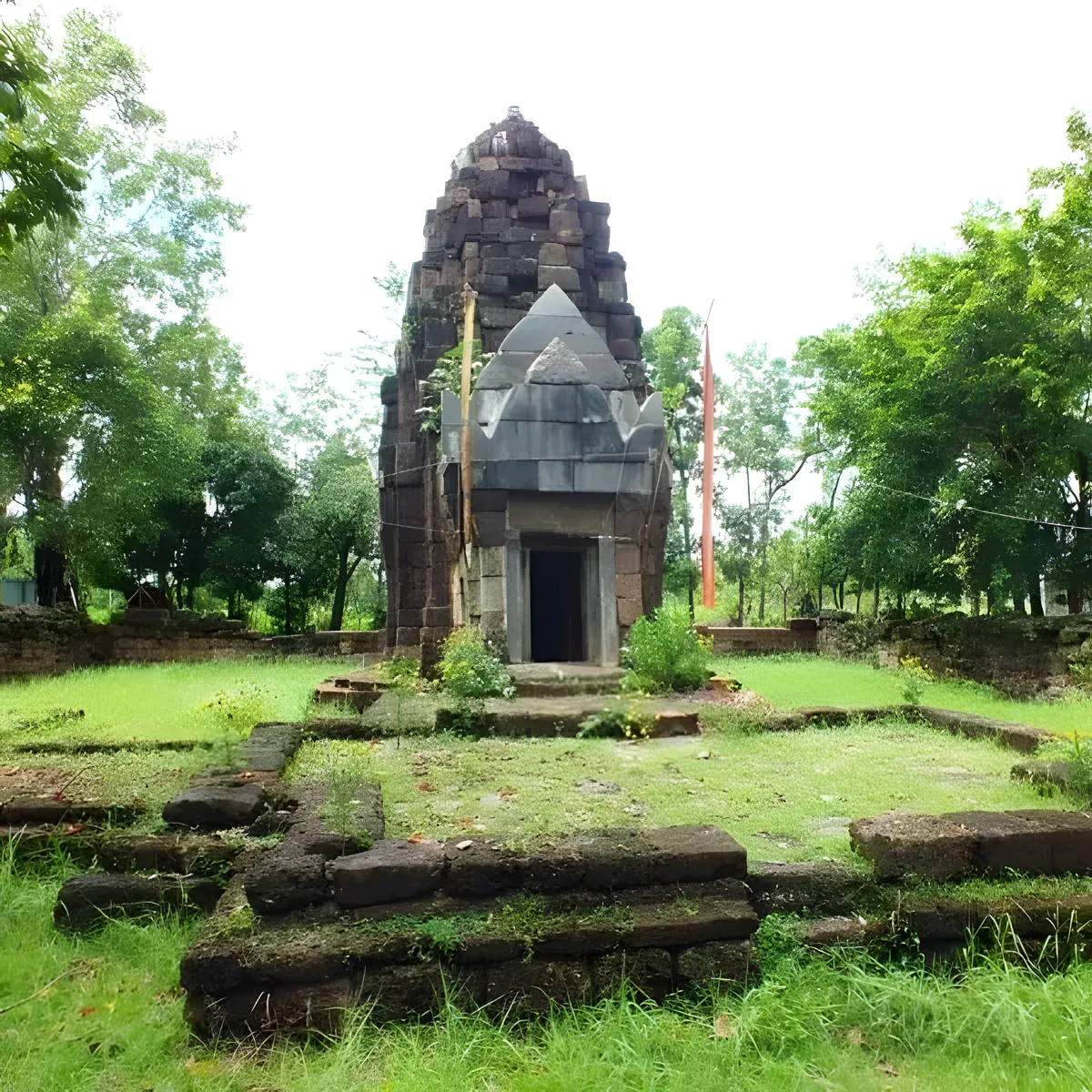
Prasat Sa Kamphaeng Yai is the finest Khmer temple in the province — an 11th-century sanctuary built in the Baphuon style by the Angkorian king Udayadityavarman II, originally dedicated to the Hindu god Shiva and later rededicated to Buddhism. Three sandstone towers rise from a laterite platform in Uthumphon Phisai district, the central prang retaining much of its original carved decoration. When the Fine Arts Department excavated the site, they found a 126 cm bronze figure of a young man in the 11th-century Baphuon style — considered one of the finest Khmer bronze figures ever discovered in Thailand, now in the National Museum in Bangkok. The site sees few visitors and sits within a functioning monastery.
Prasat Sa Kamphaeng Noi is a smaller ruin a short drive away — a laterite stupa and chapel within an enclosing wall, built in the same era and expanded in the Bayon style during the 13th century. TAT records note it was classified as an ‘Arokaya Sala’, a Khmer-era community hospital established under Jayavarman VII. Both Kamphaeng sites can be combined in a half-day.
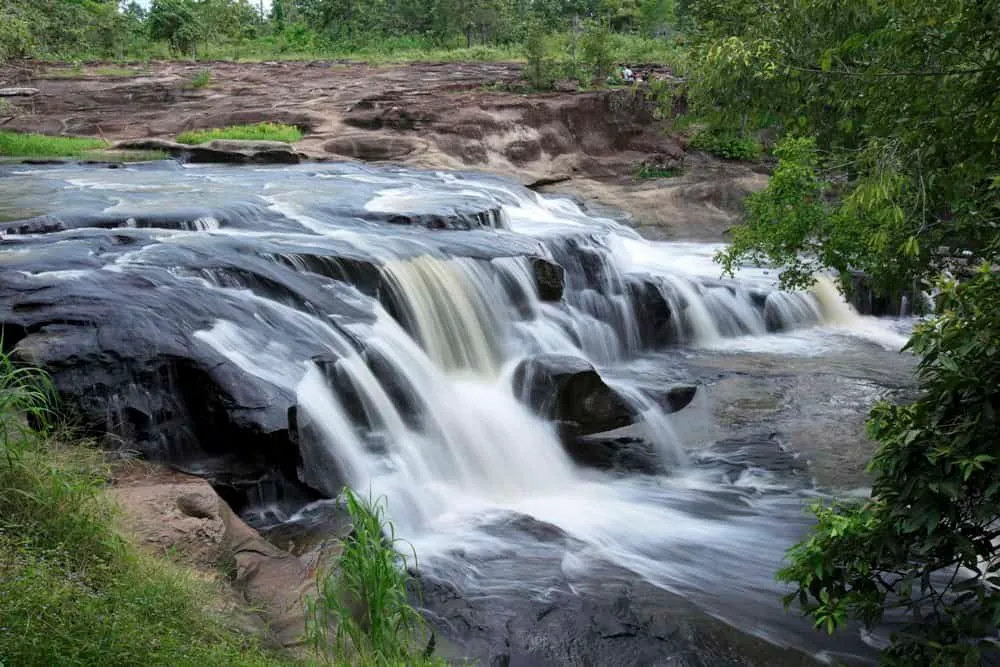
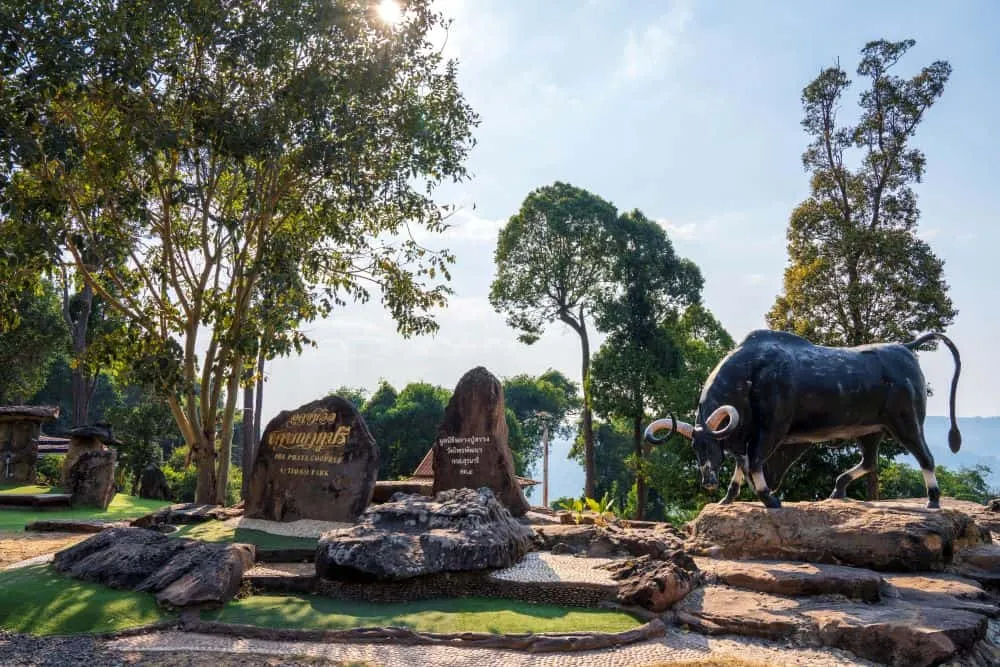
Khao Phra Wihan National Park and Pha Mo E Daeng offer the province’s most dramatic natural spectacle. The national park covers 130 km² of the Dangrek mountain escarpment in Kantharalak district. Pha Mo E Daeng is a sandstone cliff roughly 300 metres long at the edge of the escarpment, with views sweeping over the forested plateau into northern Cambodia. Sunrise here — when cloud sits below the cliff level and the forest extends to the horizon — is one of the better dawn views in the northeast. The park is open from 5am to 6pm; the 11th-century Khmer sanctuary of Preah Vihear, directly below on the Cambodian side, remains inaccessible from Thailand (see FAQ).
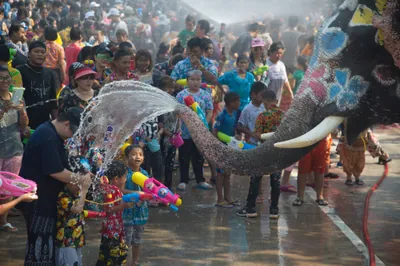
The Lamduan Flower Festival runs annually for five days in early to mid-March at Somdet Phra Srinakarindra Park in the provincial capital. The timing coincides with the mass flowering of the province’s lamduan trees, and the festival combines the floral display with performances and ceremonies representing the Lao, Khmer, Kui, and Yer ethnic communities. A nightly light-and-sound show dramatises the provincial history. It is primarily a domestic event, which is part of what makes it genuine rather than staged.
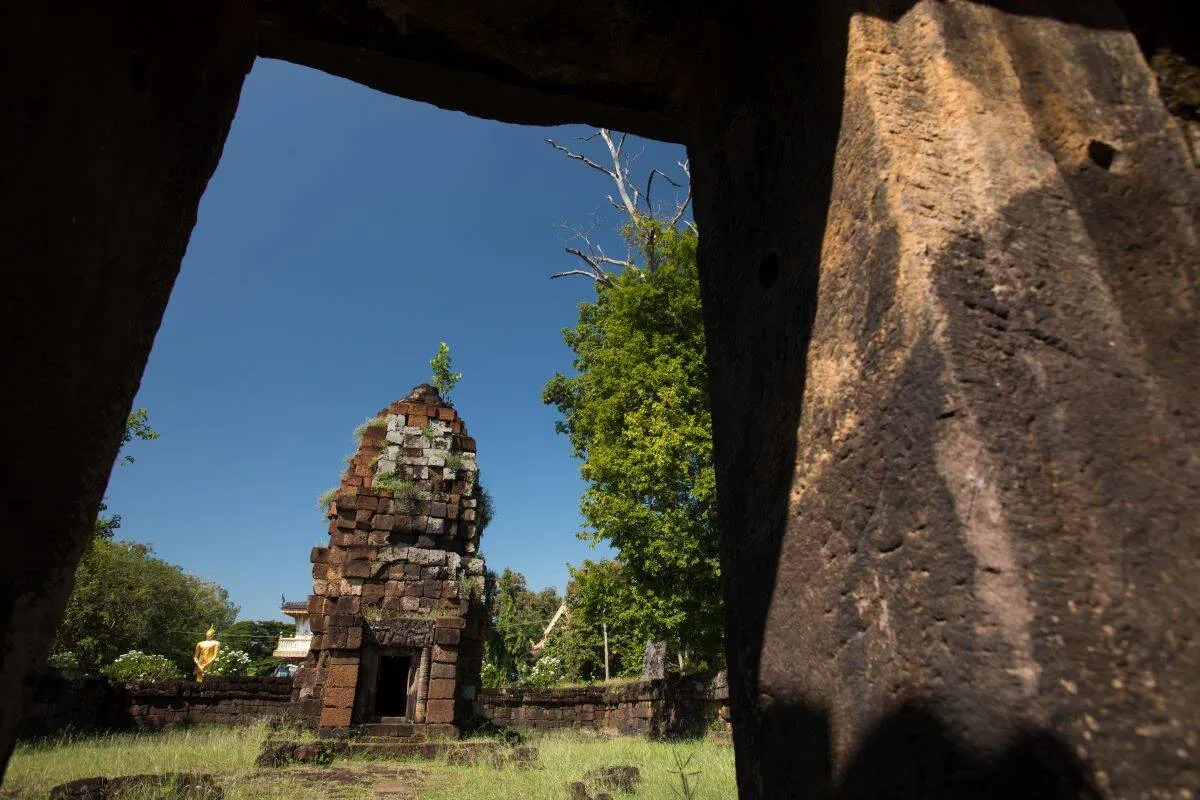
Smaller Khmer ruins are distributed across the province — Ban Samo, Huai Thap Than, Taleng, and others appearing in the site’s attractions listings. Most require no more than a short detour from a main road and none charge significant entry fees. Taking time to find the less-labelled ones is how you end up with a monastery courtyard to yourself.
Where to Stay
The provincial capital has a functional selection of mid-range hotels — Vijit Nakorn, Khum Lanna Boutique, and Boonsiri Boutique are the most consistently reviewed. Prices average around 800–1,000 baht a night. There are no international chains and no resort complexes, which accurately reflects the character of the place.
For visiting Khao Phra Wihan National Park, some travellers base themselves in Kantharalak, the nearest town to the escarpment, rather than making the round trip from the capital.
Getting There
Si Sa Ket is the penultimate stop on the Bangkok–Ubon Ratchathani rail line from Krung Thep Aphiwat Central Terminal. The express overnight train (Train No. 21, departing early morning) covers the journey in around 7–8 hours. This is the most practical and affordable way to arrive, and the overnight option means no lost daylight. Buses from Bangkok’s Northern Bus Terminal take around 9 hours. From Ubon Ratchathani, Si Sa Ket is about one hour by train or minivan.
Within the province, getting to the main sights independently requires either a hired driver or a motorbike for shorter trips. The Prasat Sa Kamphaeng cluster is reachable from the capital by local transport; Wat Lan Khuat in Khun Han (roughly 100 km southwest) and the national park in Kantharalak (70 km southeast) both benefit from having your own wheels.
Best Time to Visit
Si Sa Ket follows the standard Isan climate pattern: dry and cool from November to February, hot in March and April, with the wet season running May through October and peaking in August and September.
November to March is the most comfortable window. March is the obvious highlight month — the Lamduan Flower Festival runs in the first two weeks, temperatures are still manageable before the April heat sets in, and the national park is dry enough for the escarpment paths. Cool-season mornings at Pha Mo E Daeng (November–February) are best for the sea-of-mist effect in the valleys below.
April is the least appealing month: hot, pre-monsoon, and without the compensations of the festival. During the wet season, the ruins and bottle temple remain fully accessible, but rural roads and the national park’s interior can be muddy after heavy rain.
Frequently Asked Questions about Si Sa Ket
How do I get to Si Sa Ket from Bangkok?
What is the best time of year to visit Si Sa Ket?
How long do I need in Si Sa Ket?
How do I get around Si Sa Ket province?
Can visitors enter Preah Vihear temple from the Thai side?
Spotted something out of date or incorrect? Let us know
Plan your
Si Sa Ket trip