




Wat Thipphayaratnimit (Wat Pa Ban Chik)
วัดทิพยรัฐนิมิตร (วัดป่าบ้านจิก)
Wat Thipphayaratnimit — known locally as Wat Pa Ban Chik, “wat pa” meaning forest temple — traces back to 1930, when Mae Thip, wife of a police major, and a police lieutenant persuaded villagers in the old Ban Chik quarter to donate this land as a monk’s residence. The original ordination hall went up in front of an existing shrine. Eight years later, in 1938, the temple’s new abbot, Phra Ajarn Un Thammathoro, returned from a thudong pilgrimage with 30 monks in tow, including Luang Pu Thir Thitathammo from Mukdahan province — the monk most associated with the temple today, whose likeness and relics anchor the grounds.
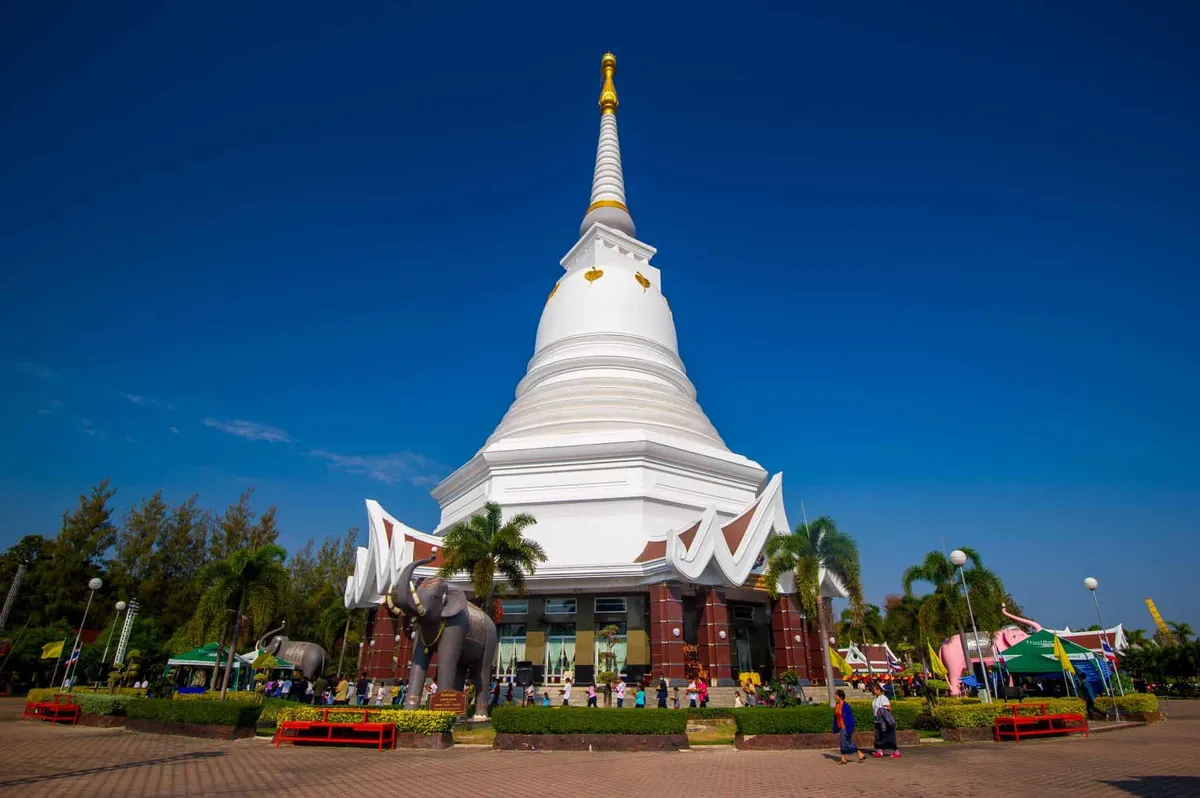
This is a forest temple in the Thai Forest Tradition, affiliated with the Thammayut order — a stricter, meditation-focused monastic discipline than most city wats practise, and it shows in the pace of the place. Shaded grounds under mature trees surround a large chedi enshrining Buddha relics, alongside a statue of Luang Pu Thir. Resident monks follow a daily rhythm of alms rounds, study, and meditation rather than performing for visitors, and the temple sits inside Udon Thani city itself — at the southeast corner of the Naresuan–Thahan road junction — rather than out in genuine forest, a reminder of how much the city has grown around what was once a quiet edge-of-town monastery.
The 1938 arrival of the thirty visiting monks matters more than it might look on paper: bringing a group that size for a single rains retreat was a deliberate move to establish Wat Ban Chik as a serious practice centre within the Thammayut network, not just a village shrine. That founding cohort, and Luang Pu Thir’s decision to stay on afterward, is what turned a donated plot of land into one of Udon Thani’s better-known forest temples.
Insider Tip: Morning, before 8 AM, is when you’ll actually see forest-tradition practice in motion — monks returning from alms rounds, the chanting hall in use. By mid-morning the temple settles into a quieter, less active rhythm.
Dress modestly, covering shoulders and knees, and remove shoes before entering the chedi hall or ordination hall. Because the temple sits inside the city, it’s reachable by songthaew, tuk-tuk, or a short taxi ride from central Udon Thani — no need for a private driver or advance planning, unlike more remote forest monasteries in the same tradition.
- Entry: Free, daily 08:30-16:30
- Founded: 1930, as a donated monk’s residence
- Tradition: Thammayut order, Thai Forest Tradition
- Associated monk: Luang Pu Thir Thitathammo (arrived 1938)
- Location: Mak Khaeng subdistrict, central Udon Thani — Naresuan/Thahan road junction
Location & Directions
Mueang Udon Thani, Udon Thani
Udon Thani, Thailand
Show your taxi or Grab driver
วัดทิพยรัฐนิมิตร (วัดป่าบ้านจิก)
Frequently Asked Questions
What does "Wat Pa Ban Chik" mean?
Who is Luang Pu Thir Thitathammo?
Is Wat Thipphayaratnimit still an active forest monastery?
Is entry free?
How do I get there?
Spotted something out of date or incorrect? Let us know
Stay Near Wat Thipphayaratnimit (Wat Pa Ban Chik)
Live prices for places closest to Wat Thipphayaratnimit (Wat Pa Ban Chik) — tap a pin to compare.