





Bai Sema Ban Kut Ngong
ใบเสมาบ้านกุดโง้ง
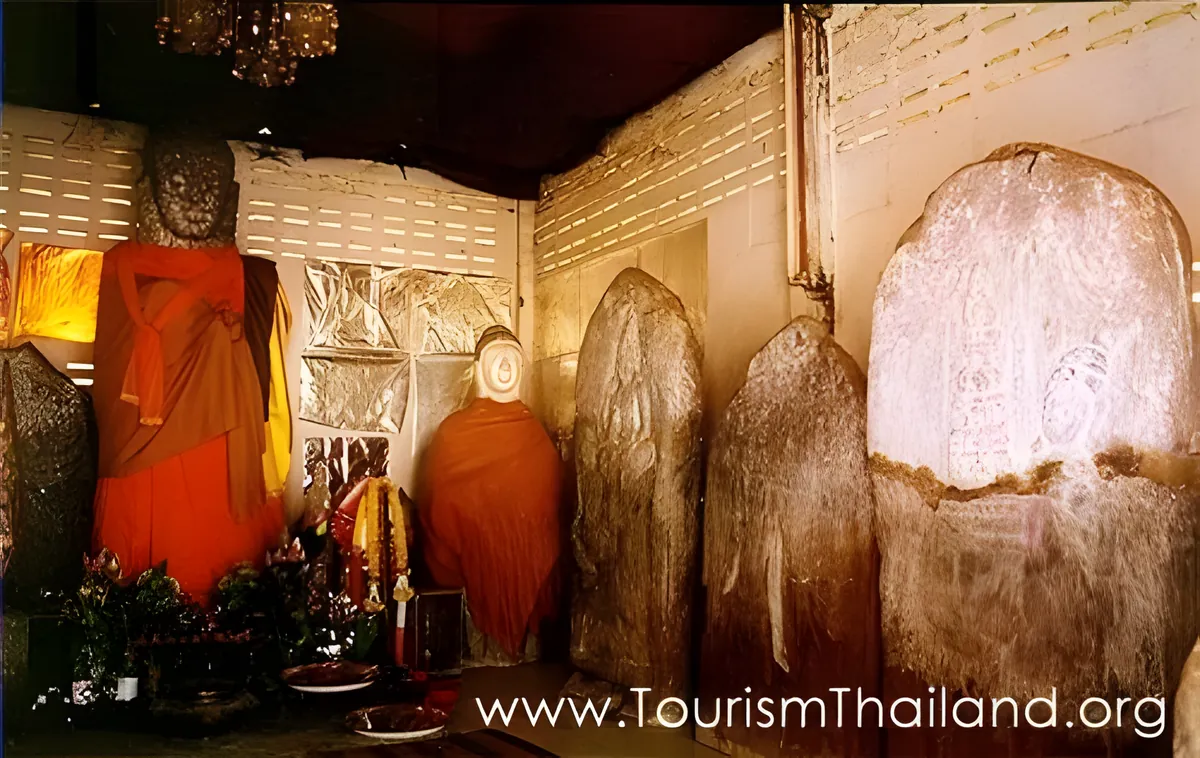
Bai Sema Ban Kut Ngong is a set of Dvaravati-era Buddhist boundary stones still standing in the village of Ban Kut Ngong, protected inside a small community-built museum rather than removed to a provincial collection. The stones mark the site of a Dvaravati settlement (roughly 6th to 11th century), and after foreign collectors stole several of the finest carved pieces in 1969, the community built the shelter that now houses and displays what remains — a rare example of a heritage site staying exactly where it was found.
The carvings vary in ambition. Some sema are plain, undecorated slabs; others are worked with stupas, Buddha imagery, or narrative scenes from the Jataka tales — stories of the Buddha’s past lives. Look closely and you can pick out lotus-petal borders and figures of celestial beings on the more elaborate stones, carved by hand without metal tools more than a thousand years ago. It’s a small site — you can see everything in under an hour — but the density of carved detail per stone rewards a slow look rather than a quick pass.
This isn’t a formal government museum with a ticket booth and a gift shop; it’s a village-run shelter built specifically to keep what happened in 1969 from happening again. That gives the visit a different feel from most heritage sites in Isan — you’re looking at objects the community itself chose to protect, in the same ground where they were originally set into the earth. There’s no crowd to navigate and no queue, just the stones, the shelter roof, and whatever quiet the village happens to have that day.
Insider Tip: Ask locally about the 1969 theft before you visit — it’s the reason the collection looks the way it does today, and most casual visitors miss that context entirely, treating the stones as generic “ancient carvings” rather than survivors of a specific loss.
- Entry fee: Free (donations welcome)
- Hours: Daily 08:30–16:30
- Era: Dvaravati period, roughly 6th–11th century
- Location: Ban Kut Ngong, Bung Khla subdistrict, Mueang Chaiyaphum district
- Time needed: Under an hour
The site is easily reached by car or motorbike from central Chaiyaphum, a short drive into Bung Khla subdistrict. Wear comfortable shoes for uneven ground around the stones, and bring sun protection since much of the site sits in the open. If Dvaravati-era craftsmanship interests you, Prang Ku elsewhere in Chaiyaphum makes a reasonable pairing for a half-day of the province’s older sites.
Location & Directions
Mueang Chaiyaphum, Chaiyaphum
Chaiyaphum, Thailand
Show your taxi or Grab driver
ใบเสมาบ้านกุดโง้ง
Frequently Asked Questions
What are bai sema, exactly?
Are the original stones still at the village, or in a museum elsewhere?
Is it free to visit?
How does this compare to other Dvaravati sites in Chaiyaphum?
What's the best time to visit?
Spotted something out of date or incorrect? Let us know
Stay Near Bai Sema Ban Kut Ngong
Compare places to stay in Chaiyaphum, or open the map for options closest to the attraction.