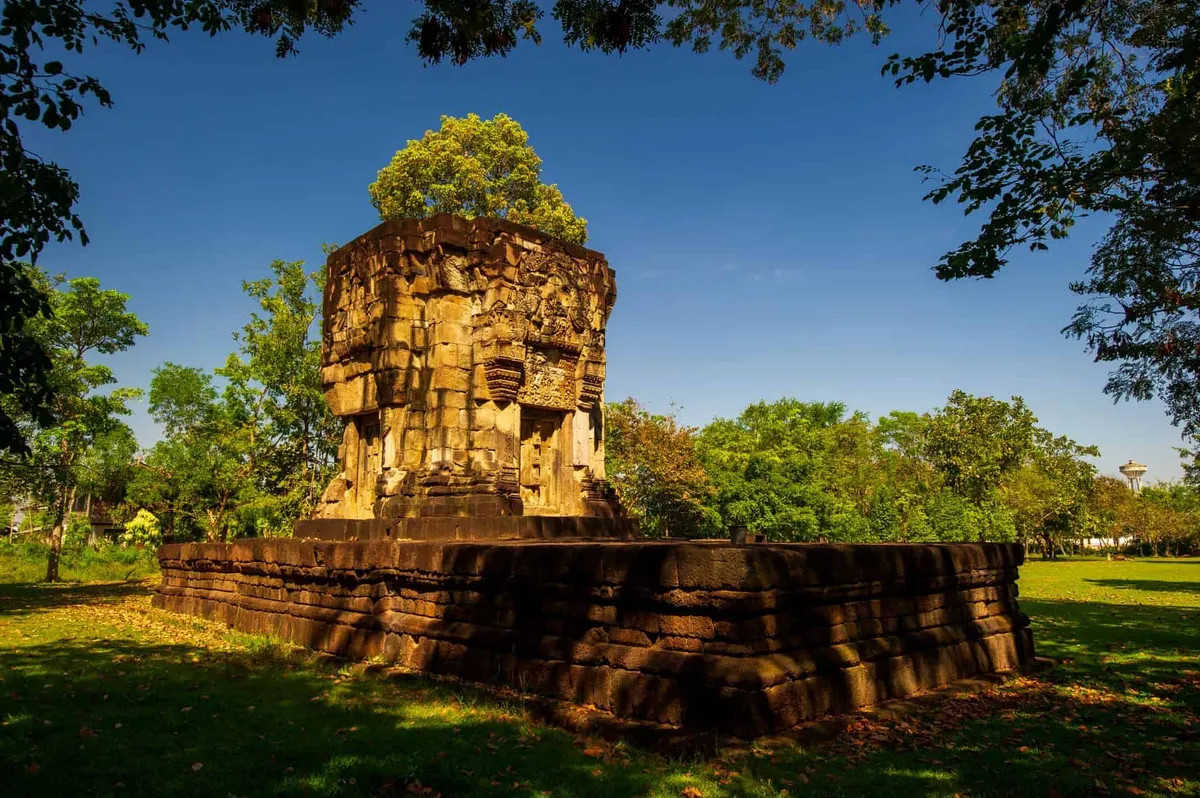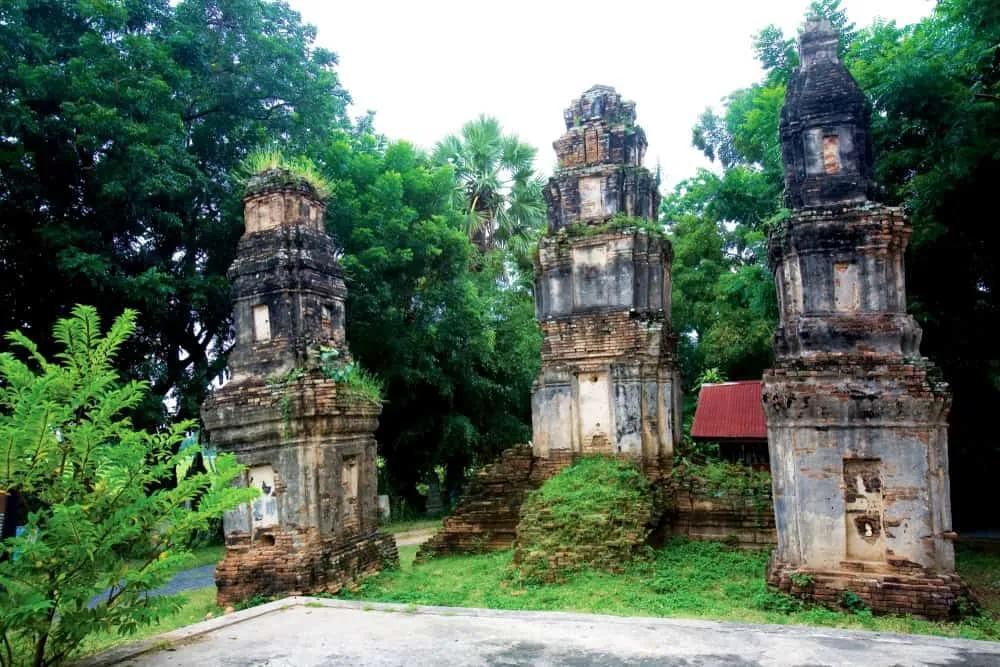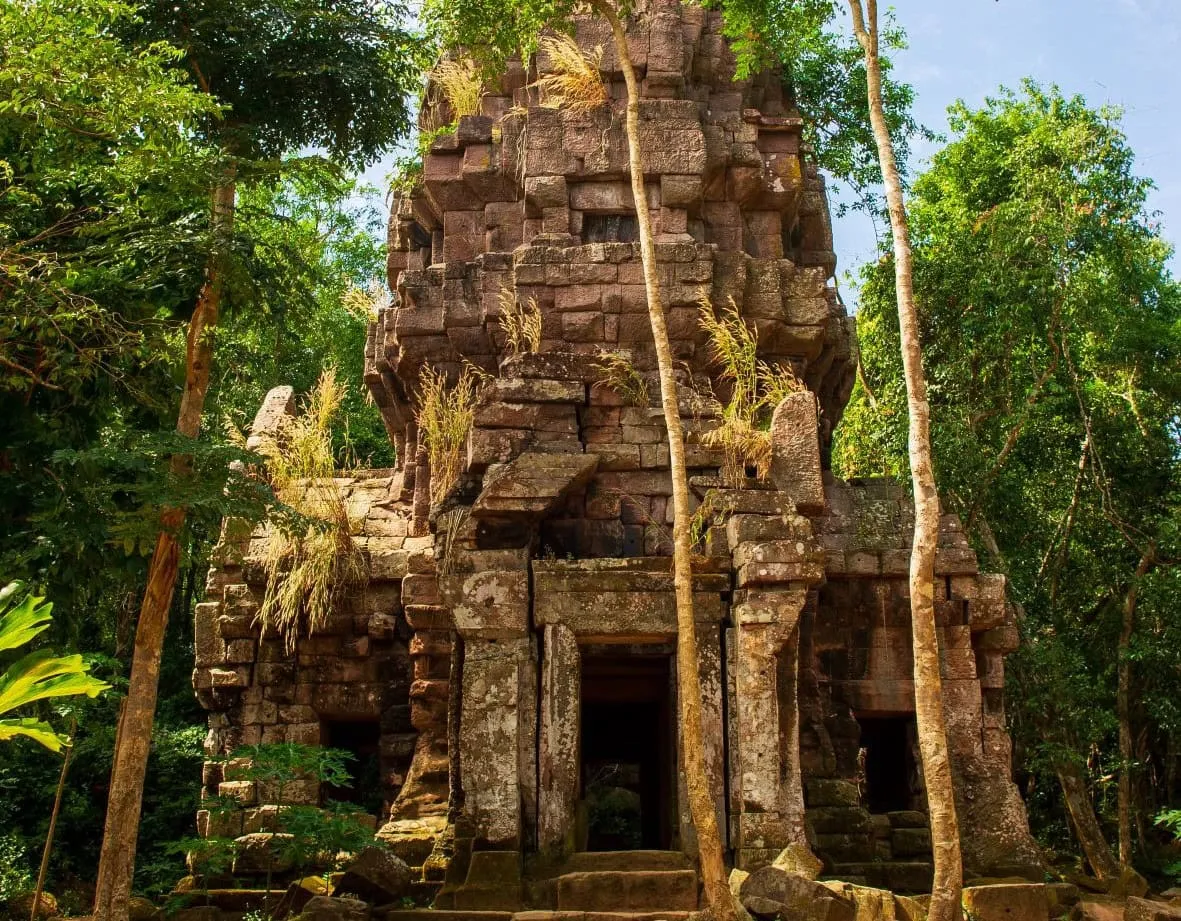






Ban Plai Castle (Prasat Ban Plai) is a Khmer brick sanctuary in Prasat district, built as three prangs — Khmer-style towers — in a row on a single laterite base, facing east and ringed by a U-shaped moat. It dates to roughly the 11th-12th century, built in the Baphuon style as a Hindu shrine to Shiva. Today only two of the three towers still stand.
The southern tower collapsed completely at some point after construction — only its base survives. The two remaining towers, each about 4 by 4 metres, keep their carved sandstone lintels: figures seated cross-legged above a kala (a guardian face from Hindu-Khmer iconography) mark the entrances to the central and northern prangs. The fallen southern tower’s lintel, recorded before it came down, showed the god Indra riding the elephant Erawan — a common motif at Khmer sanctuaries across this part of Isan. Brick walls and foundation lines mark where the rest of the complex once stood, giving a sense of the original layout without the crowds of Surin’s better-known Prasat Ta Muean or Sikhoraphum.
Insider Tip: Go in the early morning. The site has almost no shade, and low-angle light picks out the carved lintels far better than the flat glare of midday.
Watch out: There’s little on-site infrastructure — no ticket booth, shop, or shade structure — so bring your own water and sun protection.
The complex sits in open farmland in Chuea Phloeng subdistrict, part of a wider cluster of Khmer ruins across Prasat district that includes Prasat Ban Phluang and Prasat Muang Thi. The Fine Arts Department registered the site as a national historic monument in 1935, and it now falls under the care of the Surin National Museum.
- Entry fee: Free
- Hours: Daily, roughly 08:30-16:30
- Era: 11th-12th century, Baphuon-style Khmer, Hindu (Shaivite)
- Towers standing: 2 of 3 original prangs
- Getting there: Car or motorbike from Surin town, about 30km
Comfortable shoes and modest dress (shoulders and knees covered) are sensible for a site still treated as culturally significant, even though it’s no longer an active place of worship. Pair a visit with Prasat Ban Phluang or the Surin National Museum — both within a short drive and part of the same Surin Khmer-heritage trail.
Location & Directions
Prasat, Surin
Surin, Thailand
Show your taxi or Grab driver
ปราสาทบ้านไพล
Frequently Asked Questions
How many towers does Ban Plai Castle have today?
Is Ban Plai Castle free to visit?
How old is Ban Plai Castle?
What can you see in the carvings?
How do I get to Ban Plai Castle?
Spotted something out of date or incorrect? Let us know
Stay Near Ban Plai Castle
Live prices for places closest to Ban Plai Castle — tap a pin to compare.