




Phraya Surin Phakdi Si Narong Changwang (Pum) Monument
อนุสาวรีย์พระยาสุรินทรภักดีศรีณรงค์จางวาง (ปุม)
A 2.2-metre bronze statue of Phraya Surin Phakdi Si Narong Changwang, known locally as “Pum”, stands at the southern edge of Surin town, near kilometre zero of the Surin-Prasat road. That’s the edge of the old city, not the dead centre — a detail several older write-ups get wrong. Entry is free and the site has no set hours.
The dark-patina bronze figure holds an elephant goad in one hand, a direct reference to the skill that made Pum a leader in the first place: controlling war elephants. A pair of swords sits across his back, marking him as a warrior as much as an administrator. The statue rests on a stone base inscribed with an account of his achievements in Thai script. Small food vendors set up nearby through the day, and the open plaza around the base gives clear sightlines for photos from several angles.
Pum was a Kui community leader skilled at managing elephants who helped gather people and establish Surin during the late Ayutthaya to early Rattanakosin period — the same elephant-handling tradition that still defines the province’s Kui villages today. He later received a royal title from King Rama I and became Surin’s first governor. The statue itself was erected in 1968 and formally inaugurated on 13 April 1985.
Insider Tip: Early morning and early evening bring the most local visitors paying respects, and the softer light works better for photos than the flat glare of midday.
Watch out: Don’t expect a temple or museum built around the statue — this is a standalone civic monument in an open plaza, not a ticketed compound.
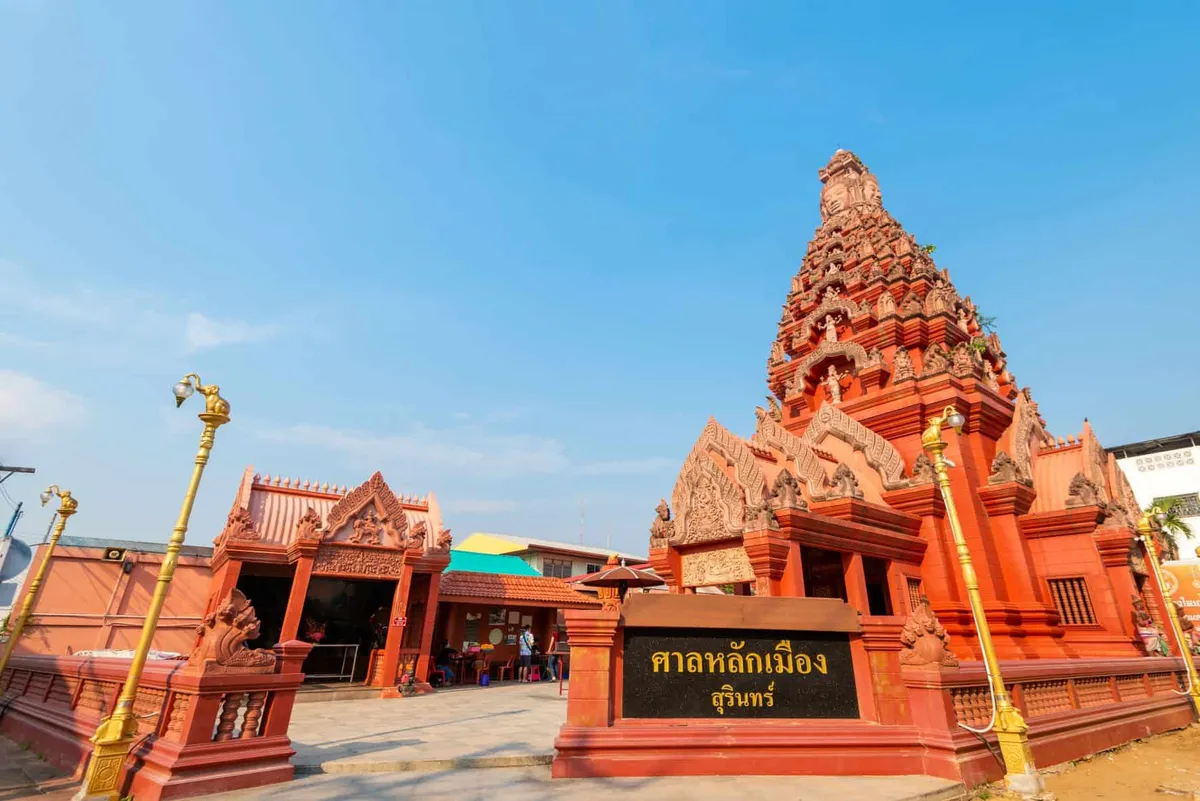
The monument is easy to reach by tuk-tuk or songthaew from anywhere in central Surin; most drivers recognise “Pum Monument” by name. Combine it with the Surin City Pillar Shrine, Surin National Museum, or a trip out to Surin Elephant Village to round out the elephant-heritage theme that runs through the whole province.
- Entry fee: Free, open access, no set hours
- Statue: 2.2 m bronze, holding an elephant goad, swords on the back
- Erected: 1968; formally inaugurated 13 April 1985
- Location: Southern edge of Surin town, near km 0 of the Surin-Prasat road
- Getting there: Tuk-tuk or songthaew from central Surin
Location & Directions
Mueang Surin, Surin
Surin, Thailand
Show your taxi or Grab driver
อนุสาวรีย์พระยาสุรินทรภักดีศรีณรงค์จางวาง (ปุม)
Within Walking Distance


Frequently Asked Questions
Is there an entry fee?
What does the statue actually depict?
Where exactly is it in Surin?
Who was Phraya Surin Phakdi?
When was the monument built?
Spotted something out of date or incorrect? Let us know
Stay Near Phraya Surin Phakdi Si Narong Changwang (Pum) Monument
Compare places to stay in Surin, or open the map for options closest to the attraction.