






Koh Lak Rat
เกาะหลักแรด
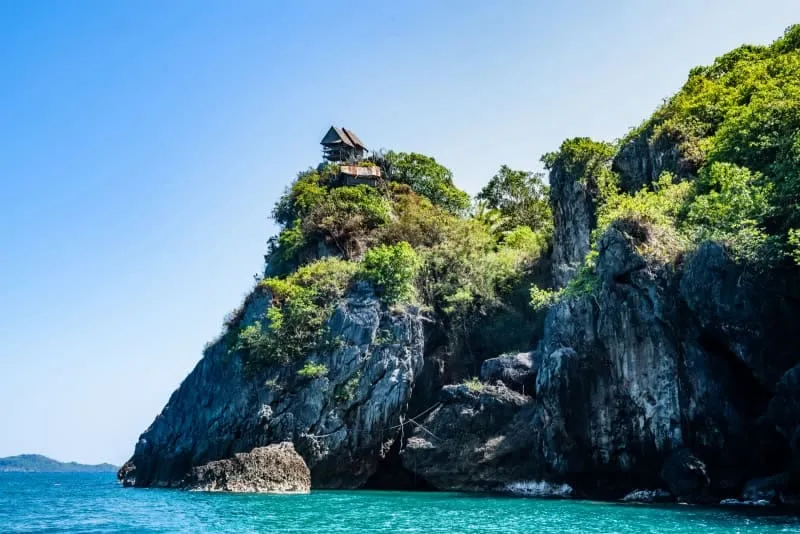
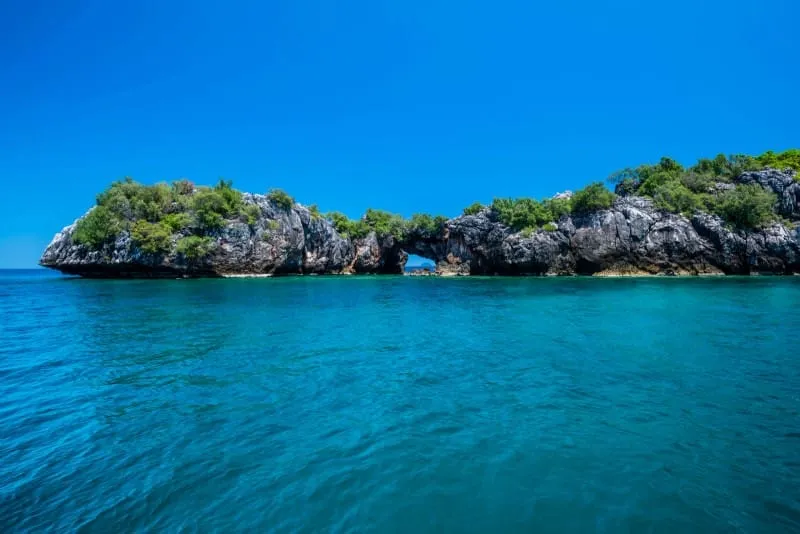
Koh Lak Rat is three limestone rock outcrops rising from the Gulf of Thailand inside Mu Ko Chumphon National Park, off Chumphon’s coast, not an island with sand to land on. Local tradition says the rocks were once used to tether a rhinoceros (raet), giving the site its name. There’s no beach here; the entire point of a visit is what’s below the surface.
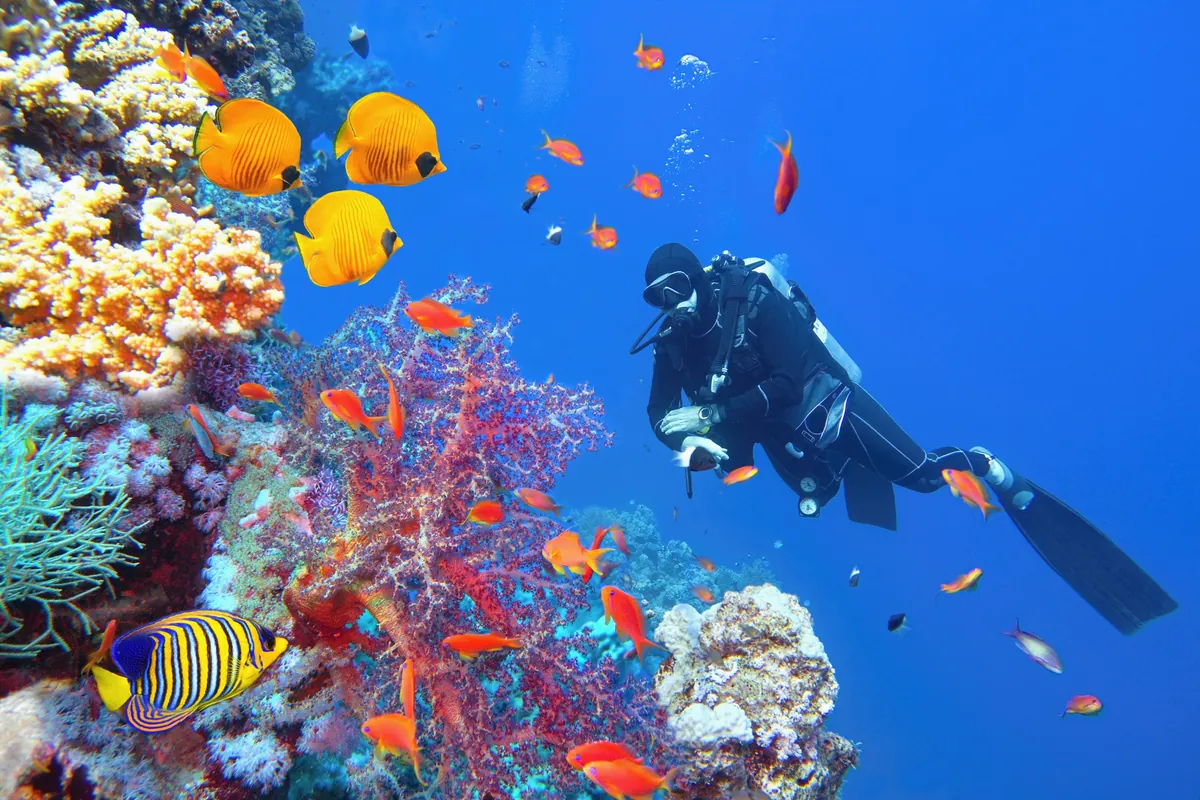
Dense coral cover starts near the surface and continues down to around 20 metres, with the richest formations (including a distinctive mound coral structure locals call “pakarang khrok”) sitting around 8-12 metres. That depth range puts the best of it out of reach for snorkel-only visitors; confident snorkellers can work the shallower reef edges, but this is really a scuba stop. Divers report reef fish, sea anemones, and moray eels working the crevices between the rocks, with visibility that holds up well outside the monsoon months.
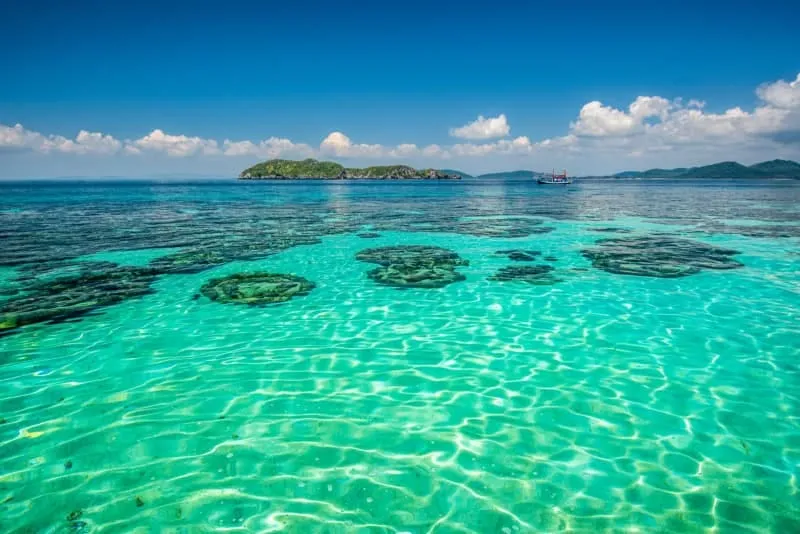
Because there’s no beach or shade, everyone arrives and leaves by boat: there’s nothing to walk to and nowhere to wait out bad weather on land. Trips run out of Tha Yang pier in Hat Sai Ri subdistrict, about 20 minutes by speedboat to the first stop, and operators typically build a day around two or three islands rather than a single-site trip: Koh Mattra and Koh Rang Ka Chiu are common pairings with Koh Lak Rat.
Watch out: Currents around the rock formations can run stronger than they look from the surface. This isn’t a spot for inexperienced open-water swimmers to explore alone. Stick with your boat crew or dive guide’s read of conditions on the day.
The site falls within Mu Ko Chumphon National Park, so the standard park fee applies (200 THB foreign adults, 40 THB Thai adults), though most day-trip operators include this in their package price rather than collecting it separately: there’s no ranger post on the rock itself. November to April brings the calmest seas and clearest water; outside that window, swells can make the crossing rough even before you reach the dive site.
Insider Tip: Ask your boat operator for a morning departure. Afternoon winds pick up on this stretch of coast later in the day, and the water clarity at the reef is noticeably better before midday.
- Entry: No separate gate fee for visitors, national park rate (200/40 THB foreigner/Thai adult) typically bundled into tour pricing
- Terrain: Three limestone rocks, no beach, no facilities
- Depth range: Surface to ~20 m; best coral around 8-12 m
- Access: Boat only, ~20 minutes from Tha Yang pier, Hat Sai Ri
- Best season: November-April for calm seas and clear water
Boats depart the same general area as Hat Sai Ri, Chumphon’s main town beach, and most trips pair Koh Lak Rat with Koh Mattra as part of a wider island-hopping day.
Location & Directions
Mueang Chumphon, Chumphon
Chumphon, Thailand
Show your taxi or Grab driver
เกาะหลักแรด
Frequently Asked Questions
Is there a beach on Koh Lak Rat?
Where does the name come from?
How do I get to Koh Lak Rat?
Is there an entrance fee?
Is this a beginner snorkel spot or for experienced divers?
Spotted something out of date or incorrect? Let us know
Stay Near Koh Lak Rat
Live prices for places closest to Koh Lak Rat: tap a pin to compare.