


Ku Chang-Ku Ma
โบราณสถานกู่ช้าง-กู่ม้า
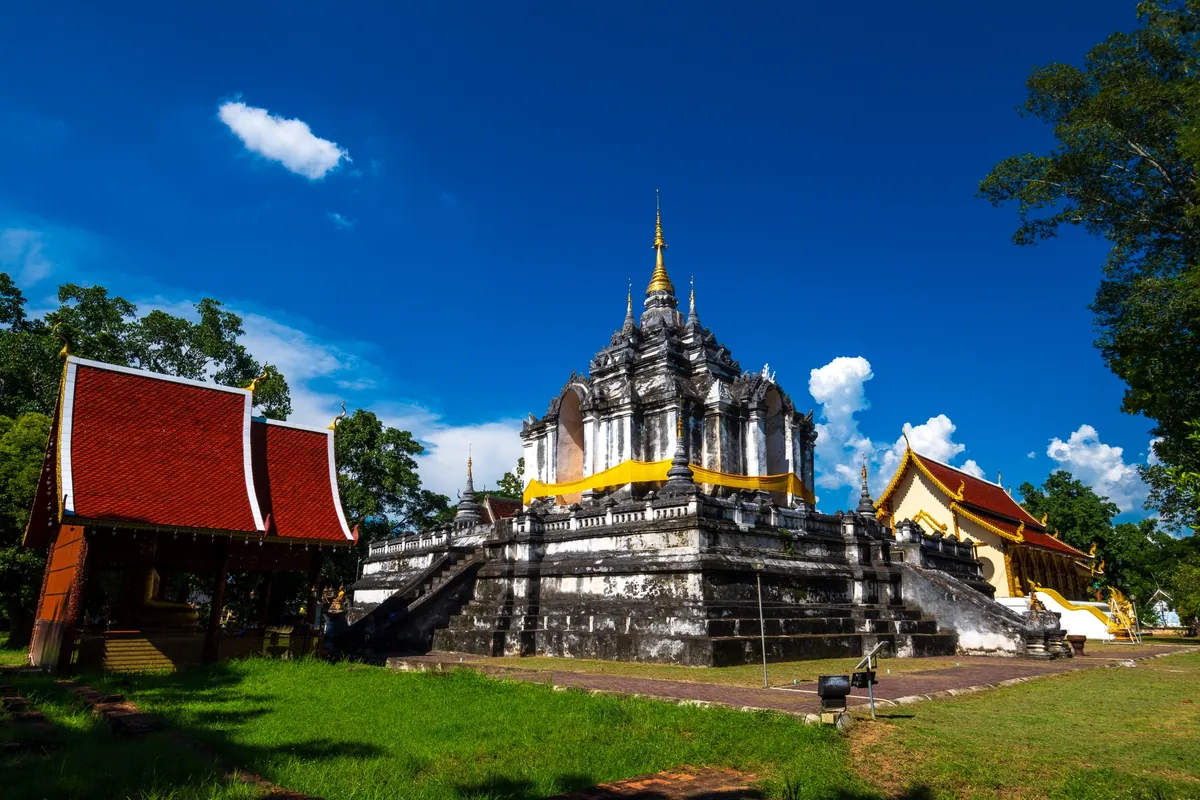
Ku Chang and Ku Ma are two brick chedis standing near the Wat Kai Kaew community in Lamphun town, in the same Nai Mueang neighbourhood as the town’s other Hariphunchai-legend sites. Local tradition ties both mounds to Queen Chamadevi, the Mon queen credited with founding the Hariphunchai Kingdom in the 7th century: Ku Chang (“elephant mound”) is said to hold the remains of her royal war elephant, and Ku Ma (“horse mound”), standing just behind it, is linked to the horse of her son, Prince Mahantayot.
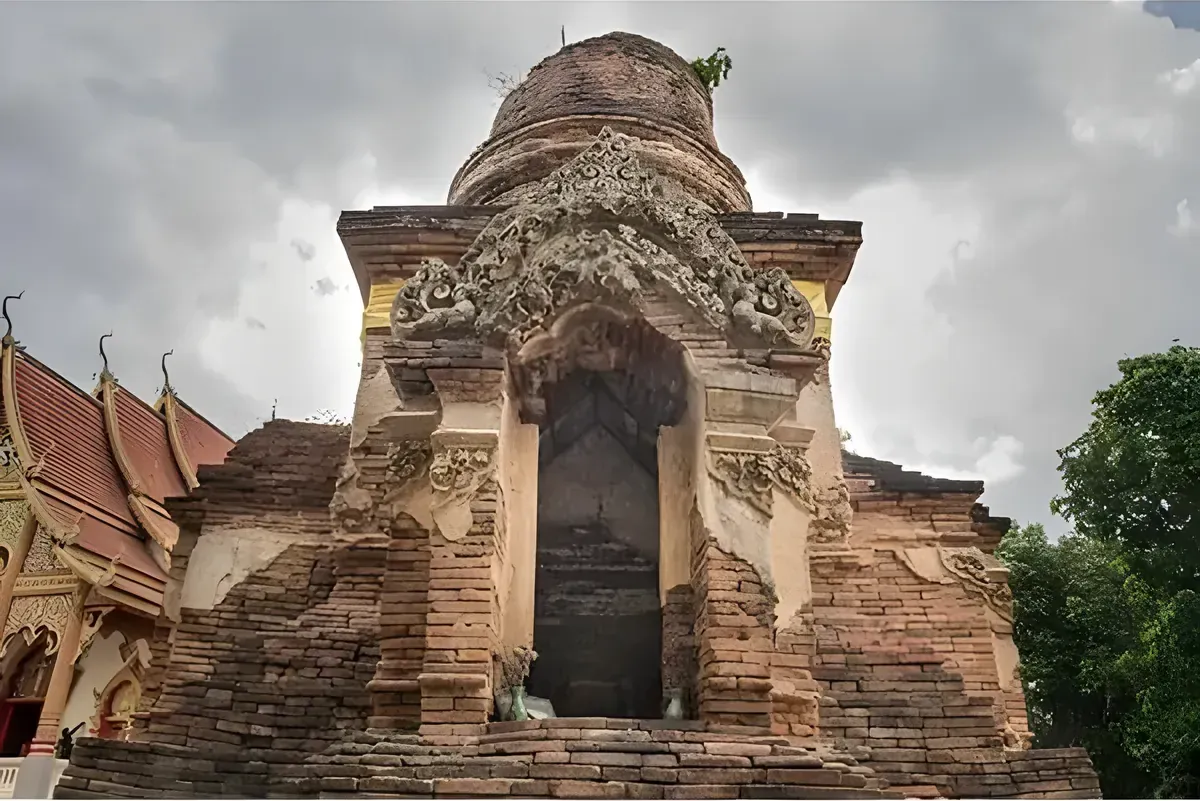
The story told locally is specific: the elephant, believed to weaken enemies simply by turning to face them in battle, died on the ninth waning day of the ninth lunar month. Chamadevi is said to have ordered its remains buried on the spot, with its tusks pointed skyward, and a chedi raised over the burial mound — the circular, five-tiered structure that still stands as Ku Chang today. Ku Ma, built on a square base with what was originally an inverted bell-shaped stupa, has fared worse over the centuries; its upper section has collapsed, leaving a squatter, less complete silhouette than its neighbour.
Neither structure carries a formal excavation record on the scale of Lamphun’s larger Hariphunchai monuments — this is a folklore site more than an archaeological one, and it’s worth visiting with that framing rather than expecting museum-grade interpretation panels. What’s here is small, quiet, and largely left to itself outside of merit-making visits from local residents, who still come to pay respects at both mounds.
Watch out: There’s little in the way of formal signage or English-language information on site — pairing a visit with the nearby Hariphunchai National Museum gives useful context on the Hariphunchai period that the mounds themselves don’t provide.
Shade is limited around the open ground surrounding both structures, so early morning or late afternoon makes for a more comfortable visit than midday. The site is a short ride from Lamphun’s town centre and easily walkable if you’re already exploring the Nai Mueang area.
Insider Tip: Combine this stop with the statue of Queen Chamadevi and Wat Cham Thewi — together they trace the same queen’s story across three very different kinds of monument: a modern bronze statue, a legendary royal tomb chedi, and these two animal-burial mounds.
- Entry fee: Free
- Hours: Daily, roughly 08:00-17:00
- Ku Chang: Circular base, five tiers — said to mark the war elephant’s burial
- Ku Ma: Square base, upper stupa collapsed — said to mark the horse’s burial
- Location: Near Wat Kai Kaew, Nai Mueang subdistrict, Mueang Lamphun district
Location & Directions
Mueang Lamphun, Lamphun
Lamphun, Thailand
Show your taxi or Grab driver
โบราณสถานกู่ช้าง-กู่ม้า
Within Walking Distance




Frequently Asked Questions
What does Ku Chang-Ku Ma mean, and what is it?
Is this connected to Wat Cham Thewi or the Queen Chamadevi statue elsewhere in Lamphun?
Is there an entrance fee?
What do the two structures actually look like today?
How much time should I plan for a visit?
Spotted something out of date or incorrect? Let us know
Stay Near Ku Chang-Ku Ma
Compare places to stay in Lamphun, or open the map for options closest to the attraction.