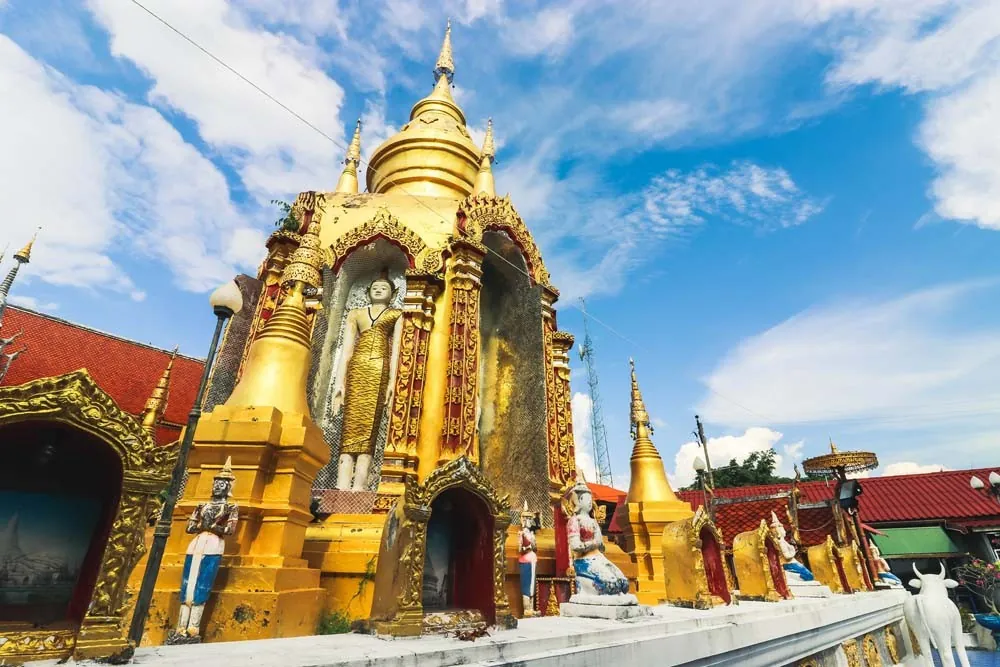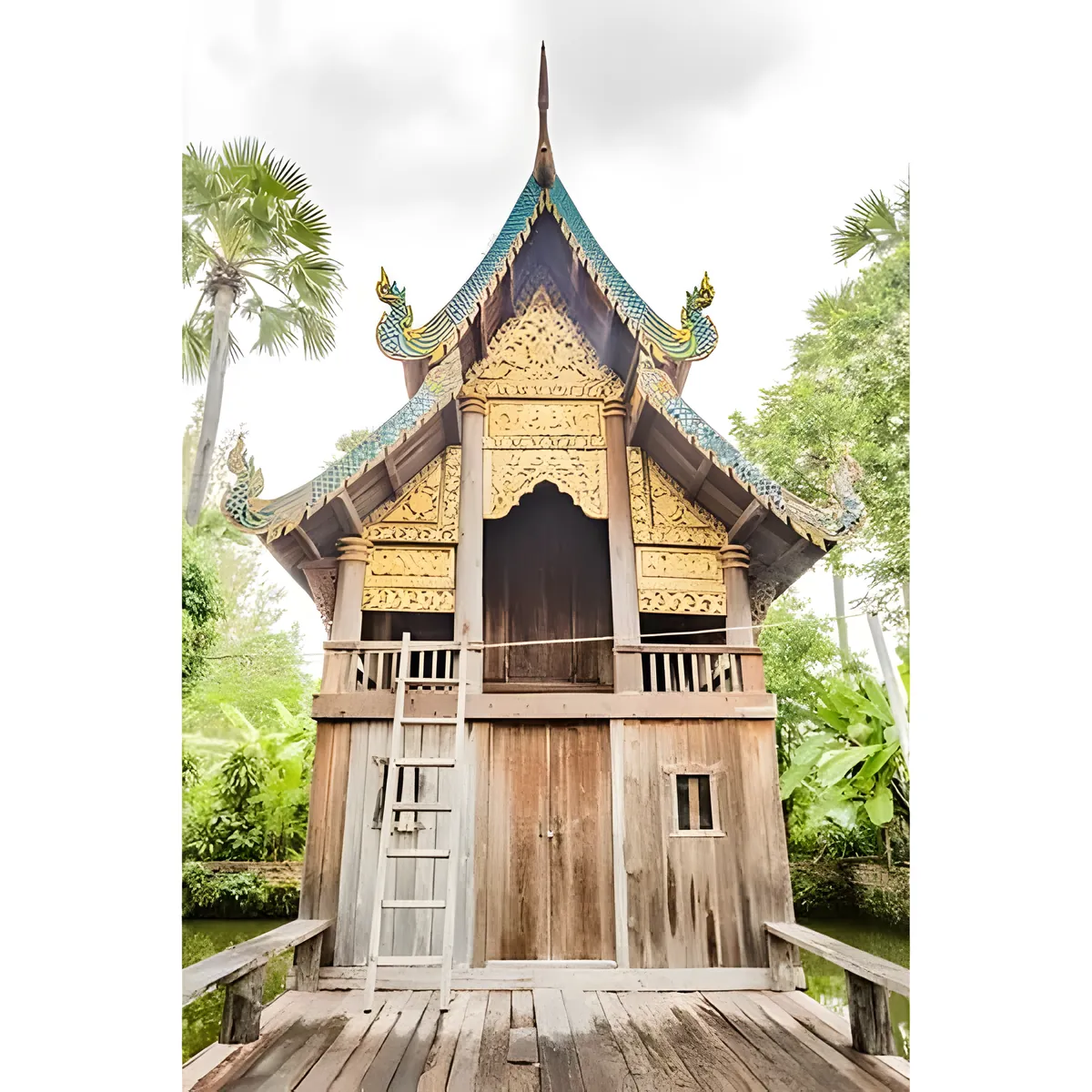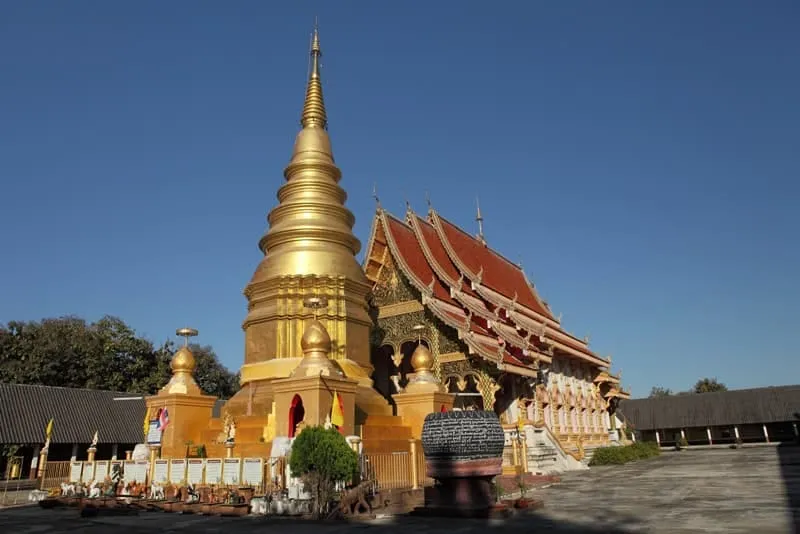

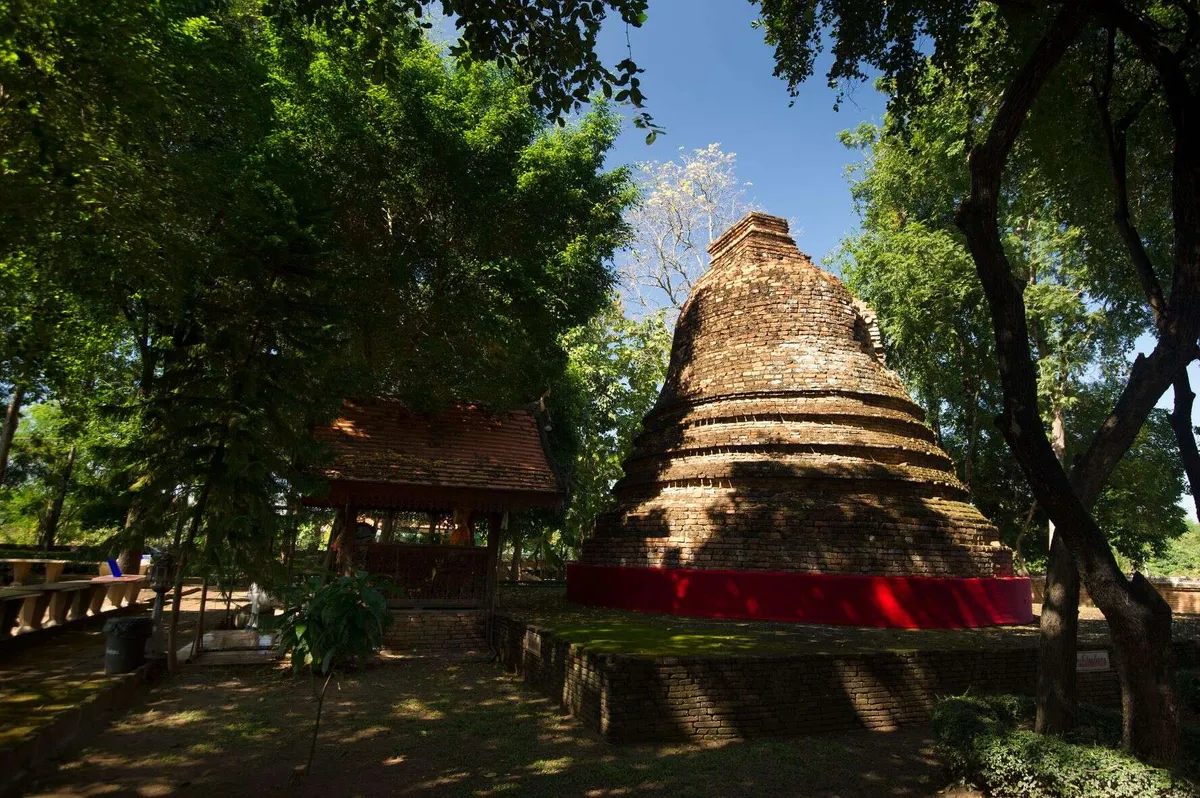
Wat Phra Yeun takes its name from the large standing Buddha image at its heart — “phra” for Buddha image, “yeun” for standing — and it’s the four-sided chedi housing that image, not any wooden temple hall, that makes this Lamphun site worth the detour. The whitewashed, square-based stupa was built in 1900 in Bagan (Burmese) style, with four gilded standing Buddha figures set into niches on each face. It replaced an earlier structure raised by the Lanna king Ku Na in the 1370s, which itself enclosed a bronze standing Buddha installed here roughly three centuries before that. The Fine Arts Department registered the chedi as a national monument in 1928, and archaeologists have recovered a stone inscription on the grounds thought to be around 600 years old.
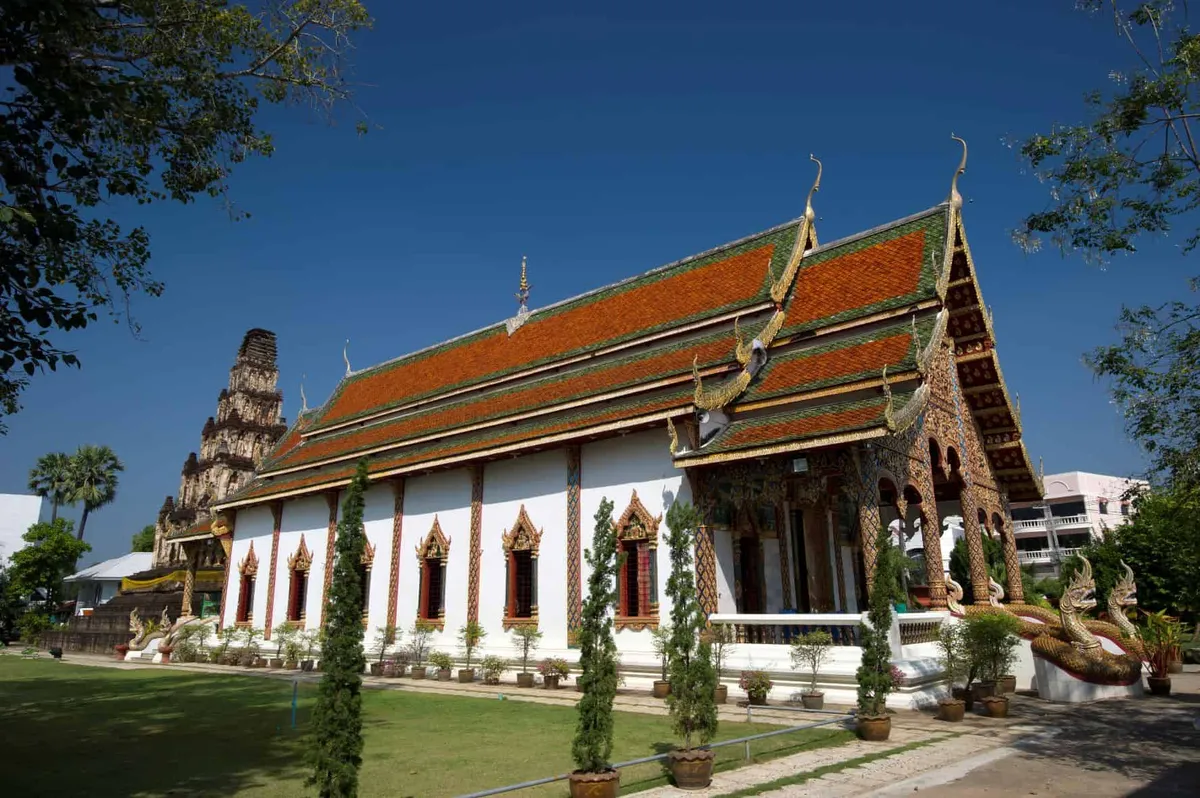
Tradition traces the site back to Queen Chamadevi, who founded it as one of four monasteries marking the cardinal points of her new capital when Hariphunchai (modern Lamphun) was established. Wat Phra Yeun held the eastern point, across the Kuang River from the city proper — which is still the case today, and still gives the temple a quieter, less-visited feel than its famous neighbour. The ordination hall dates to 1929 and keeps its original pediment paintings in surprisingly good condition, worth a look if the doors are open.
Entry is free, and the grounds are open daily from 08:00 to 18:00. Getting here on foot from central Lamphun means crossing the covered pedestrian bridge that faces Wat Phra That Hariphunchai and walking about 10 minutes further along the east bank; by car, it’s around 4 km from the Doi Ti junction via the town office. Dress modestly — shoulders and knees covered — and remove your shoes before stepping into the chedi enclosure or the ordination hall.
Insider Tip: Pair this with a visit to Hariphunchai across the river — the two temples share the same founding legend, and walking between them along the riverbank takes under half an hour, giving a clear before-and-after contrast between Lamphun’s most famous chedi and its quieter counterpart.
Watch out: because it’s a working monastery rather than a tourist site, there’s minimal signage in English. If the four standing Buddha niches are what you’ve come for, walk a full circuit of the chedi’s base rather than viewing it from one side — each face shows a different figure.
- Entry fee: Free (donations welcome)
- Hours: Daily 08:00-18:00
- Highlight: 1900-built Bagan-style chedi with 4 gilded standing Buddha niches; registered national monument since 1928
- Getting there: ~10-minute walk east from Wat Phra That Hariphunchai via the covered bridge; ~4 km by car from Doi Ti junction
- Dress code: Shoulders and knees covered; remove shoes at the chedi enclosure and ordination hall
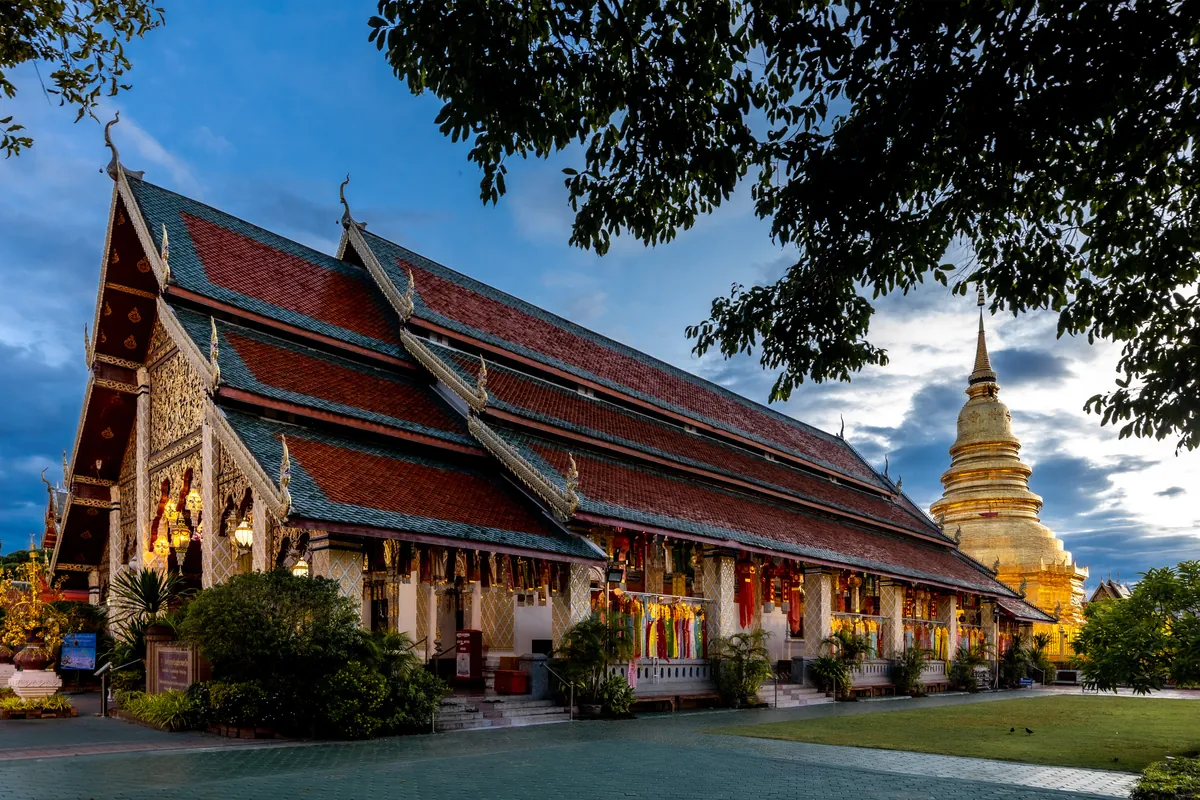
Combine the visit with Wat Phra That Hariphunchai across the river, the Hariphunchai National Museum alongside it, and the Statue of Queen Chamadevi — the founding queen both temples trace back to — in central Lamphun.
Location & Directions
Wiang Yong, Mueang Lamphun, Lamphun 51000
Lamphun, Thailand
Show your taxi or Grab driver
วัดพระยืน
Within Walking Distance




Frequently Asked Questions
What does "Phra Yeun" mean, and why is the temple named that?
Is Wat Phra Yeun the same as Wat Phra That Hariphunchai?
What's the main thing to see at Wat Phra Yeun?
Is there an entry fee?
How do you get to Wat Phra Yeun from central Lamphun?
Spotted something out of date or incorrect? Let us know
Stay Near Wat Phra Yeun
Compare places to stay in Lamphun, or open the map for options closest to the attraction.