
Luang Phor Dhavaravati
หลวงพ่อทวารวดี
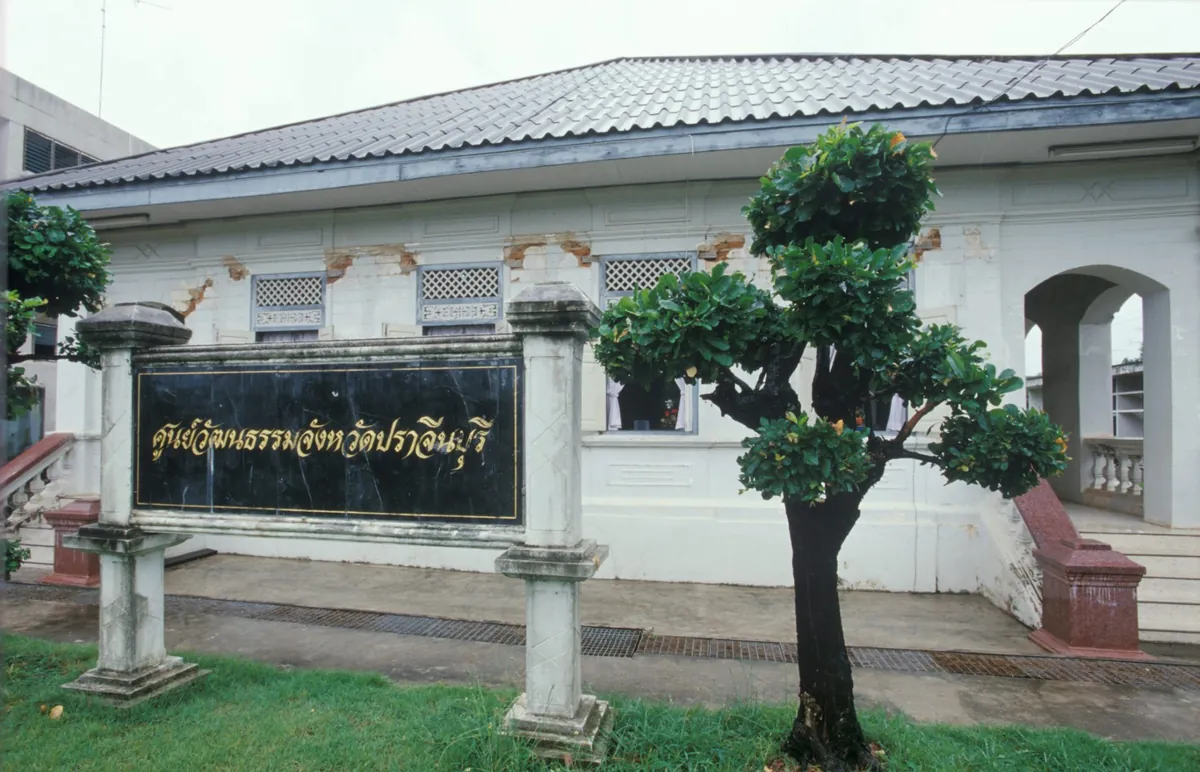
Luang Phor Dhavaravati is not a temple or a monk — it’s a sandstone standing Buddha image, roughly 2 metres tall, carved in the distinctive Dvaravati style and enshrined in a small vihara beside the Si Mahosot district office in Prachin Buri. Locals treat it as the guardian image of the old township, and it’s one of the more significant surviving Dvaravati sculptures in eastern Thailand.
The statue shows the hallmarks of early Dvaravati craftsmanship: a rounded face, brows shaped like an eagle’s wings, thick lips, and a modest ushnisha (the raised crown on the Buddha’s head). Both hands form the Vitarka mudra using a technique specific to this period — four fingers curled in to touch the palm rather than the more familiar thumb-to-forefinger circle. It was carved from a single piece of sandstone together with its circular lotus base, and excavated in 1971 from a mound south of the old walled town of Si Mahosot, near what archaeologists now catalogue as site #223. The Fine Arts Department registered it as a protected antiquity in the Royal Gazette on 28 October 1980.
A fire in October 1995 damaged the statue’s face and both arms, leaving cracks and flaking stone. The Fine Arts Department carried out a restoration — consolidating the surface, filling losses with plaster, adding discreet stainless-steel reinforcement, and retouching the colour to match the original sandstone. The repair holds up well; there’s no obvious scarring unless you look closely at the shoulders.
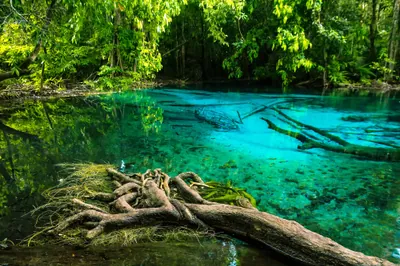
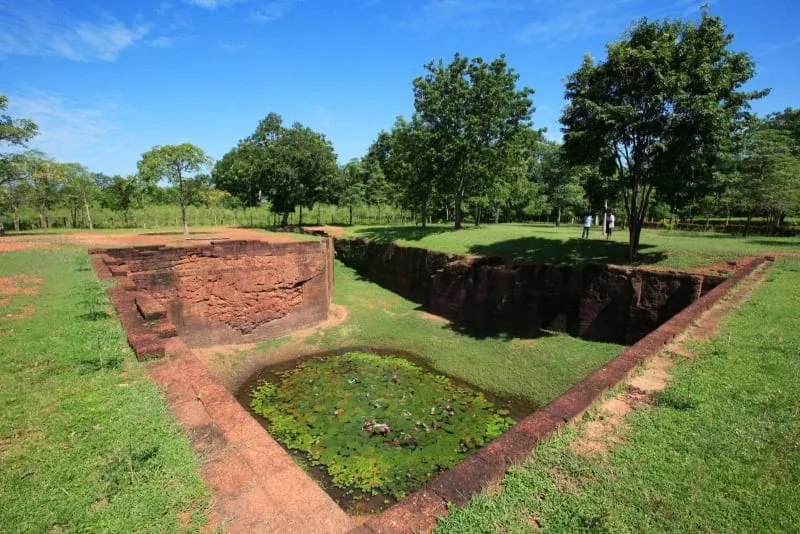
Insider Tip: Si Mahosot district is a Dvaravati-era archaeological zone, not a single-site stop — the ancient moated town of Si Mahosot and the Sa Morakot (Emerald Pond) ruins sit within a few kilometres and reward pairing with the shrine on the same trip.
Watch out: This is a small, functional shrine attached to a government office, not a tourist temple — don’t expect a gift shop, English signage, or crowds. Dress modestly and keep visits brief and quiet out of respect for the district staff working next door.
The shrine is open to the public daily, with no admission charge. Getting there means driving into Si Mahosot district from Prachin Buri town or the eastern route out of Bangkok — there’s no direct public transport to the district office, so a car or hired driver is the practical option.
- What it is: A ~2m sandstone standing Buddha, Dvaravati style
- Entry fee: Free
- Location: Beside the Si Mahosot district office, Prachin Buri
- Discovered: 1971; registered as a national antiquity in 1980
- Nearby: Si Mahosot ancient town site, Sa Morakot (Emerald Pond) ruins
Location & Directions
Si Mahosot, Prachin Buri
Prachin Buri, Thailand
Show your taxi or Grab driver
หลวงพ่อทวารวดี
Within Walking Distance



Frequently Asked Questions
What exactly is Luang Phor Dhavaravati?
How old is the statue?
Where is it kept?
Is there an entry fee?
What else is nearby worth seeing?
Spotted something out of date or incorrect? Let us know
Stay Near Luang Phor Dhavaravati
Compare places to stay in Prachin Buri, or open the map for options closest to the attraction.