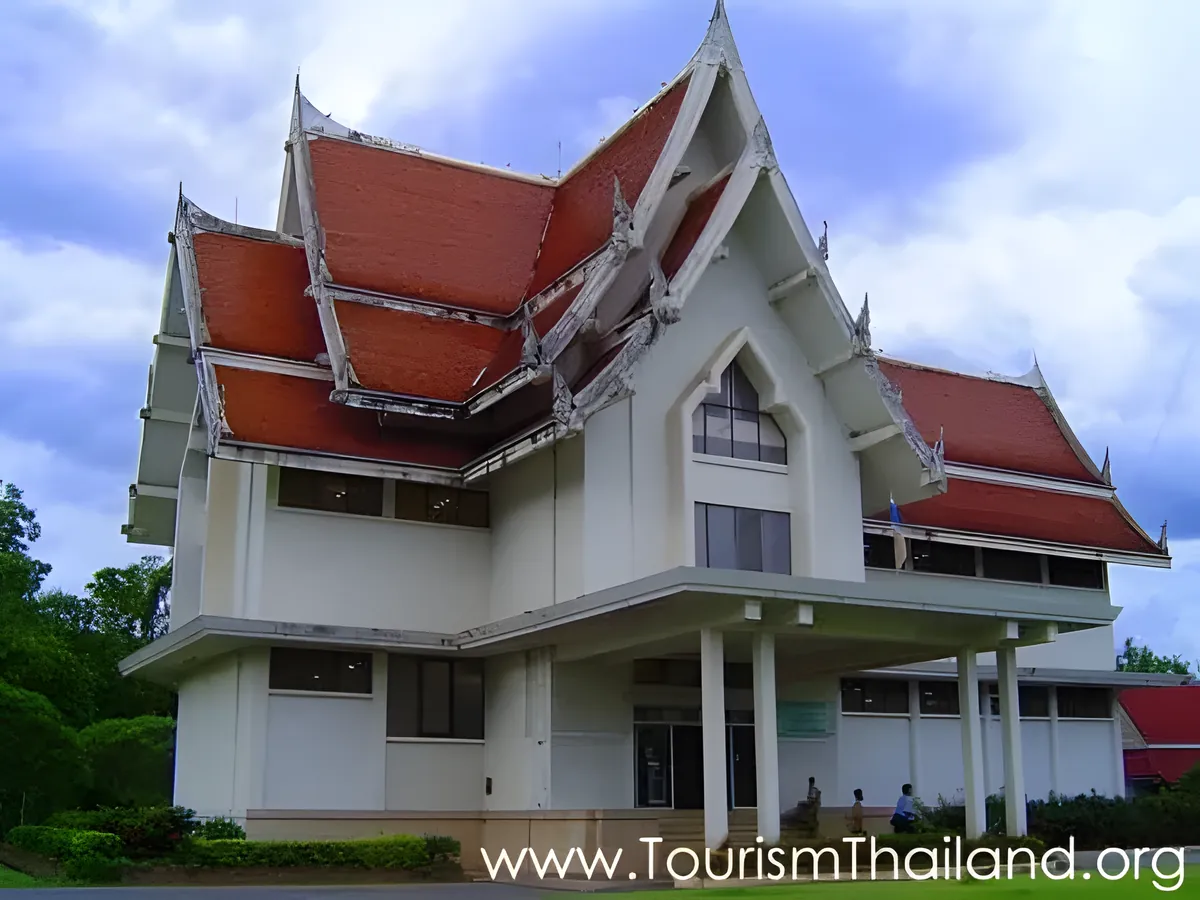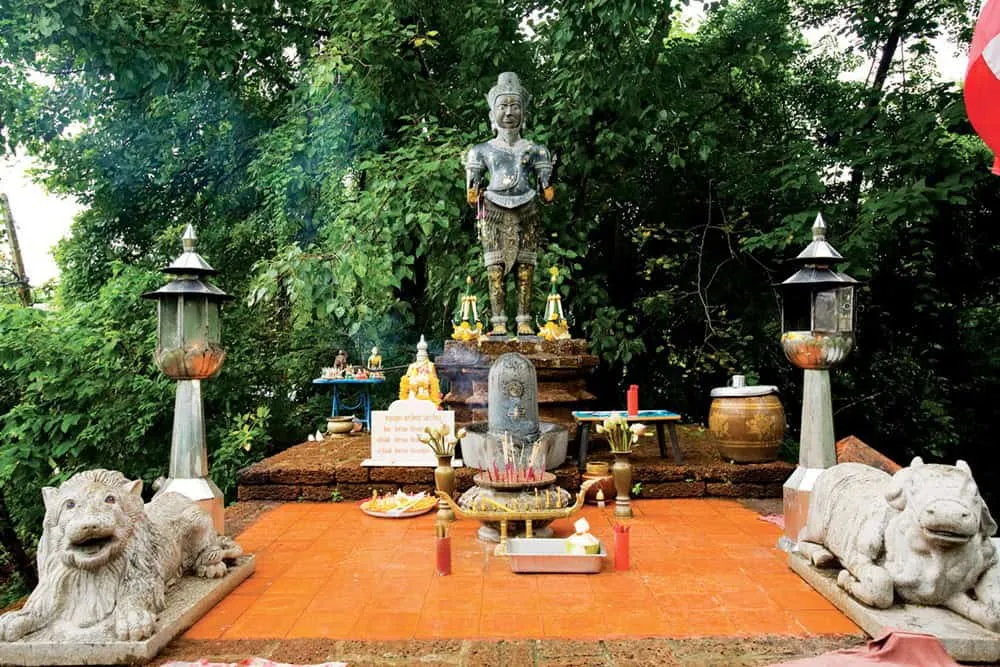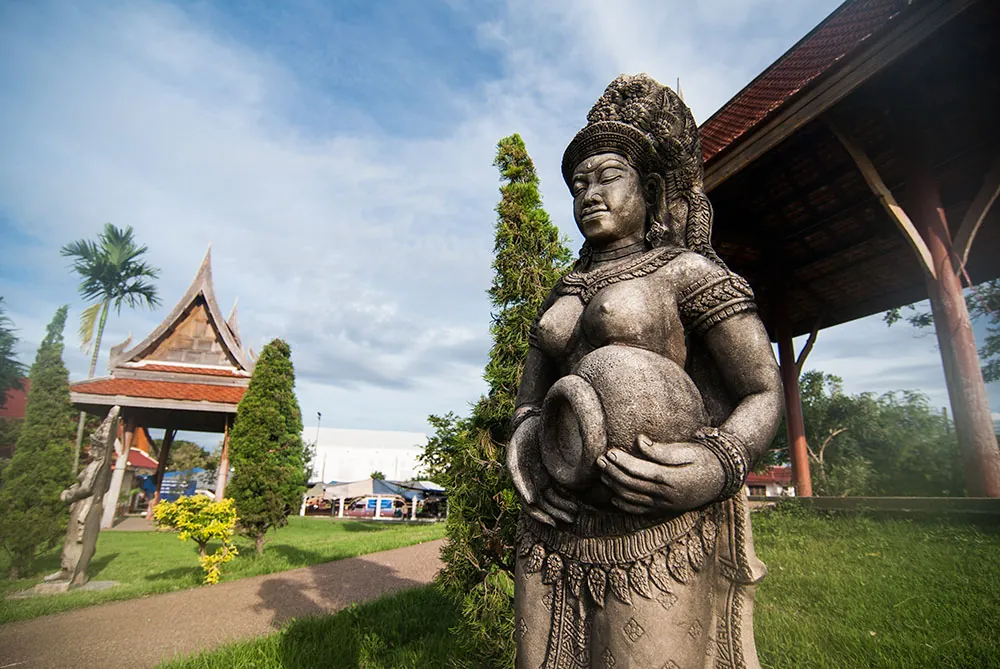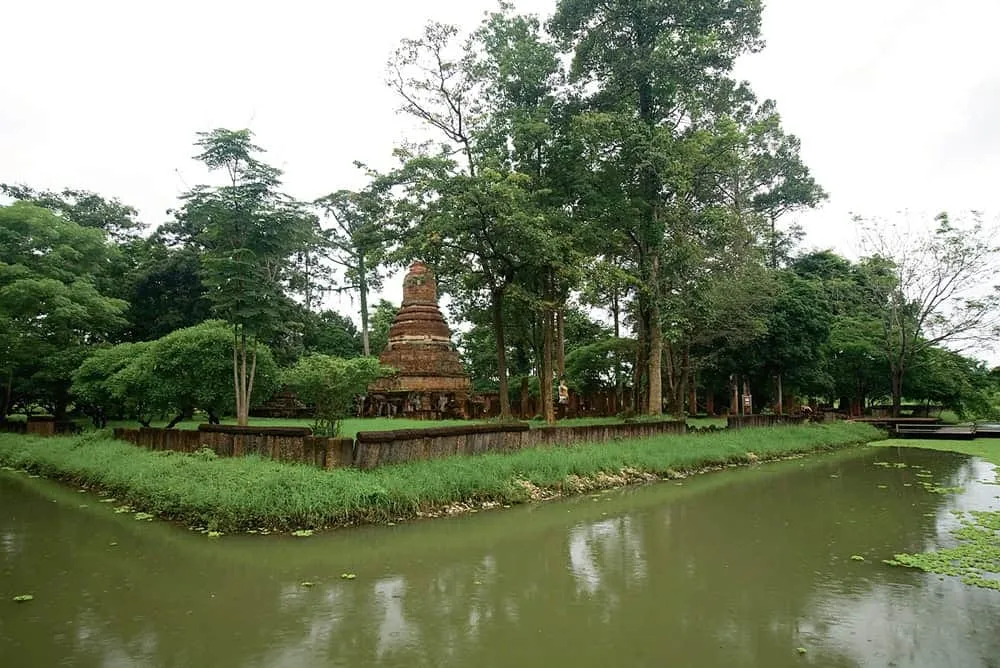






Nakhon Chum Buddhist Amulets Learning Centre
แหล่งเรียนรู้การทำพระเครื่องนครชุม
The Nakhon Chum Buddhist Amulets Learning Centre teaches the clay-pressing techniques behind Kamphaeng Phet’s famous votive tablets, in a working household studio across the Ping River from the Kamphaeng Phet old town. Entry is free. There’s no fixed opening schedule: it runs as demonstrations rather than a staffed museum, so calling ahead is the difference between watching an artisan work and finding an empty shopfront.
The centre traces back to 2008, when local craftsman Sommai Payom opened his home in Nakhon Chum subdistrict to teach visitors how the district’s classic clay amulets are made. Kamphaeng Phet has been an amulet-producing centre since well before that: the crypts beneath the old town’s ruined temples yielded some of Thailand’s most sought-after votive tablets, and collectors still trade replicas of designs like Phra Sum Ko and Phra Nang Phaya. What this centre offers is the craft side of that story: watching someone press damp clay into carved wooden or stone molds (four different mold patterns feature in a typical demonstration), then explain how the pieces are dried, fired, and finished. It’s a hands-on counterpart to the historical park’s excavated crypts, not a rerun of them.
Watch out: This is a small, informal operation run from a private home, not a ticketed attraction with regular staff. Groups and school tours are common visitors; solo travelers who show up unannounced risk finding nobody available to demonstrate. A short call ahead avoids the wasted trip.
The atmosphere is workshop-like rather than reverent: expect the smell of wet clay and the low murmur of someone explaining technique, not the incense and quiet of a temple hall. Demonstrations cover the full sequence: preparing the clay body, pressing it into a mold, releasing the tablet, and (for finished pieces on display) the firing and blessing steps that turn a pressed clay disc into an amulet Thais actually carry. Visitors are welcome to try pressing a mold themselves, which is the part most people remember afterward.
Insider Tip: Combine the visit with the Nakhon Chum Old Town Market a few minutes’ walk away: it’s one of the few places locally where you can buy amulets from the same tradition the centre teaches, at ordinary market prices rather than collector premiums.
Getting here means crossing the Ping River from central Kamphaeng Phet into Nakhon Chum: a songthaew or a short tuk-tuk ride covers it, though a rented motorbike gives more flexibility for combining the stop with Wat Phra Borommathat Chediyaram and the old town market nearby. Dress is casual; this isn’t a temple, so there’s no strict dress code, though modest clothing is still the safer default in a residential neighborhood. Photography of the demonstration is generally fine to ask for, and hosts are usually happy to explain what’s happening in English or simple terms.
- Entry: Free (small donation appreciated)
- What to expect: Live clay-amulet pressing demonstration, hands-on for visitors
- Best time: Call ahead: no fixed public hours, weekday visits more likely to catch a demonstration
- Location: Nakhon Chum subdistrict, across the Ping River from Kamphaeng Phet old town
- Nearby: Nakhon Chum Old Town Market, Wat Phra Borommathat Chediyaram
Location & Directions
Mueang Kamphaeng Phet, Kamphaeng Phet
Kamphaeng Phet, Thailand
Show your taxi or Grab driver
แหล่งเรียนรู้การทำพระเครื่องนครชุม
Frequently Asked Questions
Is the Nakhon Chum amulet learning centre free to visit?
What kind of amulets does the centre teach?
Is this the same as the ancient amulet crypts at Kamphaeng Phet Historical Park?
How long does a visit take?
Is Kamphaeng Phet the same place as Sukhothai?
Spotted something out of date or incorrect? Let us know
Stay Near Nakhon Chum Buddhist Amulets Learning Centre
Live prices for places closest to Nakhon Chum Buddhist Amulets Learning Centre: tap a pin to compare.