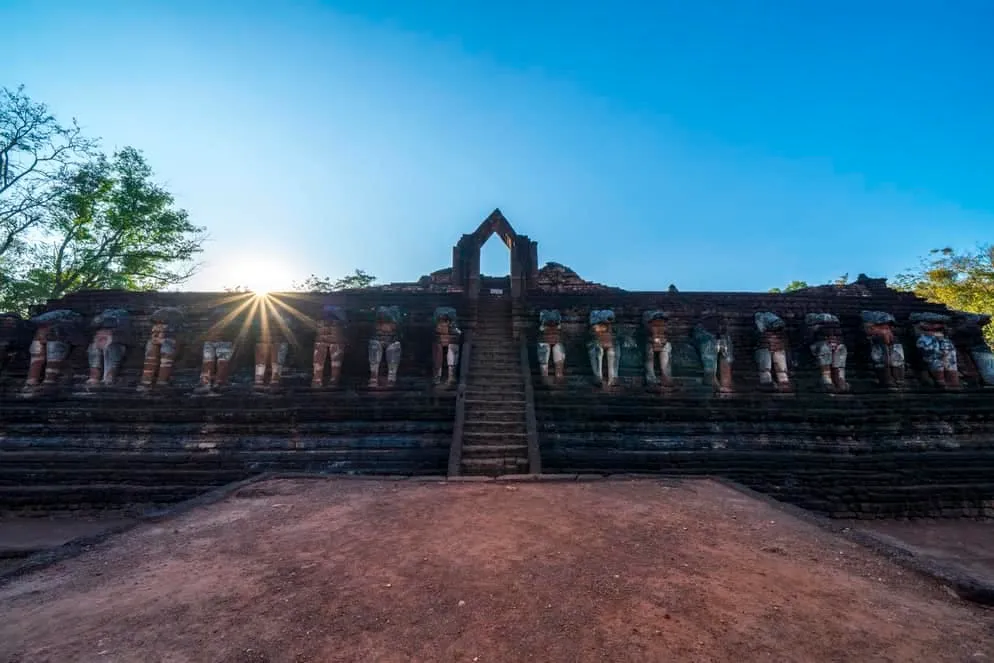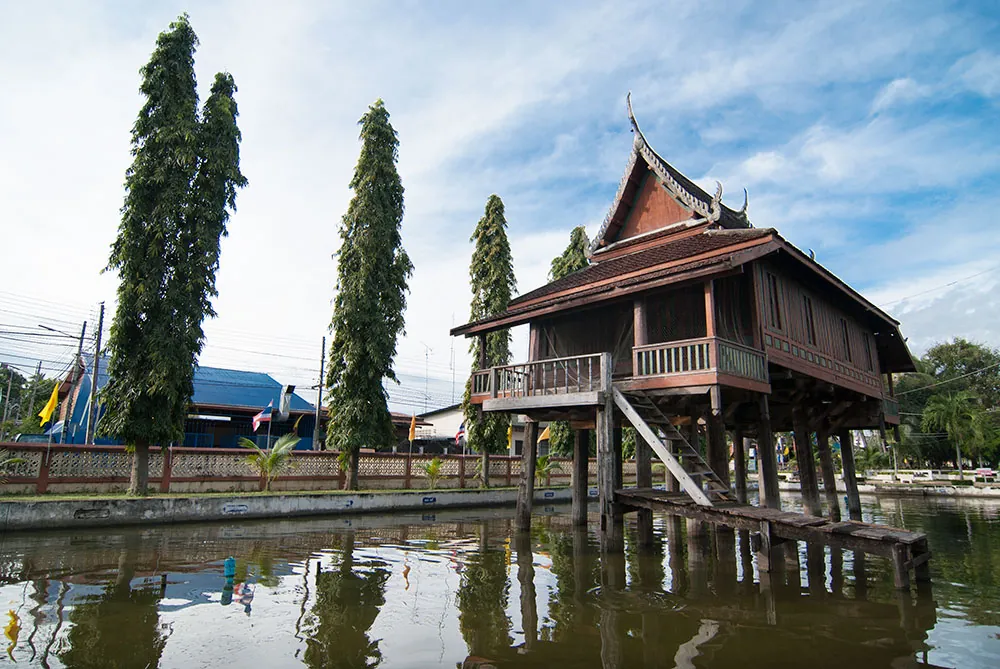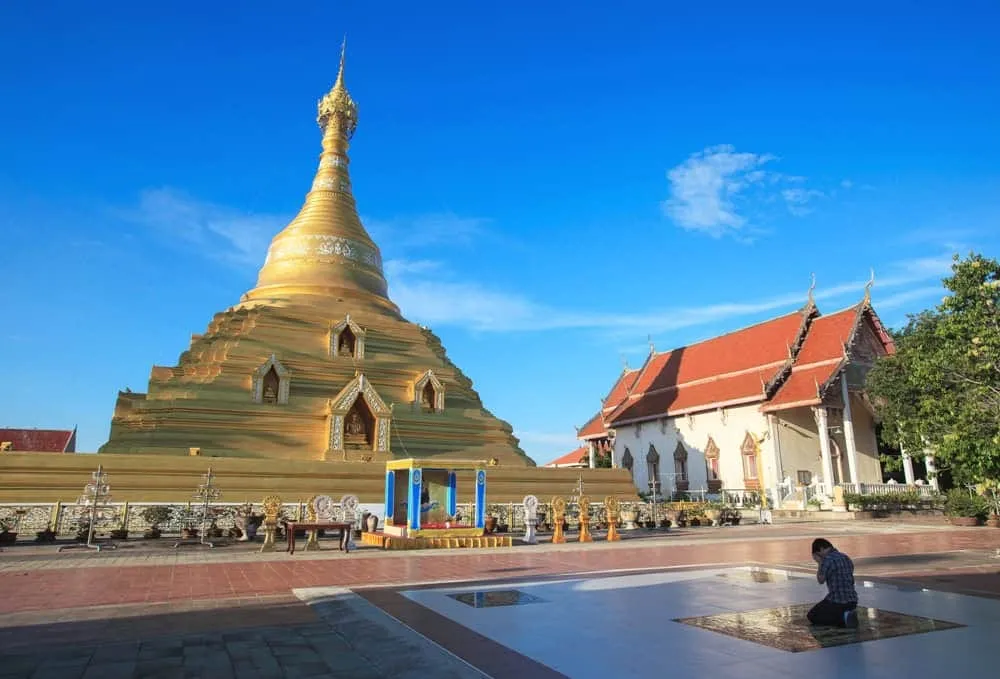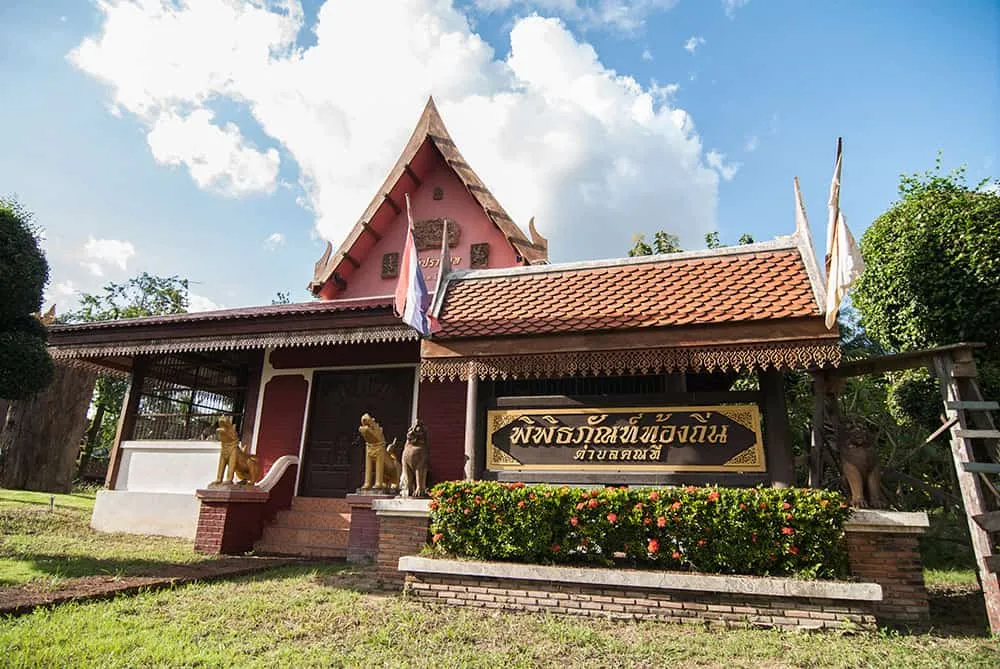





Wat Nakwatcharasophon is a working royal temple built on a moated, roughly 700-year-old monument site in Mueang Kamphaeng Phet district, known locally for most of its history as Wat Chang. Entry is free, and the ancient compound sits about 700 metres from Kamphaeng Phet Historical Park rather than inside it.
The temple’s ruins date to the late Sukhothai period, after the 19th Buddhist century, and the site was abandoned for an estimated four to five centuries before a wandering monk, Phra Wichai Pasanno, settled here in 1966 and re-established it as an active monastery. Four years later, in 1970, Thailand’s Supreme Patriarch renamed the site from Wat Chang to Wat Nakwatcharasophon; it was elevated to Phra Aram Luang (royal temple) rank in April 1996 under the Thammayut order. What survives from the earlier period is a group of ancient monuments enclosed by a moat roughly 10 metres wide and 509 metres long, spread across a 62-rai compound, a scale that puts it closer to the walled monastery layouts found across the Kamphaeng Phet-Sukhothai region than to a typical small-town wat.
Insider Tip: Kamphaeng Phet Historical Park (the UNESCO-listed site, part of the same World Heritage listing as Sukhothai and Si Satchanalai) is only a seven-minute drive away, so this makes an easy add-on rather than a special trip, good for filling the gap between the park’s opening hours and a same-day departure.
Because it’s a living monastery rather than a roped-off ruin, the atmosphere here differs from the historical park down the road: monks still use the grounds, locals come to make merit at the modern buildings that share the compound with the old moated ruins, and there’s no ticket gate or fixed visiting hours to work around. The ancient monument zone itself is quieter, with fewer information panels than the main park and correspondingly fewer visitors, which suits anyone who’s already spent a morning around Wat Phra Kaeo or Wat Phra That in the walled old city and wants a lower-key stop before heading out of town. Watch out: there’s minimal English signage on-site explaining which structures date to which period, so the historical framing above is worth reading before you arrive rather than expecting to piece it together from plaques.
- Entry: Free
- Age: Ruins date to the late Sukhothai period, roughly 700 years old
- Distance from Kamphaeng Phet Historical Park: About 700 metres (not inside the park)
- Status: Phra Aram Luang (royal temple), elevated 1996
- Former name: Wat Chang, renamed 1970
Dress modestly with covered shoulders and knees, as at any active Thai temple, and remove shoes before entering the prayer halls. The site sits within easy reach of central Kamphaeng Phet by tuk-tuk, bicycle, or a short drive along the Kamphaeng Phet-Sukhothai road, and pairs naturally with a visit to the historical park itself or the nearby national museum. There’s no food or drink sold on-site, so plan to eat in town before or after.
For the ruins the temple sits closest to, see the Kamphaeng Phet Historical Park and the Kamphaeng Phet National Museum, or start with the Kamphaeng Phet destination guide for where to stay nearby.
Location & Directions
Mueang Kamphaeng Phet, Kamphaeng Phet
Kamphaeng Phet, Thailand
Show your taxi or Grab driver
วัดนาควัชรโสภณ
Frequently Asked Questions
Is Wat Nakwatcharasophon part of Kamphaeng Phet Historical Park?
Was this temple originally called something else?
How old are the ruins on the site?
Is there an entry fee?
What does the name Nakwatcharasophon mean?
Spotted something out of date or incorrect? Let us know
Stay Near Wat Nakwatcharasophon
Live prices for places closest to Wat Nakwatcharasophon: tap a pin to compare.