Phanomwan Ancient Castle
โบราณสถานปราสาทพนมวัน
Phanomwan Ancient Castle sits beside the old road that once linked Angkor to Phimai, and it’s one of the older Khmer sanctuaries on the Korat plateau — stone inscriptions found on site date from roughly the 9th to 13th centuries CE, according to Thailand’s Fine Arts Department, which restored the complex using anastylosis (numbering and resetting the original stones) in 2000. Locals still call the site Wat Phanom Wan, since a working Buddhist temple occupies part of the same grounds. Entry costs 80 THB for foreigners and 10 THB for Thai nationals, daily 07:30-17:30.
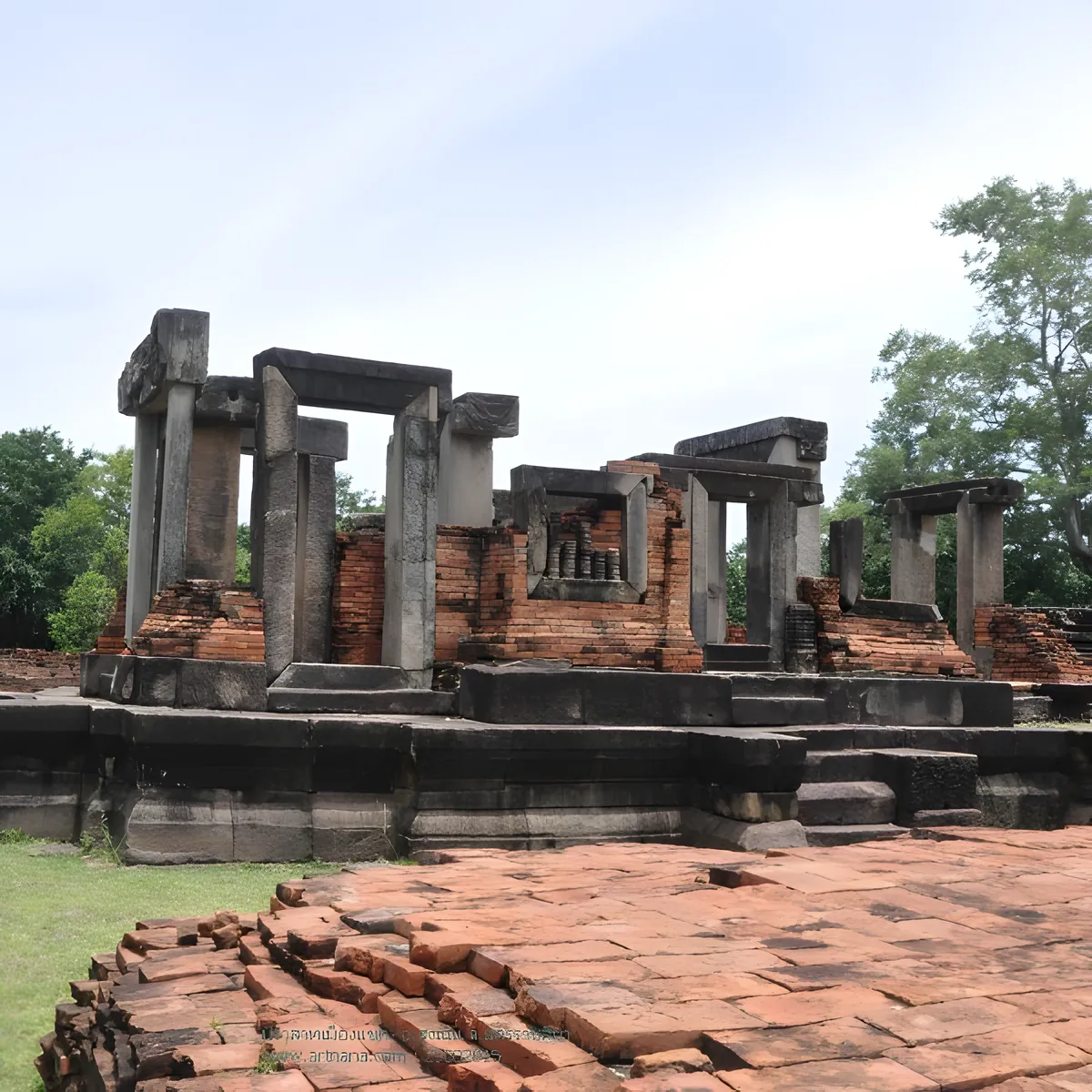
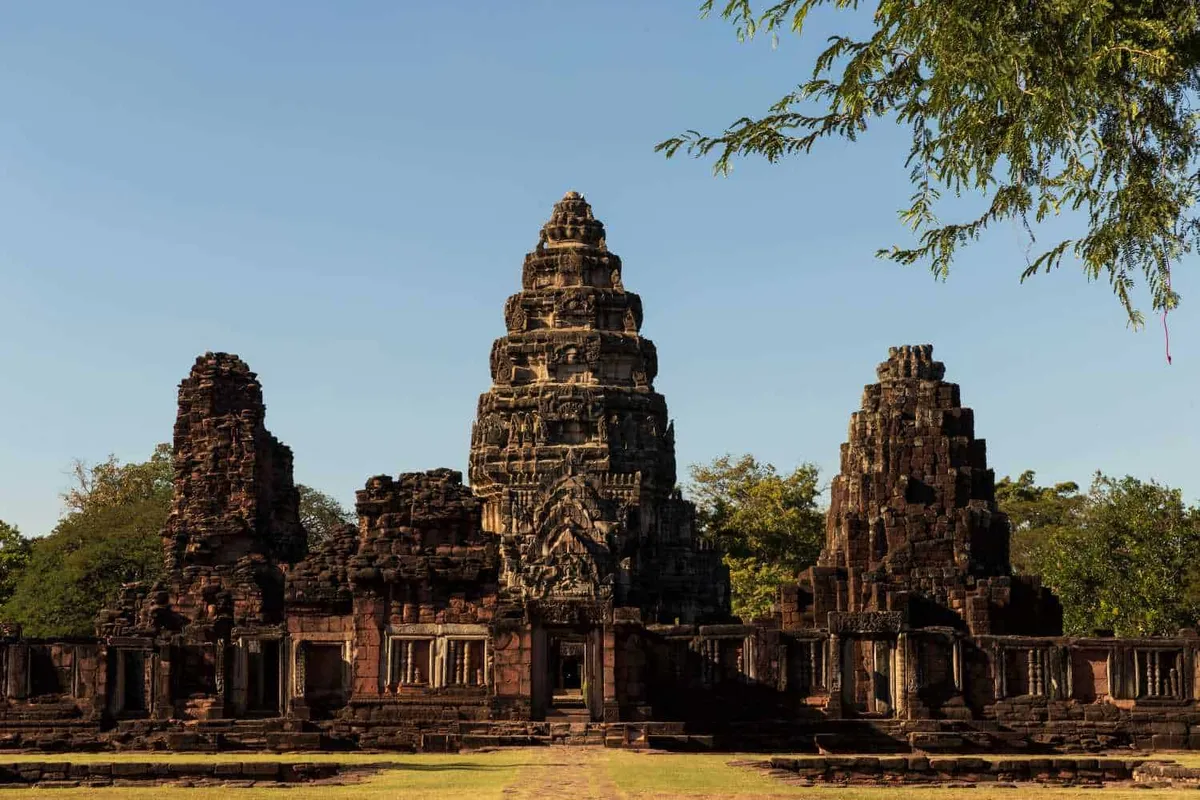
The layout follows the standard Khmer sanctuary plan: a main prang facing east, fronted by a mandapa (entrance hall) linked to it by a short covered walkway, all built as a Hindu site dedicated to Shiva — the inscriptions record offerings and royal patronage of the sanctuary, and a lingam pedestal survives near the main tower. As the site’s use shifted toward Buddhism, builders added a “Minor Prang” southwest of the main tower, housing a large red sandstone Buddha footprint, plus standing Buddha images in the surrounding gopura. Four gopura gates, built as towers, mark the cardinal points of a laterite-and-sandstone gallery enclosing the whole complex. About 300 metres east of the ruins, low earthen mounds known locally as Nen Araphim mark the remains of a moat and an unexcavated structure base — evidence the original site extended well beyond what’s fenced off today. The ground beneath the sanctuary was settled long before any of this stonework went up: excavations found traces of an Iron Age community here, roughly 1,500 years old, predating the Khmer temple by centuries. That layering — prehistoric settlement, then Hindu sanctuary, then Buddhist site — is part of what makes Phanomwan denser with history than its modest size suggests; some records rank it among the three largest Khmer religious complexes surviving in Thailand, alongside Phimai and Phanom Rung.
Compared with Phimai, roughly an hour further along the same ancient route, Phanomwan is modest — no soaring white sandstone prang, no crowds, no gift shops. That’s the appeal: you can walk the galleries and gopura at your own pace, and on a weekday morning you may have the place to yourself. The restoration seams are visible in the stonework, worth knowing going in if you’re expecting an untouched ruin rather than a maintained historical site.
Insider Tip: pair the visit with Phimai on the same day trip from Korat — Phanomwan takes 30-45 minutes to walk properly, leaving time to reach Phimai Historical Park before its own evening closing. Watch out: there’s little shade past the entrance gate, and the stone gets hot fast by midday — an early-morning or late-afternoon visit is more comfortable.
The site is on the Khorat-Khon Kaen road (Highway 2) in Ban Pho subdistrict, about 15km northeast of Nakhon Ratchasima city — roughly a 20-minute drive, with no direct public bus service. Khmer-sanctuary enthusiasts short on time for the full Phimai detour can instead pair it with the smaller, closer Prasat Mueang Kao on the opposite side of Korat city.
- Entrance: 80 THB (foreigners), 10 THB (Thai nationals)
- Hours: Daily 07:30-17:30
- Built: Inscriptions date to roughly the 9th-13th centuries CE, originally a Hindu Shaiva sanctuary
- Getting there: ~15km northeast of Korat on Highway 2 (Khorat-Khon Kaen road); car or taxi needed
- Highlight: red sandstone Buddha footprint in the Minor Prang; four cardinal gopura gates
Location & Directions
Khorat-Khon Kaen Road
Korat (Nakhon Ratchasima), Thailand
Show your taxi or Grab driver
โบราณสถานปราสาทพนมวัน
Frequently Asked Questions
How much does it cost to visit Phanomwan Ancient Castle?
How old is Phanomwan Ancient Castle?
Was Phanomwan originally a Hindu or Buddhist site?
How does Phanomwan compare to Phimai Historical Park?
What's the red sandstone footprint inside the Minor Prang?
How do I get to Phanomwan Ancient Castle from Korat?
Spotted something out of date or incorrect? Let us know
Stay Near Phanomwan Ancient Castle
Live prices for places closest to Phanomwan Ancient Castle — tap a pin to compare.