

Prasat Mueang Kao
ปราสาทเมืองเก่า
Prasat Mueang Kao is a small Khmer-era sanctuary built by Jayavarman VII between 1181 and 1220, standing inside the grounds of Wat Prang Mueang Kao in Korat’s Sung Noen district, about 3 km from Prasat Mueang Khaek. Entry is free, and the site is open daily, roughly 08:00-18:00.
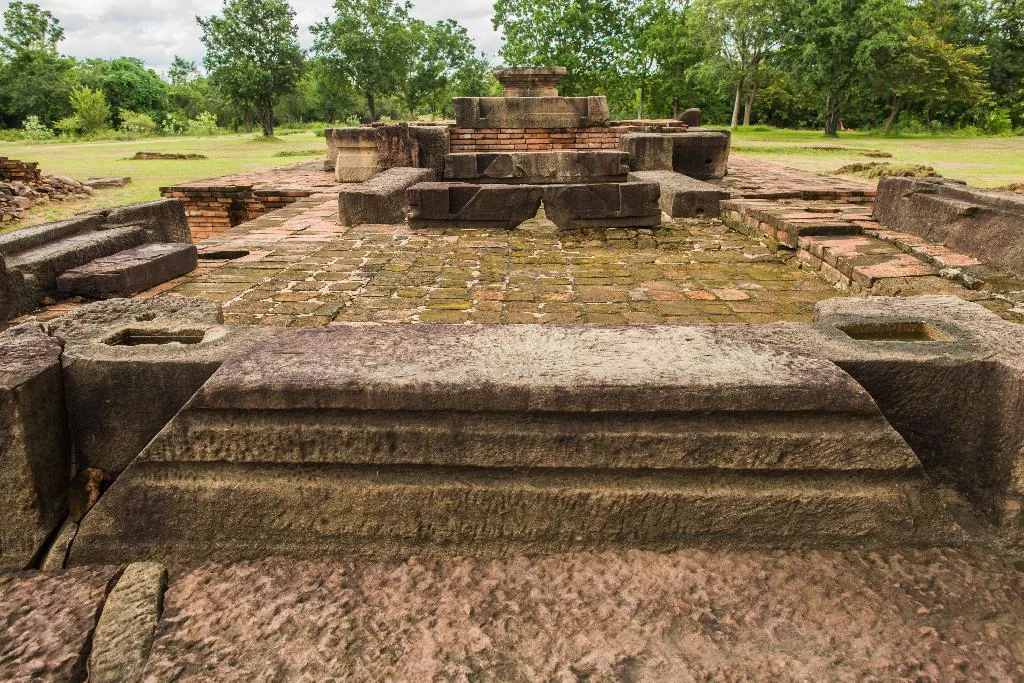
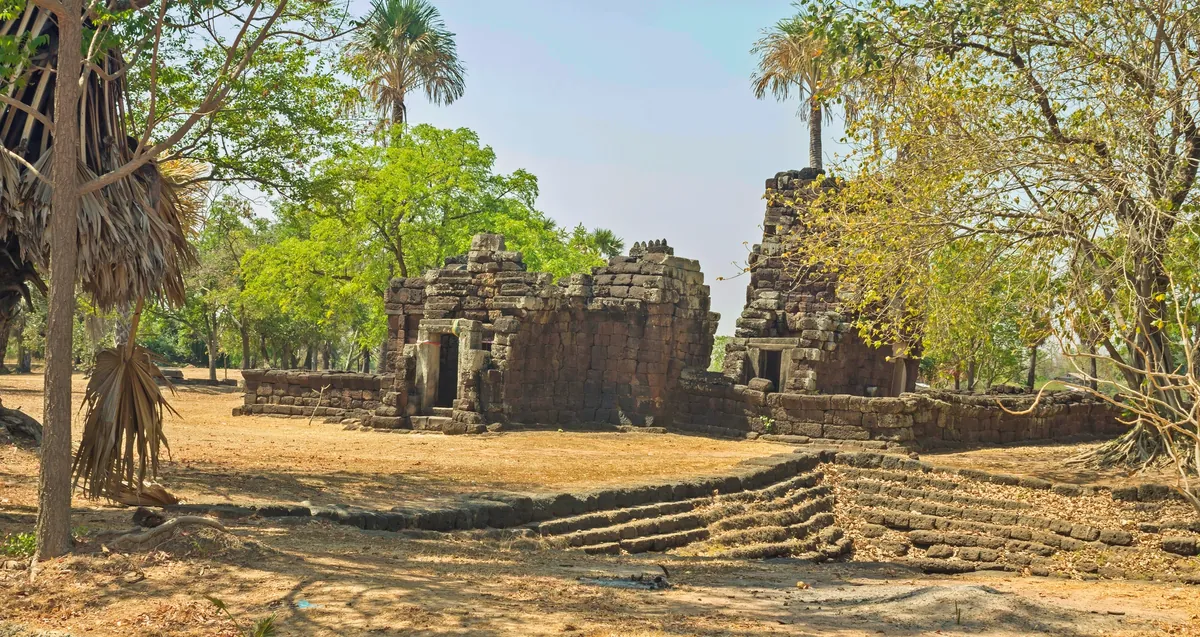
Unlike temples built for royal worship, this was an arogyasala — a Mahayana Buddhist hospital chapel, part of a network Jayavarman VII commissioned across the Khmer Empire to serve travellers and the sick along its road network. The surviving structure is modest in scale: a laterite-and-sandstone prang on a square base with twelve redented (stepped-in) corners, facing east, with a small library building at its front-right corner. A boundary wall with an entrance archway encloses the compound, and outside it, a long earthen rise is what remains of a rectangular pond that was once lined with laterite.
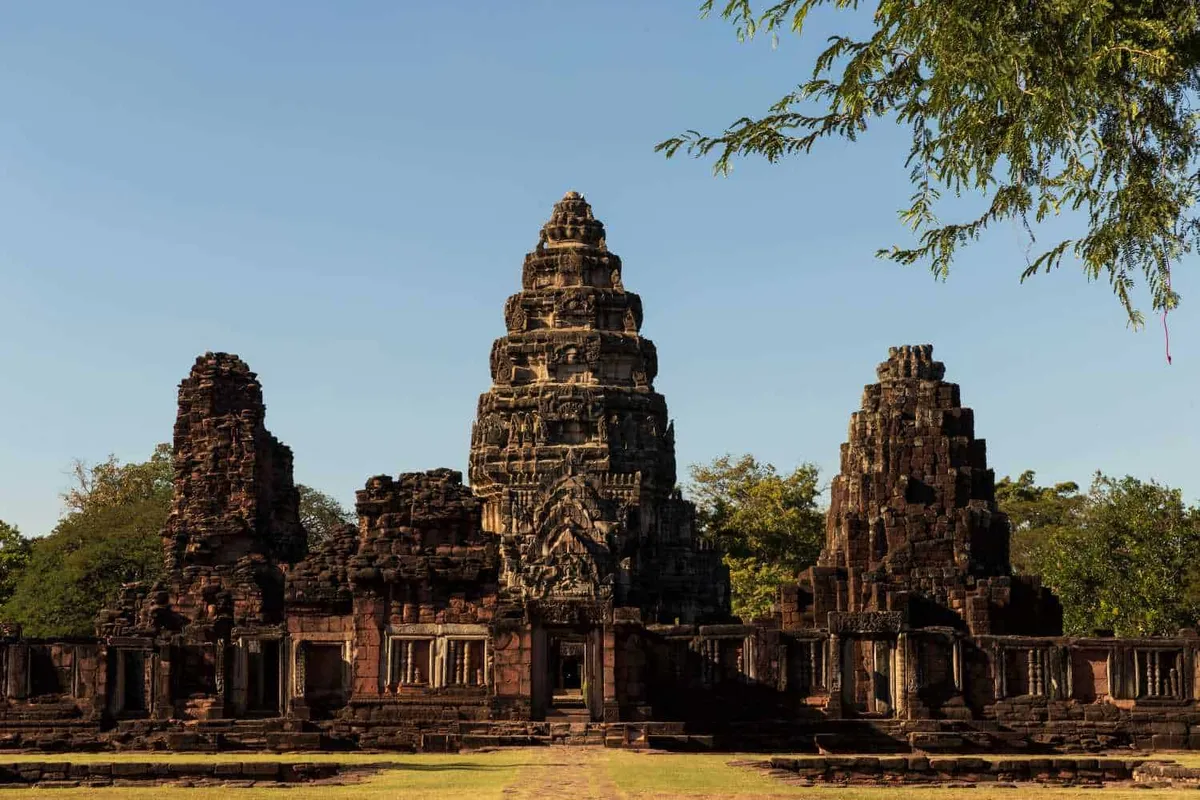
The temple gateway itself was built to echo the old city gate of Khorat, and a replica statue of Thao Suranari — the folk heroine credited with saving the town from a Lao army in 1826 — stands near the entrance, tying the Khmer ruin to a much later chapter of local history. Eight centuries of weathering show clearly on the laterite blocks; this isn’t a restored monument like Phimai, and parts of the structure are visibly eroded and incomplete.
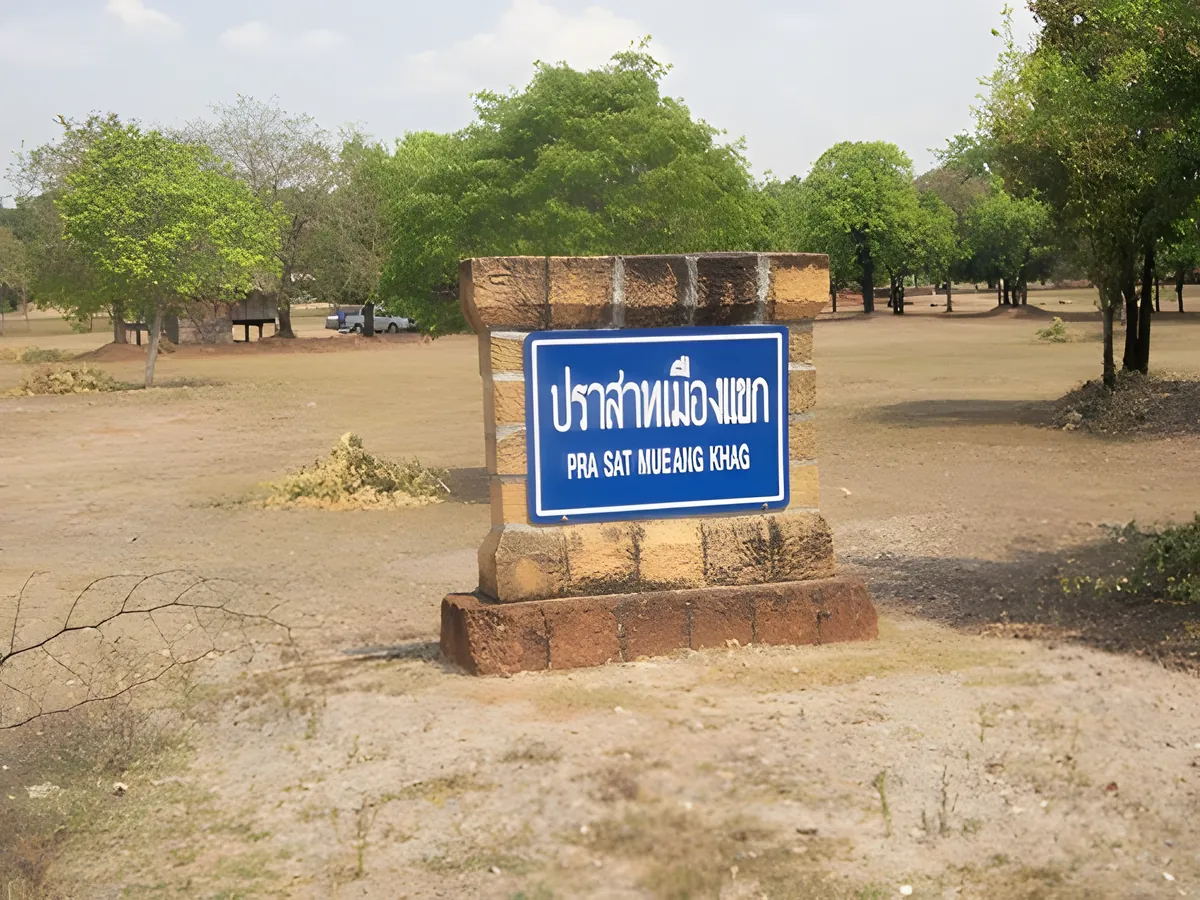
Watch out: There’s minimal signage on-site and no visitor centre, so the historical context is easy to miss without prior reading. The three-sanctuary cluster of Mueang Kao, Mueang Khaek, and a third nearby site were excavated together, and the carved lintels and artefacts recovered from all three are displayed at Phimai National Museum rather than on-site — worth visiting before or after if you want to see what was actually found here.
Insider Tip: Pair this with Prasat Mueang Khaek in the same visit — they’re 3 km apart, both free, and both quiet enough that you’re unlikely to share the ruins with more than a handful of other visitors even on a weekend.
Because it sits inside an active temple compound rather than a fenced archaeological park, there’s no ticket booth and no fixed queue — you can walk in whenever the grounds are open. Modest dress is sensible given the temple setting, though this is a low-key stop rather than a major pilgrimage site.
- Entry fee: Free
- Hours: Daily, approximately 08:00-18:00
- Built: 1181-1220, under Jayavarman VII
- Type: Arogyasala (Mahayana Buddhist hospital chapel), laterite and sandstone
- Nearby: Prasat Mueang Khaek (~3 km), Phimai National Museum (related artefacts)
Location & Directions
Moo 1
Korat (Nakhon Ratchasima), Thailand
Show your taxi or Grab driver
ปราสาทเมืองเก่า
Frequently Asked Questions
Is there an entry fee for Prasat Mueang Kao?
Who built Prasat Mueang Kao and when?
How far is it from Prasat Mueang Khaek?
Where can I see artefacts found at the site?
What condition is the ruin in?
Spotted something out of date or incorrect? Let us know
Stay Near Prasat Mueang Kao
Live prices for places closest to Prasat Mueang Kao — tap a pin to compare.