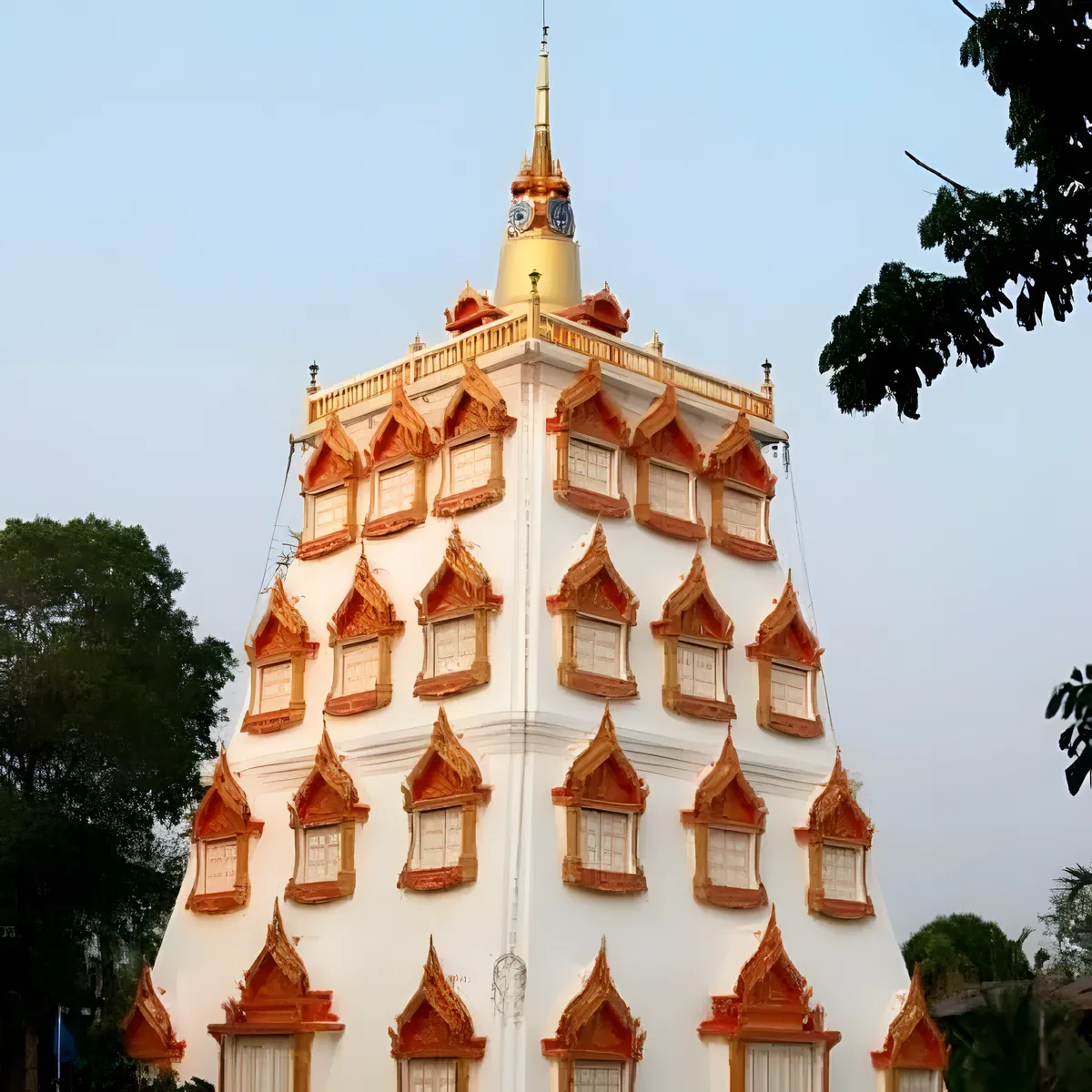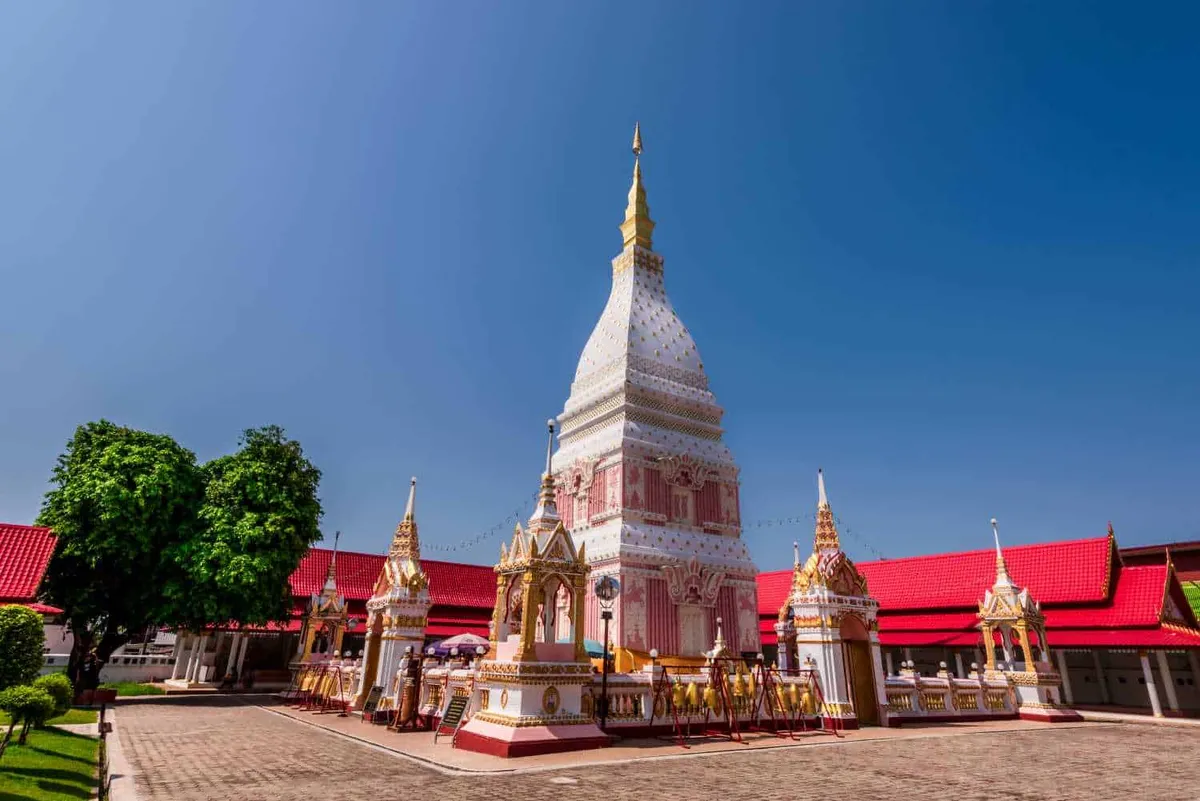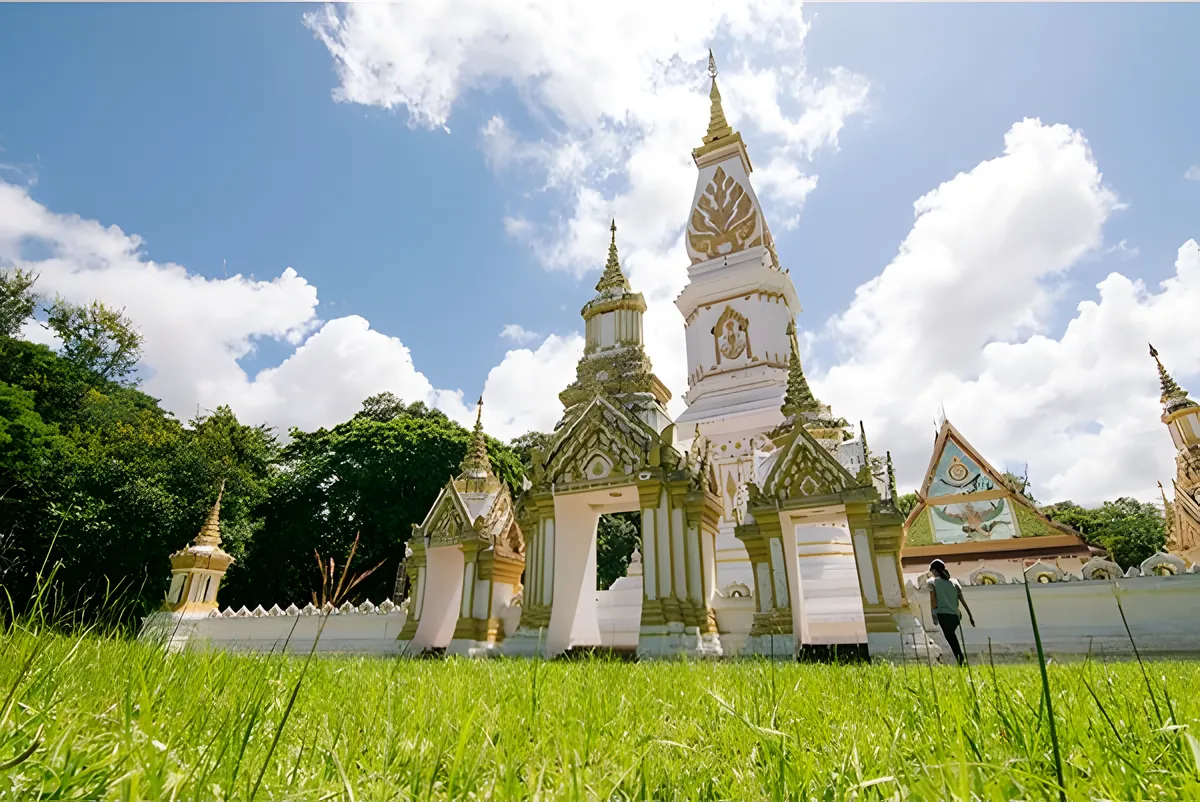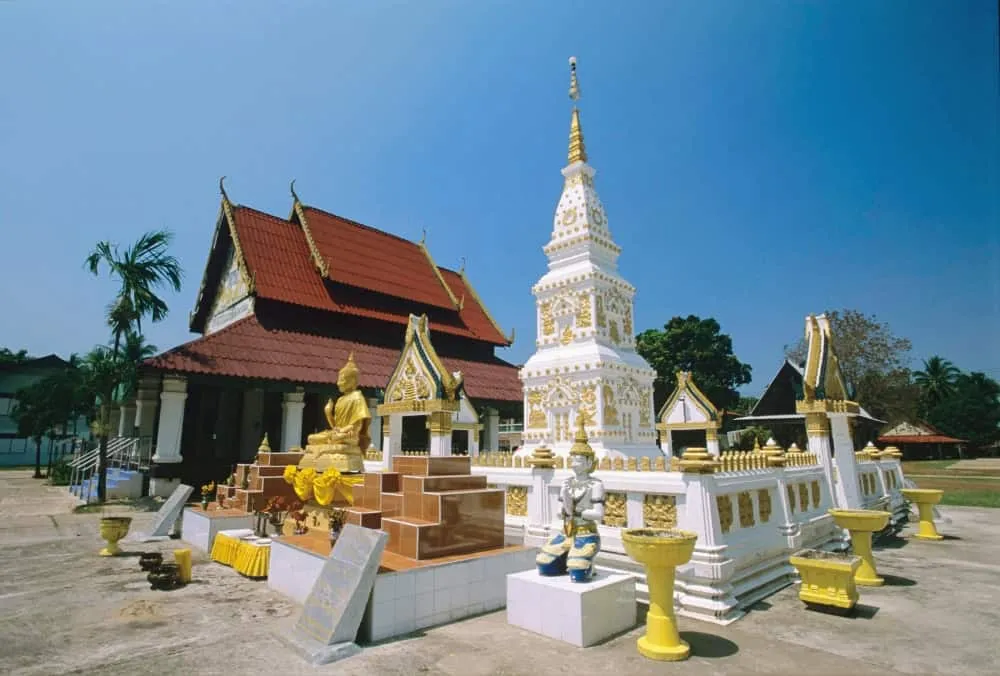



The gilded chedi of Phra That Phanom rises 57 metres over the Mekong River in Nakhon Phanom province, and ranks among the most sacred Buddhist monuments in northeastern Thailand. Thai zodiac tradition names it the guardian shrine for anyone born in the Year of the Monkey, and pilgrims cross from Laos as well as travel from across Isan believing that prayers made here carry unusual weight. The temple sits in That Phanom district, about 56 kilometres south of Nakhon Phanom city — roughly 50 minutes by car or songthaew along the riverside road.
Archaeologists date the earliest brick chamber at the chedi’s base to the 7th or 8th century, though temple tradition pushes its founding centuries earlier, to a legendary construction housing Buddha relics. The structure was raised twice over the following centuries, reaching roughly 47 metres by 1690 and its current height after a 1940 restoration. That version stood only 35 years: on the evening of 11 August 1975, after a week of relentless rain following earthquake damage earlier that year, the top-heavy tower collapsed into rubble. Workers combing the wreckage recovered a bronze casket holding the temple’s relics intact — considered close to miraculous at the time — and the chedi was rebuilt in Lao-influenced style with government and public funding, reopening on 23 March 1979. It now sits on UNESCO’s tentative World Heritage list.
Smaller stupas and open-sided sala pavilions ring the main chedi, and the prayer hall inside houses Buddha images in several classical postures beneath walls painted with Jataka tales. Monks lead chanting most evenings, incense smoke drifting across the courtyard as pilgrims press gold leaf onto the chedi’s base and set down lotus-bud offerings — a merit-making ritual that hasn’t changed in generations.
Insider Tip: Visit at dawn, 05:00-07:00, to catch the monks’ morning alms round and have the courtyard largely to yourself before tour buses arrive from Nakhon Phanom and Mukdahan.
That Phanom town itself grew up around the pilgrimage trade, and the streets closest to the temple are lined with shops selling gold leaf, lotus buds, and blessed amulets aimed squarely at devotees rather than tourists. A small museum near the temple grounds displays photographs and relics from the 1975 collapse and reconstruction, worth ten minutes if you want the fuller story behind the rebuilt spire. The Mekong forms the border with Laos just beyond the temple, and the shared devotion to Phra That Phanom on both banks is part of what makes the site feel less like a single-country attraction and more like a regional one — Lao pilgrims travel in via the Third Thai-Lao Friendship Bridge, roughly an hour’s drive north near Nakhon Phanom city. Within the same district, Phra That Renu is a smaller sister stupa often visited on the same trip.
- Entry fee: Free
- Hours: Daily 05:00-20:00
- Height: 57m gilded chedi
- Getting there: About 56km south of Nakhon Phanom city, roughly 50 minutes by car or songthaew
The Phra That Phanom Fair runs for 10 days during the third lunar month, usually landing in January or February, drawing thousands from both sides of the Mekong for merit-making, music, and an all-night atmosphere around the temple grounds. Outside festival season the site is far quieter — dress modestly with shoulders and knees covered, remove shoes before entering any building, and avoid pointing your feet toward the Buddha images or the chedi itself.
Location & Directions
183 Mu 13, Chayang Kun Road
Nakhon Phanom, Thailand
Show your taxi or Grab driver
พระธาตุพนม
Frequently Asked Questions
When did the Phra That Phanom chedi collapse, and how was it rebuilt?
How far is Phra That Phanom from Nakhon Phanom city?
When is the Phra That Phanom Fair?
Why is this stupa significant for people born in the Year of the Monkey?
Is entry free?
Spotted something out of date or incorrect? Let us know
Stay Near Phra That Phanom
Live prices for places closest to Phra That Phanom — tap a pin to compare.