Phrachao Yai Wat Hong
พระเจ้าใหญ่ วัดหงษ์
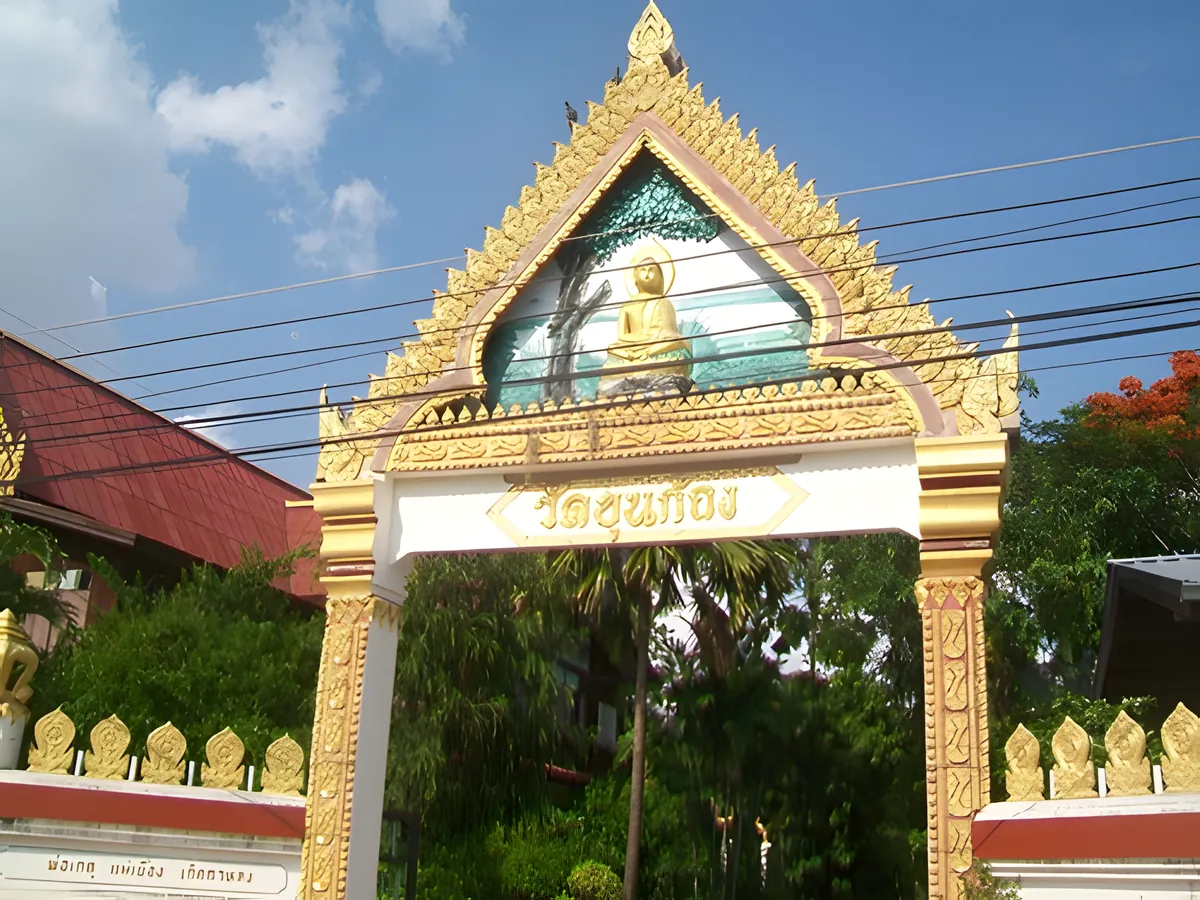
Phrachao Yai Wat Hong is a centuries-old laterite Buddha image seated in the meditation (samadhi) posture (about 1.6 metres across the lap and 2 metres tall) housed at Wat Hong in Phutthaisong district, in the northern reaches of Buriram province near its border with Maha Sarakham. Art-historians date the image to roughly the 19th–20th Buddhist century, putting its carving several hundred years before the modern temple compound around it. Entry is free, and the site functions as an active village temple rather than a monument built for tourists.
The founding story is what locals talk about first. Local chronicles describe a group tracking a huge rhinoceros into the forest here and settling nearby; later, two hunters following a wild swan (hong) stumbled on the laterite Buddha image along with the ruins of an old chedi and rhino bones, and built a temple on the spot, naming the village Ban Sisa Raet (“rhino head”) and the new temple Wat Hong (“swan temple”) after the bird that led them to the site. That’s also where the temple gets its name, distinct from the more common “Wat Sisa Raet” some records use interchangeably.
Insider Tip: If you can time a visit to the annual gilding fair (the 14th day of the waxing moon through the first day of the waning moon of the third lunar month, which usually lands around Makha Bucha in February), you’ll see the Buddha image freshly regilded and the temple grounds full of stalls and pilgrims from across Buriram and neighbouring provinces. Outside festival dates, it’s a quiet, unhurried village temple.
Watch out: There’s no museum-style signage explaining the founding legend on site: most of what’s known comes from oral history and local district records, so a Thai-speaking guide or a pre-trip read helps more than wandering in cold.
- Location: Phutthaisong district, northern Buriram province
- Buddha image: Laterite, seated meditation posture, 1.6 m lap width, 2 m tall
- Estimated age: 19th–20th Buddhist century (c. 13th–14th century CE)
- Entry fee: Free
- Main festival: Annual gilding fair, 3rd lunar month (around Makha Bucha, February)
Dress modestly (shoulders and knees covered) and remove your shoes before entering the main hall, as at any working wat. There’s no public transport route directly to the temple; renting a car or arranging a driver from Buriram town is the practical way to combine this with Lak Mueang Shrine, Buri Ram or the hilltop Wat Khao Angkarn elsewhere in the province. For the full rundown of Buriram’s temples, ruins, and stadiums, see the Buriram destination guide.
Location & Directions
Phutthaisong, Buri Ram
Buriram, Thailand
Show your taxi or Grab driver
พระเจ้าใหญ่ วัดหงษ์
Frequently Asked Questions
Is Phrachao Yai Wat Hong in Ubon Ratchathani?
How big is the Phrachao Yai Buddha image?
How old is the statue?
Is there an entry fee?
When is the main festival here?
Spotted something out of date or incorrect? Let us know
Stay Near Phrachao Yai Wat Hong
Live prices for places closest to Phrachao Yai Wat Hong: tap a pin to compare.