
Phra Suphatthara Bophit
พระสุภัทรบพิตร
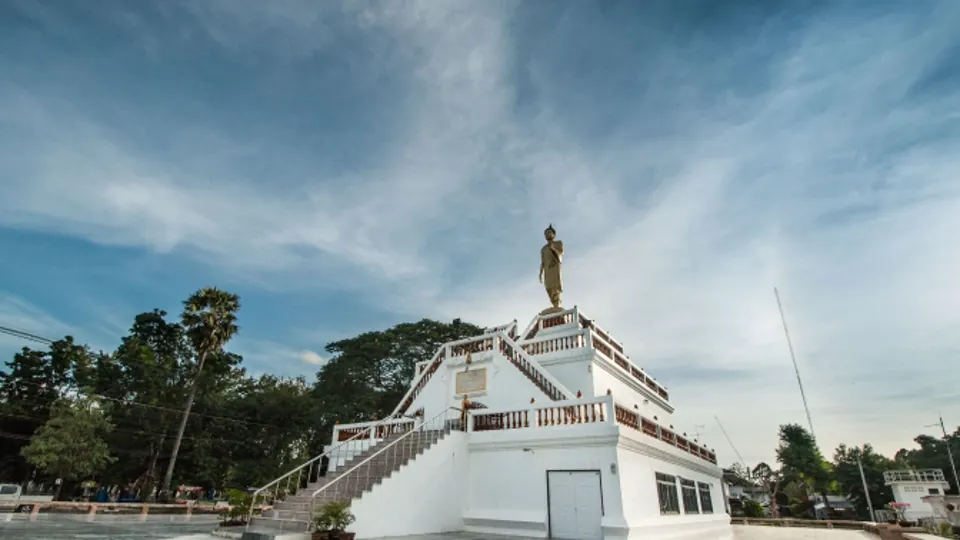
Phra Suphatthara Bophit is a 14-metre seated Buddha image enshrined atop Khao Kradong, an extinct volcano roughly 6 km from Buriram town on the Buriram–Prakhon Chai road. Built in 1969 from brick and stucco, it’s the largest Buddha image in the province and the city’s best-known landmark, visible from much of the town below.
Provincial governor Surawuth Bunyanusaasn and Luang Pho Boonma, then abbot of Wat Phra Phutthabat Khao Kradong, led the construction with donations from merchants and residents across Buriram. The finished statue measures 12 meters across the shoulders, faces north, and sits in the classic meditation posture. Inside the head, the temple enshrines Buddha relics said to have been brought at the request of Nang Chaew, mother of a former deputy minister — the detail locals point to when explaining why the image is treated as the spiritual anchor of the city rather than just another roadside shrine.
- Location: Khao Kradong, Tambon Samet, ~6 km from Buriram town
- Built: 1969, brick and stucco
- Size: 12 m across the shoulders, 14 m tall, facing north
- Entry fee: Free
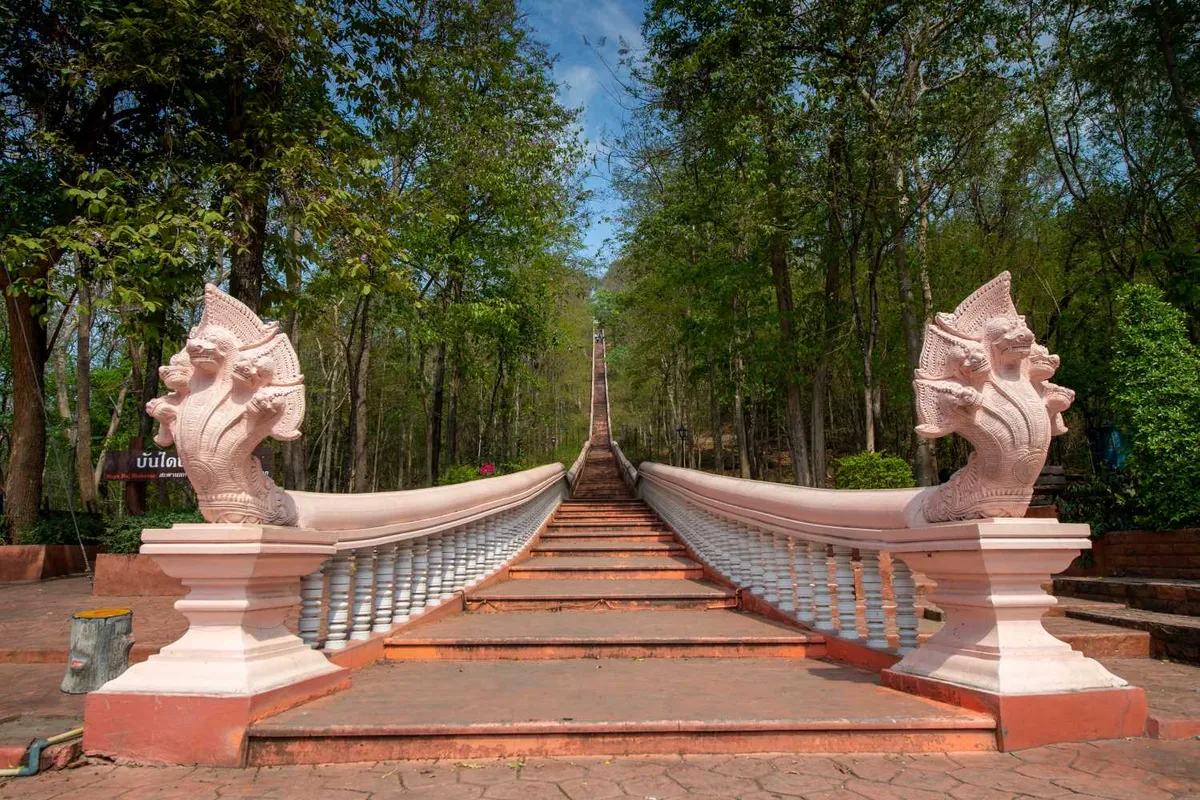
- Getting there: Paved summit road or naga staircase
Reaching the top means either driving the paved road that switchbacks up the old volcanic cone, or climbing the naga-flanked staircase if you want the workout. At 265 meters, the summit clears the surrounding rooftops and rice fields, and on a clear afternoon you can pick out the Chang International Circuit and the edge of town from the viewing platform beside the Buddha. A replica of the Buddha’s footprint sits nearby, a smaller devotional stop most visitors pass on the way to the main image.
Insider Tip: Time the visit for late afternoon — the statue faces north, so the light is flatter and cooler for photos after 4 PM, and you avoid the worst of the midday heat on the exposed summit.
The site rarely feels crowded outside Songkran and other merit-making holidays, when families climb to make offerings together. Because the mountain is also a protected non-hunting area (the Phukhaofai Kradong Non-Hunting Area shares the same extinct crater), the forest around the statue is left largely untouched — expect birdsong and the occasional hornbill rather than souvenir stalls crowding the path.
Watch out: The summit has minimal shade and no reliable food or water vendors at the top — bring your own water, especially between March and May when the exposed rock face gets uncomfortably hot by mid-morning.
Dress modestly (covered shoulders and knees) since this is an active place of worship, not just a viewpoint. Combine the visit with the wider Khao Kradong crater trails, or if time allows, the Khmer sanctuary further south at Phanom Rung — the two together cover Buriram’s two defining landmarks, one Buddhist, one Khmer.
Location & Directions
Mueang Buri Ram, Buri Ram
Buriram, Thailand
Show your taxi or Grab driver
พระสุภัทรบพิตร
Within Walking Distance




Frequently Asked Questions
How do I get to Phra Suphatthara Bophit?
How big is the Buddha image?
Is entry free?
What else is on Khao Kradong?
When's the best time to visit?
Spotted something out of date or incorrect? Let us know
Stay Near Phra Suphatthara Bophit
Compare places to stay in Buriram, or open the map for options closest to the attraction.