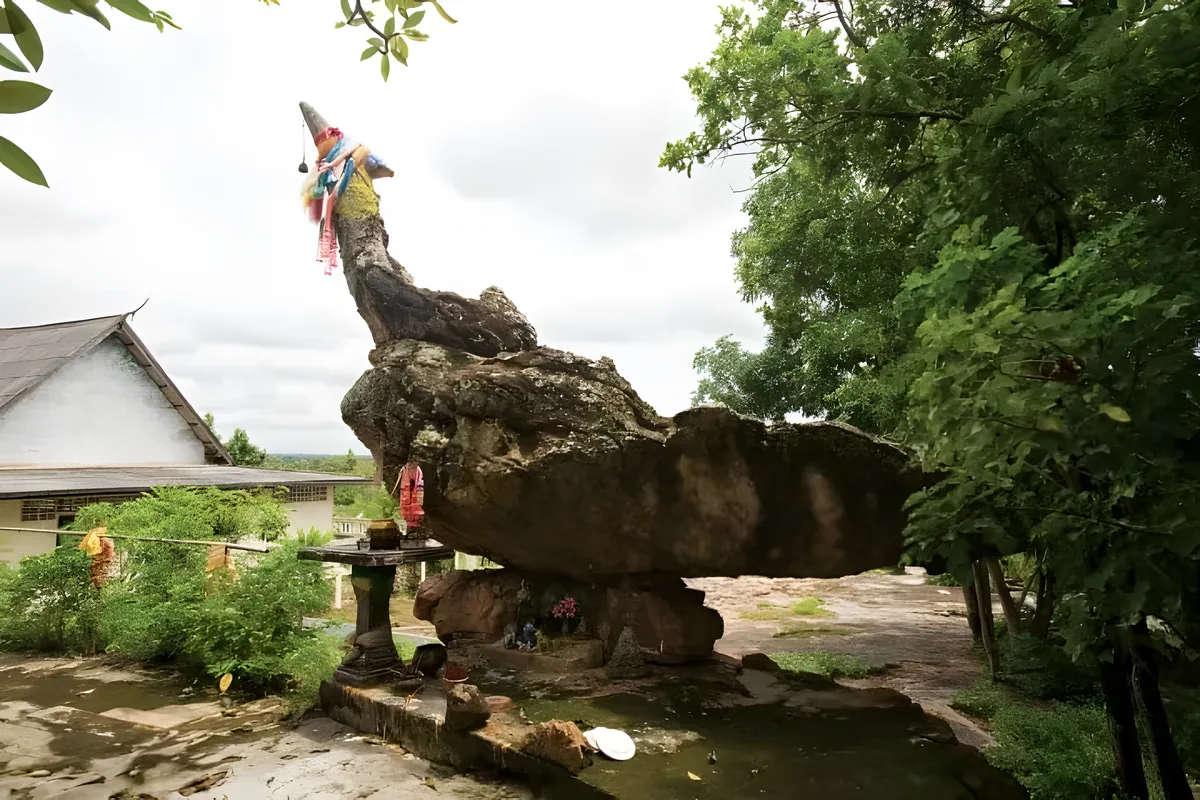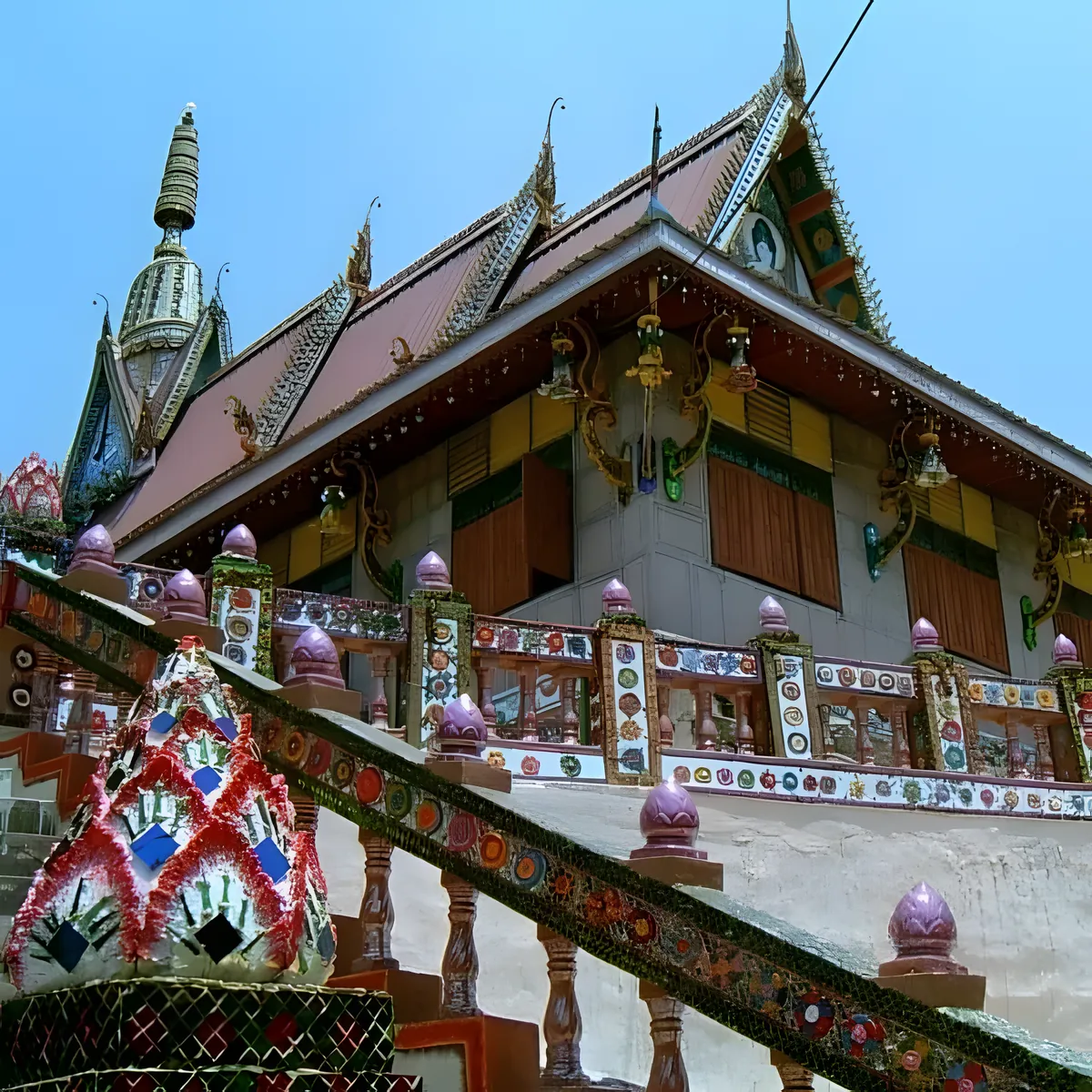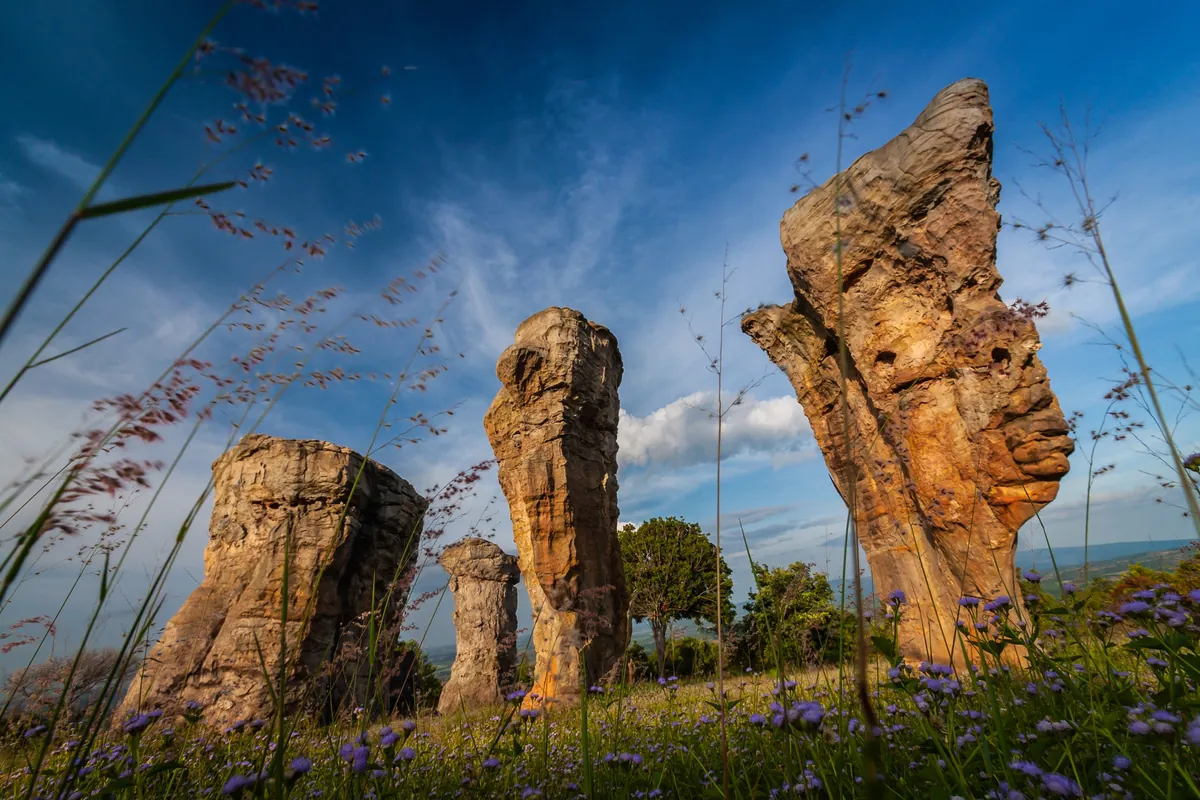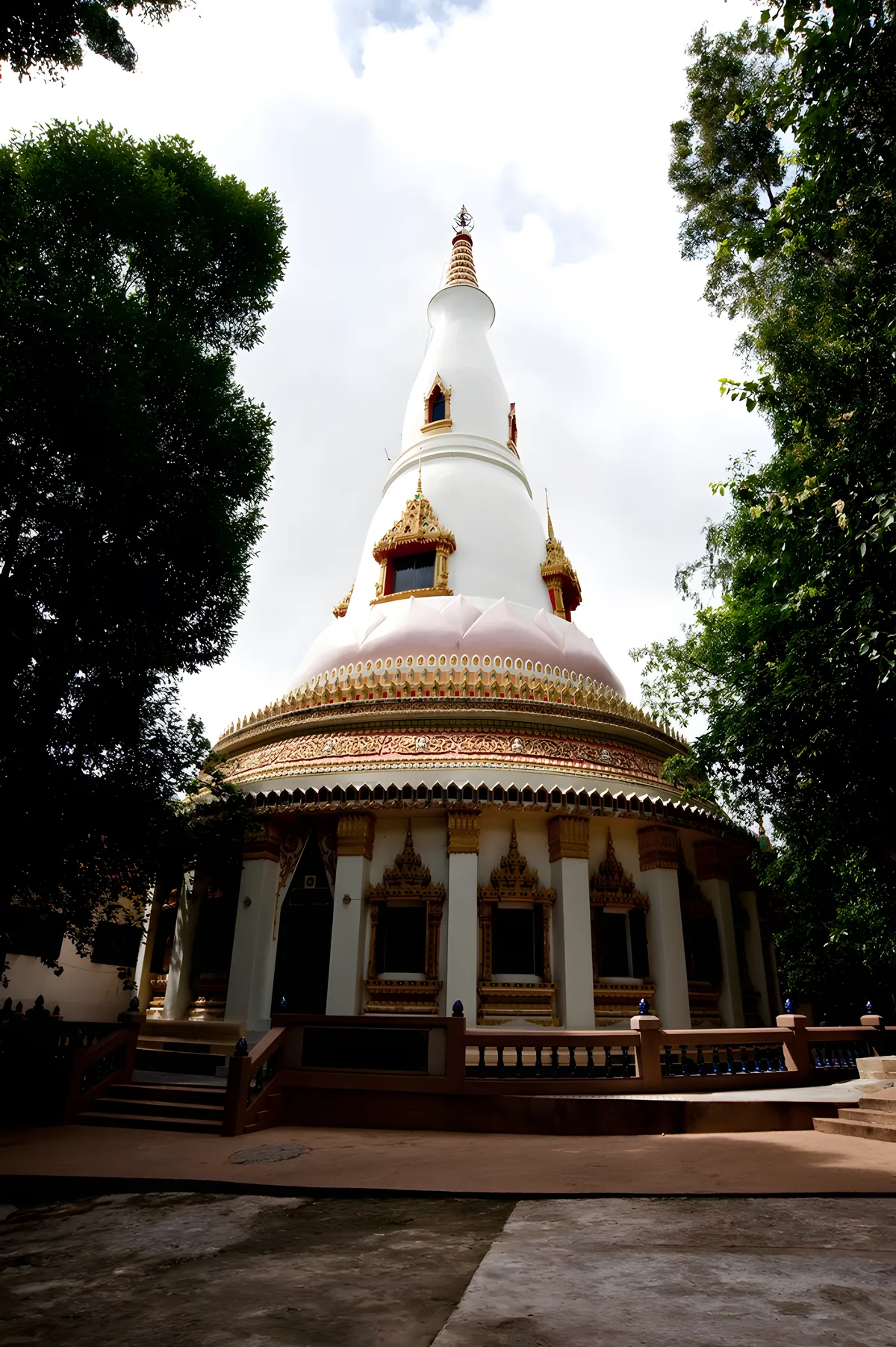




Phu Phra takes its name from the Buddha images carved directly into a cliff face at this rock outcrop in Chaiyaphum province: “Phu” meaning mountain or cliff, “Phra” referring to the Buddha images themselves. Wat Sila-Ard, the temple built around and into the formation, is free to enter daily from 08:30 to 16:30, and sits close to Chaiyaphum’s city centre rather than out in the surrounding countryside.
The carvings sit at the base and along the lower faces of the outcrop, worked directly into the natural stone rather than added as freestanding statues, the kind of integration of rock and religious art that gives the site its name and its distinct character among Chaiyaphum’s temples. Cave shrines cut into the cliff hold further Buddha images and offerings, with the stone interiors staying noticeably cooler than the open ground outside, a welcome break in the middle of the day. Climbing higher along the temple’s paths brings views out over the surrounding rice paddies and countryside, though this is a modest outcrop rather than a major peak: the reward here is the carvings and shrines, not a dramatic summit panorama.
As a working temple, Wat Sila-Ard sees a mix of local devotees making merit and visitors drawn by the carvings, without the crowds of Chaiyaphum’s better-known forest monasteries. It’s a quieter stop, best treated as an hour’s visit rather than a half-day excursion.
- Entry fee: Free
- Hours: Daily 08:30-16:30
- Main feature: Buddha images carved into the natural cliff face
- Location: Na Siao subdistrict, Mueang Chaiyaphum district
- Visit length: About an hour
Watch out: The rock paths around the carvings and cave shrines can be uneven and, after rain, slippery. Wear shoes with real grip rather than sandals.
Morning visits avoid the worst of the midday heat on the exposed rock sections. Remove your shoes before entering any cave shrine or prayer area, and keep voices down: this remains an active place of worship, not a roped-off historical site. For other Chaiyaphum temples in a similar mountain-and-forest setting, Wat Pa Sukato and Wat Phra Phutthabat Phu Faet are both a reasonable drive away; the Chaiyaphum hub page covers the rest of the province’s temple and national park circuit.
Location & Directions
Mueang Chaiyaphum, Chaiyaphum
Chaiyaphum, Thailand
Show your taxi or Grab driver
ภูพระ
Frequently Asked Questions
Where does the name "Phu Phra" come from?
Is there an entrance fee?
What's the main thing to see?
What should I wear and expect on the climb?
How does this differ from other Chaiyaphum mountain temples?
Spotted something out of date or incorrect? Let us know
Stay Near Phu Phra, Wat Sila-Ard
Live prices for places closest to Phu Phra, Wat Sila-Ard: tap a pin to compare.