




Prang Khaek is a row of three brick towers on a traffic island in old Lopburi, and it’s the oldest standing monument in the city — most estimates put construction in the 11th or 12th century, when Lopburi (then called Lavo) sat under Khmer political and religious influence. It predates the better-known Prang Sam Yot a few hundred metres away, and unlike that later, more photogenic complex, Prang Khaek has no macaques, no ticket booth, and almost no crowds.
The three prangs stand in a north-south line, each built from brick with sandstone door frames, and each with a single entrance — there’s no connecting corridor between them, so the towers were designed to be entered and used separately. The central tower is tallest, at roughly 12 metres, flanked by two slightly shorter companions. This was originally a Hindu shrine: archaeologists found a Shiva linga fragment in the central tower, and a surviving lintel elsewhere on the site carves Vishnu riding Garuda, both markers of Shaivite-Vaishnavite worship rather than Buddhist practice. A four-armed Vishnu image once associated with the site is now held in the Lopburi National Museum rather than displayed on-site.
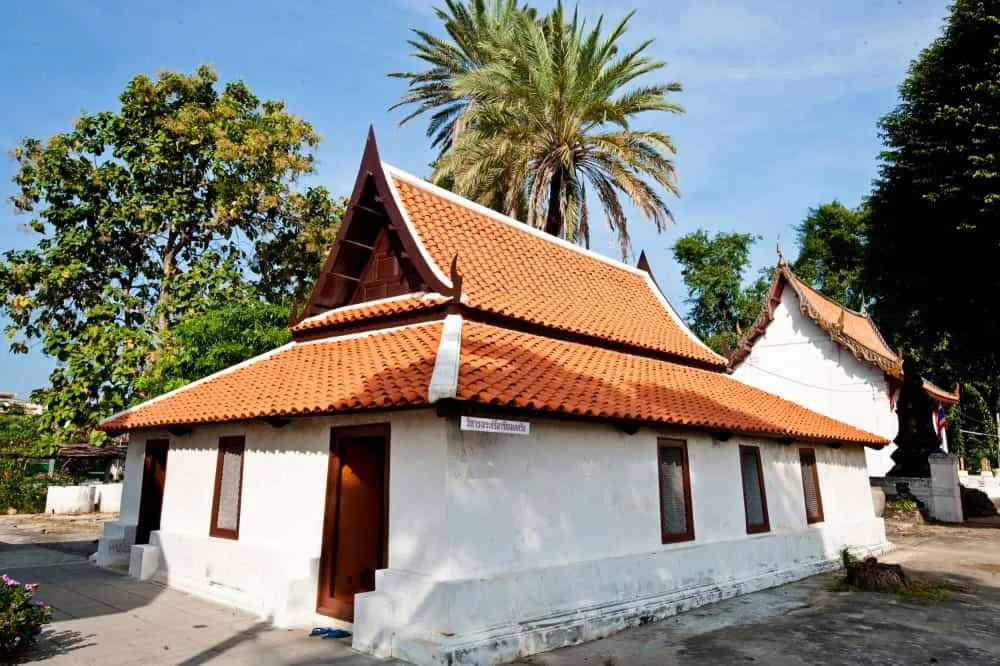
King Narai’s 17th-century court left its own mark. Rather than converting the shrine to Buddhist use, as happened at many older Hindu sites in the kingdom, Narai’s builders added a small prayer hall and water tank in a Thai style with European touches — a deliberate choice to preserve the Hindu character of the site during an era when Brahmin ritual still had a role at court. The Fine Arts Department registered Prang Khaek as a national historic monument in 1936, and reinforced the base with concrete in 1961 after centuries of monsoon erosion had started to undermine the brickwork.
Because it sits on an open traffic island rather than behind a wall, there’s no set visiting hours and nothing to buy a ticket for. Bring shoes you don’t mind getting dusty; the ground around the towers is uneven brick rubble and packed earth, with almost no shade.
- Entry: Free, open site, no fixed hours
- Age: 11th–12th century, oldest standing monument in Lopburi
- Structure: Three brick prangs in a row, tallest ~12m, sandstone door frames
- Religion: Hindu (Shiva/Vishnu), later additions by King Narai kept it non-Buddhist
- Location: Traffic island, Sura Songkhram–Wichayen Road junction, old town Lopburi
Insider Tip: Visit early morning before the traffic builds up around the junction — the towers sit on a literal roundabout, and photographing them mid-afternoon means dodging both heat and motorbikes.
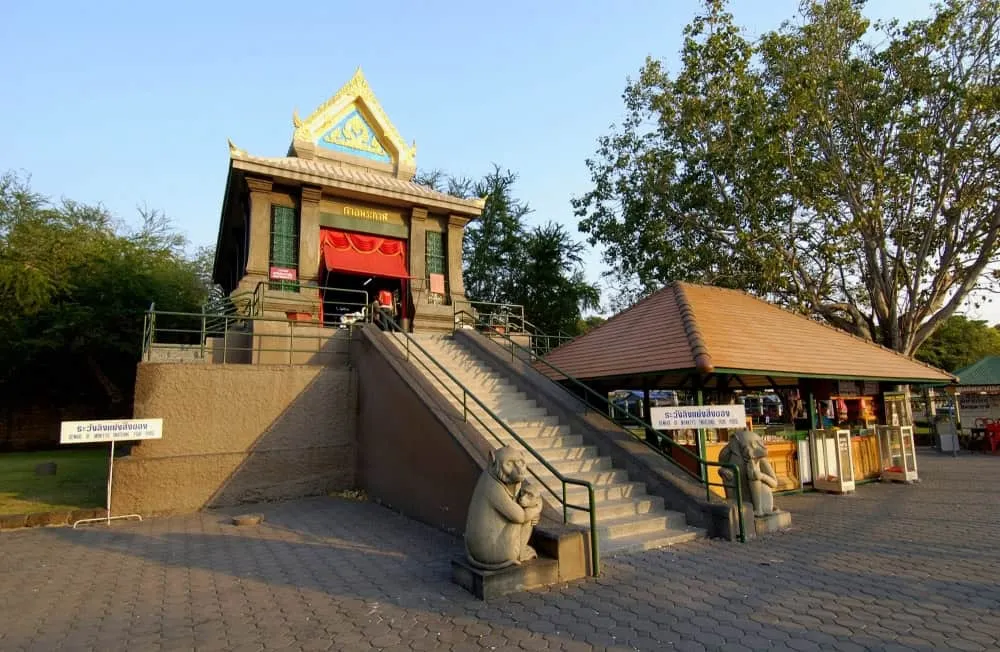
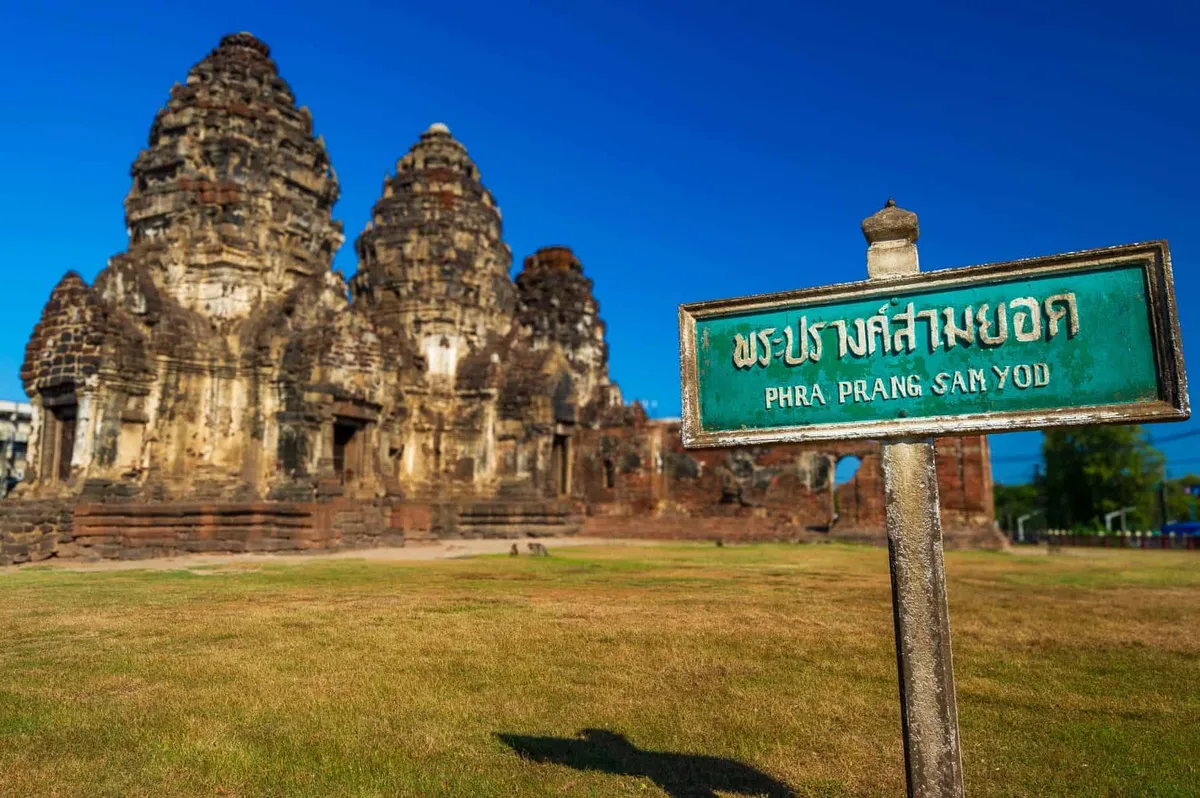
Prang Khaek is a short walk from Phra Prang Sam Yot and San Phra Kan, Lopburi’s monkey-shrine landmark — the three sites form a compact loop through the old town’s Khmer-era core. The Lopburi hub has more on planning a full day around the ruins.
Location & Directions
Mueang Lop Buri, Lop Buri
Lop Buri, Thailand
Show your taxi or Grab driver
เทวสถานปรางค์แขก
Within Walking Distance




Frequently Asked Questions
How old is Prang Khaek?
Is Prang Khaek a Buddhist or Hindu site?
How many towers does the site have?
Is entry free?
What's the difference between Prang Khaek and Prang Sam Yot?
Spotted something out of date or incorrect? Let us know
Stay Near Prang Khaek
Compare places to stay in Lop Buri, or open the map for options closest to the attraction.