




Prang Ku (Nong Ku Castle)
ปรางค์กู่ หรือ ปราสาทหนองกู่
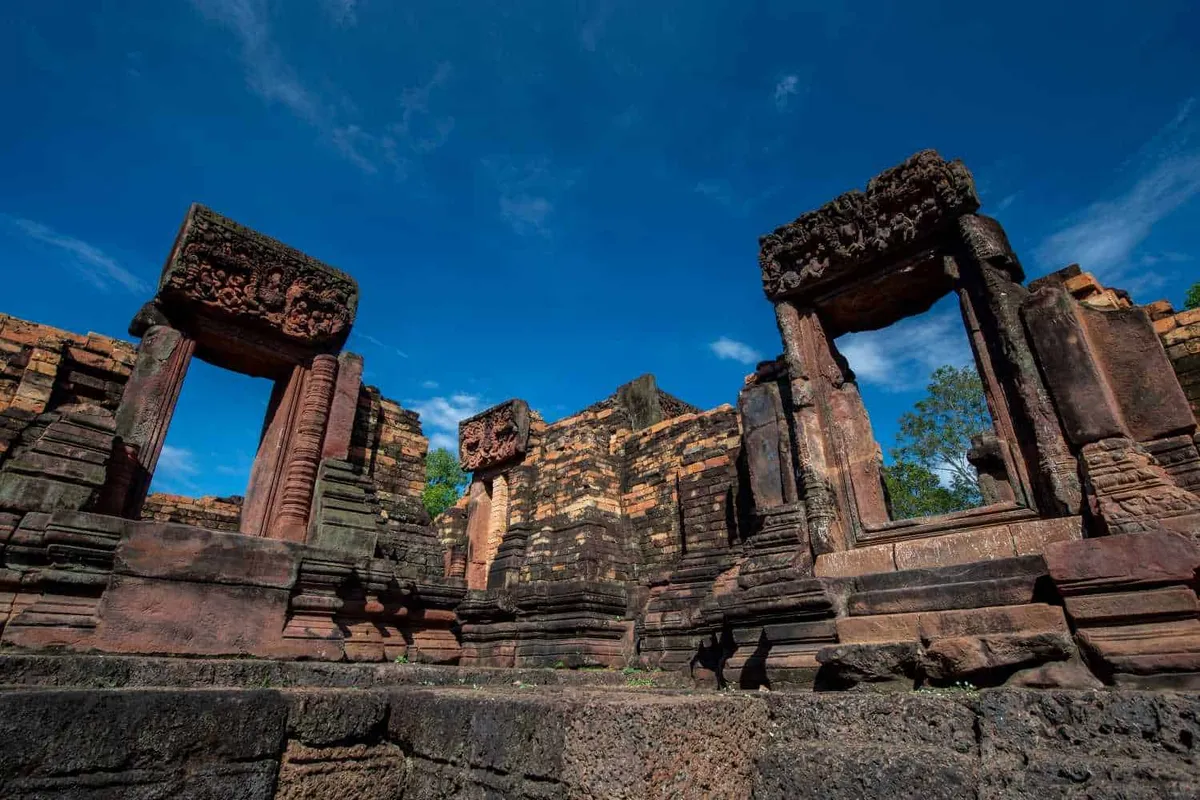
Prang Ku, also signposted as Nong Ku Castle, is a Khmer religious complex near Thawat Buri district office, about 14-16 km from Roi Et town along Highway 23 toward Yasothon. The English “castle” tag is a loose translation of the Thai “prasat” — this was never a fortress or a residence. Fine Arts Department records classify it as an arogayasala, a hospital chapel of the kind Jayavarman VII commissioned by the hundreds across the Khmer Empire, built in the 18th Buddhist century (around the 13th century CE) during his reign.
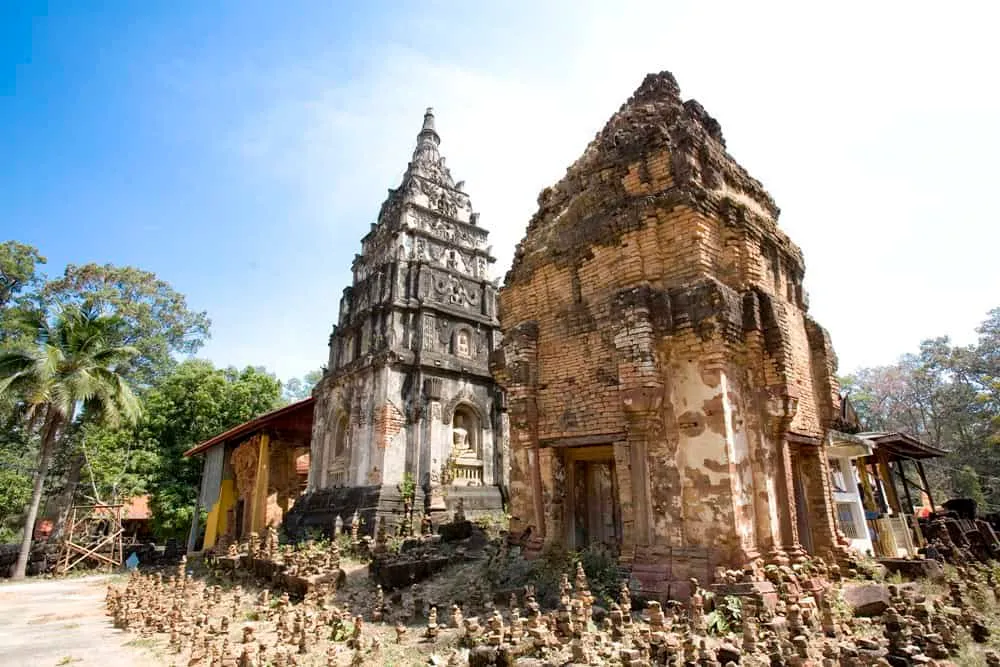
What survives is a compact but legible complex: the main prang tower, a smaller annex structure that would have served as a library or scripture store, a perimeter wall punctuated by gate arches, and a moat running outside that wall — the standard layout for this class of Khmer healing-station building. The main tower has held up better than most sites its age: three tiers of its roof remain, along with the lotus-bud finial base at the top, giving a clearer sense of the original silhouette than you get at more eroded ruins nearby. The Fine Arts Department listed the site as a national ancient monument in 1935 and carried out its most recent restoration in 2011.
Insider Tip: Combine this with Roi Et’s other Khmer ruins — Ku Ka Sing and Ku Phra Kona are both within a similar radius of town, so a single day can cover three different arogayasala-style sites without much backtracking.
Watch out: There’s no on-site museum or interpretive signage in English beyond a basic plaque, so a little pre-reading on the arogayasala building type goes a long way — without it, the layout can look like a random scatter of stonework rather than a designed hospital chapel.
The grounds are unshaded and lightly maintained rather than manicured, with basic parking near the entrance. Early morning is the most comfortable time to walk the site before the heat builds over the open ground.
- Entry fee: Free
- Hours: Daily 08:00–17:00
- Built: 18th Buddhist century (~13th century CE), reign of Jayavarman VII
- Structure: Main prang, annex “library,” perimeter wall with gate arches, outer moat
- Getting there: ~14-16 km from Roi Et town via Highway 23 toward Thawat Buri
Prang Ku sits within the Roi Et hub, near two other Khmer sites worth pairing with it: Ku Ka Sing and Ku Phra Kona.
Location & Directions
Roi Et-Yasothon Road
Roi Et, Thailand
Show your taxi or Grab driver
ปรางค์กู่ หรือ ปราสาทหนองกู่
Frequently Asked Questions
Is Prang Ku (Nong Ku) actually a castle?
How old is Prang Ku?
How far is Prang Ku from Roi Et town?
What can you see on site today?
Is there an entry fee?
Spotted something out of date or incorrect? Let us know
Stay Near Prang Ku (Nong Ku Castle)
Compare places to stay in Roi Et, or open the map for options closest to the attraction.