


Ku Ka Sing
กู่กาสิงห์
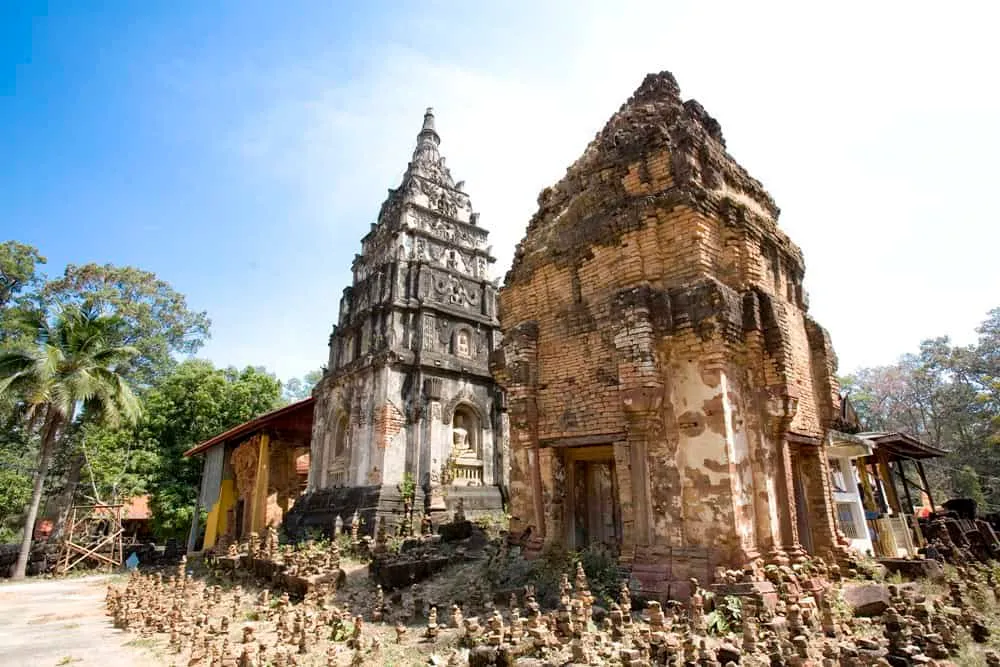
Ku Ka Sing is an 11th-century Khmer Hindu sanctuary, not a natural formation: a genuine prasat, built of laterite, sandstone, and brick, standing on the grounds of Wat Burapha in Kaset Wisai district, about 49 km south of Roi Et town. Entry is free, the grounds are open daily 07:00-17:00, and the site is one of the better-preserved Khmer ruins in Roi Et province.
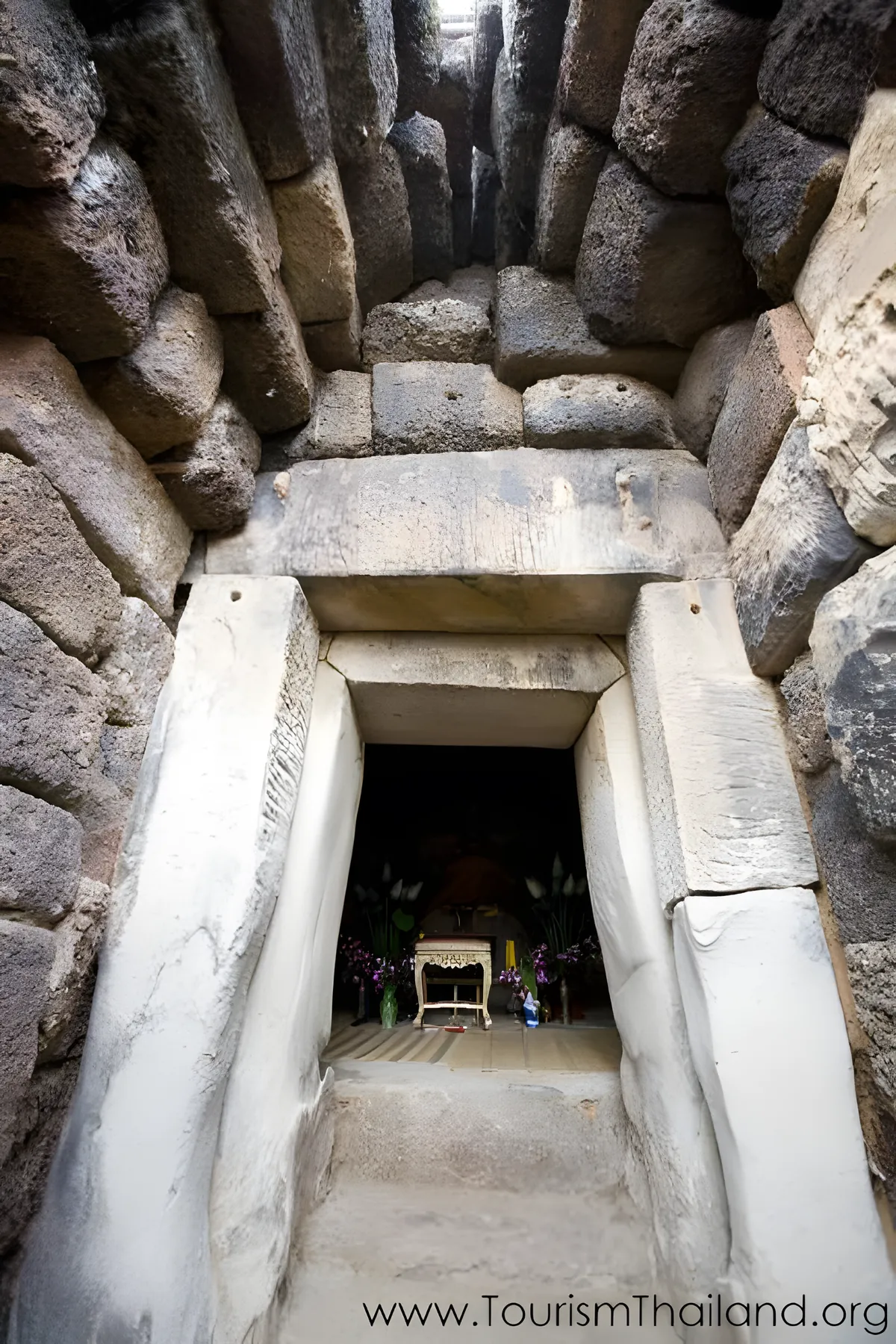
The complex centres on three towers (prang) raised on a laterite platform. The central tower, the largest of the three, once held a stone Shiva lingam. The temple was built as a Hindu sanctuary, and its carving style (lotus motifs and flame-like kanok patterns on the base of the central tower) places it at the tail end of the Baphuon period, roughly the late 11th century. No foundation inscription survives, so that date comes from comparing the decoration to other, better-dated Angkorian sites rather than from a text found on-site. Two rectangular library buildings sit in the southeast and northeast corners (large enough to rival the main shrine itself) and a laterite wall with four cruciform gopura gateways once enclosed the whole complex. Faint traces of a dry, horseshoe-shaped moat still outline where water once surrounded the sanctuary.
Insider Tip: Visit early morning. Low light picks out the texture difference between the laterite base, sandstone tower walls, and brick upper sections far better than midday sun, and you’ll likely have the ruins to yourself outside of a temple fair.
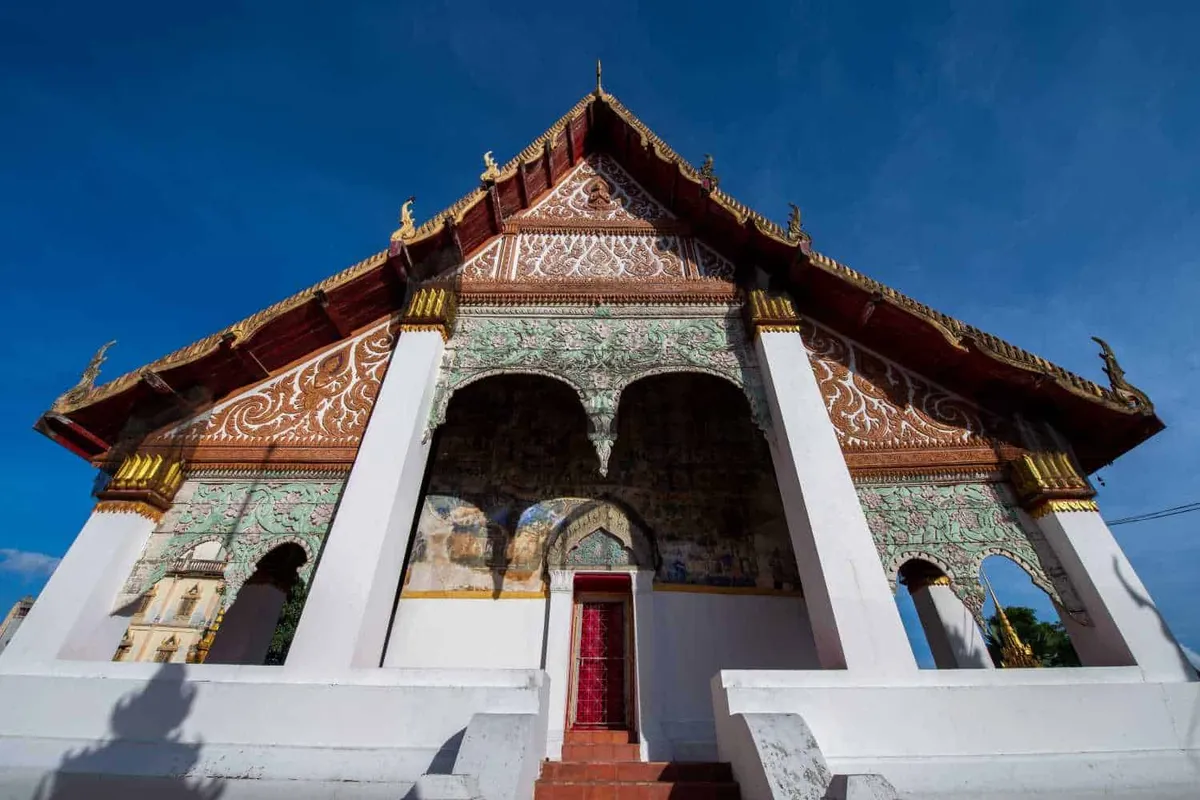
What makes the site worth the detour beyond the architecture is the layering of belief: this was built for Shiva nine centuries ago, and it now sits inside the grounds of a working Buddhist temple, with local villagers still treating the ku as sacred ground. It’s a small, quiet reminder of how much of Isaan’s Khmer heritage was absorbed into later Thai Buddhist practice rather than abandoned outright.
Watch out: This is a modest, partially-ruined site, not a restored monument on the scale of Phanom Rung or Phimai. Go for the archaeology and the atmosphere, not expecting grand photo backdrops.
Several of the carved stone pieces excavated here, statues and architectural fragments, are now held at the Roi Et National Museum in Roi Et town (100 THB, Wednesday-Sunday 09:00-16:00, no photography inside), which gives useful context if you see the museum before or after the site itself. If you want to see more of the region’s Khmer ruins, Ku Phra Kona in Suwannaphum district is a similar-era sanctuary worth combining with the trip.
Getting here means your own transport. There’s no scheduled public transport into Kaset Wisai district. Bring water and sun protection; the grounds are open and mostly unshaded.
- Entry fee: Free
- Hours: Daily 07:00-17:00
- Built: Late 11th century (Baphuon style), Hindu (Shiva) sanctuary
- Getting there: ~49 km south of Roi Et town via Kaset Wisai
- See the finds: Roi Et National Museum, 100 THB, Wed-Sun 09:00-16:00
Location & Directions
Kaset Wisai, Roi Et
Roi Et, Thailand
Show your taxi or Grab driver
กู่กาสิงห์
Frequently Asked Questions
Is Ku Ka Sing a natural rock formation?
Is there an entry fee?
What god was it built for?
Where are the carvings and statues found here now?
How far is it from Roi Et town?
Spotted something out of date or incorrect? Let us know
Stay Near Ku Ka Sing
Live prices for places closest to Ku Ka Sing: tap a pin to compare.