


Roi Et
ร้อยเอ็ด
The city of 101 — Isan's centrepiece lake, a 59-metre standing Buddha, ancient Khmer ruins, and Thailand's best jasmine rice grown on the Thung Kula Ronghai plain.
Recommended by us
Wat Burapha Phiram
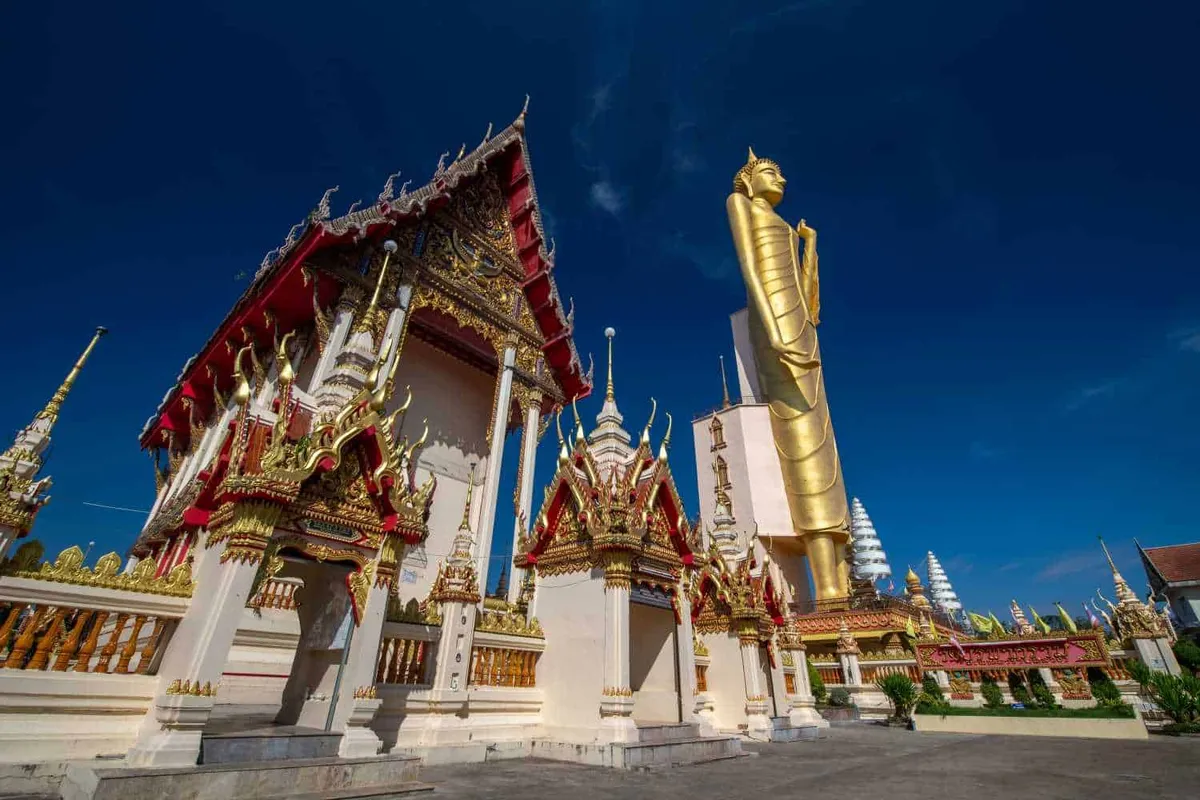
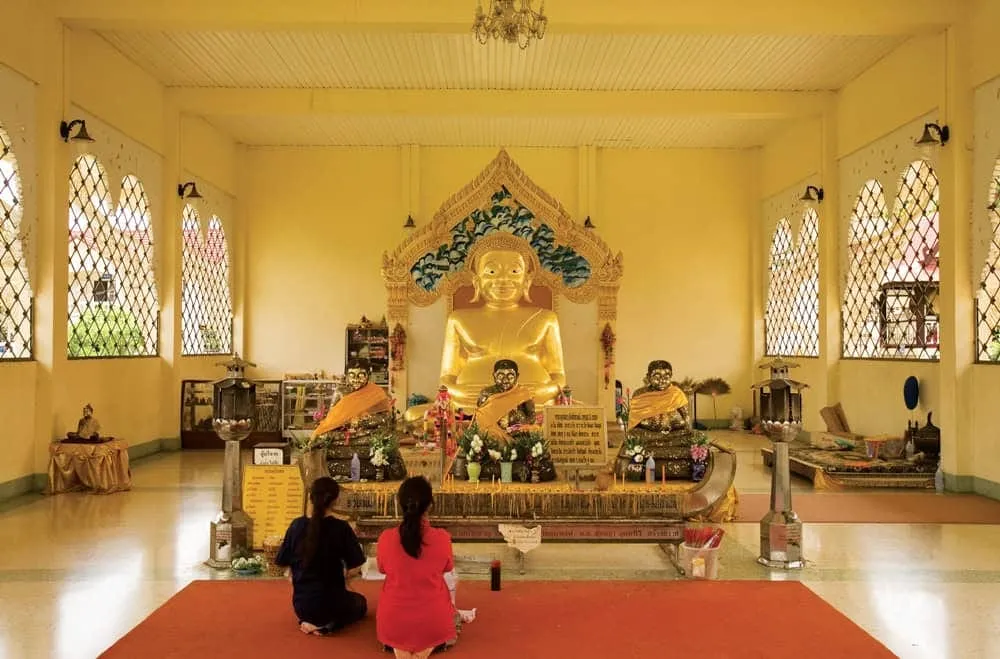
Roi Et's main city temple, home to a 59-metre standing Buddha that dominates the skyline. You can climb inside for a view over Bueng Phlan Chai lake — go in the morning when the light is good.

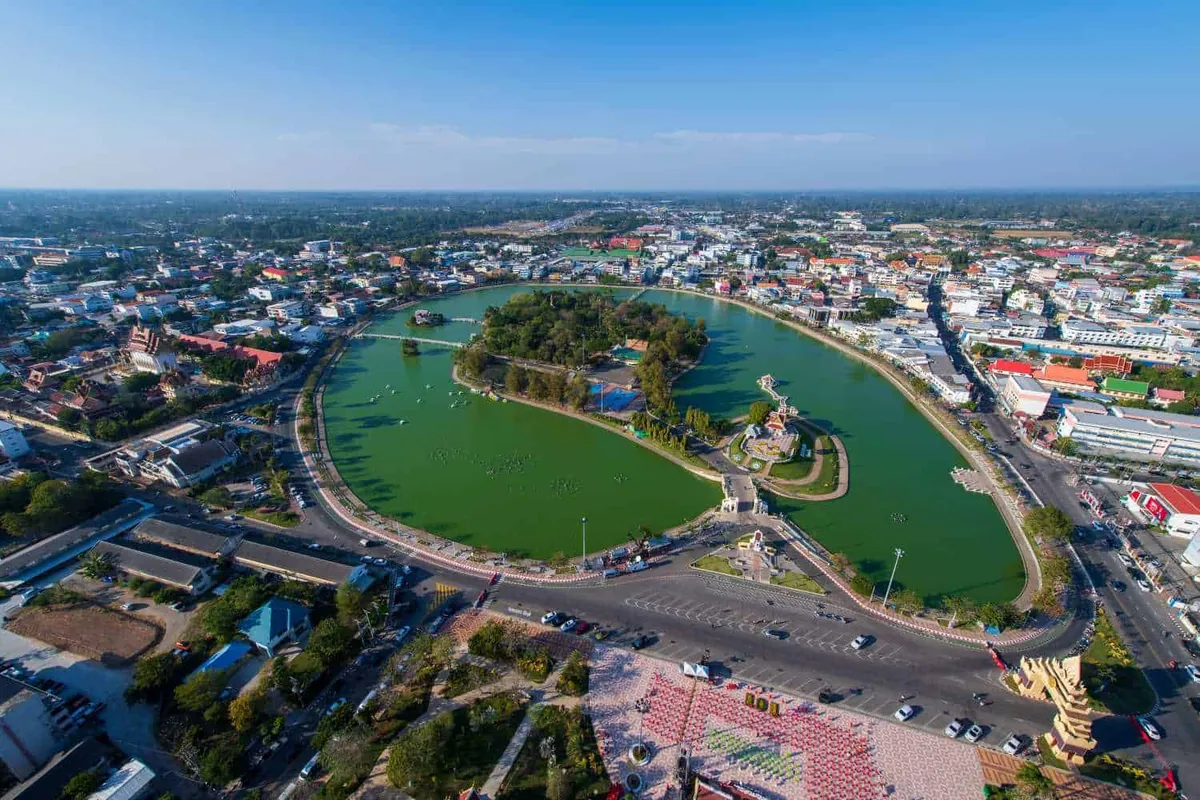
Bueng Phlan Chai
The large lake at the centre of town, ringed by a walking path and lit up at night. Rent a pedalo or just walk the loop at dusk — the standing Buddha reflection in the water is the money shot.

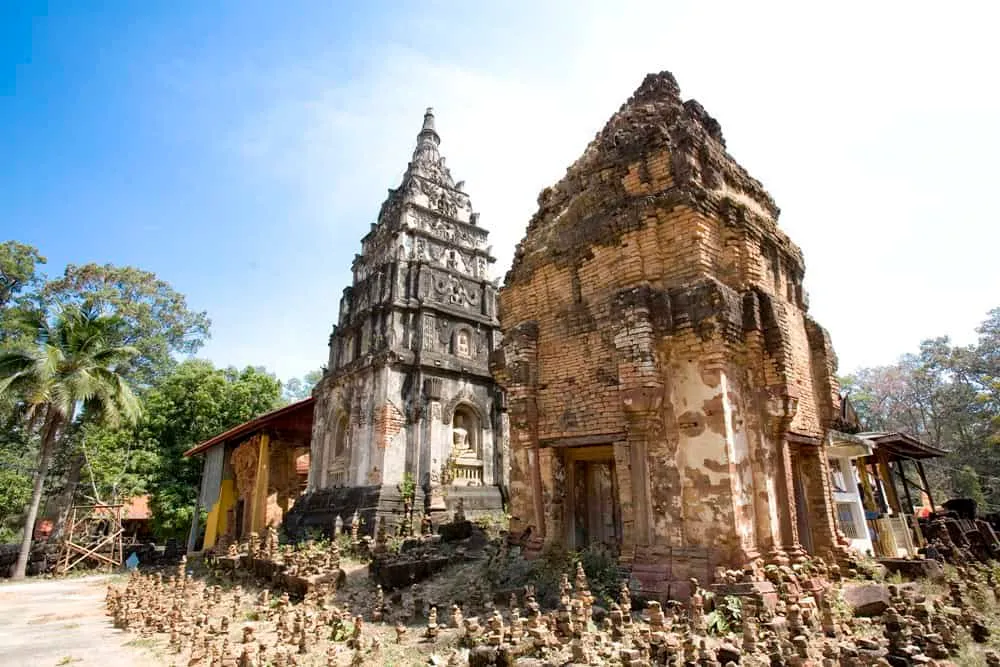
Ku Phra Kona
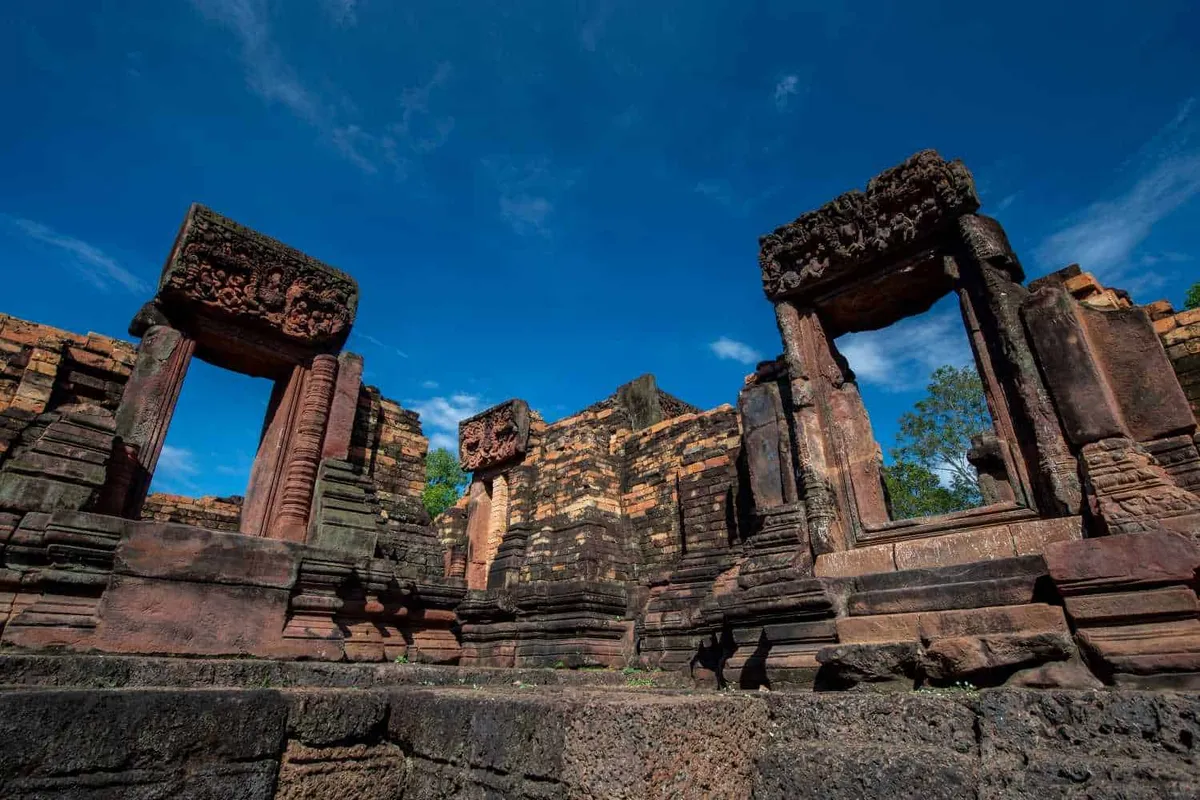
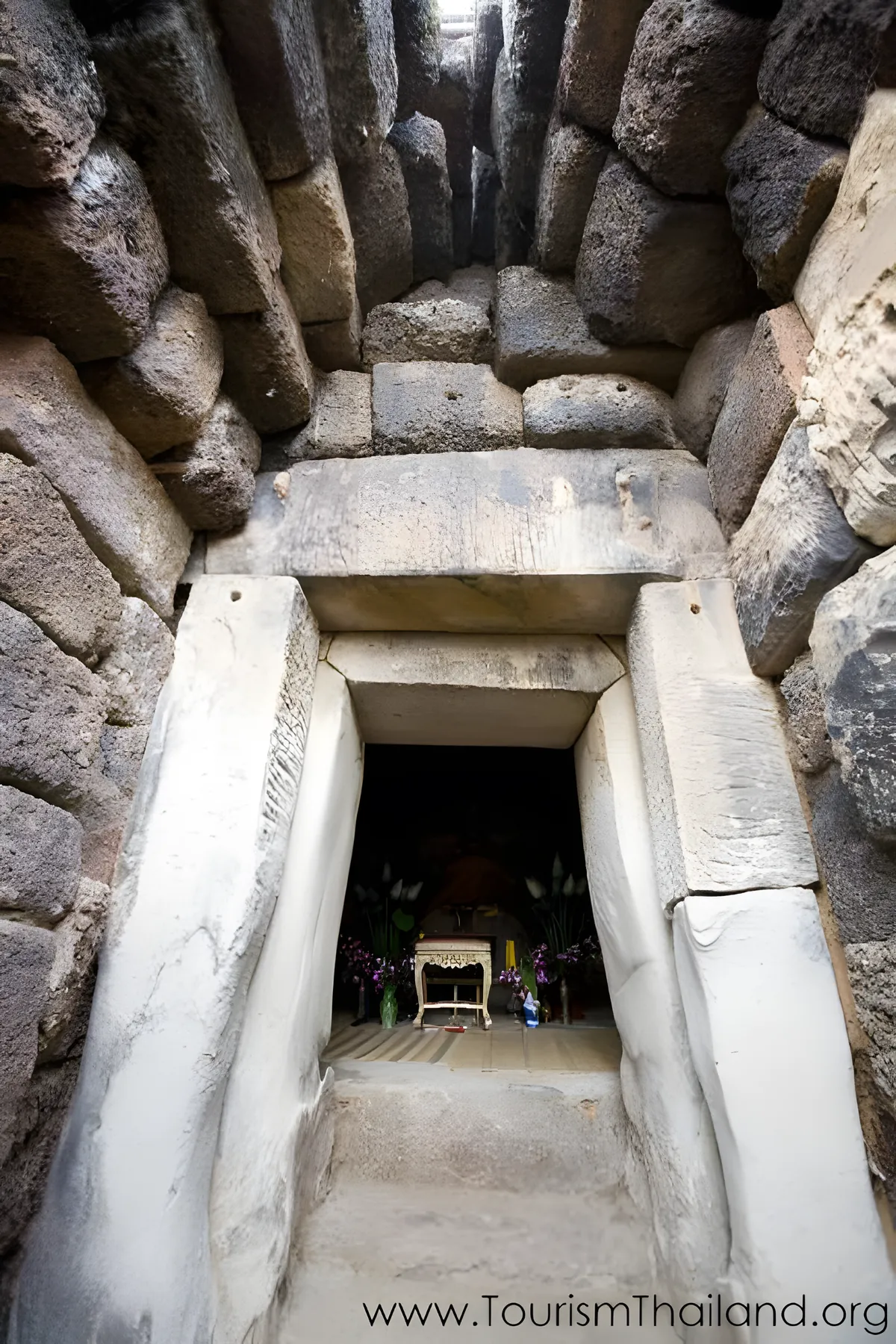
A Khmer laterite sanctuary in Suwannaphum district, around 55km from Roi Et city, one of the better-preserved ancient sites in the province. Quiet on weekdays — you'll likely have it to yourself.

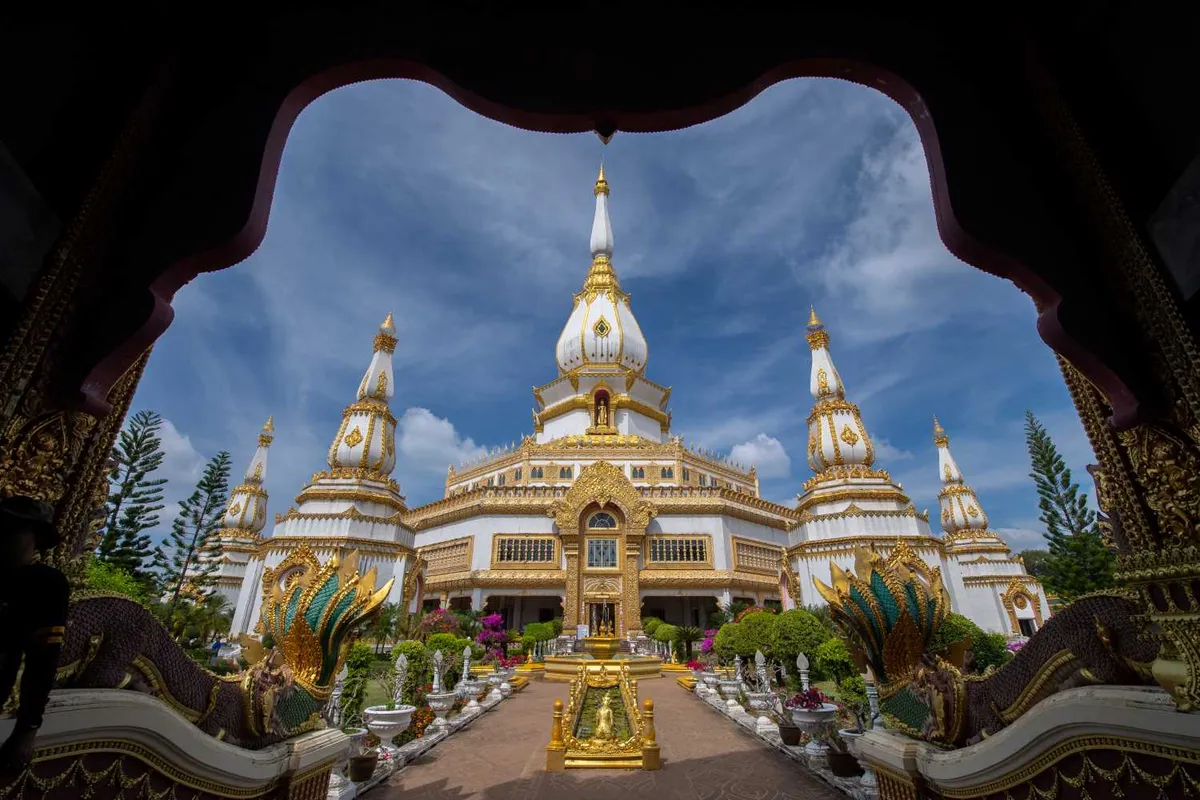
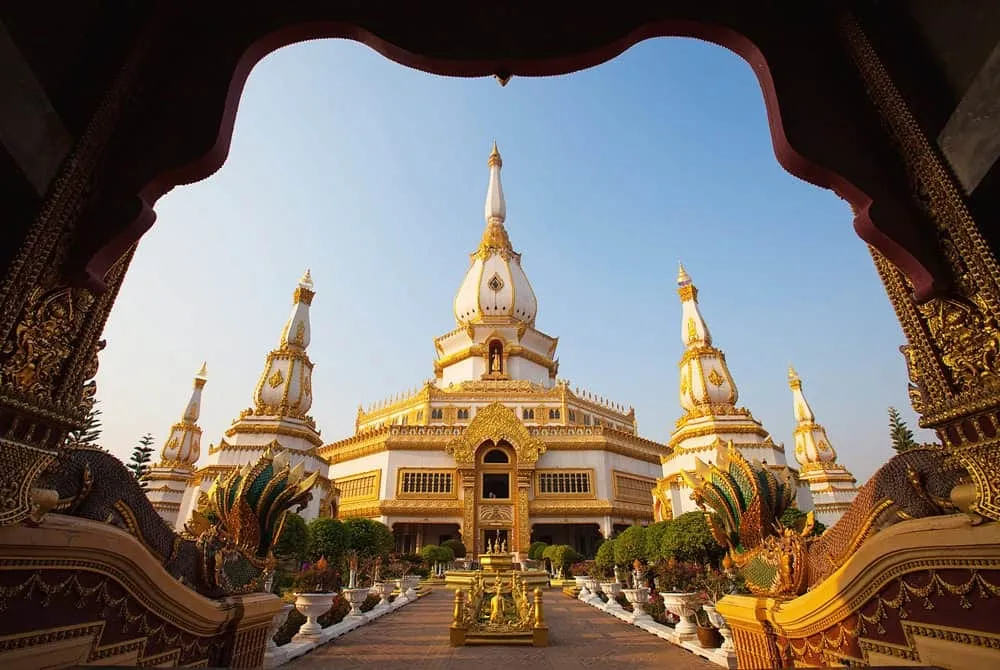
Phra Maha Chedi Chai Mongkhon
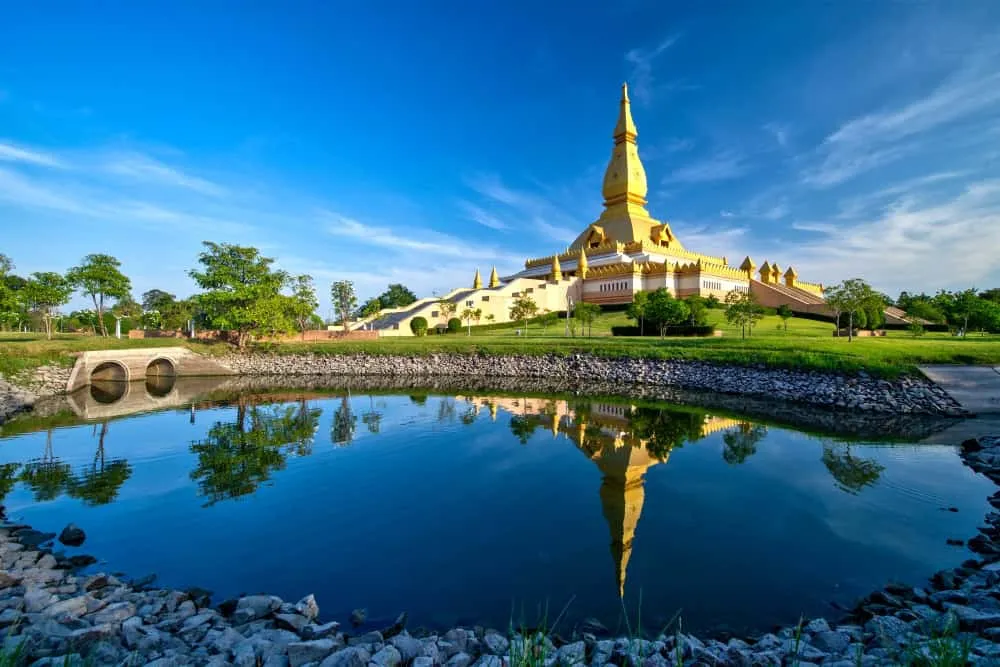
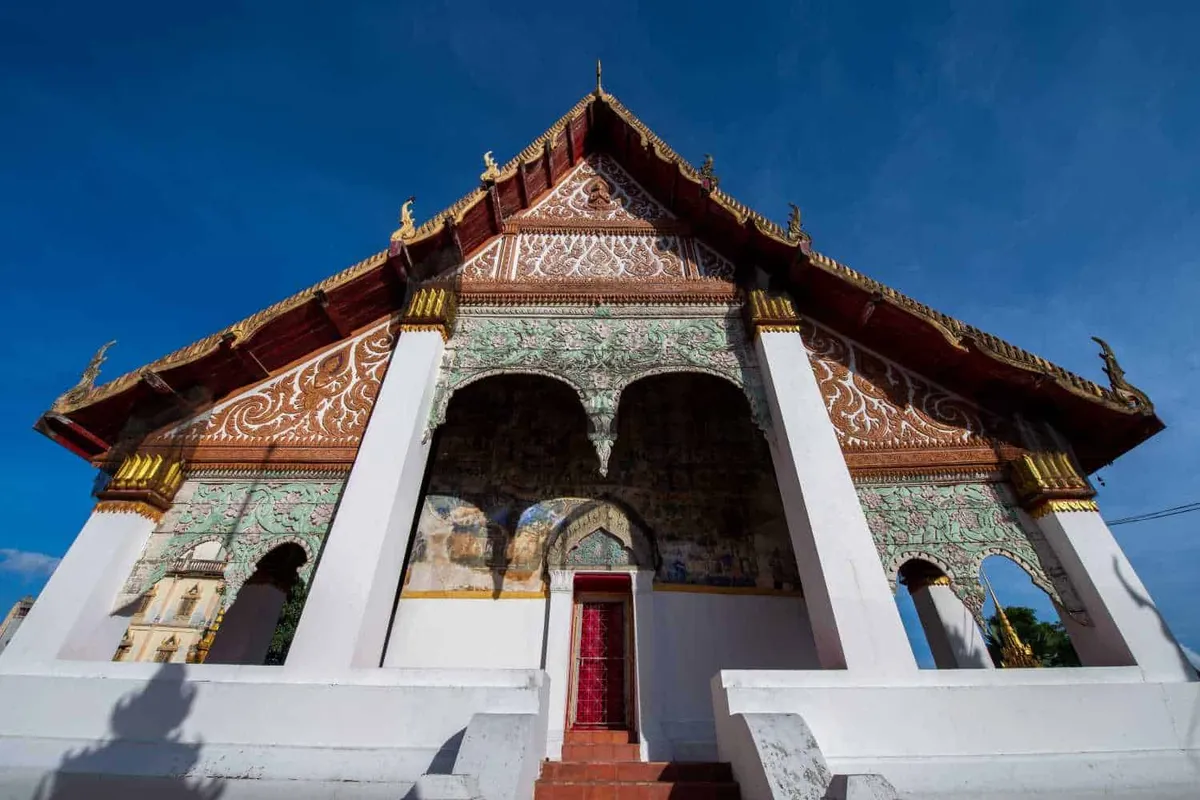
A gilded pagoda complex south of town worth the short drive — the grounds are well kept and the interior murals are more elaborate than the exterior suggests.

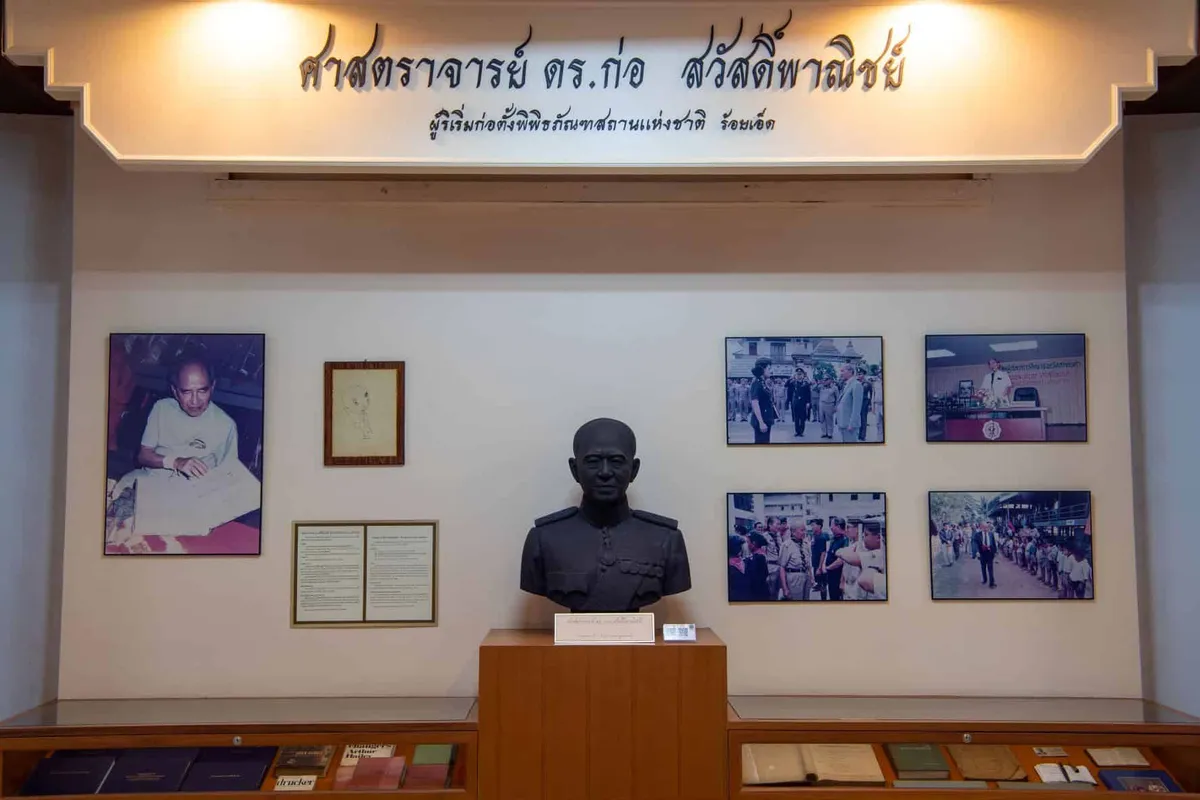
Roi Et National Museum
A solid overview of Isan prehistory and the Thung Kula Rong Hai rice plain — the Khmer artefacts and Bronze Age finds are the highlights. Give it an hour.
Get to Roi Et
Overnight buses from Bangkok's Mo Chit terminal take around 7 hours and drop you close to the town centre — the most practical way in from the capital.

eSIM for Thailand
Land with data already working and skip the airport SIM queue. We tested six plans — code THAIHOLIDAY saves 10%.

Travel insurance
Hiring a motorbike to reach the Khmer ruins is the norm out here — sort cover before you go and check the motorbike clause.
Wats, shrines & spiritual sites
Temples in Roi Et









Waterfalls, peaks, caves & parks
Nature & outdoors around Roi Et




Museums, history & heritage
Museums & culture in Roi Et





Things to do on the map
Tap a pin for details — 25 places in Roi Et plotted.
When to go
Nov–Feb Cool and dry — the most comfortable time for temple touring, the Bueng Phlan Chai lakefront, and day trips to the Khmer ruins. Temperatures drop pleasantly in the evenings, sometimes to 15°C.
Mar–Apr Hot season on the Khorat Plateau pushes past 35°C. Sightseeing is easier early morning. The Bun Bang Fai rocket festival builds up across the region in May–June, with Suwannaphum district hosting a celebrated parade.
May–Oct Isan monsoon, with the heaviest rain falling July through September. The Thung Kula Ronghai rice plain turns green and the Chi River basin fills — rural roads can flood. Temples and the city centre remain accessible.
About Roi Et
Last updated September 2026
Overview
Roi Et sits in the middle of Isan, Thailand’s northeastern plateau, and its name tells you something about its history. The Thai phrase means “one hundred and one” — a reference to the ancient walled city of Saket Nakhon, which once had eleven gates and eleven vassal settlements. By the time of the Thonburi Kingdom, the city had been abandoned and the gate count had grown in the retelling to 101. The province was re-established in 1777 by settlers who appealed to King Taksin, and the old name stuck.
Today, Roi Et town is built around Bueng Phlan Chai, a large artificial lake at the city centre. A golden walking Buddha stands on an island in the middle of it, connected to the shore by a causeway, and the city pillar shrine sits in the same parkland. Locals walk, run, and cycle the lake path in the early mornings — it’s a good-natured, functional place that doesn’t structure itself around tourism.
Outside town, the province has a lot to offer if you’re willing to drive. Ancient Khmer sanctuaries, a silk-weaving village with royal patronage, one of the region’s great temple complexes on a natural cliff, and the Thung Kula Ronghai plain — the source of Thailand’s best-regarded jasmine rice — all spread across the roughly 8,300 square kilometres of flat Chi River basin and low hills to the north.
Top Things to Do
Bueng Phlan Chai and the Walking Buddha is the natural first stop in the city. The lake at Roi Et’s centre is a proper urban park — boats to hire, a running track, playgrounds, and the small island at the heart of it all where a gilded walking Buddha stands among gardens and the city pillar shrine. It’s especially pleasant in the cool-season evenings when half the city seems to be out walking.
Wat Burapha Phiram holds Phra Phuttha Rattana Mongkhol Maha Munee — a standing Buddha begun in 1973 and completed in 1979, rising 59.2 metres, or 67.55 metres including its base. It is the tallest standing Buddha in Thailand. The scale becomes apparent as you approach across the temple grounds; the surrounding galleries and smaller chedis make the composition work as a whole, not just as a single oversized monument. Entry is free.
Roi Et Tower is a 101-metre observation structure opened in the early 2020s, designed in the form of a wot — the traditional Isan panpipe instrument — and the number 101 is deliberate. From the observation decks on floors 28 to 34, you get a 360-degree view of the city, the lake, and the flat rice-farming plains stretching to the horizon. Cultural exhibits on Isan heritage are installed throughout the interior.
Ku Ka Sing is the best-preserved Khmer temple complex in the province, about 30 km from the capital. Three prangs on a single laterite base, enclosed by a wall with gopura on four sides and a U-shaped moat beyond, dating to the late 11th century in the Baphoun style — the same architectural period as parts of Angkor Wat. It sees very few foreign visitors. Ku Phra Kona, closer to town (around 10 km northeast), is another 11th-century Khmer sanctuary with three brick prangs dedicated to Shiva; the restoration has been less faithful to the original, but the carvings and setting reward a visit. Prang Ku (Nong Ku Castle) is a third Khmer arogayasala — a hospice-temple from the 12th–13th centuries — with a main prang, library, enclosing wall, and a pond outside the perimeter.
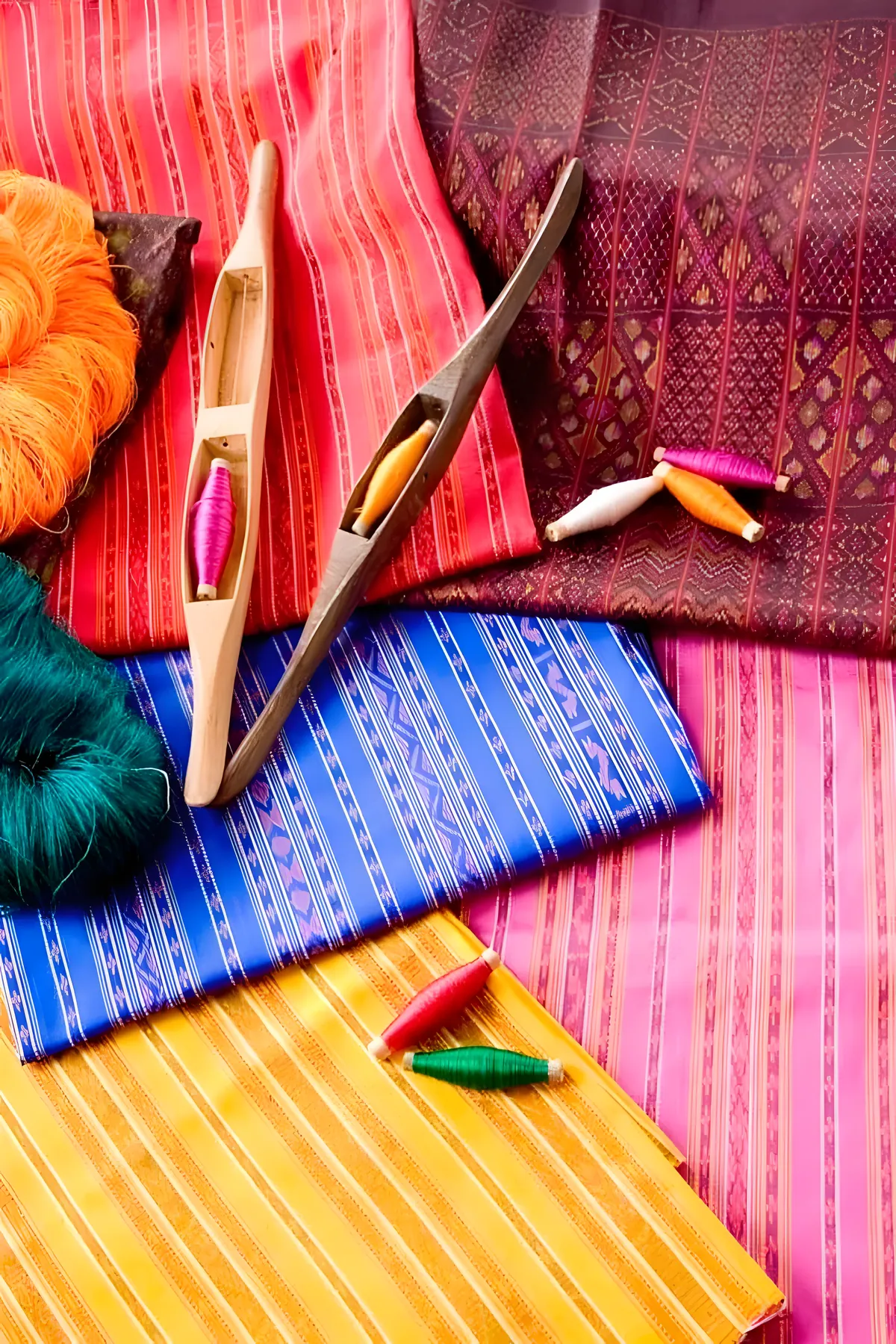
The Silk Weaving Village of Amphoe Na Pho is where families produce mudmi silk using traditional techniques, with support from the Royal Folk Arts and Craft Centre. Mudmi is the tie-dyed silk characteristic of Isan — the threads are resist-dyed before weaving, producing patterns in the fabric itself rather than printed on top. You can watch weaving in progress and buy direct from households at prices far below Bangkok.
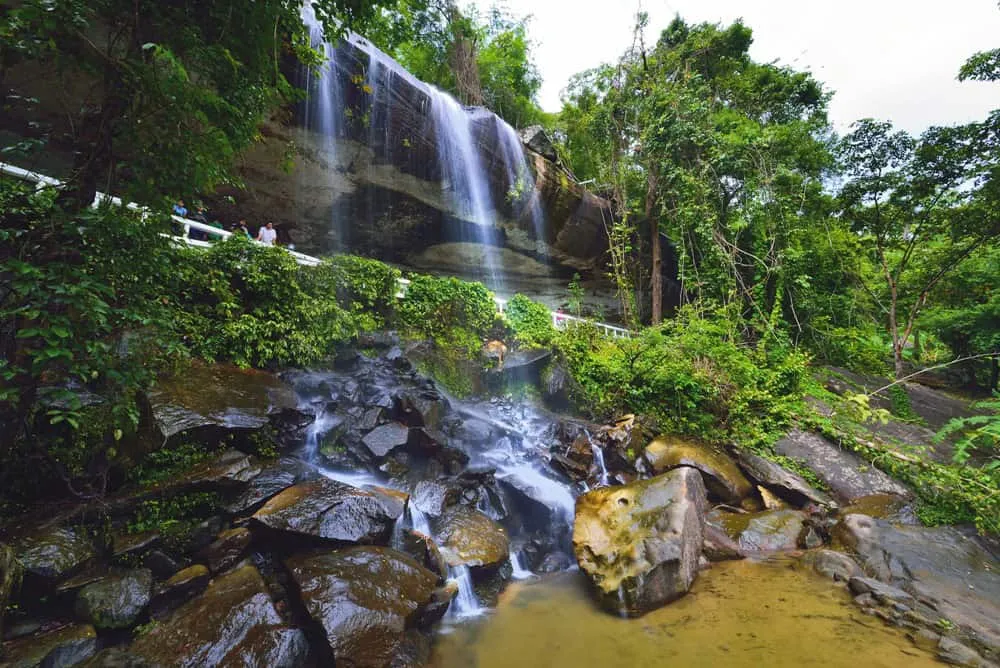
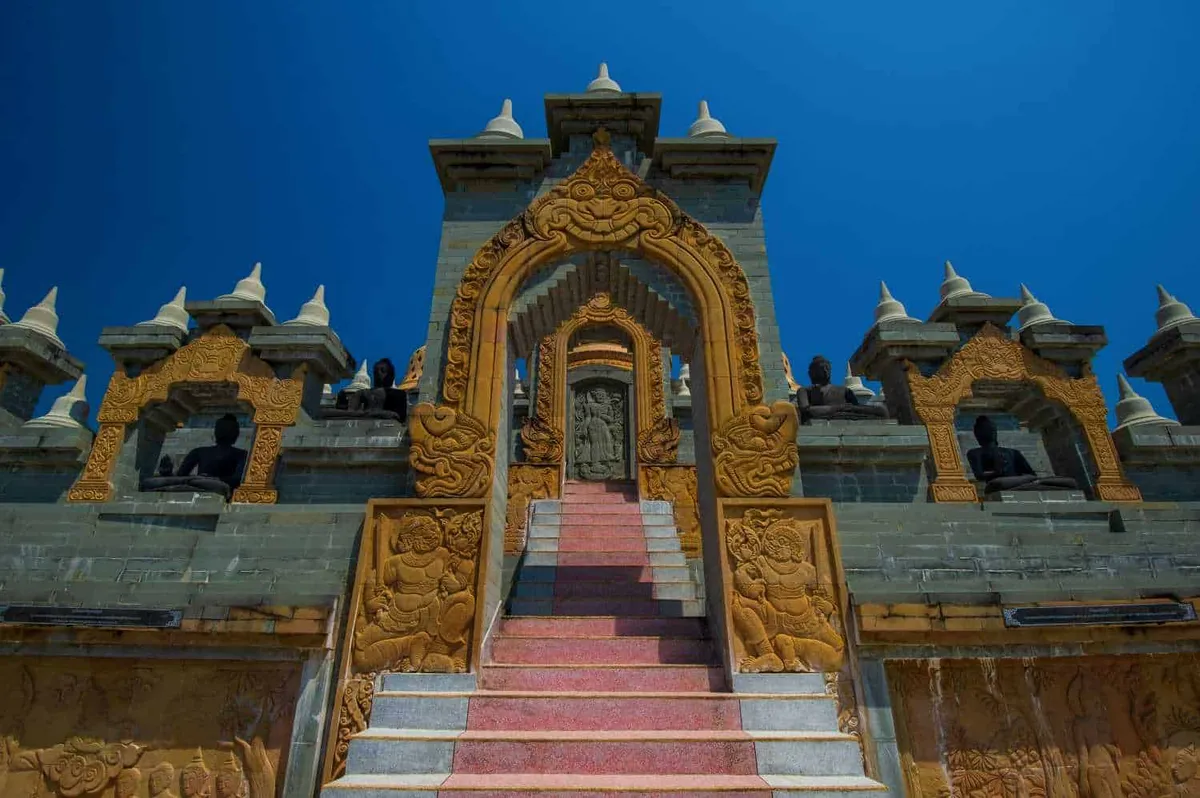
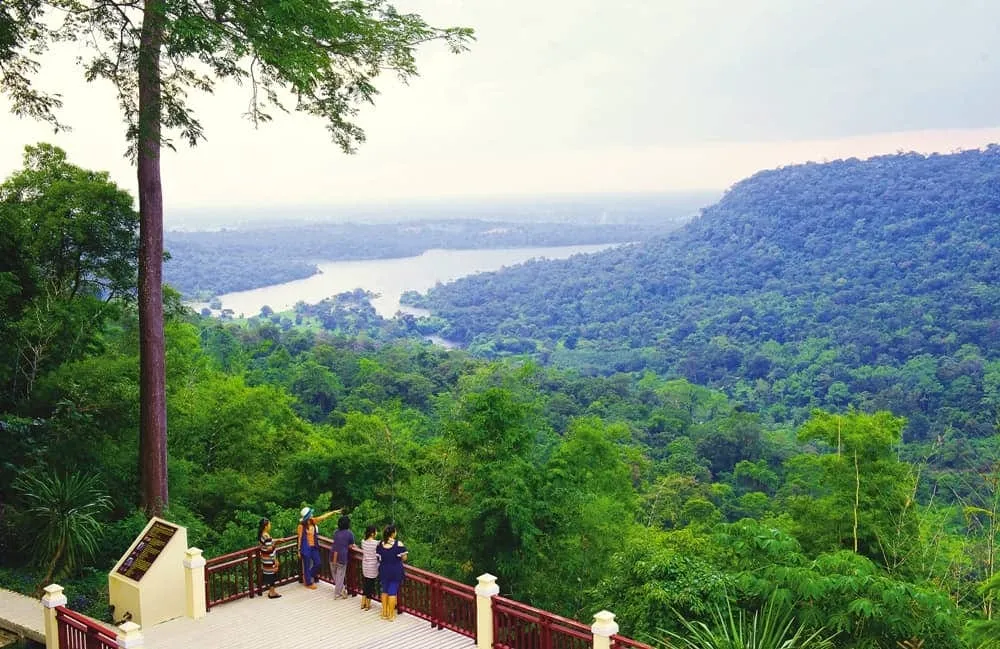
Pha Nam Yoi and Wat Pha Nam Thip Thep Prasit Wanaram is a temple-and-cliff complex in Nong Phok district, about 60 km from the city. A seasonal waterfall runs down the face of the cliff (Pha Mok Mi Wai — “Cliff where the Clouds Never Fade”), and the temple above it includes the Phra Maha Chedi Chai Mongkhon — a white-and-gold chedi 109 metres tall including its spire, one of the largest in Thailand. The cliff edge is a sunset viewpoint. A shuttle bus runs from the car park to the temple.
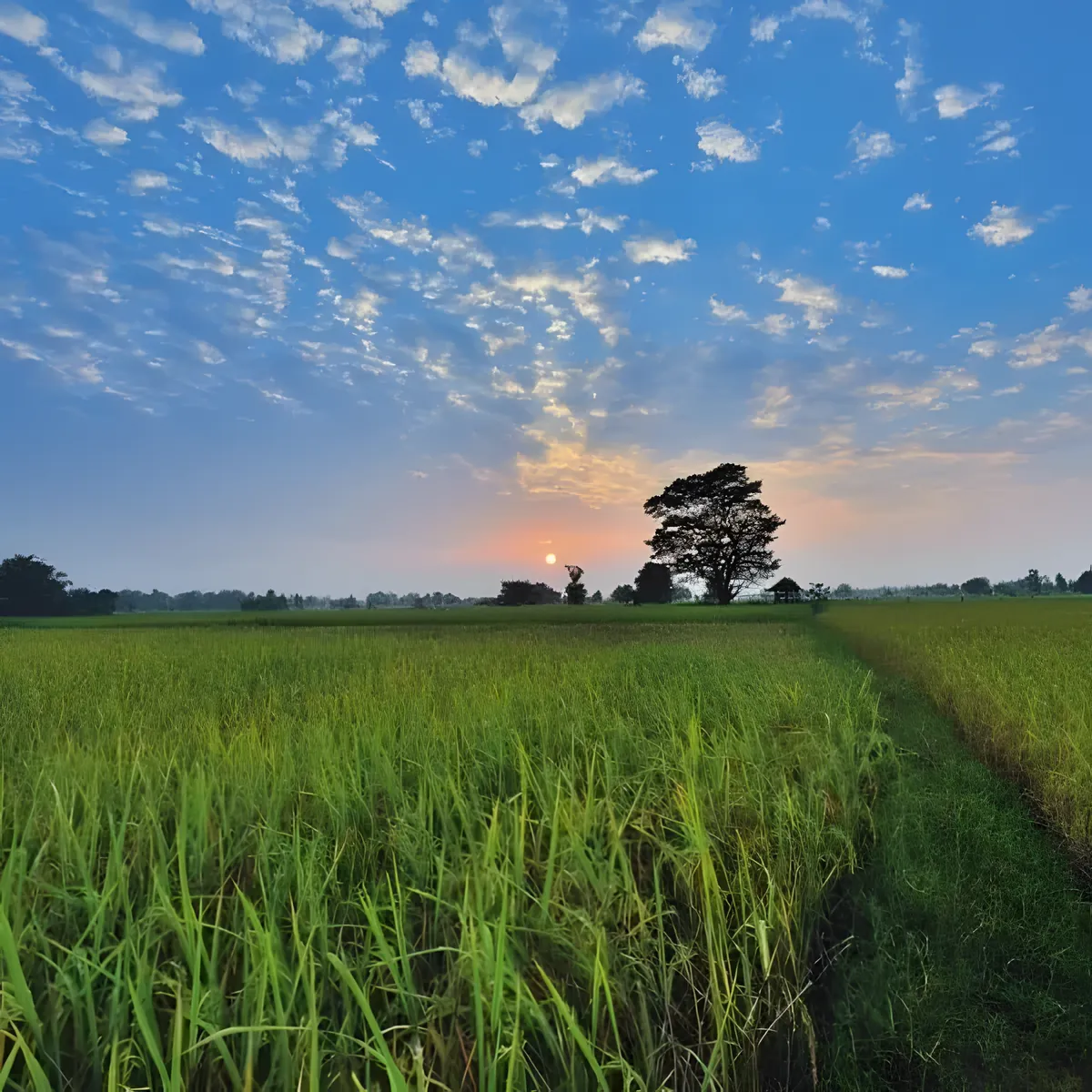
The Thung Kula Ronghai plain covers most of south and central Roi Et — a flat, sodium-rich basin where Khao Dawk Mali 105 jasmine rice has been grown for generations. The variety holds GI protection — registered in Thailand since 2006, with EU recognition following in the 2010s. Driving across it in harvest season (October–December) gives a sense of the scale: paddies to the horizon in every direction, with rice mills operating round the clock. The town of Suwannaphum, at the plain’s northern edge, is a base for exploring this part of the province and hosts its own celebrated Bun Bang Fai rocket festival in early June.
Where to Stay
Roi Et city has a reasonable spread of mid-range hotels, mostly within walking distance of the lake. The HOP INN is a reliable budget-friendly option with consistent standards across the Thai chain. The town is compact enough that location matters less than in larger cities — almost everything you’ll want to visit in the centre is within a short ride of any hotel in the downtown area.
There are no resort complexes or international chains here. For the Khmer ruin day trips and the Pha Nam Yoi visit, Roi Et town is the natural base — both circuits can be done as day trips with an early start.
Getting There
The fastest option from Bangkok is the Thai AirAsia daily flight from Don Mueang Airport to Roi Et Airport (IATA: ROI) — roughly one hour in the air. This makes Roi Et feasible as a long weekend destination from the capital without the seven-to-eight-hour bus journey. There is no train service to Roi Et; the nearest stations are at Surin (south) and Khon Kaen (north), both requiring an onward bus of around two hours.
Within the province, a hired car or motorbike is the only practical way to reach the Khmer ruins, the silk village, and the Pha Nam Yoi cliff complex. The city centre and Bueng Phlan Chai are manageable on foot or by songthaew.
Best Time to Visit
Roi Et follows the standard Isan pattern: wet season May through October, cool dry season November through February, hot season March through April. The cool season is the clear best window — comfortable for outdoor sightseeing, pleasant evenings at the lake, and good conditions for driving around the province. The Khmer ruins at Ku Ka Sing are especially rewarding in the early-morning cool of January or February.
The hot season is manageable if you time sightseeing for before 10am and after 4pm. May and June bring the Bun Bang Fai rocket festivals across the region — a pre-monsoon rain-calling tradition rooted in Isan’s agrarian calendar. Suwannaphum’s festival, held on the first weekend of June, is considered one of the most impressive for its parade and decoration.
During the wet season, the Thung Kula Ronghai plain turns vivid green as planting begins, and the light in the early morning over the paddies is striking. But rural roads can flood in September and October, so check conditions before attempting the outer circuits.
Frequently Asked Questions about Roi Et
How do I get to Roi Et from Bangkok?
What is the best time of year to visit Roi Et?
How long do you need in Roi Et?
How do I get around Roi Et province?
What makes Roi Et jasmine rice so highly regarded?
Spotted something out of date or incorrect? Let us know
Plan your
Roi Et trip