



Sema ancient remains
โบราณสถานเมืองเสมา
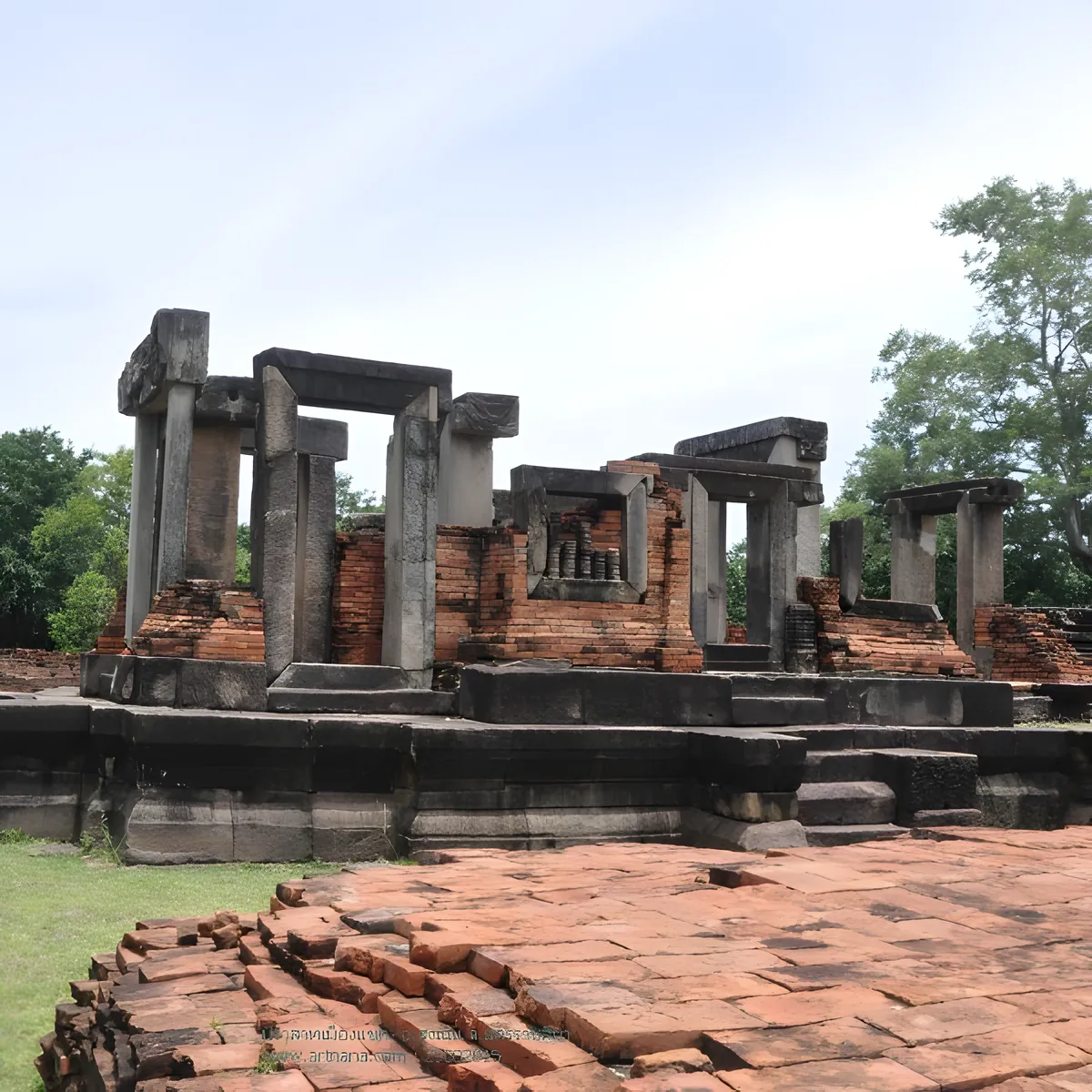
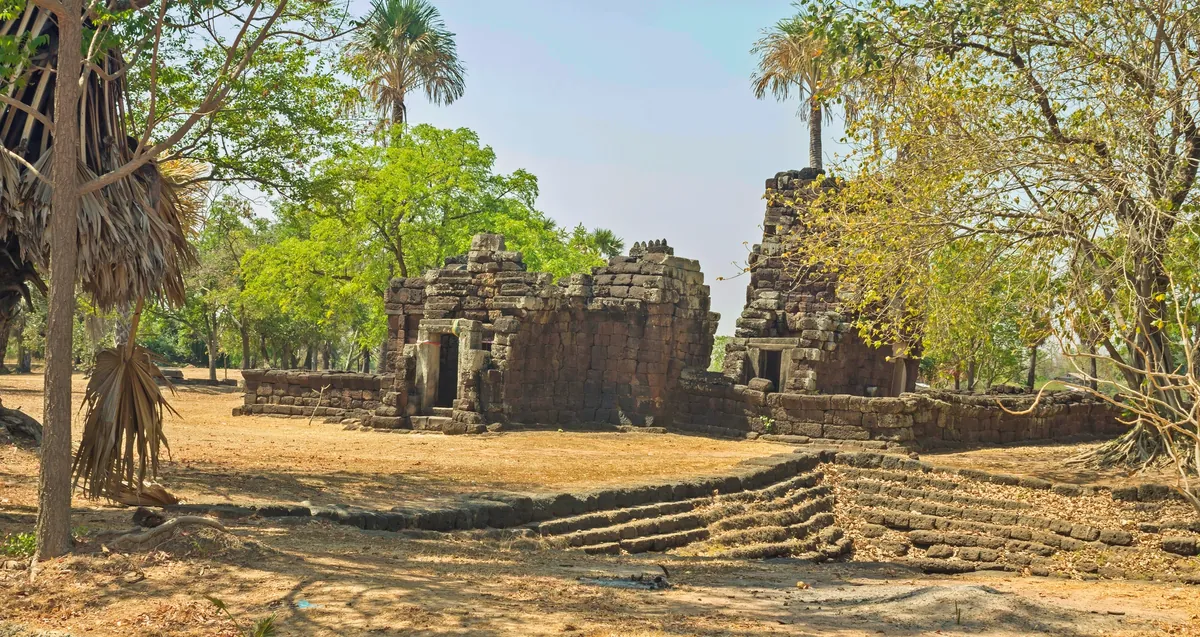
Sandstone boundary stones and brick ruins mark the site of Mueang Sema, a moated ancient city about 5 km north of Sung Noen, occupied from the Dvaravati period through the Khmer era. What survives is modest by the standards of Thailand’s big archaeological parks — foundations of stupas and a viharn, sections of restored brick sanctuary, and dozens of sandstone sema scattered across the grounds, some still upright, many toppled — but it’s a genuine window into how a northeastern Dvaravati community marked its monastery grounds roughly 1,200-1,500 years ago.
The sema themselves are the reason archaeologists rate this site: sandstone slabs, some standing waist-high, carved with lotus-petal motifs and geometric patterns that once ringed an ordination hall’s consecrated boundary. Mueang Sema’s location — deep in the Dvaravati cultural sphere that spread through the Mun River basin — makes its collection one of the more studied groupings of this kind in the northeast, alongside fragments of Buddha images and stone dharmacakra (wheel of the law) carvings recovered from the same excavations. A moat and earthen rampart, oval rather than rectangular, still trace the old city’s perimeter around the ruins.
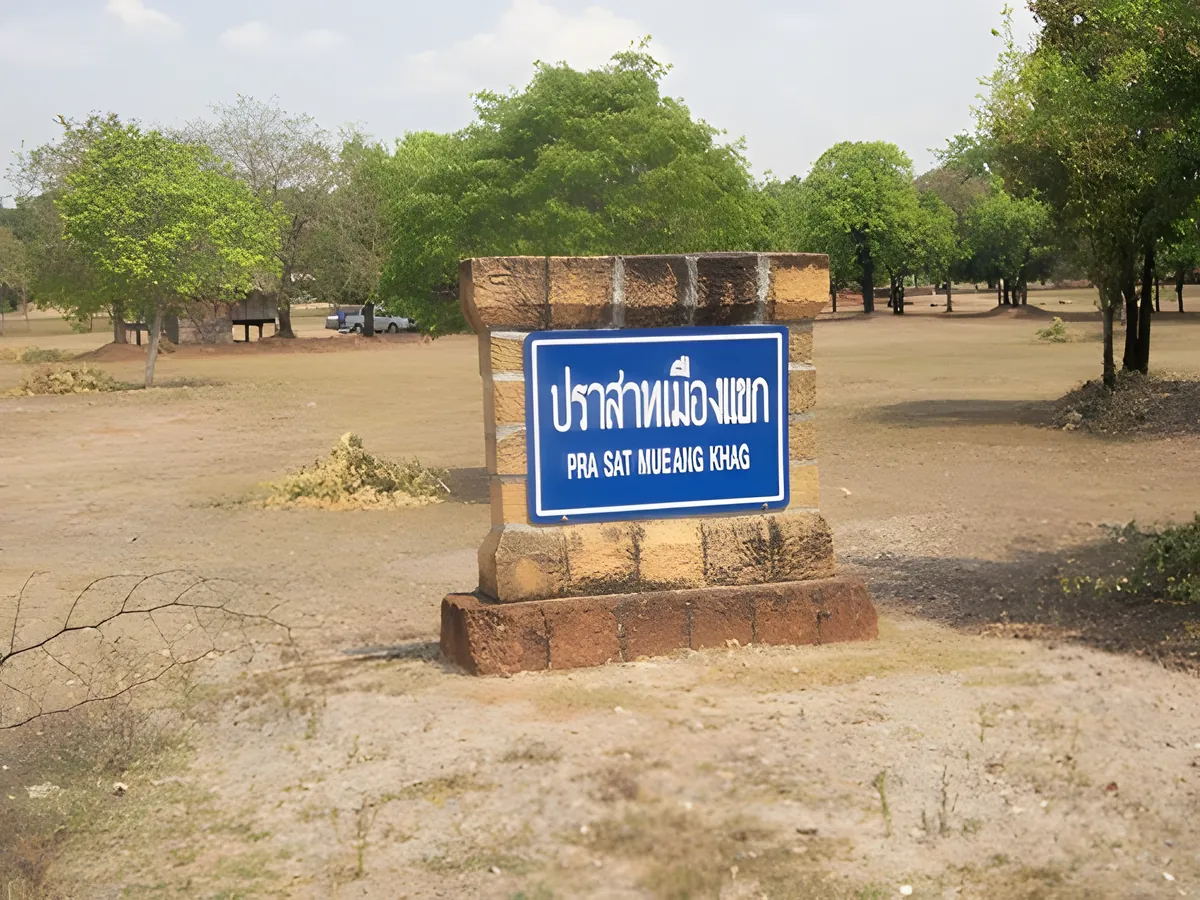
Almost nobody visits. Rice fields run up to the site boundary and farmers pass on motorbikes along the tracks; you’re likely to have the ruins to yourself outside any organised tour. Signage explaining the layout exists but has weathered badly in places, so the story is easier to follow with some context read beforehand than picked up on-site.
Insider Tip: Combine this with Wat Dhammachak Semaram a few minutes away in the same Sema subdistrict — home to one of Thailand’s oldest reclining Buddha figures — for a fuller half-day of Dvaravati-era Sung Noen without much extra driving.
Watch out: There’s no visitor centre, shade, or water on site. Bring your own, and expect uneven ground underfoot around the toppled stones.
- Entry: Free, daily 09:00-16:00
- What survives: Sandstone sema (boundary stones), stupa/viharn foundations, restored brick sanctuary remains, a moat and rampart outline
- Period: Dvaravati (c. 6th-11th century) through Khmer era
- Location: Sema subdistrict, about 5 km north of Sung Noen town, Nakhon Ratchasima
- Getting there: Car or motorcycle from Sung Noen; no public transport to the site
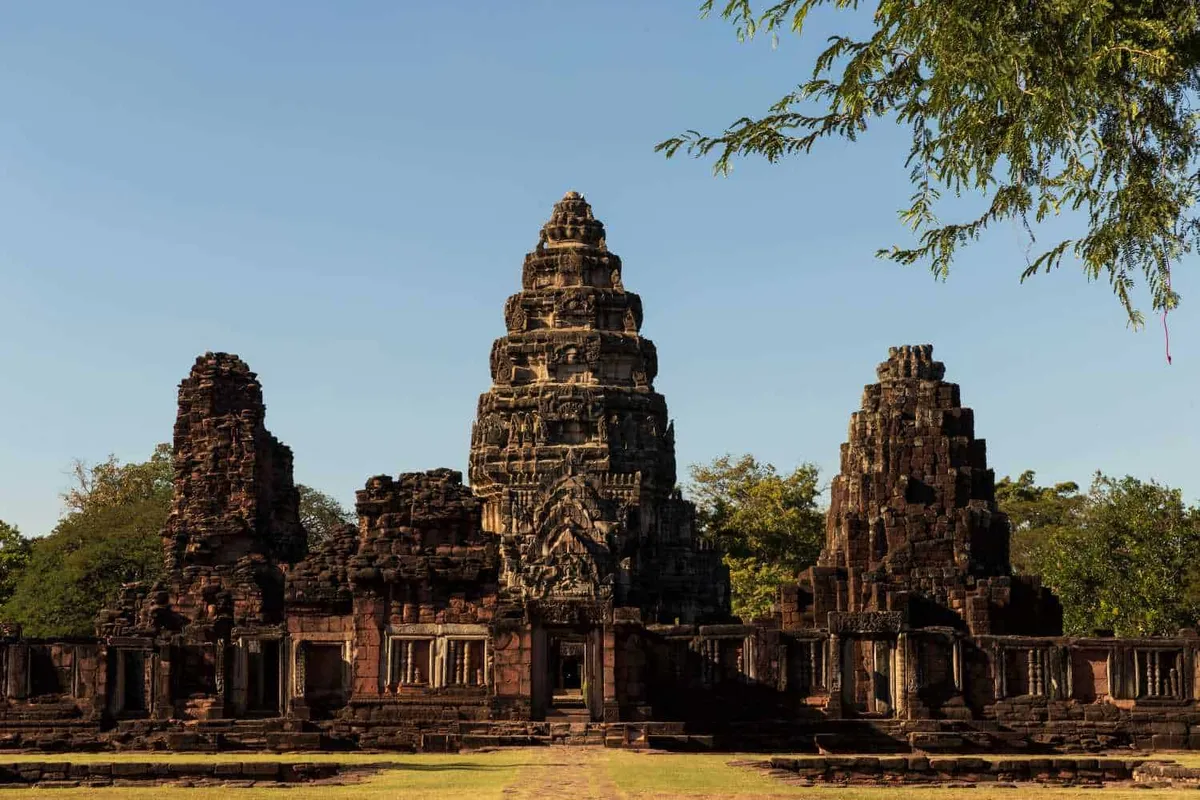
For a bigger, better-preserved Khmer site in the same province, Phimai Historical Park is roughly an hour’s drive northeast. The Korat visit guide covers the province’s wider spread of temples and historical parks.
Location & Directions
Sung Noen, Nakhon Ratchasima
Korat (Nakhon Ratchasima), Thailand
Show your taxi or Grab driver
โบราณสถานเมืองเสมา
Frequently Asked Questions
What exactly is Sema ancient remains — a temple or a lost city?
What is a sema stone, and why does this site have so many?
Is this the same site as the giant reclining Buddha nearby?
Is there an entry fee?
How do I get there from Sung Noen or Korat?
Spotted something out of date or incorrect? Let us know
Stay Near Sema ancient remains
Live prices for places closest to Sema ancient remains — tap a pin to compare.