
Ramkhamhaeng National Museum
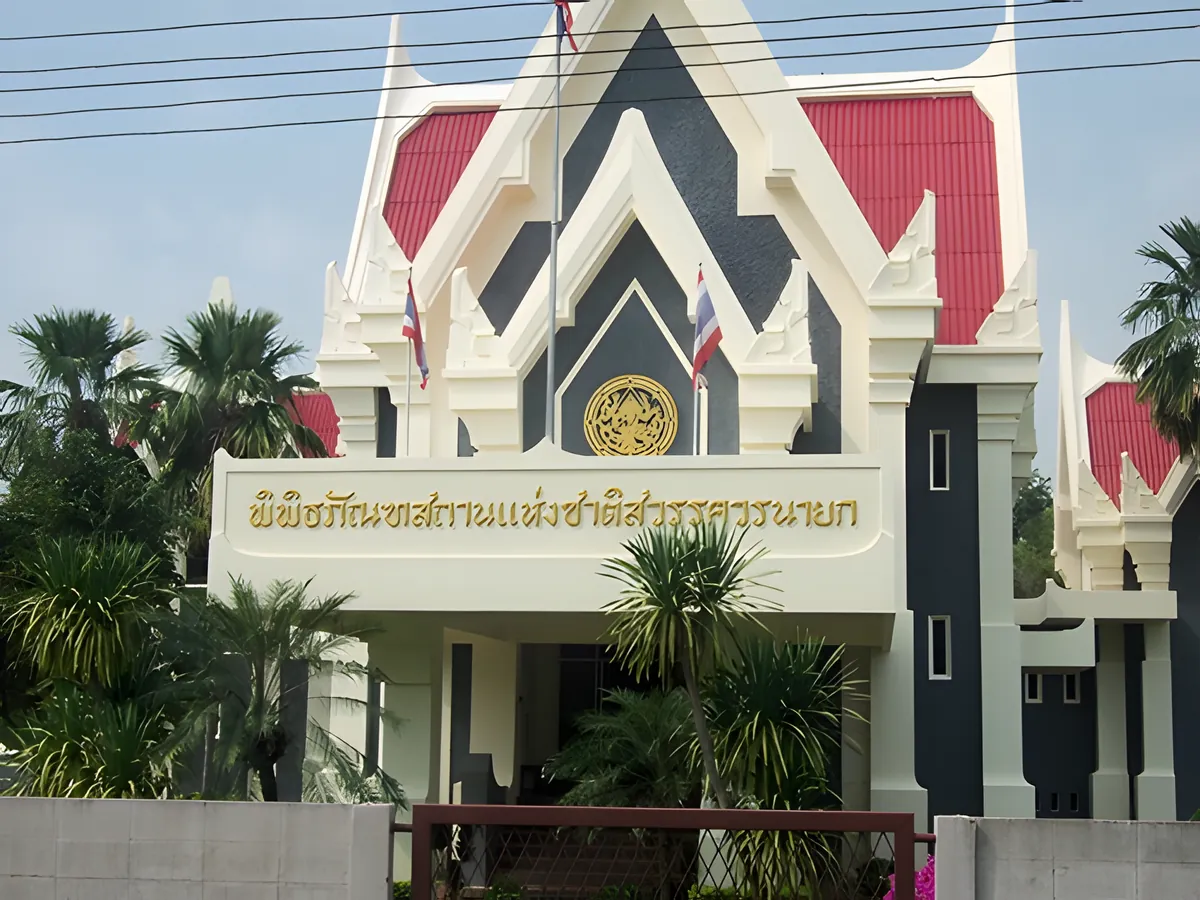
พิพิธภัณฑสถานแห่งชาติรามคำแหง
The Ramkhamhaeng National Museum sits right at the entrance to Sukhothai Historical Park, and its single most famous exhibit is a cast of the Ramkhamhaeng Inscription — the stone credited as the earliest known example of Thai script. The original stele isn’t here: it was found in 1833 by the monk who later became King Mongkut (Rama IV), on a pilgrimage through Sukhothai’s old palace mound, and it’s now kept at the National Museum Bangkok. What the Sukhothai museum displays is a faithful replica, alongside the archaeological finds that never left the region. Entry costs 200 THB for foreign visitors and 30 THB for Thai nationals (students, monks, and other religious practitioners in uniform enter free), daily 09:00-16:00, with no weekly closure day.
The most striking original piece in the collection is the bronze Walking Buddha — the defining innovation of Sukhothai-era sculpture. Earlier Thai Buddha images stood rigid and frontal; Sukhothai artisans broke that convention, casting a figure mid-stride with the left foot forward, the right heel lifting, and the torso leaning back in a way that reads as genuinely in motion rather than posed. The oval face, flame-shaped crown ornament, and faint smile are the style’s signature, repeated across the smaller Buddha images filling the surrounding cases.
Beyond the Buddhist art, the museum’s holdings trace contact well outside the Sukhothai kingdom’s own borders. Bronze kettledrums in the Dong Son style — found across mainland Southeast Asia — point to trade and cultural exchange reaching back to around 500 BCE, long before Sukhothai existed as a polity. Cases of Chinese ceramics from the Yuan, Ming, and Qing dynasties document the kingdom’s trading relationships with China, alongside coinage, terracotta water pipes recovered from the old city’s infrastructure, and stone images of Hindu deities like Shiva and Vishnu that show the era’s religious culture wasn’t purely Buddhist.
Insider Tip: Visit the museum before walking the historical park rather than after — the inscription replica and the timeline of Sukhothai art give real context to the ruins, and you’ll recognise the Walking Buddha pose repeated in stone across several of the park’s temple platforms once you’ve seen the bronze original here first.
Watch out: Photography rules vary by gallery — some cases, particularly around the inscription, restrict flash or photography altogether. Check the signage before shooting rather than assuming a blanket policy.
- Entry fee: 200 THB (foreign visitors), 30 THB (Thai nationals); free for students/monks in uniform
- Hours: Daily 09:00-16:00, no weekly closure
- Signature piece: Replica of the Ramkhamhaeng Inscription (original held at the National Museum Bangkok)
- Signature original: Bronze Walking Buddha, the defining pose of Sukhothai-era sculpture
- Location: At the entrance to Sukhothai Historical Park, walking distance from the main temple ruins
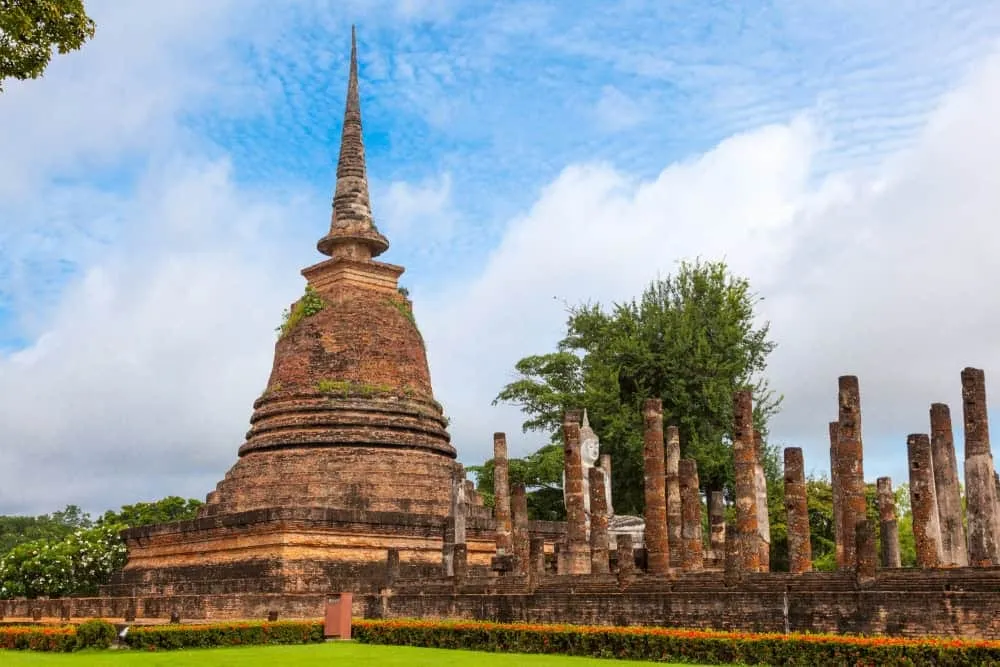
The museum sits within walking distance of Wat Sa Phan Hin and the historical park’s other central-zone temples, making it an easy first or last stop on a day spent exploring Sukhothai’s ruins. Air-conditioned galleries also make it a reasonable midday break from the heat between temple visits — bring comfortable shoes regardless, since floors can be slick in wet-weather months.
Location & Directions
Ramkhamhaeng National Museum Jarodwitheethong Road Muang-Kao Sub-District Muang Sukhothai District Sukhothai Province
Sukhothai, Thailand
Show your taxi or Grab driver
พิพิธภัณฑสถานแห่งชาติรามคำแหง
Frequently Asked Questions
Is the Ramkhamhaeng Inscription on display here the original?
How much does entry cost?
What are the opening hours?
What's the single best original artifact to see?
Should I visit before or after the historical park ruins?
Is it walkable from the park's main temples?
Spotted something out of date or incorrect? Let us know
Stay Near Ramkhamhaeng National Museum
Live prices for places closest to Ramkhamhaeng National Museum — tap a pin to compare.