




The First Rubber Tree In Thailand
ยางพาราต้นแรกของประเทศไทย
A roadside marker in Kantang town, Trang, commemorates the spot where Thailand’s rubber industry began. In 1899, Phraya Rasadanupradit Mahisonphakdi (Khaw Sim Bee na Ranong) — the governor credited with developing Trang province — planted seedlings brought from British Malaya, starting a crop that would eventually make Thailand the world’s largest rubber exporter. Entry is free, and the site sits in a quiet residential corner of town rather than on any tourist circuit.
Informational plaques around the marker explain the rubber trade’s spread through the south after that first planting, and a few younger rubber trees grow nearby as a living reminder of the original stock. Visitor accounts over the years note that the tree itself has been cut and regrown more than once since 1899, so what you’re seeing is more a preserved planting site than an untouched century-old trunk — worth knowing before you go in expecting a dramatic old-growth specimen.
Insider Tip: Combine it with the Phraya Ratsadanupradit Mahison Phakdi Museum and monument, both a short drive away in Kantang — together they tell the fuller story of how one governor’s decision reshaped the regional economy, which the tree alone can’t convey.
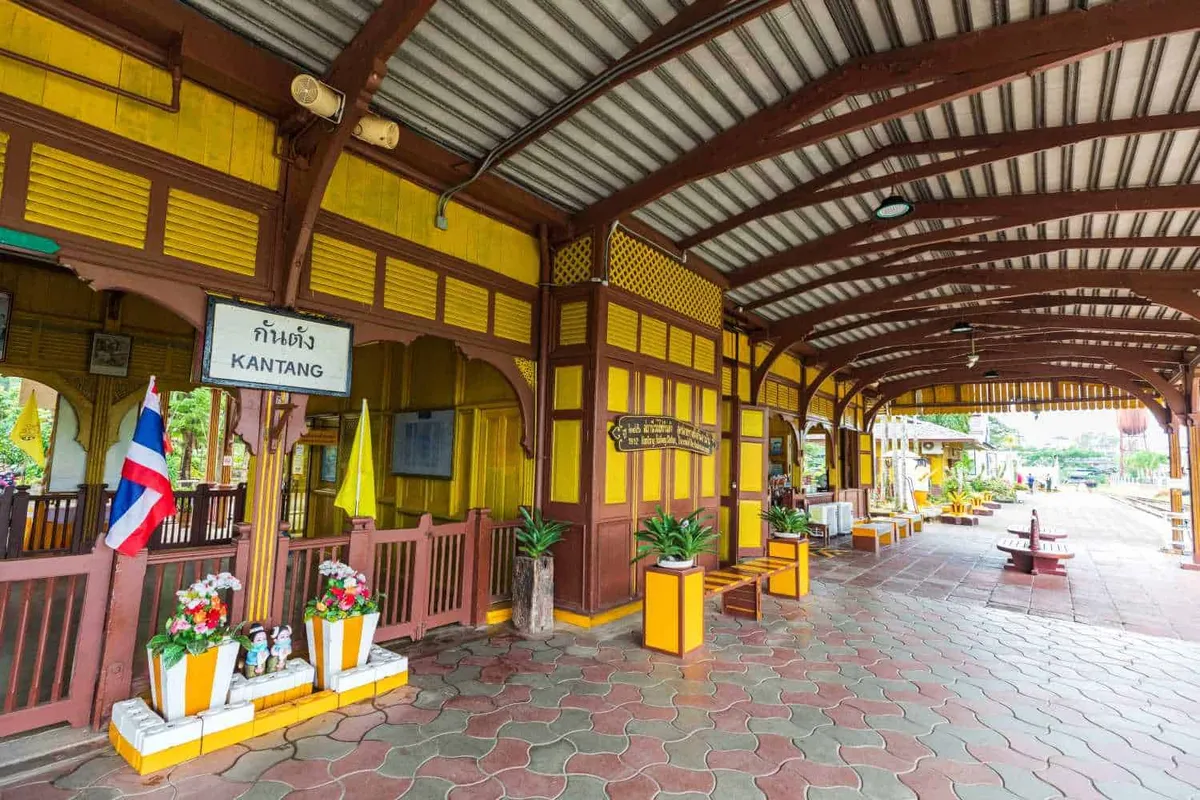
The stop itself takes ten to fifteen minutes. It’s a quiet, low-key piece of economic history rather than a visual highlight, and works best as one stop on a wider look at Kantang’s colonial-era landmarks — the old train station included.
- Entry fee: Free
- Planted: 1899, by Phraya Rasadanupradit Mahisonphakdi
- Origin: Seedlings brought from British Malaya
- Getting there: Kantang town, Trang — a short walk from the train station
- Time needed: 10-15 minutes
For the wider region, see the Trang destination guide. Two related Kantang stops: the Phraya Ratsadanupradit Mahison Phakdi Museum and his monument, both covering the governor’s broader legacy.
Location & Directions
Kantang, Trang
Trang, Thailand
Show your taxi or Grab driver
ยางพาราต้นแรกของประเทศไทย
Within Walking Distance


Frequently Asked Questions
Who planted the first rubber tree in Thailand?
Is the tree still standing the original?
Is there an entry fee?
What else is nearby connected to this history?
How much time should I set aside?
Spotted something out of date or incorrect? Let us know
Stay Near The First Rubber Tree In Thailand
Compare places to stay in Trang, or open the map for options closest to the attraction.