




Phra Phutthabat Wern Pla (Buddha Footprint in the Mekong)
รอยพระพุทธบาทเวินปลา
A rock outcrop in the middle of the Mekong River — not a man-made replica — is what draws visitors to Wat Phra Phutthabat Wern Pla in Tha Uthen district. Two footprint-shaped impressions mark the stone: the upper roughly 55cm wide and 2.05m long, the lower a flat slab with a round hollow and five toe marks. Local Buddhist tradition reveres them as the Buddha’s own footprint, and the site has drawn pilgrims from both sides of the Mekong for generations.
The catch: the rock sits roughly 100 metres offshore, and it’s underwater for most of the year. It only breaks the surface in the dry season, typically February to April, when the Mekong’s level drops enough to expose the sandbar it sits on. Outside that window — including most of the rainy season, June to October — there’s no footprint to see, just river. In recent low-water years the rock has occasionally surfaced earlier or later than usual, but there’s no fixed date; ask locally or check with the temple before making a special trip.
The legend behind the site ties into the founding story of Phra That Phanom, Isan’s most revered stupa a short drive north. According to the Urangkhathat chronicle, a naga king and a fish spirit — both devoted to the Buddha’s teaching — asked him to leave a footprint on this rock as a lasting object of veneration for the region. Whether or not you take the legend literally, the rock is a genuine natural formation, and the reverence around it is centuries old rather than a modern tourist invention.
Even when the footprint is submerged, the riverside temple grounds stay open daily, 08:30–16:30, free of charge — there’s a shrine pavilion facing the river where people pray toward the spot regardless of water level. During the dry-season window when the rock is exposed, expect boats ferrying pilgrims out to it and a noticeably busier temple than the rest of the year.
Insider Tip: Time a visit for the driest weeks of the dry season — March is usually the safest bet — and confirm locally that the water’s low enough. Turning up in July expecting to see a footprint in the middle of a full river is the single most common disappointment here.
Watch out: Access to the rock depends entirely on river level and local boat operators; there’s no guaranteed public ferry schedule, so this isn’t a site you can plan down to the hour from a distance.
- Entry: Free
- Temple hours: Daily 08:30–16:30
- Footprint visible: Typically February–April (dry season); submerged the rest of the year
- Location: Ban Wern Pla, Wern Phrabat subdistrict, Tha Uthen district, Nakhon Phanom
- Legend: Tied to the Urangkhathat chronicle behind nearby Phra That Phanom
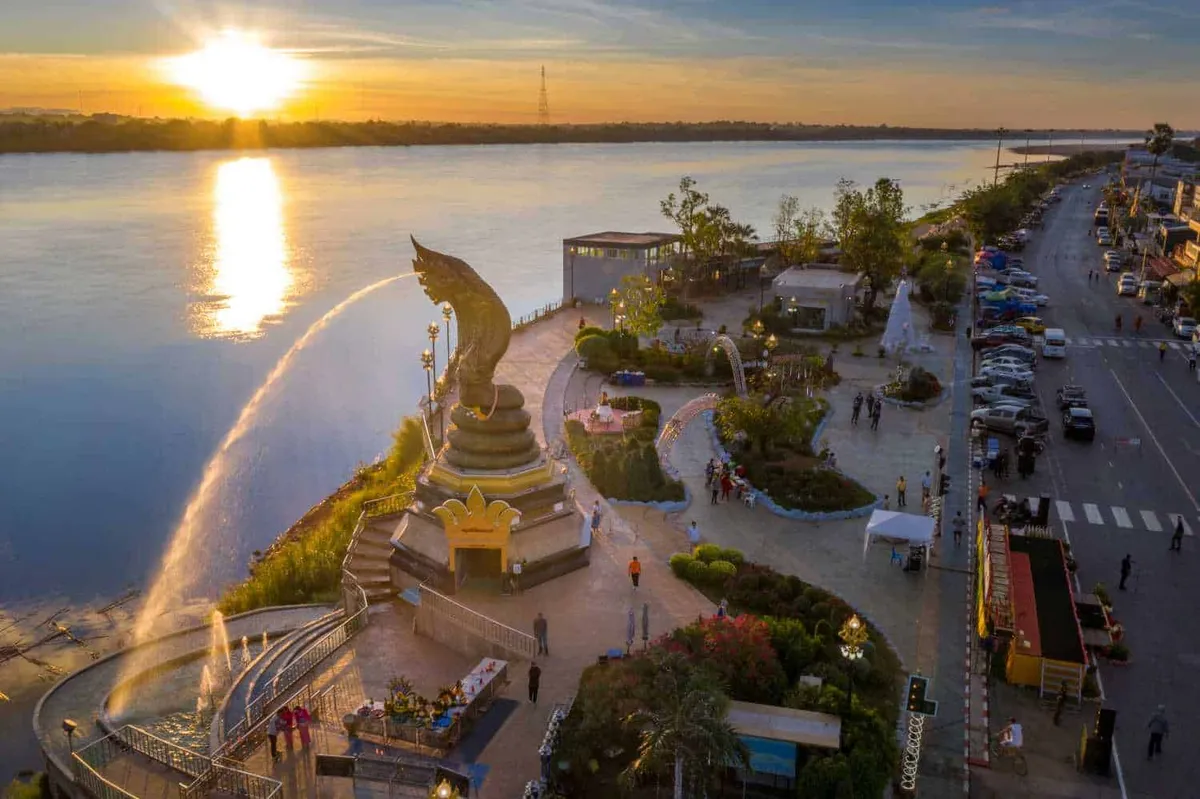
Tha Uthen district sits along the Mekong in Nakhon Phanom province, and most visitors combine the footprint with Phra That Phanom and the wider river towns rather than making it a single-stop trip.
Location & Directions
Tha Uthen, Nakhon Phanom
Nakhon Phanom, Thailand
Show your taxi or Grab driver
รอยพระพุทธบาทเวินปลา
Within Walking Distance

Frequently Asked Questions
Is this really the Buddha's footprint, or a replica?
When can I actually see the footprint?
Is there an entry fee?
How do I get out to the rock when it's exposed?
What's nearby?
Spotted something out of date or incorrect? Let us know
Stay Near Phra Phutthabat Wern Pla (Buddha Footprint in the Mekong)
Compare places to stay in Nakhon Phanom, or open the map for options closest to the attraction.