




Wat Bang Krabao
ค้างคาวแม่ไก่วัดบางกระเบา
Wat Bang Krabao in Prachin Buri’s Ban Sang district is a working monastery best known for what lives in its trees, not what’s inside its buildings: a colony of Lyle’s flying foxes (Pteropus lylei), Thailand’s largest bat species, roosting in the tall trees around the temple grounds. It’s one of roughly a dozen temple sites across central Thailand where these bats have taken shelter for generations, protected by the Buddhist tradition against taking life.
Hundreds of bats hang upside down from the canopy in tight clusters, wings folded, with a constant low soundtrack of screeching and the occasional burst of flapping as individuals resettle. Dawn and dusk are the most active windows. The colony stirs as the light changes, and at dusk the bats lift off in loose streams to forage for fruit and nectar overnight, returning before sunrise. May through July tends to bring the fullest trees, when local breeding activity peaks. Lyle’s flying fox is IUCN-listed as vulnerable, with populations down an estimated 30-35% over the past 15 years mostly from habitat loss elsewhere, which makes protected roosts like this one, inside a temple compound where nothing disturbs them, genuinely important to the species, not just a curiosity for visitors.
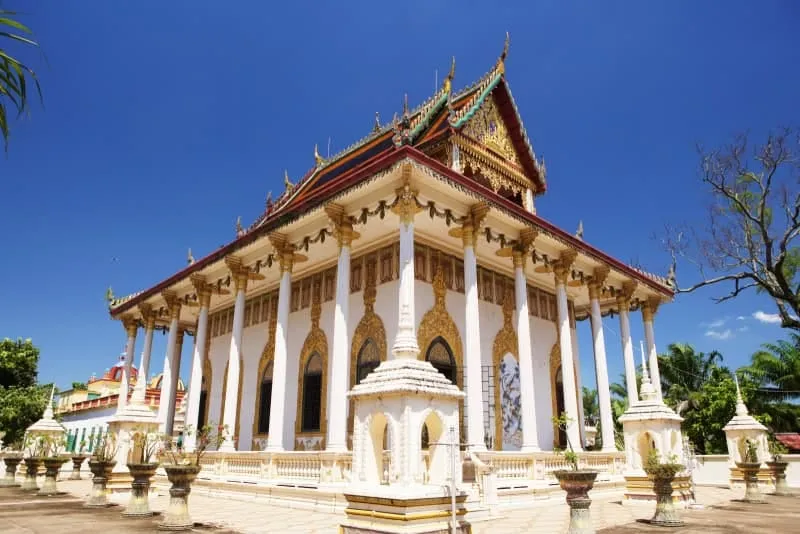
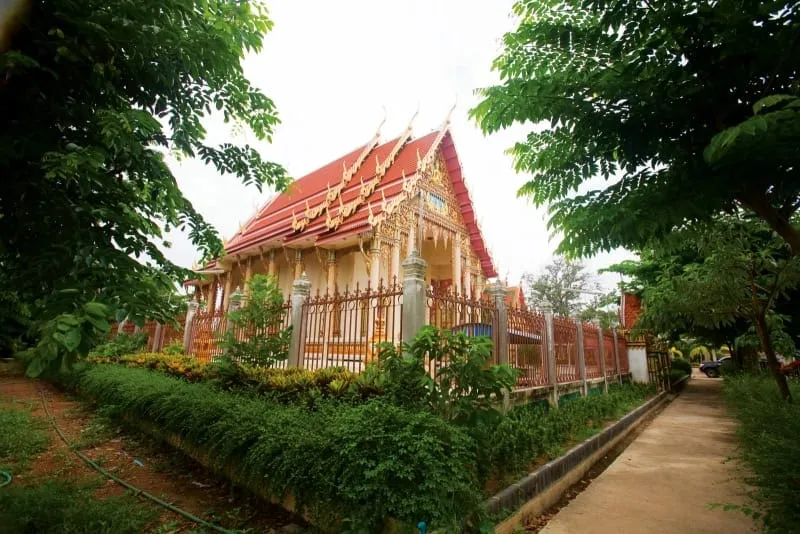
The temple itself functions as an ordinary neighbourhood monastery around the bat trees: a working ordination hall, resident monks, and the usual rhythm of morning and evening chanting. It isn’t set up as a wildlife-viewing attraction with platforms or signage. You look up from the temple grounds the same way local devotees do on their way to make merit.
Insider Tip: Stand upwind and off to the side rather than directly underneath the roost trees. Droppings fall constantly, and the smell is stronger directly below the colony.
Watch out: These are wild animals in a working temple, not a managed sanctuary. Don’t use flash photography or throw anything to try to get the bats moving; both stress the colony and are disrespectful in an active place of worship.
Entry is free and the grounds are open daily from around 06:00 to 18:00. Dress modestly (covered shoulders and knees) as you would at any Thai temple, and keep noise down near the ordination hall if chanting is underway. It’s a short drive off the Ban Sang–Bang Taen road in Bang Krabao subdistrict, with no public transport directly to the gate: a car, motorbike, or taxi from Prachin Buri town is the practical way in.
- What lives here: A colony of Lyle’s flying foxes (Pteropus lylei), Thailand’s largest bat species
- Best viewing: Dawn and dusk; May–July for peak colony activity
- Entry fee: Free
- Hours: Daily 06:00–18:00
- Conservation status: IUCN Vulnerable, one of roughly a dozen protected temple roosts in central Thailand
Location & Directions
Moo 6 Ban Sang-Bang Taen Road
Prachin Buri, Thailand
Show your taxi or Grab driver
ค้างคาวแม่ไก่วัดบางกระเบา
Frequently Asked Questions
What kind of bats live at Wat Bang Krabao?
When is the best time to see the bats?
Is it safe to visit?
Is there an entrance fee?
Why are the bats protected here?
Spotted something out of date or incorrect? Let us know
Stay Near Wat Bang Krabao
Live prices for places closest to Wat Bang Krabao: tap a pin to compare.