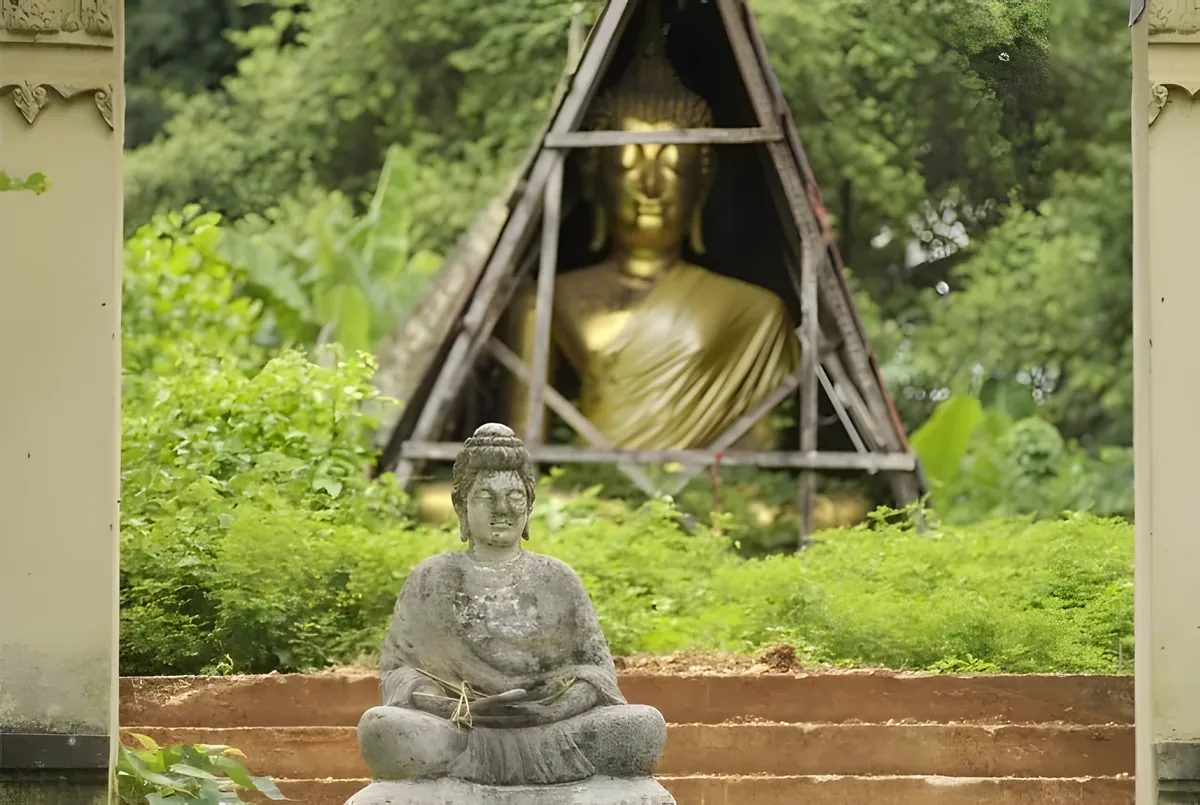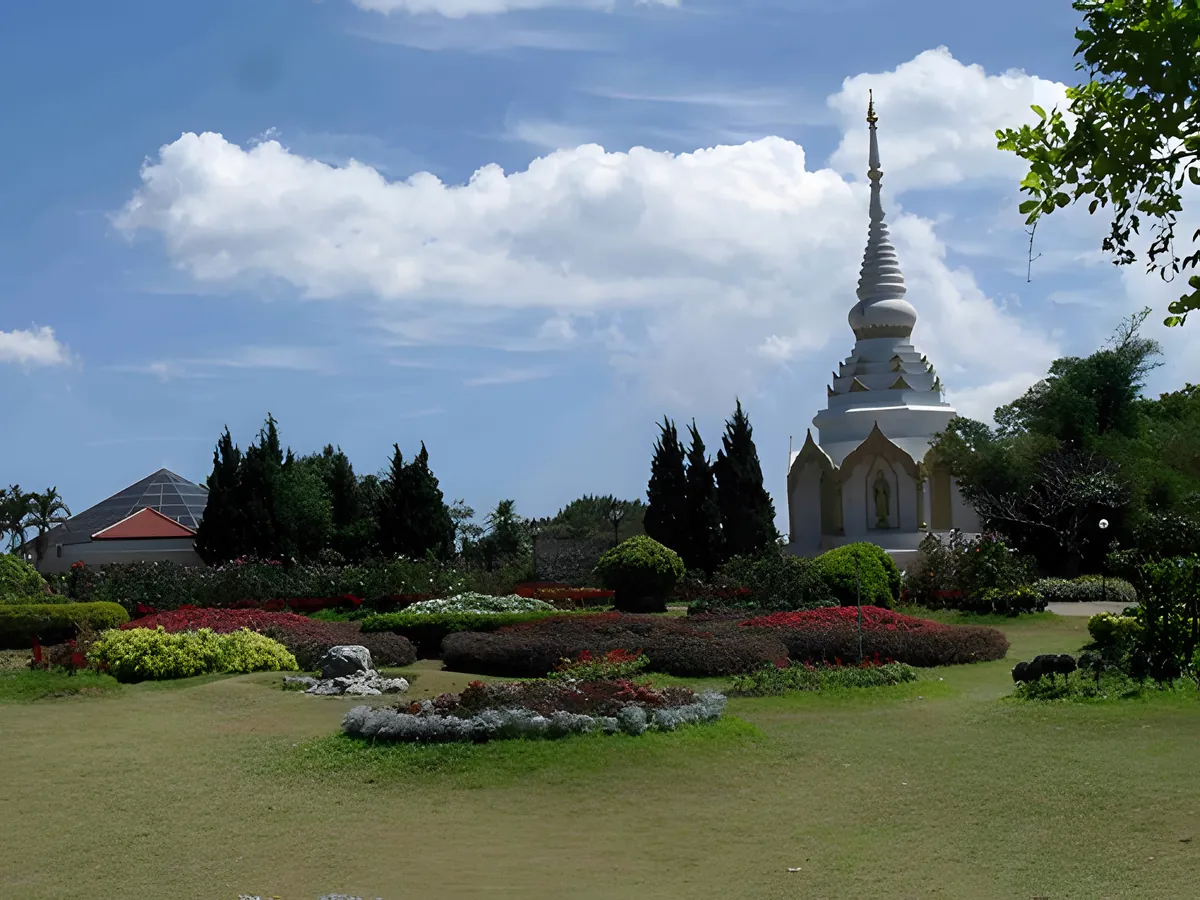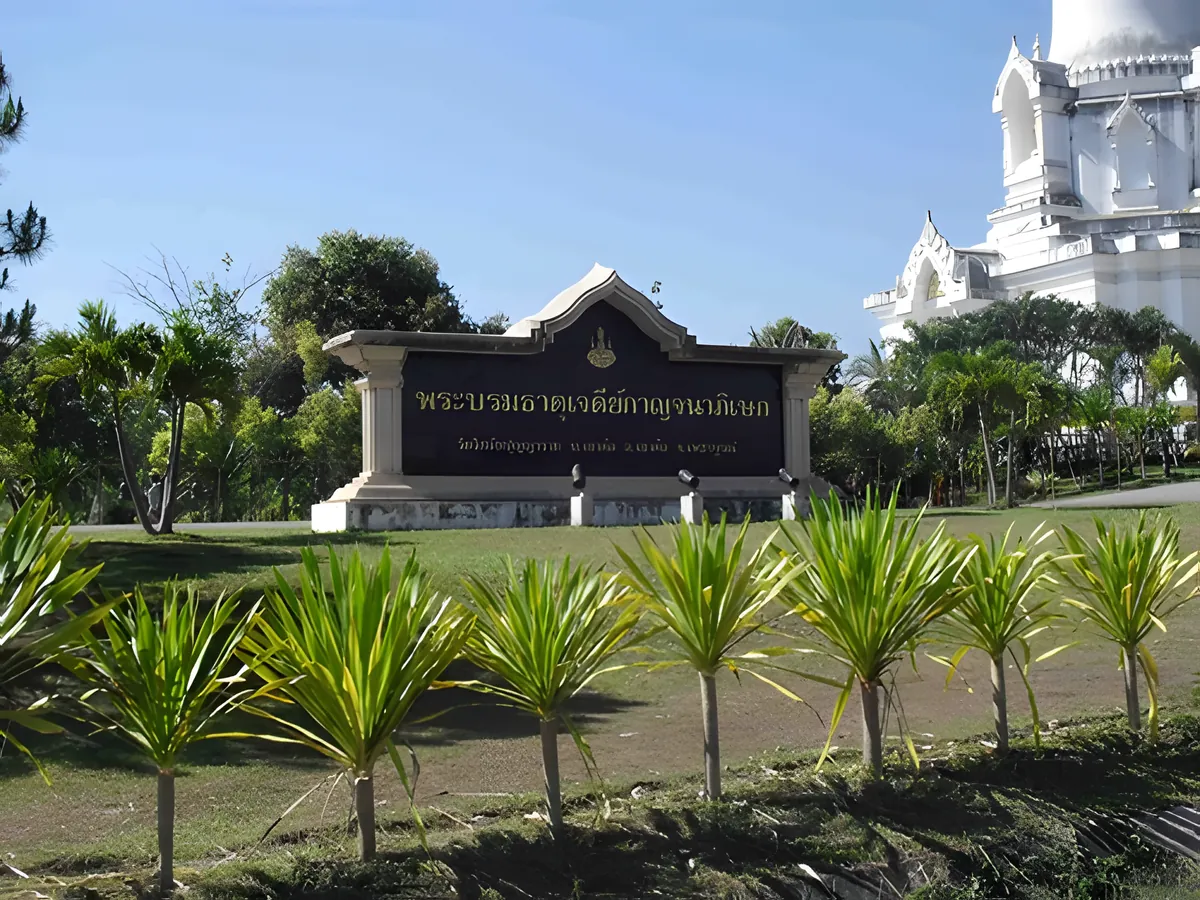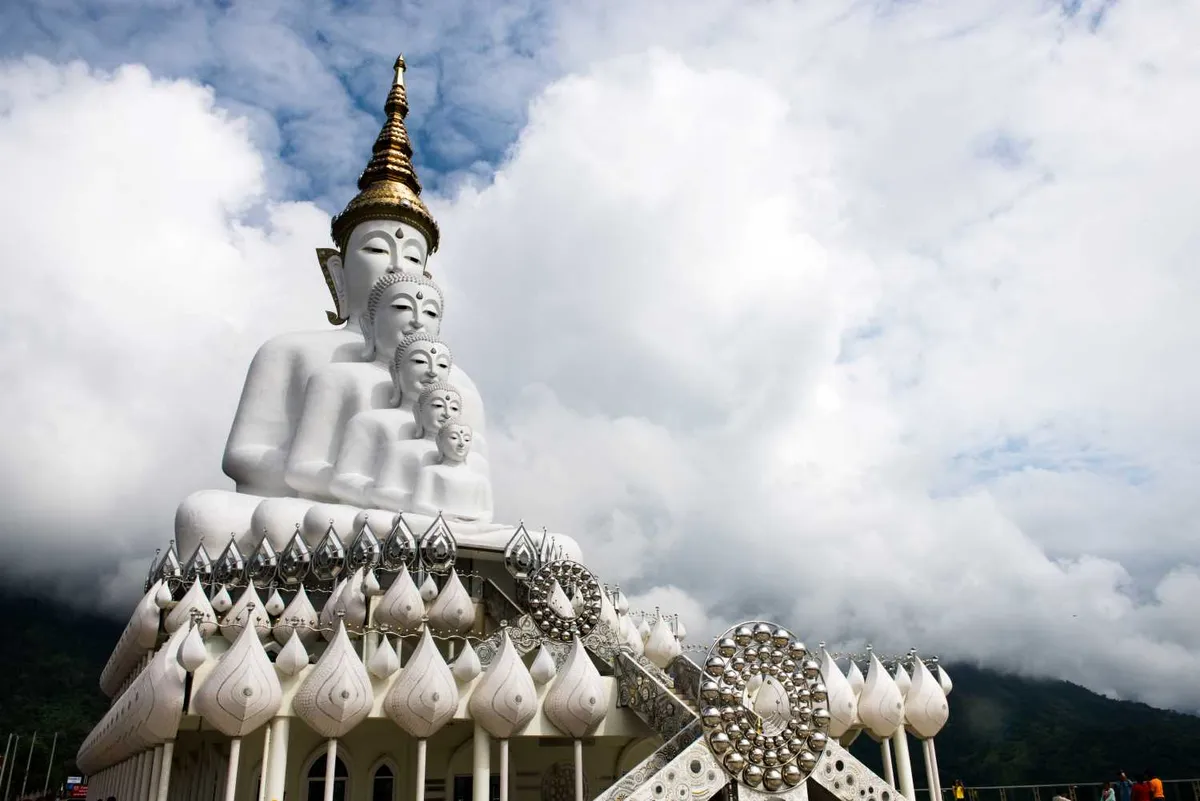





Two white elephant statues guard the entrance to Wat Chang Puek, south of Phetchabun town off Highway 21. The statues give the temple its name, which translates to “White Elephant Temple.” Local records put its founding at roughly 300 years ago, likely during the Ayutthaya period; archaeological evidence of an earlier ordination hall was documented at the site in 2004. Entry is free, and it functions as a working community temple rather than a tourist stop.
The temple’s real significance to Phetchabun locals is Luang Pho Thob (Phra Khru Wichit Phatcharachan), a monk who restored the buildings over three years starting in 1973 and became widely known across the province for his protective amulets, still traded and collected today. He died during the consecration ceremony for the rebuilt ordination hall and is remembered as having reached a rare level of spiritual attainment; his body did not decompose and remains enshrined at the temple in a glass case, drawing a steady stream of devotees separate from the general temple visitors. An annual memorial for him each March is the temple’s biggest event of the year.
Inside the main hall, murals depict scenes from the Vessantara Jataka: the story of Prince Vessantara’s final life of perfect generosity before becoming the Buddha, one of the most commonly illustrated Buddhist narratives in Thai temple art. The hall itself is modest in scale compared to Phetchabun’s larger city temples, which is part of the appeal: there’s no entrance queue, no gift shop, just monks going about ordinary temple business and the occasional local family making an offering.
Insider Tip: If you’re interested in Thai amulet culture, Wat Chang Puek is a genuine stop rather than a tourist-trade one: Luang Pho Thob’s amulets are still actively collected, and the temple can point serious collectors toward verified pieces rather than the tourist-market fakes sold near bigger temples.
There’s no public bus route directly to the temple, so a rented car, motorbike, or taxi from Phetchabun town is the realistic way in: the drive south on Highway 21 takes well under half an hour. Once there, expect a working temple’s pace rather than a curated visitor experience: no ticket booth, no set tour, just open grounds you’re free to walk through respectfully. Combine the visit with Phetchabun’s other temples, such as Wat Phra Kaew in the town centre, if you want a fuller half-day of temple-hopping without the crowds of the province’s more heavily promoted sites like Wat Phra That Pha Son Kaew.
- Meaning: “White Elephant Temple”, named for the entrance statues
- Founded: Roughly 300 years ago (Ayutthaya-period origins); rebuilt from 1973
- Notable relic: The incorrupt body of Luang Pho Thob, enshrined in a glass case
- Murals: Vessantara Jataka scenes in the main hall
- Entry: Free; located south of Phetchabun town off Highway 21
Location & Directions
Mueang Phetchabun, Phetchabun
Phetchabun, Thailand
Show your taxi or Grab driver
วัดช้างเผือก
Frequently Asked Questions
What does the name Wat Chang Puek mean?
Who is Luang Pho Thob?
How old is the temple?
Is there an entry fee?
When's the best time to visit?
Spotted something out of date or incorrect? Let us know
Stay Near Wat Chang Puek
Live prices for places closest to Wat Chang Puek: tap a pin to compare.