Wat Chang Rop
วัดช้างรอบ อุทยานประวัติศาสตร์กำแพงเพชร
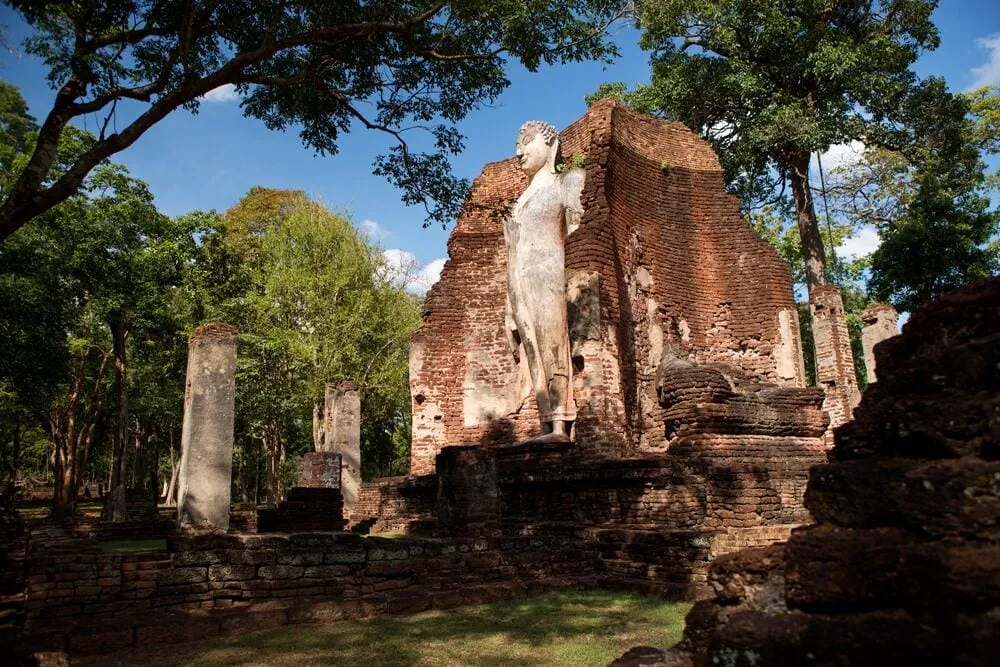
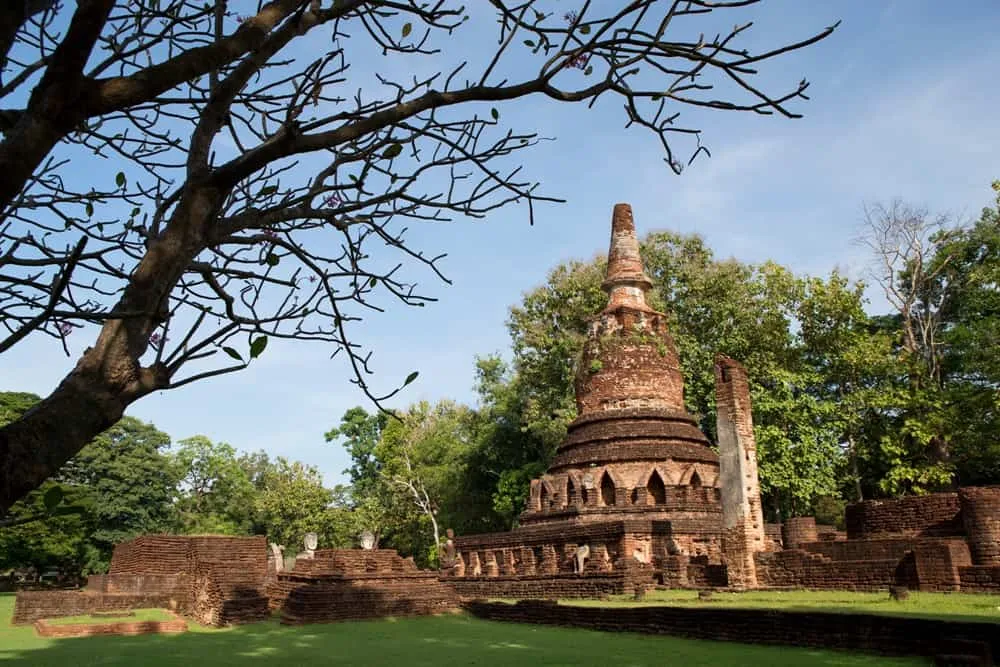
Sixty-eight Sukhothai-style elephant statues once ringed the square laterite platform at Wat Chang Rop, each protruding from the base as if carrying the chedi above on its back — the name literally means “temple surrounded by elephants.” It stands in the Aranyik zone, the forest monastery area of Kamphaeng Phet Historical Park, on a hill set apart from the walled in-town zone where Wat Phra Kaew and Wat Phra That draw most day-trip traffic. Built during the Sukhothai period, likely in the 15th or 16th century, it’s a separate site from Sukhothai Historical Park itself, about 80 km away, though both fall under the same UNESCO World Heritage listing for the Sukhothai group of historic towns.
The platform base runs roughly 31 metres to a side, and the elephant statues that survive show real variation in condition — some retain crisp detail in the trunks and ears, others have worn to soft outlines after centuries of monsoon rain. The bell-shaped chedi that once topped the structure has collapsed; what’s left is the octagonal base and a few of the lower receding tiers, along with the bases of smaller subsidiary chedis scattered around the main platform. It’s a ruin in the true sense — nothing has been rebuilt or restored to its original form, which is part of what makes it feel different from the more manicured temple sites elsewhere in the park.
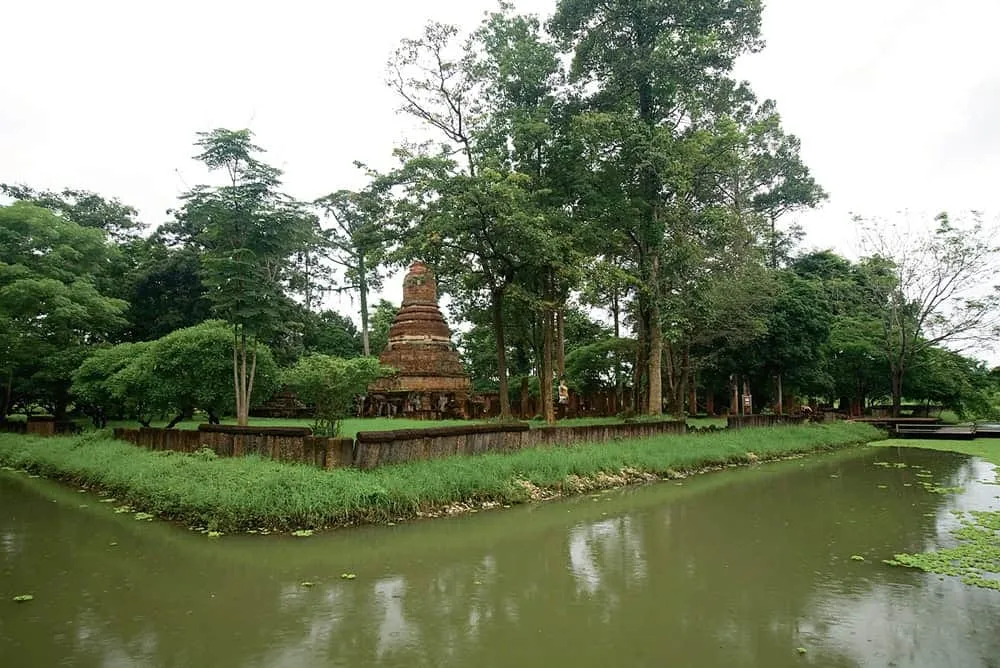
Aranyik sits away from the historical park’s busiest paths, so the atmosphere tends toward quiet even when the in-town zone has coach groups. Trees crowd close to several of the ruins in this forest zone, and the elephant statues are easiest to appreciate at ground level, walking the perimeter of the platform rather than viewing it from a distance.
Insider Tip: Cycle out to Aranyik in the late afternoon after covering the in-town temples in the morning — the forest zone has almost no shade cover at the ruins themselves, so the cooler light works better for both comfort and photos.
Watch out: Laterite and old stone surfaces around the platform are uneven and can be loose underfoot; sandals aren’t ideal here even though the site is otherwise easy walking.
Wat Chang Rop is free to visit; the historical park’s other zones may charge separately at their own entry points, so confirm on arrival if you’re combining several sites in one day. Bring water and sun protection — there’s little shade directly at the ruins, and the forest zone spreads out enough that a bicycle or motorcycle beats walking between sites.
- Location: Aranyik (forest) zone, Kamphaeng Phet Historical Park — not Sukhothai Historical Park
- Meaning: “Chang rop” = “elephants surrounding,” referring to the 68 statues ringing the chedi base
- Condition: Chedi collapsed; octagonal base and lower tiers survive, along with worn elephant statues
- Entry fee: Free (other park zones charge separately)
- Getting there: Bicycle or motorcycle from the main historical park entrance
Location & Directions
Mueang Kamphaeng Phet, Kamphaeng Phet
Kamphaeng Phet, Thailand
Show your taxi or Grab driver
วัดช้างรอบ อุทยานประวัติศาสตร์กำแพงเพชร
Within Walking Distance




Frequently Asked Questions
Is Wat Chang Rop in Sukhothai or Kamphaeng Phet?
Why is it called Wat Chang Rop?
Is the temple still intact?
Is there an entrance fee?
How do I get to Wat Chang Rop?
Spotted something out of date or incorrect? Let us know
Stay Near Wat Chang Rop
Compare places to stay in Kamphaeng Phet, or open the map for options closest to the attraction.